

10 Inclusive Coffee Shops for Remote Work
Table of Contents
- What Makes a Coffee Shop Inclusive for Remote Workers
- Coffee Shops With Wi-Fi and Outlets: Essential Setup Features
- LGBTQIA+-Friendly Coffee Shops That Welcome Everyone
- Coffee Shops With Quiet Workspaces and Low Noise Levels
- Remote Work Coffee Shop Etiquette and Best Practices
- Bring Your Own Premium Coffee to Any Workspace
- Finding Your Ideal Remote Work Coffee Shop
- Frequently Asked Questions
Last Updated: October 12, 2026
What Makes a Coffee Shop Inclusive for Remote Workers
What defines 10 inclusive coffee shops for remote work goes beyond Wi-Fi and outlets: they welcome everyone, regardless of background, identity, or needs, and reflect that diversity in both atmosphere and policy.
They prioritize accessibility, sensory comfort, and belonging: physical access for mobility challenges, quiet zones for sensory sensitivities, gender-neutral restrooms, and staff trained to welcome LGBTQIA+ patrons and people of color. Feeling safe and accepted directly affects remote workers' productivity and satisfaction.
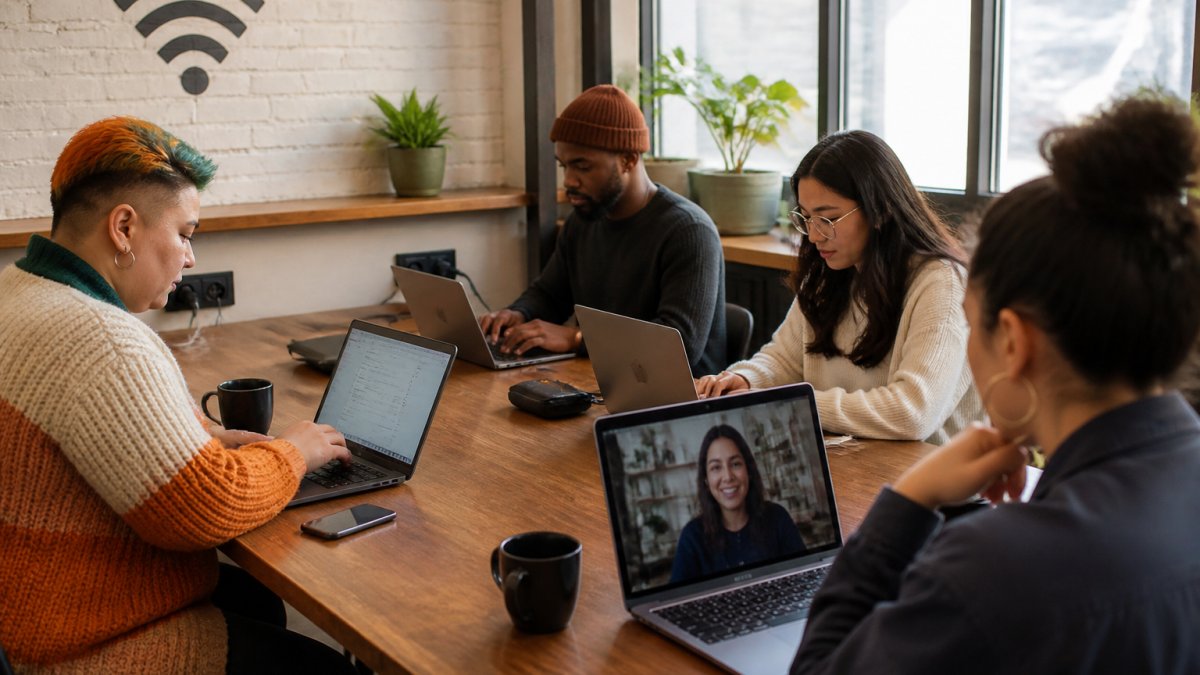
The best shops communicate their values clearly: inclusive signage, support for local LGBTQIA+ organizations, and diverse artists in their decor. Staff training matters most, baristas who use correct pronouns and handle accessibility requests without hesitation make all the difference.
Coffee Shops With Wi-Fi and Outlets: Essential Setup Features
The foundation of any remote work coffee shop is reliable infrastructure: consistent Wi-Fi that doesn't drop mid-video call, power outlets within reach, and enough table space for a laptop and notebook.
Test the Wi-Fi speed yourself before committing to a long session, and ask staff how many concurrent users the network handles at peak. A shop that's perfect at 10 a.m. may be unusable at noon. Look for outlets scattered throughout the seating area, not just near the counter.
| Feature | Why It Matters | What to Look For |
|---|---|---|
| Wi-Fi Reliability | Stable connection for video calls and cloud work | Speed test 25+ Mbps download, 5+ Mbps upload |
| Outlet Availability | Keeps devices charged for full work sessions | At least 1 outlet per 3-4 tables |
| Table Space | Room for laptop, notebook, and coffee mug | Minimum 24" x 18" work surface |
| Seating Comfort | Prevents back pain during long sessions | Chairs with back support, adjustable height |
| Natural Light | Reduces eye strain and improves mood | Windows with good daytime coverage |
Many remote workers use LGBrewTeaQ's Travel Mug With A Handle ($46.09) to bring premium coffee to any workspace, eliminating the pressure to keep buying drinks just to hold a table. The stainless steel design keeps beverages at temperature for hours.

LGBTQIA+-Friendly Coffee Shops That Welcome Everyone
A coffee shop can fly a pride flag and still be uncomfortable to open a laptop in if the culture behind the counter doesn't match the decor.
Read the policy, not just the poster. Many independent shops post a customer code of conduct near the register or online.
Watch the room for five minutes before you commit. Sit where you can see the counter and door.
Check the physical signals that matter to LGBTQIA+ patrons. Gender-neutral or single-occupancy restrooms without gendered icons are a practical inclusion marker, especially for trans and nonbinary customers, and they should be clean and stocked.
Use reviews written by LGBTQIA+ patrons as a filter. Search the shop's name alongside terms like "trans friendly," "queer owned," or "safe space," and read the most recent reviews rather than the top-rated ones.
Ask about ownership and hiring if it's relevant to you. Directories from national advocacy organizations and local chambers of commerce often list self-identified LGBTQIA+-owned cafes; listings are opt-in, so they reflect the owner's own disclosure. If ownership isn't public, lean more heavily on the in-person signals above.
Coffee Shops With Quiet Workspaces and Low Noise Levels
Noise is the factor remote workers mention most when a shop doesn't work out, but it's rarely the only sensory variable.
Map the shop's sensory zones before you sit down. Most cafes have three environments: the counter and espresso bar (loudest), the main seating area (moderate, unpredictable), and a back room, mezzanine, or window nook (quietest, often overlooked).
Time your visit to the shop's rhythm. A cafe unusable at noon can be ideal at 2:30 p.m. Ask staff when their two slowest weekday windows are, often the mid-morning lull and the mid-afternoon gap.
Evaluate lighting and visual load. Fluorescent overheads, flickering bulbs, and glare from unshaded windows commonly trigger eye strain and migraines.
Ask about quiet hours or designated work windows. More cafes now set aside weekday mid-morning or early-afternoon hours when patrons keep conversations low and certain tables are reserved for laptops.
Cappuccino, Latte Multifunctional Semi-Automatic Espresso Machine →
| Sensory Factor | Why It Matters for Remote Work | What to Check on Arrival |
|---|---|---|
| Intermittent noise | Grinders and blenders break focus more than steady hum | Distance from counter and door |
| Music volume | Competing audio makes calls and reading harder | Can you hear it over conversation? |
| Lighting | Glare and flicker cause eye strain and migraines | Warm layered light, no screen reflection |
| Ambient scent | Strong fragrances affect some workers | Roasting smoke, cleaning products |
| Crowding | Raises noise floor, reduces seat predictability | Mix of solo tables vs. communal benches |
| Temperature | Drafts and vents make long sessions uncomfortable | Seat away from doors and HVAC vents |
Remote Work Coffee Shop Etiquette and Best Practices
Being a considerate remote worker keeps you welcome and helps others. The unspoken rules of coffee shop work culture matter, especially if you plan to make a space your regular workspace.
Buy something regularly. A coffee shop isn't free coworking space. Order at least one drink or food item per session, even during long stays, baristas notice who camps out without purchasing. Rotate your purchases, try different drinks, support the food menu, and tip consistently.
Respect the space during peak hours. When crowded, work at the counter or bar rather than occupying a full table. Keep your materials contained, never spread across multiple seats or leave belongings unattended, use headphones for video calls, and keep your voice low.
Respect other patrons' focus. Don't take loud phone calls or video meetings in the main seating area, step outside or find a quiet corner. Keep music and notifications silent, and stay aware of how your presence affects others.
| Best Practice | Why It Matters | How to Do It |
|---|---|---|
| Purchase regularly | Supports the business and maintains your welcome | Buy at least one item per session |
| Respect peak hours | Ensures seating for customers who aren't working | Use counter seating when busy |
| Keep calls private | Protects other patrons' focus and privacy | Step outside for phone/video calls |
| Maintain workspace | Shows respect for shared space | Keep materials contained, clean up |
| Tip consistently | Acknowledges staff effort and builds goodwill | 15-20% tip on each purchase |
Bring Your Own Premium Coffee to Any Workspace
One of the smartest moves for remote workers is bringing premium coffee from home. It eliminates the pressure to keep buying drinks just to justify a table, saves money, and ensures you always have coffee you enjoy.
LGBrewTeaQ offers several options for remote workers who want to bring their own coffee. The 12 Pack Single Serve Coffee Capsules ($19.99) are ideal for brewing a travel mug's worth before you head out.

For variety without commitment, the Single Origin Favorites Sample Pack ($24.99) includes six 2 oz pouches: Brazil Santos, Colombia, Costa Rica, Ethiopia, Honduras, and Tanzania. Each roast highlights distinct terroir, from bright fruit and florals to deep caramel and spice, roughly 25-35 total cups to explore before choosing a favorite.
If you're constantly moving between coffee shops, the Instant Coffee ($20.99) offers 30 servings in a resealable pouch. Dissolve a scoop in hot water at any café, or bring hot water in your travel mug. It delivers the same smooth milk chocolate and caramel notes as the full-bodied roasts, with no equipment or brewing time.

Finding Your Ideal Remote Work Coffee Shop
Finding 10 inclusive coffee shops for remote work depends on your needs, work style, and values. Some prioritize quiet focus, others social spaces; some need maximum accessibility, others LGBTQIA+ community affirmation. Be honest about what you need to do your best work.
Identify your non-negotiables: reliable Wi-Fi and outlets, quiet versus background noise, explicit LGBTQIA+ welcome, accessibility needs. Then visit potential shops during your typical work hours and observe for 15-30 minutes.
Talk to remote workers already in the space: how long they've been coming, what they like, what frustrates them. Ask staff about Wi-Fi reliability, outlets, and their approach to inclusion. The answers reveal whether a shop is genuinely built for remote work or just tolerates it.
Finding a coffee shop that truly supports your remote work means looking beyond surface-level amenities: reliable infrastructure, genuine inclusivity, and a workspace that respects your focus and identity. Whether you're exploring single-origin coffees or keeping convenient capsules on hand, you can bring exceptional coffee anywhere. Shop Coffee and build your ideal remote work routine.
Frequently Asked Questions
What should I look for in a coffee shop for remote work?
Look for reliable Wi-Fi, accessible power outlets, comfortable seating at tables (not just bar seating), and a noise level that supports concentration. Check opening hours to ensure they align with your work schedule, verify parking or transit options, and confirm the cafe welcomes long work sessions. Staff attitude matters too, a friendly, inclusive environment makes extended stays more pleasant.
How can I tell whether a coffee shop is LGBTQIA+-friendly?
Check for visible pride flags, inclusive imagery, or staff badges indicating allyship. Read reviews from LGBTQIA+ community members on Google or Yelp mentioning safety and respect. Visit during off-peak hours to chat with staff about the culture. Inclusive coffee shops often highlight their values on social media or their website. Trust your instinct, welcoming spaces feel noticeably different from the moment you walk in.
How long is it appropriate to work from a coffee shop?
Most coffee shops expect customers to purchase something every 1-2 hours. A reasonable work session is 3-4 hours with periodic purchases of coffee, tea, or food. During busy times, consider limiting your stay to 2 hours to respect other customers seeking seating. Off-peak hours (mid-morning or mid-afternoon) are better for longer sessions. Always ask staff if you're unsure, many inclusive cafes appreciate remote workers and will tell you their expectations upfront.
Should I ask before taking a video call in a coffee shop?
Yes. Ask staff if video calls are acceptable and find a quiet corner away from other customers. Use headphones and keep your microphone muted when not speaking to minimize disruption. Avoid calls during peak hours. Many inclusive coffee shops designate quiet zones or have policies about calls, respecting these shows you value the shared space. If the cafe is crowded, consider rescheduling calls for when you're back at home or in a quieter location.
Can I bring my own coffee from home instead of buying at the cafe?
Most coffee shops have a no outside-beverage policy. However, many inclusive, remote-work-friendly cafes are flexible if you purchase food or a light item. Always ask first. Better yet, try LGBrewTeaQ's 12 Pack Single Serve Coffee Capsules ($19.99) or Instant Coffee ($20.99) to enjoy premium coffee at home before heading to the cafe, or bring our Travel Mug With A Handle ($46.09) with coffee prepared at home for commutes.