

Are Queer Friendly Brands More Expensive? A 2026 Review
Table of Contents
- Are Queer Friendly Brands More Expensive? The Real Answer
- The 'Queer Tax' Myth vs. Reality: What You're Actually Paying For
- Price Transparency Frameworks: How to Read What You're Paying For
- Affordable Queer Clothing Brands: Where to Find Them and What to Expect
- How to Support Queer Businesses on a Budget Without Cutting Corners
- Queer-Owned Coffee Roasters: Pricing, Sourcing, and What Sets Them Apart
- Geographic and Accessibility Barriers: Why Location Still Shapes Your Options
- Conclusion: Making Informed Choices That Match Your Values and Wallet
- Frequently Asked Questions
Last Updated: October 4, 2026
Are Queer Friendly Brands More Expensive? The Real Answer
Queer friendly brands are not automatically more expensive, but the ones that invest in ethical production, fair wages, and small-batch manufacturing often carry higher price tags than mass-market alternatives. At LGBrewTeaQ, we hear this question constantly from shoppers who want their money to match their values without wrecking their budget.
That distinction matters because it changes how you shop. If you assume every rainbow-flagged label costs more, you will miss genuinely affordable options. If you assume none of them do, you will be surprised at checkout.
Below, we break down what actually drives the price gap, how to read a brand's claims, and where to find queer friendly brands that fit a tight budget. We will also cover the "queer tax" debate directly, because most guides either ignore it or repeat it without evidence.
The short version: you are usually paying for sourcing, scale, and transparency, not for a pride flag.
The 'Queer Tax' Myth vs. Reality: What You're Actually Paying For
The phrase "queer tax" implies that LGBTQ+ owned businesses charge more because of who owns them. That framing does not survive contact with a cost sheet.
1. Small-batch production runs. A domestic cut-and-sew shop that runs 300 units of a tee spreads its setup, pattern-grading, and screen-prep costs across 300 pieces.
**2.
3. Materials and traceability. Organic cotton, recycled poly, and named-mill fabrics cost more per yard than commodity blends.
4. No bulk purchasing power. Small brands buy fabric, blanks, and packaging in quantities that do not qualify for volume discounts. A big-box retailer negotiating a national contract pays less per unit for the same input.
5. Marketing and distribution overhead. A small brand cannot amortize a national ad campaign across millions of units. Its customer acquisition cost per sale is higher, and some of that lands in the price.
What most guides miss is the comparison problem. A small-batch, ethically sourced tee is not competing with the cheapest item on a discount shelf, it is competing with other specialty goods.
There is a real version of the concern, though, and it is worth naming: a brand can slap a rainbow on a mass-produced item and charge a premium without changing any of the five line items above. That is rainbow washing, and the next section gives you a framework for spotting it.
Price Transparency Frameworks: How to Read What You're Paying For
A price transparency framework is a repeatable way to break a product's cost down so you can judge whether a premium reflects ethical production or a rainbow-washing markup.
Use this five-point check before you decide a brand is too expensive.
1. Cost-per-wear, not sticker price. Divide the price by the number of times you expect to wear or use the item.
2. Named suppliers. Can the brand name its mill, farm, or factory? Named suppliers signal real traceability.
3. Wage disclosure. Does the brand state a wage floor, a living-wage benchmark, or a certification (Fair Trade, B Corp, SA8000)? A specific commitment is verifiable.
4. Production model. Made-to-order and print-on-demand models carry lower inventory risk and often lower prices than stocked goods, because nothing sits in a warehouse.
5. What is bundled in. Shipping, packaging, and returns all sit inside the final number.
Red flags that suggest a rainbow-washing markup:
- A pride collection that appears only in June and disappears in July.
- No named suppliers, no wage statement, no production disclosure anywhere on the site.
- A premium price on a mass-produced blank with a rainbow print and no other change to the product.
- No public donation record, partnership, or community commitment tied to the collection.
- Marketing copy that leans on identity language but never on sourcing, labor, or materials.
Green flags that suggest a justified premium:
- A roast date, a mill name, or a factory name printed on the product or page.
- A stated wage floor or a third-party certification.
- Year-round product lines, not a June-only drop.
- A published giving or partnership record.
- Willingness to answer a direct email about sourcing.
Federal Trade Commission guidance on advertising claims sets the standard for how businesses should describe sourcing and environmental claims, which is a useful benchmark when a label feels vague.
Run this framework on any brand, queer-owned or not, and you will quickly see which premiums are earned and which are decoration.
Affordable Queer Clothing Brands: Where to Find Them and What to Expect
Affordable queer clothing brands do exist, and they tend to sit in the mid-range rather than the luxury tier. The trick is knowing which categories stay reasonable and which carry a premium.
Basics usually cost the least. A classic cotton tee or a simple pullover is easier to produce affordably than a structured jacket. Print-on-demand and made-to-order models also keep prices lower because nothing sits in a warehouse.
Here is how our own apparel lines compare, so you can see what a transparent price looks like:
| Item | Price | Material | Best For |
|---|---|---|---|
| Unisex Classic Tee | $20.35 | 100% cotton, 5.0-5.3 oz | Everyday wear, layering |
| Unisex Garment-Dyed Heavyweight T-shirt | $38.50 | 6.1 oz ring-spun cotton | A heavier, lived-in staple |
| Unisex Hoodie | $48.95 | 8.0 oz cotton-poly fleece | Cool mornings, casual days |
| Unisex Midweight Hoodie | $69.45 | 8.5 oz fleece, cotton face | Structured layering |
| Bucket Hat | $43.54 | 100% cotton twill | Sun protection, festivals |
Notice the pattern: the heavier the fabric and the more complex the construction, the higher the price. That is true across the industry, not just for queer-owned labels.
How to Support Queer Businesses on a Budget Without Cutting Corners
Supporting queer businesses on a budget comes down to timing, format, and focus. You do not need to buy everything at once, and you do not need to pay full price to make an impact.
Try these approaches:
- Buy gift cards at a set amount. They let you support a business now and spend later, and they never expire when the brand structures them that way.
- Prioritize consumables over one-time purchases. Coffee and tea get used, so the value is realized quickly.
- Watch for recurring delivery. Subscriptions often lower the per-order cost compared to one-off buys.
- Start with a single item. A mug or a bag of beans is a low-risk way to test a brand before committing more.
Our LGBrewTeaQ Gift Card starts at $25.00 and is redeemable across the whole catalog, from whole bean coffee to drinkware. That makes it a practical entry point if you want to support the business while keeping spending controlled.

Queer-Owned Coffee Roasters: Pricing, Sourcing, and What Sets Them Apart
Queer-owned coffee roasters typically price above supermarket coffee because they roast to order and buy from specific farms. Freshness and traceability are the two things you are paying for, and both show up in the cup.
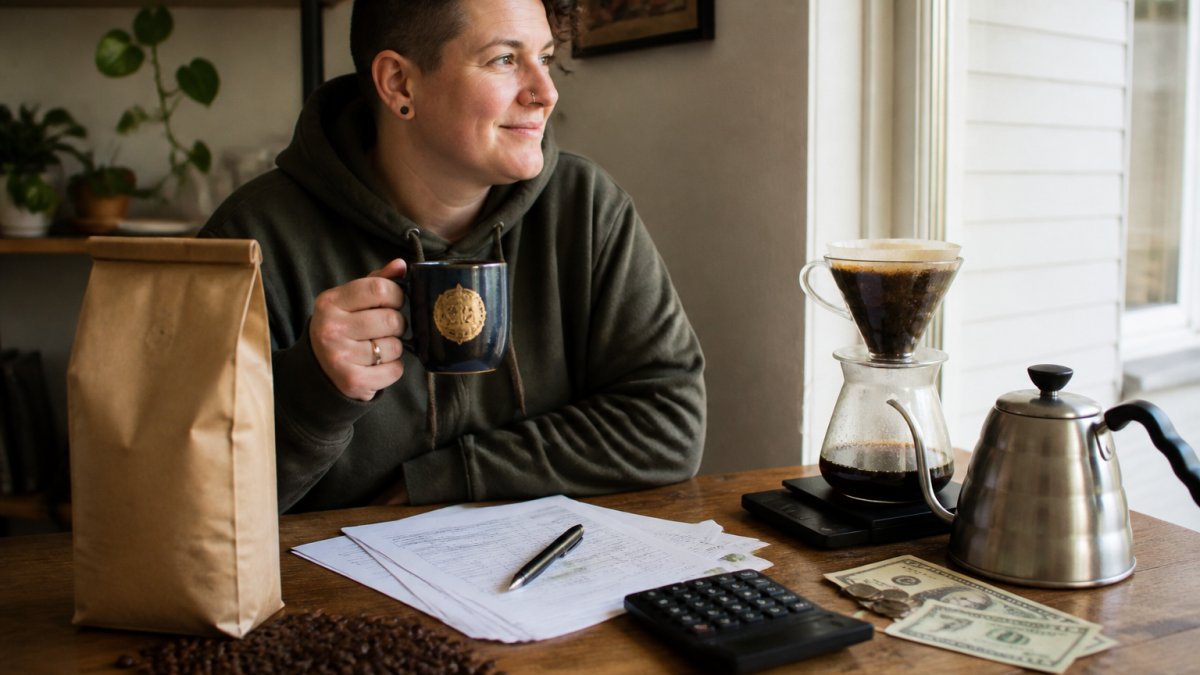
Roasting to order means the beans ship shortly after they are roasted rather than sitting on a shelf for months. That shortens the window between roast and brew, which is where most of the flavor difference comes from.
Sourcing is the other half. When a roaster names its farms and pays above commodity rates, the green coffee costs more. That cost passes through to you, but it also supports the producers.
If you want to keep the ritual simple, a White Glossy Mug at $14.30 or a Mug With Color Inside at $19.25 pairs well with a fresh roast without adding much to the total.


Geographic and Accessibility Barriers: Why Location Still Shapes Your Options
Location still shapes what you can buy, even in a market full of online stores. Rural shoppers and people outside major metros often face fewer local options and higher shipping costs, which effectively raises the price of supporting queer-owned brands.
Delivery solves part of the problem. Direct-to-door shipping means you are not limited to whatever is within driving distance. It does not solve all of it, though, because shipping fees and delivery frequency vary by region.
U.S. Small Business Administration resources on rural business access outlines some of the structural gaps small businesses and their customers face outside urban centers, which is worth understanding if you live somewhere with limited local retail.
The practical move is to consolidate orders. Buying a few items at once spreads the shipping cost across more of your purchase, which lowers the effective premium per item.
Conclusion: Making Informed Choices That Match Your Values and Wallet
The price question has a real answer, and it is rarely about identity. Queer friendly brands cost more when they source carefully, produce in small batches, and pay fairly, and those are choices you can see reflected in what you buy. The harder part is finding options that fit both your values and your budget, especially if you live somewhere with limited local access.
At LGBrewTeaQ, we built our catalog around that tension. We roast to order for maximum flavor and aroma, source beans from trusted farms, and keep ordering simple with fast, reliable delivery. Start with a Travel Mug With A Handle at $46.09 or a Unisex Classic Tee at $20.35, and see how the numbers work out for you.
Shop Coffee with LGBrewTeaQ and turn your daily cup into a choice you can stand behind.
Frequently Asked Questions
Are queer-owned brands generally more expensive than mainstream retailers?
It depends on the product category. Queer-owned coffee roasters and small-batch manufacturers often charge more because they source specialty ingredients, roast to order, and pay fair wages. But affordable queer clothing brands exist at price points comparable to mainstream options. The difference usually comes down to production scale, sourcing standards, and whether the brand prioritizes ethical production over volume discounts.
Why do ethical and inclusive brands often have higher price points?
Small-batch manufacturing, fair wage commitments, and supply chain transparency all cost more than mass production. When a queer-owned coffee roaster sources single-origin beans from trusted farms and roasts to order, the per-unit cost rises. Those costs get passed to the consumer. The trade-off is fresher products, better labor practices, and money staying in community-focused businesses rather than large corporate supply chains.
How can I support LGBTQ+ businesses on a budget?
Start with lower-cost entry points. A $14.30 ceramic mug or a $20.35 classic tee from a queer-owned brand gives you a way to support without a big spend. Gift cards starting at $25 let you contribute to someone else's purchase. You can also prioritize one or two brands you buy from regularly rather than spreading spending thin across many. Subscriptions and recurring orders often reduce per-unit costs too.
Does shopping at queer-friendly brands guarantee ethical labor practices?
No. A brand can be queer-friendly in its marketing without ethical production behind the scenes. Look for specifics: where blanks are sourced, whether the brand names its farms or factories, and whether it publishes wage information. Rainbow washing, where companies slap a pride flag on a product without community investment, is common. Brand authenticity shows in consistent action, not seasonal campaigns.
What is the difference between 'queer-friendly' and 'queer-owned' pricing models?
Queer-owned means the business is founded and run by LGBTQIA+ people, so profits go directly to community members. Queer-friendly means the brand supports LGBTQ+ causes but may not be community-led. Queer-owned brands often price higher because they lack the economies of scale that larger friendly brands have. Friendly brands may offer lower prices but a smaller share of profit reaches LGBTQ+ communities.