

Best Ethical Coffee Subscription for LGBTQ Community
Table of Contents
- Why an Ethical Coffee Subscription Matters for LGBTQ Shoppers
- What Makes a Coffee Subscription Truly Ethical
- How to Identify Ethical Coffee Sourcing Before You Subscribe
- Queer-Owned Coffee Roasters and What Your Subscription Supports
- LGBrewTeaQ: Fresh Roasted Coffee Built for the LGBTQIA+ Community
- How to Choose the Right Subscription for Your Brewing Style
- Conclusion
- Frequently Asked Questions
Last Updated: September 11, 2026
Why an Ethical Coffee Subscription Matters for LGBTQ Shoppers
An ethical coffee subscription is a recurring coffee delivery service that prioritizes transparent sourcing, fair treatment of farm workers, and often direct support for a specific community. For LGBTQ shoppers, that last part carries real weight: where your coffee dollars land is a statement about which businesses get to exist. This guide from LGBrewTeaQ walks through what separates genuine ethical sourcing from rainbow-washed marketing, and which subscription model actually fits how you brew.
Here's the uncomfortable truth most buying guides skip: slapping a pride flag on a bag costs a roaster nothing. Paying above commodity rates for green coffee, publishing the farm names, and keeping a subscription flexible enough to cancel without a fight costs real money. That gap is where the decision gets made.
Below, we break down the signals worth trusting, the sourcing questions to ask before you subscribe, and how to match a subscription to your brewing setup.
What Makes a Coffee Subscription Truly Ethical
A truly ethical coffee subscription rests on three pillars: traceable sourcing, fair labor practices, and pricing that reflects the real cost of quality coffee (fairtradeamerica.org). Miss any one of them and the "ethical" label is decoration.
Ask these questions before you commit:
- Does the roaster publish the farm, cooperative, or region for each lot, or just a country name?
- Is the coffee roasted to order, or pulled from warehouse stock roasted months ago?
- Are subscription terms clear about pausing, swapping, and canceling?
- Does the roaster name the certification bodies it works with, such as Fair Trade or USDA Organic?
Vague answers on any of these are your signal to keep looking.
Sourcing, Labor, and Transparency Signals to Look For
The strongest transparency signal is a named origin. "Colombia" tells you almost nothing. "Smallholder farms in Medellín, fully washed, sun-dried on raised beds" tells you the roaster knows the supply chain.
Labor signals matter just as much. Look for language about cooperatives, family farms, and long-term buying relationships rather than one-off spot purchases. A roaster that buys the same cooperative's harvest year after year has a stake in that community's stability (peer-reviewed research).
How to Identify Ethical Coffee Sourcing Before You Subscribe
Identifying ethical coffee sourcing comes down to verification: can you trace the claim to a specific farm, cooperative, or certification, or does it stop at a marketing phrase?
Work through this checklist before your first order:
- The product page names a specific region, farm, or cooperative
- The roaster states its roast-to-order process and turnaround time
- Certifications are named, not implied, such as Fair Trade, Rainforest Alliance, or USDA Organic
- The roaster explains how it pays producers, not just that it pays "fairly"
- Subscription terms are published before checkout, including pause and cancel policies
- The company's ownership and community commitments are stated plainly
If a roaster clears four of these six, it's worth a trial order. Fewer than that, and you're paying a premium for a story.
Queer-Owned Coffee Roasters and What Your Subscription Supports
Queer-owned coffee roasters put ownership itself on the table. When you subscribe to one, your recurring spend supports an LGBTQIA+-owned business directly, rather than routing through a corporate pride campaign that ends when the calendar flips to July.
That distinction matters for how the money moves. A subscription to a queer-owned roaster funds payroll, green coffee purchasing, and roasting equipment at a business that exists because of and for the community. A limited-edition pride blend from a large chain typically funds a donation with a cap and a campaign window (hrc.org).
What your subscription supports also depends on the roaster's sourcing model. A queer-owned roaster buying from smallholder cooperatives keeps two commitments running at once: community ownership at home and fair pricing at origin. That combination is rarer than it should be.
LGBrewTeaQ: Fresh Roasted Coffee Built for the LGBTQIA+ Community
LGBrewTeaQ pairs LGBTQIA+-owned ownership with roast-to-order production and named-origin sourcing. Every batch is roasted in small, deliberate lots, hand-packed, and shipped fresh, with the origin story attached to the bag.
The catalog gives you room to explore without committing to a full pound of something you might not love. Single origins run from the silky caramel and red berry notes of the Colombia Single Origin Coffee at $23.99, through the wild jasmine and bergamot brightness of the Ethiopia Single Origin Coffee, to the syrupy dark chocolate depth of the Sumatra Single Origin. Each is $23.99 and roasted to order.
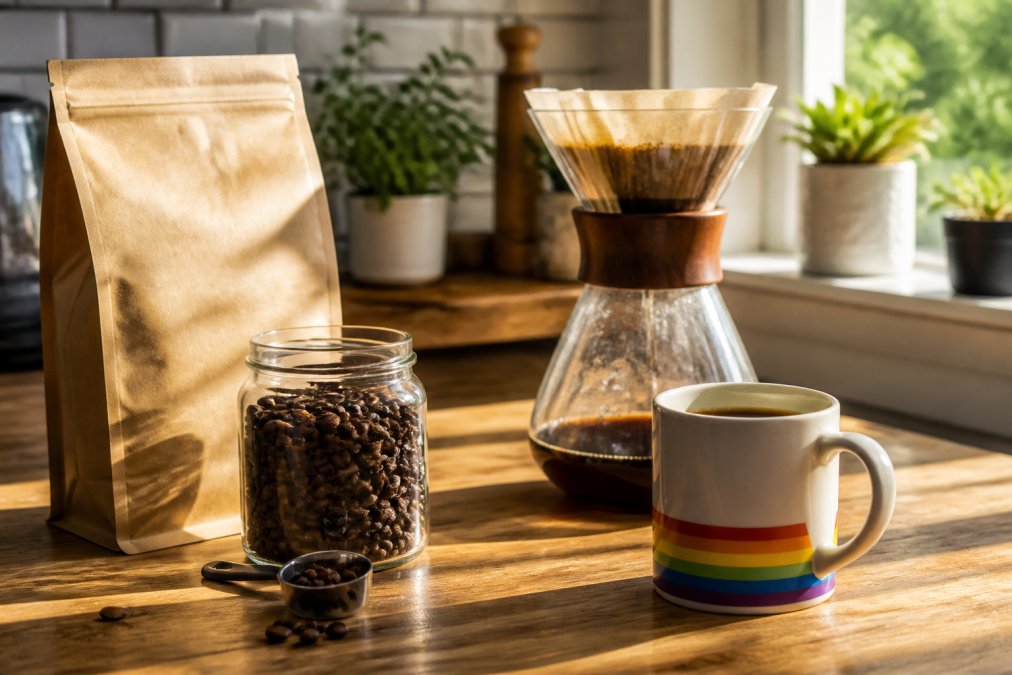
If you're the kind of person who wants to taste before committing, the sample flights solve that problem directly.
Single Origins, Sample Packs, and Gift Options
The Single Origin Favorites Sample Pack at $24.99 covers six regions in 2 oz pouches, from Brazil Santos to Tanzania, giving you roughly 25 to 35 cups to find your daily roast. The Best Sellers Coffee Tasting Flight at $24.99 takes a different angle, packing six of the most-loved house roasts including the 6 Bean Blend dark roast and the Breakfast Blend medium.


Tea drinkers aren't left out. The Artisan Whole Leaf Tea Tasting Flight at $22.56 runs eight whole-leaf varieties across white, oolong, black, and aged pu-erh, and each sachet re-steeps two to three times.
For a gift where you'd rather let someone choose, the LGBrewTeaQ Gift Cards start at $25.00 and redeem against anything in the store except other gift cards.

How to Choose the Right Subscription for Your Brewing Style
The right subscription matches your brewing method first, then your drinking volume. Buying a light-roast Ethiopian for a drip machine with a coarse grind wastes the florals you paid for; buying a heavy Sumatran for a delicate pour-over buries them.
Use this to narrow it down:
| Your Setup | Best Roast Match | Why |
|---|---|---|
| Drip coffee maker | Colombia | Balanced, forgiving of coarse grind |
| Pour-over (V60, Chemex) | Ethiopia, Kenya | Floral and citrus notes stay intact |
| French press | Sumatra | Heavy body and oils shine through |
| Espresso machine | Sumatra | Dense crema, cuts through milk |
| Cold brew | Sumatra | Low bitterness, smooth concentrate |
Start with a sample flight if you're unsure, then move to a recurring subscription once you've found the roast you reach for every morning.
Subscription Flexibility, Shipping, and What to Expect
Flexibility is where subscriptions earn or lose trust. Confirm three things before you commit: how often deliveries arrive, whether you can pause without losing your rate, and whether swapping a roast mid-cycle costs extra.
A common approach is a monthly cadence with the option to skip. That works well if you drink one to two cups a day. If you're brewing for a household, a larger bag or a shorter interval makes more sense than doubling up on shipping.
Conclusion
Finding the best ethical coffee subscription for the LGBTQ community means looking past the flag on the bag and into the sourcing, the ownership, and the subscription terms. Most shoppers stop at the first one.
LGBrewTeaQ keeps all three commitments in view: LGBTQIA+-owned and community-centered, roast-to-order for freshness, and single origins sourced from named farms and cooperatives, plus sample flights, tea selections, and gift cards if you're buying for someone else. Get started with LGBrewTeaQ and taste the difference a fresh roast makes in your morning cup.
Frequently Asked Questions
What makes a coffee subscription ethical?
An ethical coffee subscription combines verified sourcing with fair treatment of farmers and transparent business practices. Look for roasters that name their cooperatives, pay above commodity rates, and roast to order so beans arrive fresh. Ethical subscriptions also support causes the brand actually stands behind, such as LGBTQIA+ community programs, rather than treating inclusion as a one-time marketing campaign. Checking a roaster's sourcing page and ownership details tells you more than a certification logo alone.
Are there coffee roasters specifically owned by LGBTQ+ individuals?
Yes. Several roasters in the specialty coffee space are openly LGBTQIA+-owned, and they range from small-batch operations to full subscription services. LGBrewTeaQ is one example, describing itself as proudly LGBTQIA+-owned and community-centered. When evaluating queer-owned coffee roasters, confirm ownership claims on the brand's about page, check whether the company names its farm partners, and look at whether community support appears in ongoing practices rather than seasonal posts.
How can I verify if a coffee brand is LGBTQ-friendly?
Start with the brand's own materials: an about page that states ownership, staff stories, and community partnerships. Then look for third-party signals such as coverage in LGBTQ media, sponsorships of Pride events, or donations to advocacy organizations. Be cautious of brands that add a rainbow logo in June and remove it in July. A subscription that supports the community year-round, like one from an LGBTQIA+-owned roaster, gives you a clearer, more lasting signal.
Do ethical coffee subscriptions offer fair trade certification?
Some do, but certification is not the only mark of ethical sourcing. Fair trade labels verify minimum prices and labor standards for certified cooperatives. Many specialty roasters instead buy directly from smallholder farms and publish the farm name, elevation, and processing method. That direct-trade approach can deliver more money to growers than certification alone. Ask how to identify ethical coffee sourcing by checking whether the roaster discloses origin details and pays above commodity prices.
What if I do not like the blends in my subscription?
Flexible subscriptions let you pause, skip, or swap selections without long contracts. Before signing up, check the cancellation window and whether you can change roast profiles between shipments. A low-commitment option like the Single Origin Favorites Sample Pack at $24.99 lets you try six regions before committing to recurring deliveries. If a roaster locks you into a fixed term with no swaps, that is a sign the subscription is built around the company's convenience, not yours.