

Best Tea for Meditation: Top Calming Teas for 2026
Table of Contents
- Our Top Picks for the Best Tea for Meditation
- What Makes a Tea Ideal for Meditation?
- Review: Organic Lavender Herbal Tea for Evening Practice
- Review: Hibiscus Rose and Apple Cider Rooibos for Grounding
- Exploring Whole Leaf Teas with the Artisan Tasting Flight
- How to Perform a Tea Meditation Ritual Step by Step
- The Benefits of Tea Meditation for Mind and Body
- What to Avoid: Teas That Disrupt Your Zen Practice
- Frequently Asked Questions
Last Updated: September 9, 2026
Finding the best tea for meditation isn't about picking the trendiest blend; it's about choosing a brew that supports a calm, alert mind without the jitters. At LGBrewTeaQ, we've curated a selection of premium, loose-leaf teas specifically to enhance this ritual, and our guide breaks down the top calming options for 2026.
Below, we'll explore what makes a tea truly meditative, review our top picks for different times of day, and walk you through a step-by-step tea meditation ritual. We'll also cover which teas to avoid and how to manage caffeine for a deeper practice.
Our Top Picks for the Best Tea for Meditation
A truly meditative tea is one that harmonizes with your nervous system. For most practitioners, the best tea for meditation is a high-quality loose leaf that is naturally caffeine-free, as this allows for deep relaxation without interrupting sleep cycles or causing restlessness.
Quick Picks:
- Best for Evening Practice: Organic Lavender Herbal Tea
- Best for Grounding Rituals: Apple Cider Rooibos Herbal Tea
- Best for Sensory Exploration: Artisan Whole Leaf Tea Tasting Flight
- Best for Afternoon Slumps: Hibiscus Rose Herbal Tea
What Makes a Tea Ideal for Meditation?
The perfect meditation tea should promote a state of "alert relaxation", a feeling of being calm and grounded yet fully awake and present. This is achieved by balancing the tea's chemical compounds, particularly the interaction between caffeine and L-theanine.

The Science of L-Theanine and Alert Relaxation
L-theanine, an amino acid found almost exclusively in the Camellia sinensis plant, is the key to this unique state. Unlike the sharp spike and crash of coffee, the caffeine in tea is moderated by L-theanine, which promotes calming brain waves without drowsiness. This synergistic effect creates a smooth, focused energy ideal for sustained attention, making it a cornerstone of any tea for meditation practice.
Here is the deeper mechanism: L-theanine increases the production of alpha brain waves, which are associated with a state of relaxed alertness, the same brainwave pattern observed during deep meditation and creative flow (PubMed). It also influences key neurotransmitters, including GABA, serotonin, and dopamine, which help regulate mood, anxiety, and focus. When caffeine is present, L-theanine modulates its stimulatory effects, reducing the likelihood of jitters and the subsequent crash. This is why a cup of whole-leaf green or white tea often feels fundamentally different from a cup of coffee.
The ratio of L-theanine to caffeine matters significantly. Shade-grown teas like gyokuro or matcha are cultivated to increase their L-theanine content, making them particularly effective for promoting focused calm. In contrast, heavily oxidized teas like some black teas may have lower L-theanine levels relative to caffeine, leading to a less balanced experience.
Caffeine vs. Calm: Managing Your Intake
Managing caffeine is the most critical factor in choosing your meditation tea. For early morning or pre-work meditation, a light oolong or white tea can offer gentle focus. However, for evening practices aimed at winding down, a caffeine-free herbal infusion is almost always the better choice.
For those who are sensitive to caffeine or who practice later in the day, a structured approach is essential. Here is a practical guide for managing your intake:
- Morning or Early Afternoon Practice: If you are meditating before noon, a whole-leaf tea with a balanced L-theanine-to-caffeine profile, such as a white tea or a lightly oxidized oolong, can enhance alertness without anxiety. Steep for 2-3 minutes to control caffeine extraction.
- Late Afternoon or Evening Practice: If your practice is after 2 PM, switch to a naturally caffeine-free herbal tea. Look for blends with adaptogenic herbs like ashwagandha or nervines like lemon balm and passionflower, which support the nervous system without any stimulant effect.
- The Decaf Dilemma: If you crave the flavor of traditional tea but cannot handle caffeine, be cautious with decaffeinated teas. The decaffeination process often strips away some of the aromatic oils and can alter the flavor profile. More importantly, even "decaf" tea retains a small amount of caffeine (typically 2-5 mg per cup), which can be enough to disrupt sleep for highly sensitive individuals (the FDA). For a truly caffeine-free experience, stick with herbal infusions like rooibos, chamomile, or lavender.
Understanding your own body chemistry is the final piece of the puzzle. Some individuals are fast metabolizers of caffeine and can enjoy green tea in the evening without issue, while others should avoid all caffeine after noon. The goal is not to eliminate caffeine entirely but to use it strategically to support your meditation practice.

Review: Organic Lavender Herbal Tea for Evening Practice
Our top pick for evening meditation is the Organic Lavender Herbal Tea, a deeply soothing blend of whole organic French lavender blossoms. As a tea for meditation, it excels because its naturally caffeine-free profile and heady floral aroma are designed to quiet a busy mind. The act of inhaling the lavender's perfume as you sip is a sensory anchor in itself, drawing your attention away from scattered thoughts.
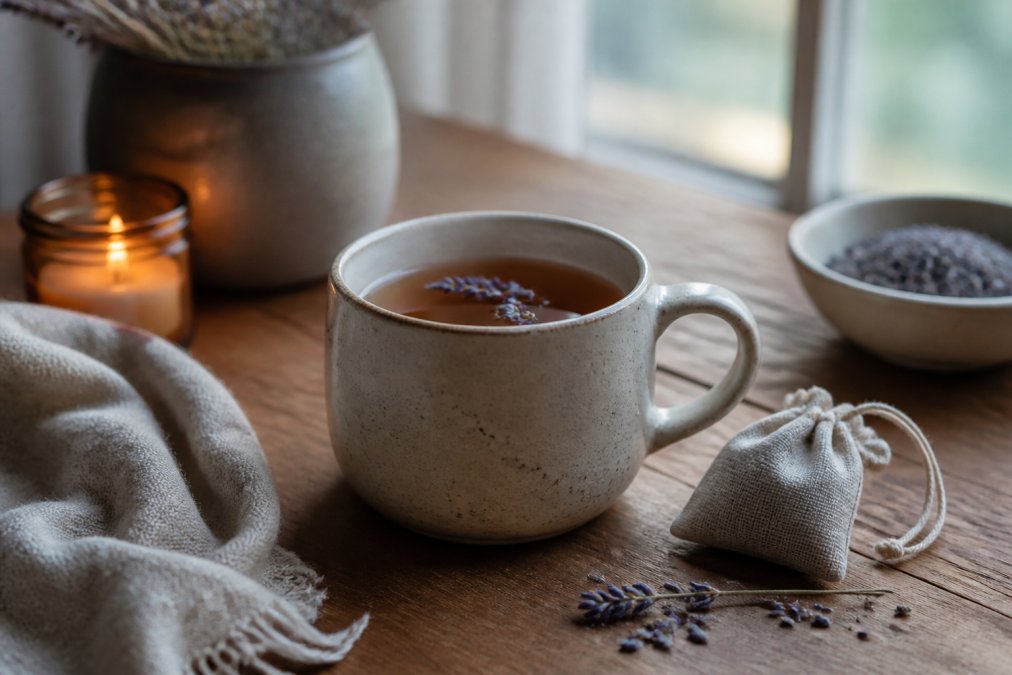
This loose-leaf tea, available in a 2 oz tin for $12.68, steeps into a delicate, honeyed cup with zero bitterness. The recommended ritual of steeping 1 to 2 teaspoons in 205°F water for 5 to 7 minutes in a covered mug is a practice in patience and intentionality, making it the perfect pre-sleep reset.
Review: Hibiscus Rose and Apple Cider Rooibos for Grounding
The Hibiscus Rose Herbal Tea is a vibrant, caffeine-free infusion of hibiscus, rose petals, and chamomile that brews into a stunning crimson cup. Its tart, cranberry-like tang is surprisingly focusing, making it an excellent choice for an afternoon meditation when you need to cut through mental fog without caffeine.
For those seeking deep, comforting warmth, the Apple Cider Rooibos is a superb choice. This blend pairs mineral-rich South African rooibos with cinnamon, cloves, and citrus peel, delivering a naturally sweet and spiced cup. Rooibos is uniquely forgiving due to its low tannin content, meaning it never turns bitter, even if you get lost in your breath and steep it longer than planned. For a tea for meditation focused on grounding and nostalgia, this is a wonderful companion.

Exploring Whole Leaf Teas with the Artisan Tasting Flight
If you prefer the gentle focus of traditional teas, the Artisan Whole Leaf Tea Tasting Flight is a masterclass in mindful tasting. This curated flight contains 8 sachets spanning four foundational styles: white, oolong, black, and aged pu-erh. Each whole-leaf variety unfurls gradually, revealing new flavor layers with every steep, mirroring the process of deepening awareness in meditation.
This flight is an excellent choice for those who want to discover their personal ideal tea for meditation. By exploring the delicate sweetness of white tea or the earthy depth of pu-erh, you can learn how different oxidation levels and terroirs affect your mental state.
How to Perform a Tea Meditation Ritual Step by Step
A tea meditation ritual is the practice of using the entire process of brewing and drinking tea as a focal point for mindfulness. This transforms a simple daily habit into a powerful tool for grounding and presence. Here is a simple ritual to begin your practice:
- Prepare Your Space: Choose a quiet spot and gather your loose-leaf tea, an infuser, and a favorite mug. Silence your phone.
- Heat Your Water: Bring fresh, filtered water to the correct temperature for your tea. Listen to the sound of the water heating.
- Measure and Inhale: Place your tea in the infuser. Inhale deeply and notice the dry aroma of the leaves.
- Pour and Steep: Pour the hot water over the leaves. Watch them unfurl as you set a timer, focusing only on the steeping process.
- Sip with Intention: Once steeped, hold the warm mug in both hands. Take a sip and notice the temperature, the flavor, and the sensation of the liquid. Let each sip bring you back to the present.
The Benefits of Tea Meditation for Mind and Body
The benefits of tea meditation extend far beyond simple relaxation. The primary benefit is the cultivation of focused attention and a meditative state, which can help reduce stress and improve emotional regulation. The ritual's inherent intentionality forces you to slow down and engage with a single task, breaking the cycle of constant multitasking.
Regularly engaging in this practice can also improve your sensory awareness. By paying close attention to the tea's aroma, taste, and warmth, you train your brain to be more present, a skill that carries over into daily life. The benefits of tea meditation also include a structured way to reset your nervous system and return to your tasks with renewed clarity.
What to Avoid: Teas That Disrupt Your Zen Practice
Just as some teas enhance meditation, others can actively disrupt it. The most significant culprit is high-caffeine tea, which can induce anxiety, a racing heart, and a scattered mind. While some practitioners use a small amount of caffeine for alertness, many find that even moderate amounts can interfere with deep relaxation.
Beyond these general guidelines, there is a critical dimension that most tea-for-meditation guides overlook: health interactions and contraindications. A tea that is calming for one person can be actively harmful for another. Here is what you need to know before you brew.
Medication Interactions and Health Conditions
- Blood Pressure Medications: Teas containing licorice root or yohimbe can raise blood pressure and may counteract the effects of antihypertensive drugs. Conversely, hibiscus is known to lower blood pressure; if you are already on medication for hypertension, drinking large amounts of hibiscus tea could cause your blood pressure to drop too low (the NIH). Always monitor your levels and consult your healthcare provider.
- Thyroid Conditions: If you have hypothyroidism and take levothyroxine, avoid consuming green tea or other high-caffeine teas at the same time as your medication. The caffeine and certain compounds in green tea can interfere with the absorption of the drug. A common pattern is to wait at least 1-2 hours after taking thyroid medication before drinking any caffeinated tea. Additionally, some herbal ingredients like lemon balm and passionflower may affect thyroid hormone levels and should be used with caution.
- Sedatives and Anti-Anxiety Medications: Many calming herbs used in meditation teas, such as chamomile, valerian root, and passionflower, have a mild sedative effect. When combined with prescription sedatives or benzodiazepines, they can amplify the effects, leading to excessive drowsiness or impaired motor function. If you are on such medications, treat these herbs with the same respect you would a pharmaceutical.
- Iron Deficiency Anemia: Tannins in black, green, and oolong teas bind to iron and reduce its absorption. If you are anemic or at risk for iron deficiency, avoid drinking caffeinated teas with meals. Herbal teas like rooibos are naturally low in tannins and are a safer choice for supporting your practice without compromising your iron levels.
- Pregnancy and Nursing: Many herbal teas are not recommended during pregnancy. For example, hibiscus is traditionally used to stimulate menstruation and may pose a risk. High doses of chamomile and lavender are also generally advised against. If you are pregnant or nursing, stick to well-studied, pregnancy-safe herbs like ginger or peppermint, and always confirm with your obstetrician.
Botanical Ingredients to Approach with Caution
- Hibiscus: While generally safe, hibiscus is a potent plant. It can interact with diuretics and blood pressure medications, and its high acidity can trigger acid reflux or stomach discomfort in sensitive individuals. If you have a history of kidney stones, note that hibiscus is high in oxalates.
- Licorice Root: Often used for its sweet flavor, licorice root can cause potassium depletion and elevate blood pressure. It is not recommended for anyone with heart conditions, high blood pressure, or who is taking diuretics. If you see licorice root in a blend, treat it as a medicinal ingredient, not a harmless flavoring.
- Yerba Mate: Some practitioners are drawn to yerba mate for its focus-enhancing properties. However, it contains a significant amount of caffeine and may also contain compounds that are carcinogenic when consumed in very large quantities over time. It is not a suitable choice for evening meditation or for those with anxiety disorders.
Frequently Asked Questions
What is the strongest calming tea for meditation?
For a strong calming effect without drowsiness, look for teas with L-theanine, like a high-quality green or white tea. For a completely caffeine-free option that promotes relaxation, herbal infusions like our Organic Lavender Herbal Tea are highly effective. The lavender blossoms signal the nervous system to slow down, making it a powerful choice for evening meditation sessions.
Can drinking tea actually improve your meditation practice?
Yes. The benefits of tea meditation are well documented. Tea provides a focal point for your senses, from the aroma to the warmth of the cup. The L-theanine in true teas promotes a state of alert relaxation, helping you maintain focus without feeling jittery. This sensory awareness anchors you in the present moment, making it easier to settle into a meditative state.
Are there specific teas to avoid before meditating?
You should avoid teas high in caffeine, such as strong black teas or mate, right before meditating, as they can cause restlessness. Also, skip any teas with artificial flavors or added sugars, as these can be distracting. Stick to pure, whole-leaf teas or caffeine-free herbal blends like rooibos to support a calm and focused practice.
What is the best tea for mental clarity during meditation?
For mental clarity, you want a balance of focus and calm. Teas with L-theanine, such as white or light oolong teas, are excellent. They provide a steady, calm focus without the crash associated with coffee. If you prefer no caffeine, our Hibiscus Rose Herbal Tea offers a vibrant, grounding alternative that helps clear the mind through its rich, tart flavor profile.