

Is Siphon Coffee Worth the Effort? An Honest Review
Table of Contents
- The Honest Verdict on Siphon Coffee for Home Brewers
- How Vacuum Brewing Works: The Upper and Lower Chamber
- How to Use a Siphon Coffee Maker: Step-by-Step
- Siphon Coffee vs Pour Over: Which Wins Your Counter?
- Taste, Cost, and Time: What the Cup Actually Delivers
- Choosing the Best Siphon Coffee Maker for Home Use
- Siphon Coffee Maker Cleaning and Maintenance
- Frequently Asked Questions
Last Updated: October 17, 2026
The Honest Verdict on Siphon Coffee for Home Brewers
Siphon coffee is worth the effort for home brewers who want a clean, tea-like cup and enjoy a ritual that takes about ten minutes from setup to cleanup. It is not worth it for anyone who wants coffee in under three minutes with minimal gear.
The method is fussy by design: you grind, heat, stir, watch a vacuum pull the brew down through a filter, then disassemble hot glass parts.
Below, we break down how vacuum brewing works, walk through the steps, compare it to pour over, and give you the numbers on cost and time.
How Vacuum Brewing Works: The Upper and Lower Chamber
A siphon brewer is a two-chamber glass vessel that uses vapor pressure to push water upward and vacuum pressure to pull the brewed coffee back down. The lower chamber holds water.
That mechanism explains every quirk of the method: the brew cannot start until the water climbs, and it cannot finish until the vacuum pulls it back.
The filter matters too. Cloth filters let more oils through for a rounder body; paper filters trap more sediment for the cleanest, most transparent cup. Most brewers ship with one or the other, and the choice changes the taste more than most people expect.
How to Use a Siphon Coffee Maker: Step-by-Step
Using a siphon coffee maker takes roughly eight to twelve minutes total, including setup and cleanup. The process is not hard, but it is unforgiving of skipped steps.
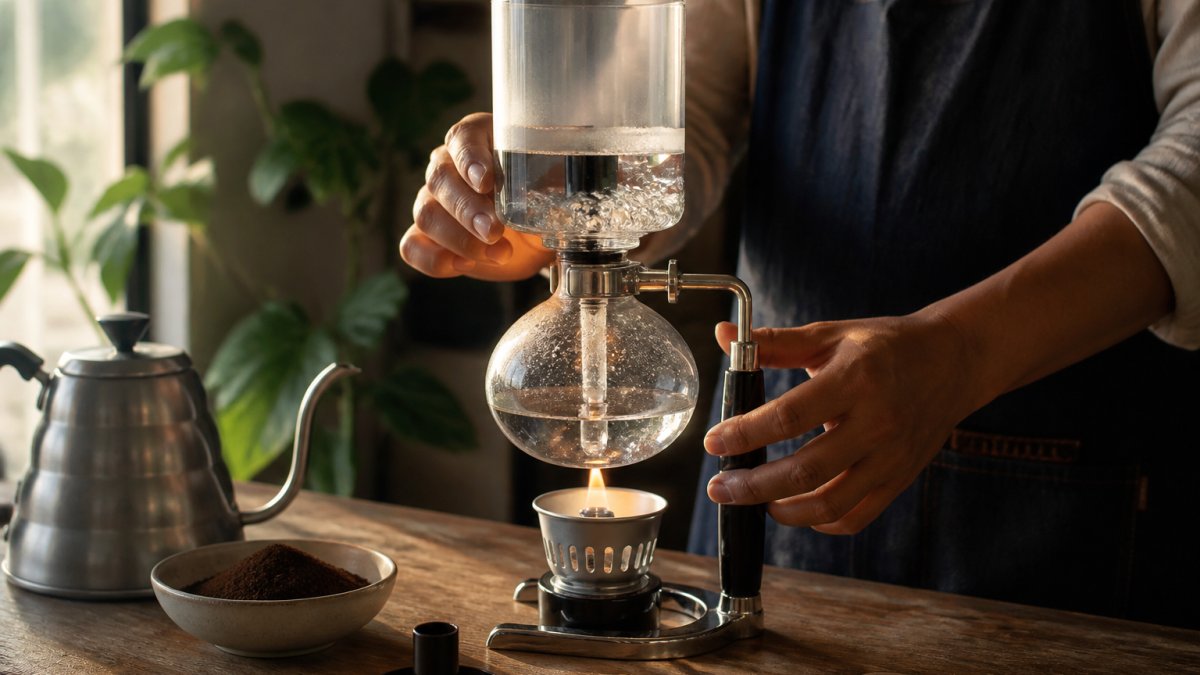
Setting Up Your Station and Heat Source
Start with a level, heat-safe surface and keep the brewer dry. Fill the lower chamber with hot water from a kettle rather than cold, it cuts several minutes off the heat-up. Insert the filter, hook the upper chamber in place, and check that the seal sits flush.
Your heat source shapes the experience. An alcohol burner is cheap and traditional but slow and hard to control. A halogen heater is faster and easier to dial in. Whichever you choose, never leave glass over an open flame unattended.
The Brew: Dose, Grind, Stir, and Drawdown
Use a coffee-to-water ratio of about 1:15 by weight, so roughly 30 grams of coffee to 450 grams of water for a two-cup brew. Grind medium-fine, closer to what you would use for a pour over than a French press. Too fine and the drawdown stalls; too coarse and the cup turns thin and sour.
Once the water has risen into the upper chamber, add the grounds, stir gently to saturate them, and start your timer. Total immersion runs about 60 to 90 seconds; stir once more at the halfway mark, then remove the heat.
Siphon Coffee vs Pour Over: Which Wins Your Counter?
Pour over wins on speed, cost, and repeatability. Siphon coffee wins on cup clarity and the ritual itself. For a home brewer, the decision comes down to minutes, dollars, and how much fuss you will tolerate on a given morning.
A pour over setup costs less, takes about four minutes, and forgives small mistakes. A siphon takes longer, costs more, and punishes impatience, but gives back a softer mouthfeel and a cleaner, more layered cup, especially with light and medium roasts. Our Ethiopia Single Origin Coffee is a good example: its jasmine and bergamot notes come through with unusual clarity in a siphon.

A Practical Time-and-Effort Comparison
Most siphon guides say "about ten minutes" and leave it there, hiding the real work. Here is how the methods break down for a single two-cup brew.
| Method | Setup | Active brewing | Cleanup | Total elapsed | Attention required |
|---|---|---|---|---|---|
| Siphon | 2-3 min (fill, filter, seal check) | 6-8 min (heat, stir, drawdown) | 3-5 min (cool, disassemble, rinse) | 11-16 min | High, you watch the whole brew |
| Pour over | 1 min (rinse filter, heat water) | 3-4 min (bloom, pours) | 1-2 min (dump, rinse) | 5-7 min | Medium, active pouring |
| French press | 1 min (add grounds, water) | 4 min steep + 1 min plunge | 2-3 min (rinse grounds, disassemble) | 7-9 min | Low, mostly waiting |
| Automatic drip | 1 min (load filter, add water) | 0 min active (machine brews) | 1-2 min (toss filter, rinse carafe) | 2-3 min of your time | Very low, walk away |
The siphon's hidden cost is attention, not just clock time. You cannot walk away during the climb or the drawdown, while a pour over lets you step aside between pours and an automatic drip asks almost nothing. If your mornings involve getting kids out the door, that difference matters more than the raw minute count.
Where the Siphon Actually Wins
The siphon is not slower because it is inefficient, it is slower because it does more. The vacuum drawdown filters through a cloth or paper bed under pressure, pulling out sediment for a cup with almost no grit.
If you brew one careful cup on a weekend morning and want the clearest expression of a light roast, the siphon earns its minutes. If you brew two or three cups every weekday and want them fast, a pour over or drip machine serves you better. Most households end up with both.
| Factor | Siphon | Pour Over |
|---|---|---|
| Time per brew | 11-16 minutes total | 5-7 minutes total |
| Startup cost | Higher | Lower |
| Cup clarity | Highest | High |
| Repeatability | Finicky | Forgiving |
| Cleanup | Multi-part | Simple |
| Best for | Weekend brewing | Daily routine |
Taste, Cost, and Time: What the Cup Actually Delivers
The cup is the reason people put up with the fuss. Siphon brewing produces a soft mouthfeel, low sediment, and acidity that reads as bright rather than sharp. Flavor complexity and aroma come through clearly, particularly in lighter roasts. If you mostly drink dark, syrupy coffee, the siphon's strengths will not show up as dramatically.
But taste is only half the decision. The other half is what the method costs in dollars and minutes over a year.
Colombia Single Origin Coffee →
Total Cost of Ownership
Budget for the brewer, filters, and heat source. A two-cup glass siphon brewer typically runs $40-$80 depending on brand and build quality. A halogen heater or butane burner adds $20-$50.
Glass is the real risk. A replacement upper chamber often costs $20-$40, and if the model is discontinued you may be buying a whole new brewer. Add in good beans, a 12-ounce bag of specialty coffee runs $15-$20, and the siphon becomes a hobbyist's method.
Compare that to a pour over: a ceramic dripper costs $15-$30, paper filters run a few cents per brew, and there is no glass to break.
Time and Effort Compared to Other Methods
A drip machine takes two minutes of your attention, a French press four, a pour over five. A siphon takes ten, plus cleanup, and cleanup is where beginners quit. The brewer has to cool before you can disassemble it safely, and every part needs rinsing.
Repeatability and Troubleshooting for Beginners
The siphon is unforgiving, but not unpredictable once you understand the four variables that control the brew: grind, heat, seal, and stirring.
- Grind too fine: the drawdown stalls and the brew turns bitter. Fix: coarsen the grind one step and stir more gently.
- Grind too coarse: the brew drains too fast and tastes thin or sour. Fix: tighten the grind and extend immersion by 15 seconds.
- Heat too low: the water climbs slowly or not at all. Fix: use a hotter starting water temperature and a stronger burner.
- Worn seal: vapor escapes and the vacuum never forms. Fix: replace the gasket at the first sign of stiffness.
- Over-stirring: agitation pushes fines through the filter and clouds the cup. Fix: stir once at the start and once at the halfway mark, no more.
A repeatable starting recipe for a two-cup brew: 30 grams of medium-fine coffee to 450 grams of hot water (about 1:15), 60-90 seconds of immersion, one stir at the start and one at halfway, then remove the heat and let the drawdown finish in 45-60 seconds.
Choosing the Best Siphon Coffee Maker for Home Use
The best siphon coffee maker for home use has a sturdy base, a reliable seal, and replacement parts you can actually buy. Capacity matters more than brand: most models brew two to five cups, and a two-cup brewer is plenty for one person.
Durability and safety deserve real weight. Glass brewers are breakable, and open flame plus hot water raises the stakes.
Accessibility is the angle most reviews skip. The method requires standing, watching, and handling hot glass, which is not realistic for every household.
Siphon Coffee Maker Cleaning and Maintenance
Siphon coffee maker cleaning takes about three to five minutes and should happen after every brew. Let the glass cool, then disassemble and rinse each part in warm water.
Once a week, wash the glass with mild detergent and a soft brush, then rinse thoroughly. Check the gasket for cracks and stiffness, a worn gasket is the most common cause of a failed drawdown. Skip the dishwasher entirely.
The honest challenge with siphon brewing is not the equipment or the technique, it is the patience.
Where LGBrewTeaQ helps is on the bean side. Start with our Colombia Single Origin Coffee for a balanced, silky cup that holds up to the siphon's clarity, or explore the full range and find the roast that fits your morning ritual.

Frequently Asked Questions
Is siphon coffee better than pour-over?
Neither is objectively better, but they suit different priorities. Siphon coffee uses vacuum pressure and full immersion to produce a clean-tasting cup with a soft mouthfeel and clear acidity, similar to a well-made pour-over but often with more flavor complexity. Pour-over is faster, cheaper to start, and easier to repeat on a busy morning. If you want ritual and a delicate cup, siphon earns its place. If you want speed and consistency, pour-over wins.
Does siphon coffee taste different from other brewing methods?
Yes, and the difference is noticeable. The vacuum brewing process pulls the brew through a cloth or paper filter under pressure, which removes most oils and sediment. The result is a clean-tasting cup with high cup clarity, bright acidity, and a lighter body than French press or espresso. Many drinkers describe it as tea-like. Light and medium roasts show the most detail, while very dark roasts can lose some of their heavy body.
How long does it take to brew siphon coffee?
Plan on 8 to 12 minutes from setup to cleanup for a single batch. Heating the water takes 3 to 5 minutes depending on your burner, the immersion and stirring phase runs about 60 to 90 seconds, and drawdown takes another 30 to 60 seconds. Add a few minutes for grinding, filter prep, and washing the glass. It is slower than drip or pour-over, so it fits best on weekends or slow mornings.
Are siphon coffee makers hard to clean?
Cleaning takes about 3 to 5 minutes once you build the habit. Rinse both glass chambers with warm water, discard the filter, and wipe the globe with a soft brush. Avoid dish soap on the glass, since residue can affect flavor. Cloth filters need a boil and a soak in clean water after each use. The main risk is breakage during handling, not the cleaning itself, so wash over a towel or in a padded sink.
What grind size should you use for siphon coffee?
Use a medium-fine grind, close to what you would use for a pour-over or slightly finer. It should feel like fine sand, not powder. Too coarse and the water pulls through too fast, leaving a weak cup. Too fine and the drawdown stalls, which over-extracts and turns the cup bitter. A burr grinder gives you the consistency the method needs, and you can adjust one notch finer or coarser to fix a slow or fast drawdown.