

Queer Coffee Alternatives: Swap Your Brew for Good
Table of Contents
- What Makes a Coffee Brand Queer-Friendly?
- Queer-Owned Coffee Roasters and Inclusive Brands to Support
- The Best Coffee Substitutes for Anxiety: Caffeine-Free Options
- Ethical Coffee Sourcing Practices: What to Look For
- How to Vet a Brand's LGBTQ+ Commitment
- A Quick Guide to Brewing Inclusive Tea at Home
- Which Queer Coffee Alternative Should You Try?
- Conclusion
- Frequently Asked Questions
Last Updated: September 6, 2026
Choosing a queer coffee alternative no longer means picking between a great cup and a great cause. A growing wave of queer-owned roasters and inclusive tea brands prove that ethical sourcing, community support, and exceptional flavor belong in the same bag. This guide from LGBrewTeaQ breaks down what makes a brand queer-friendly, which caffeine-free swaps work best for anxiety, and how to brew a ritual that supports the community.
What Makes a Coffee Brand Queer-Friendly?
A queer-friendly coffee brand goes beyond a rainbow logo during Pride Month. True inclusivity shows up in year-round actions: queer-owned leadership, inclusive hiring, and consistent donations to LGBTQ+ advocacy groups, plus safe space culture through community events or local queer partnerships.
The most credible signals are structural: queer-led co-ops, transparent non-profit partnerships, and a public track record of social justice commitments that predate June. Brands that treat the LGBTQ+ community as a year-round audience earn genuine trust.
Queer coffee alternatives are not just about who roasts the beans. They are about the ecosystem around the cup, from who picks the coffee to who profits from the sale.
Queer-Owned Coffee Roasters and Inclusive Brands to Support
Supporting queer-owned roasters is one of the most direct ways to put your dollars behind the community. These businesses prioritize ethical sourcing and community engagement as core values, not afterthoughts.
LGBrewTeaQ offers a curated selection of freshly roasted coffee and premium teas, roasted for the LGBTQIA+ community (and everyone else), and delivered directly to your door. Our collection features a variety of blends, single-origin beans, espressos, flavored coffees, and specialty teas designed to elevate your daily brewing ritual. We also provide a range of both branded and unbranded merchandise, including apparel and mugs, alongside essential coffee machines and supplies to complete your experience.
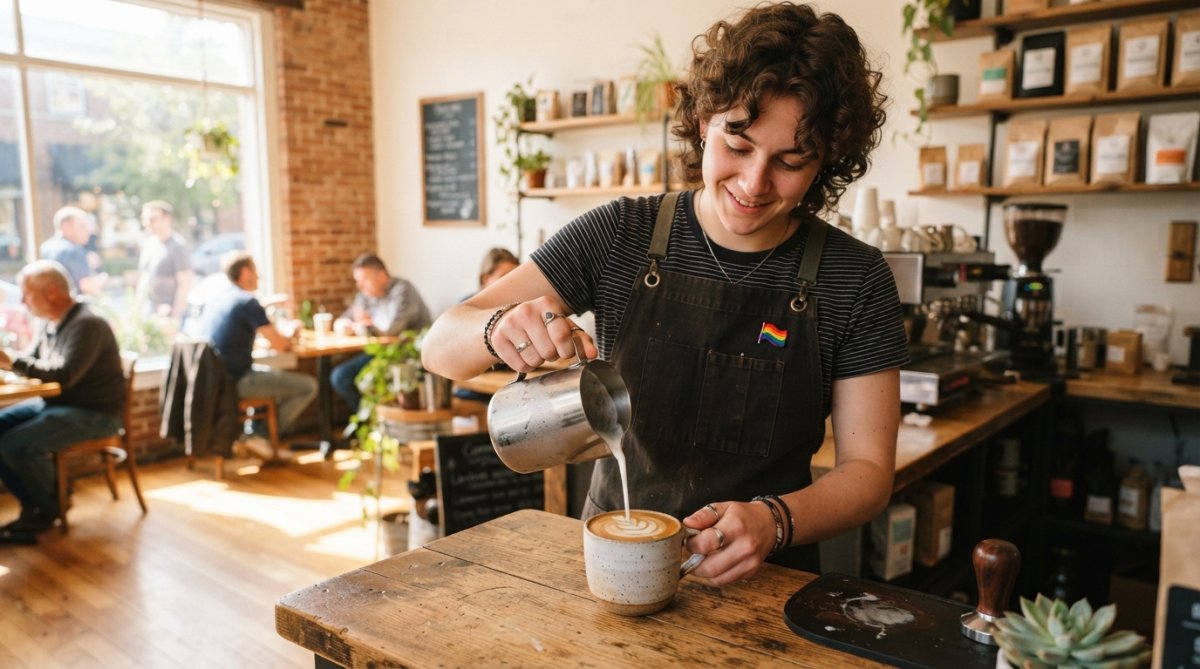
Beyond dedicated queer brands, look for roasteries that demonstrate allyship through inclusive spaces and visible support. The key is verifying that their commitment is substantive rather than symbolic.
The Best Coffee Substitutes for Anxiety: Caffeine-Free Options
For those sensitive to caffeine, the best coffee substitutes for anxiety are herbal blends and roasted grain drinks that mimic coffee's warmth without the jitter. Caffeine can amplify anxious feelings, so swapping your morning brew for a calming, caffeine-free alternative can make a measurable difference (the NIH).
Popular choices include adaptogen blends, chicory root "coffee," and ceremonial-grade matcha, which contains L-theanine for a calm focus. Herbal infusions like chamomile, lavender, and passionflower are classic go-tos for nervous system support.

LGBrewTeaQ's Calm & Relax loose leaf tea combines chamomile, lavender, and passionflower in a caffeine-free formula designed for evening unwinding. For a more vibrant option, their Hibiscus Rose blend offers a tart, fruity caffeine-free cup that works hot or iced. The Moroccan Mint green tea provides a gentler caffeine lift than coffee, with the refreshing payoff of cool mint.
| Alternative | Caffeine Level | Best For | Price |
|---|---|---|---|
| Hibiscus Rose Herbal Tea | Caffeine-free | Fruity, vibrant anytime sipping | $18.67 |
| Calm & Relax Herbal Blend | Caffeine-free | Evening relaxation and sleep support | $12.67 |
| Matcha | Moderate | Calm, focused energy for rituals | $22.99 |
| Hojicha | Low | Toasted, comforting notes with mild lift | $22.99 |
Ethical Coffee Sourcing Practices: What to Look For
Ethical sourcing in specialty coffee is rarely a single certification; it is a chain of decisions from farm gate to grinder. For a queer coffee alternative to be truly ethical, sourcing must align with the equity and transparency that define inclusive spaces. Here is a framework to evaluate any roaster.
Start with the price paid at origin. The commodity 'C' market price has historically hovered around $1.50 to $2.00 per pound; direct trade often pays two to four times that, but the term is unregulated (fao.org). Ask what premium they pay above the Fair Trade minimum. A roaster that names a specific farm or co-op and states the premium per pound shows a transparency generic 'ethically sourced' labels cannot match.
Trace the supply chain for labor practices. Look for roasters who can speak to working conditions on the farms they buy from, including wages, healthcare, childcare, and safe housing. Many progressive roasters publish annual impact reports detailing sourcing relationships. If a brand cannot tell you who picked the beans, they likely do not know if workers were treated fairly.
Connect sourcing to community investment. The most compelling models reinvest in the origin community, whether by funding a local school, supporting women-led farming cooperatives, or financing water access. For a queer-focused brand, this extends to supporting LGBTQ+ rights in coffee-growing regions, where legal protections are often weaker than in the U.S.
Look for the 'queer lens' on sustainability. Climate change disproportionately impacts smallholder coffee farmers in fragile ecosystems. A brand prioritizing shade-grown coffee, regenerative agriculture, or carbon-neutral shipping acknowledges that environmental justice is queer justice, a core concern for many LGBTQ+ advocacy groups.
When you find a roaster that meets these criteria, you are funding a model of commerce that treats every person in the supply chain with dignity, from the queer farmer in Central America to the queer barista in your neighborhood.
How to Vet a Brand's LGBTQ+ Commitment
Vetting a brand's LGBTQ+ commitment requires looking past marketing. A common mistake is accepting a Pride Month promotion as proof of support. Instead, ask direct questions.
First, check if the brand is actually queer-owned or queer-led. Second, look for year-round charitable giving with a stated percentage or donation structure. Third, review inclusive hiring policies and whether workplace culture reflects public messaging. Finally, see if they create physical or digital safe spaces, such as community meetups or resource sharing.
A Quick Guide to Brewing Inclusive Tea at Home
Brewing inclusive tea at home is about creating a ritual that centers your wellbeing and values. Start with quality loose leaf tea, which offers better flavor and more steeps than most bags.
For green tea like jasmine or Moroccan mint, use water around 175°F and steep for two to three minutes. Black teas like Earl Grey or Masala Chai handle boiling water and a longer steep of three to five minutes. Herbal infusions are forgiving, so a five to seven minute steep in just-boiled water works well.
A home ritual is also a chance to slow down. Measuring leaves, heating water, and waiting for the steep can be a meditative pause in a busy day.
Which Queer Coffee Alternative Should You Try?
Choosing the right queer coffee alternative is about matching the option to your specific needs. The search often splits between finding a queer-owned coffee brand or a caffeine-free substitute. This framework is based on your caffeine sensitivity, flavor profile, and the level of community support you want to fund.
Step 1: Assess your caffeine tolerance. If you experience anxiety, jitters, or disrupted sleep after a standard cup, you likely have high sensitivity. An 8-ounce cup of brewed coffee contains roughly 95 milligrams of caffeine; hojicha contains about 20, and rooibos contains zero (the FDA). For moderate tolerance, a matcha latte provides 60-70 milligrams per serving.
Step 2: Define your ritual. If you miss coffee's warm, bitter, roasted flavor, a chicory or dandelion root 'coffee' is your closest match. If you miss the creamy texture of a latte, ceremonial-grade matcha whisked with oat milk delivers that mouthfeel. If you crave the meditative act of brewing, loose leaf teas offer a multi-step ritual as satisfying as a pour-over.
Step 3: Decide where your dollars go. If your primary goal is to support queer-owned businesses, prioritize explicitly queer-led brands. If you want a caffeine-free alternative that also supports the community, look for brands that partner with LGBTQ+ non-profits or donate a percentage of proceeds year-round. A useful question: does the donation structure support direct services (like homeless youth shelters) or advocacy (like legal defense funds)? Both are valid but serve different needs.
Step 4: Match the option to the time of day. For a morning replacement that still provides alertness, consider a low-caffeine option like hojicha or genmaicha. For an afternoon slump without the crash, yerba mate or white tea offers a gentle lift. For the evening, a rooibos or honeybush blend provides a naturally sweet, caffeine-free finish.
| Scenario | Recommended Alternative | Caffeine Level | Why It Works |
|---|---|---|---|
| Morning ritual replacement | Chicory root 'coffee' | Caffeine-free | Mimics coffee's roasted bitterness |
| Mid-morning focus | Ceremonial matcha | Moderate | L-theanine provides calm alertness |
| Afternoon slump | Hojicha | Low | Toasty flavor, minimal caffeine |
| Evening wind-down | Rooibos or chamomile blend | Caffeine-free | Supports sleep and relaxation |
| Social latte moment | Adaptogen mushroom latte mix | Caffeine-free | Creamy texture with functional benefits |
Step 5: Use the 'vibe check' framework. Beyond the product, evaluate the brand's community presence. Does the company host events, sponsor queer sports leagues, or create digital spaces for connection? A brand that actively cultivates community offers more than a beverage; it offers a sense of belonging that separates a transactional purchase from a meaningful one.
The right choice is the one that feels sustainable for your body and budget. There is no single 'correct' queer coffee alternative; the best option is the one you will actually brew consistently, supports the causes you care about, and makes you feel good from the first sip to the last.
Conclusion
Finding queer coffee alternatives that align with your values is simpler than it used to be. Whether you choose a queer-owned roastery, a caffeine-free herbal blend for anxiety, or a brand with transparent ethical sourcing, every purchase is a vote for the coffee culture you want to see.
At LGBrewTeaQ, we are proud to offer freshly roasted coffee and premium teas with a simple ordering process and fast, reliable delivery. Our carefully sourced beans and roasted-to-order approach are designed to inspire better mornings and unforgettable moments. Get started with LGBrewTeaQ and shop coffee that supports the community with every sip.
Frequently Asked Questions
What makes a coffee or tea brand 'queer-owned'?
A queer-owned brand has at least 51% of its ownership, control, and management held by individuals who identify as LGBTQ+. Many of these brands also prioritize inclusive hiring practices and partner with non-profit organizations that support the community. This commitment often extends beyond a rainbow logo on the bag, showing up in company culture, community-led initiatives, and year-round charitable giving.
What is the best coffee substitute for anxiety?
If you are sensitive to caffeine, herbal teas like chamomile, lavender, or a blend like Calm & Relax are strong options. For a coffee-like ritual with less caffeine, try matcha or hojicha, which contain L-theanine. To avoid caffeine entirely, look for rooibos, hibiscus, or lemon ginger blends that offer a warm, comforting cup.
How do I find ethical coffee sourcing practices and queer-friendly roasters?
Look for roasters that publish their supply chain transparency and discuss their direct trade or fair trade partnerships. You can search directories like Queer Coffee to find verified brands. LGBrewTeaQ offers carefully sourced beans from trusted farms, ensuring the beans you buy support both farmers and the LGBTQ+ community.
Can I brew loose leaf tea without buying new equipment?
Yes. You do not need a fancy setup. A simple mesh tea ball or a disposable paper filter works fine. Use about one teaspoon of loose leaf tea per eight ounces of water. For green teas like jasmine, use water around 175°F to avoid bitterness. Black teas like Earl Grey can handle a full boil. Steep for three to five minutes, and you are ready to pour.