

The Complete Guide to Specialty Coffee Grading
Last Updated: October 26, 2026
Quick Summary
Specialty coffee grading is a standardized system for evaluating and classifying coffee beans by sensory quality, physical characteristics, and defect count. The Specialty Coffee Association defines specialty grade coffee as beans scoring 80 points or higher on a 100-point scale, with trained Q Graders assessing aroma, flavor, body, acidity, and defects using a standardized cupping protocol.
- The SCA 100-point scale divides into five quality tiers: Outstanding (90-100), Excellent (85-89.99), Very Good (80-84.99), and commercial grade below 80.
- A maximum of 5 full defects per 300g sample of green coffee is allowed, with primary defects counting as one full defect and two secondary defects equaling one full defect.
- Q Graders complete rigorous Specialty Coffee Association training including sensory training, standardized cupping protocol, and blind tastings to ensure consistent scoring across the global supply chain.
- Processing methods like washed, natural, and honey process significantly influence final scores and flavor profiles, with the same origin potentially scoring differently based on processing approach.
- Bean density, screen size, and moisture content at 10-12% are critical physical characteristics evaluated during grading that influence how coffee roasts and develops flavor.
Table of Contents
- What Is Specialty Coffee Grading
- The SCA Coffee Scoring System Explained
- Understanding Coffee Bean Defect Count
- The Q-Grader Certification Process
- Green Coffee Grading Criteria and Standards
- Sensory Analysis and Cupping Protocol
- Specialty vs. Commercial Grade Coffee
- Start Your Specialty Coffee Journey
- Frequently Asked Questions
What Is Specialty Coffee Grading
Specialty coffee grading is a standardized system for evaluating and classifying coffee beans by sensory quality, physical characteristics, and defect count. Unlike commercial-grade coffee, which prioritizes volume and consistency, specialty coffee emphasizes flavor complexity, origin character, and traceability.
The Specialty Coffee Association's official standards define specialty grade coffee as beans that score 80 points or higher on a standardized 100-point scale. This threshold represents a meaningful divide in the coffee world.
The grading process evaluates appearance, aroma, flavor across different notes, and defects that would compromise the final cup.
The SCA Coffee Scoring System Explained
How the 100-Point Scale Works
The Specialty Coffee Association's 100-point scale is the industry standard for evaluating coffee quality. It breaks into specific categories: aroma, flavor, aftertaste, acidity, body, balance, uniformity, clean cup, sweetness, and overall impression. Each category receives a score, and those combine into the final rating.
The scoring system uses a cupping protocol, a standardized tasting method where coffee is brewed under identical conditions and evaluated by multiple people to ensure consistency. The Coffee Quality™ Method provides comprehensive sensory assessment including quality ratings and just-about-right metrics, which means a score of 85 from one Q Grader should align closely with an 85 from another Q Grader tasting the same coffee.
A score of 88 signals excellent balance, clear origin character, and minimal flaws; an 82 indicates a solid coffee with minor inconsistencies or less complex flavor development. The difference matters for roasters choosing lots and for consumers who want to understand what they're paying for.
Quality Tiers: Outstanding to Very Good
The 100-point scale divides into five quality tiers. Outstanding coffee is graded 90-100 points, representing the highest expression of a coffee's potential. These are the coffees that win competitions, command premium prices, and inspire passionate conversations among enthusiasts. They're rare because achieving that level requires everything to align: exceptional terroir, ideal growing conditions, meticulous harvesting, careful processing, proper storage, and skilled roasting.
Excellent coffee scores 85-89.99 points, the sweet spot for most specialty drinkers: complex flavor, clean cups, and memorable sensory experiences without the extreme premium of the 90+ category.
Below 80 points, coffee is commercial grade, prioritizing consistency, shelf stability, and cost efficiency. Commercial-grade coffee serves a purpose, but it's not what specialty roasters like LGBrewTeaQ focus on. We work exclusively with coffees that score 80 or higher, because that's where the flavor story begins.
Understanding Coffee Bean Defect Count
Primary vs. Secondary Defects
Defects are physical flaws in coffee beans that affect cup quality. The grading standard allows a maximum of 5 full defects per 300g sample of green coffee.
Primary defects are serious flaws: black, sour, mold-damaged, or severely insect-damaged beans. A single primary defect counts as one full defect.
Defects reveal what happened during harvest, processing, and storage. A high defect count suggests supply chain problems: careless cherry sorting, or beans sitting too long in humid conditions. When you buy specialty-grade coffee, you're buying beans that passed this scrutiny.
The Q-Grader Certification Process
Q Graders are the people who actually assign scores to coffee.
Q Graders learn to identify flavor compounds, recognize defects, and evaluate coffee through blind tastings, preventing bias from influencing scores. The training emphasizes standardization: every Q Grader should score a given coffee similarly, regardless of location or personal preference.
The certification means scores come from trained professionals using a shared vocabulary and methodology.
Green Coffee Grading Criteria and Standards
Bean Density, Screen Size, and Moisture Content
Specialty coffee grading evaluates physical characteristics that influence how coffee roasts and tastes.
Screen size refers to the bean's physical dimensions. Coffee is sorted through screens with different hole sizes, and larger beans (typically screen size 16 and above) are preferred in specialty coffee because they roast more evenly.
Moisture content is critical for storage and roasting. Green coffee is typically stored at 10-12% moisture to prevent mold and insect damage while maintaining bean integrity. Too dry and beans become brittle; too wet and they risk fermentation or mold.
How Processing Methods Influence Grading
Processing after harvest profoundly affects final score and flavor. Washed coffees, where fruit is removed mechanically and beans are fermented and dried, typically show cleaner, more acidic profiles with pronounced origin character.
Single Origin Favorites Sample Pack →
A coffee processed one way might score 84, while the same origin processed differently could score 87. Neither score is "wrong"; they reflect different flavor expressions of the same terroir.
Processing also introduces variables that affect defect counts. Washed coffees require careful fermentation management to avoid sour flavors and defects. Natural-process coffees need proper drying to prevent mold and off-flavors.
Sensory Analysis and Cupping Protocol
Sensory analysis is how specialty coffee quality ultimately gets defined, and the cupping protocol is the standardized method.
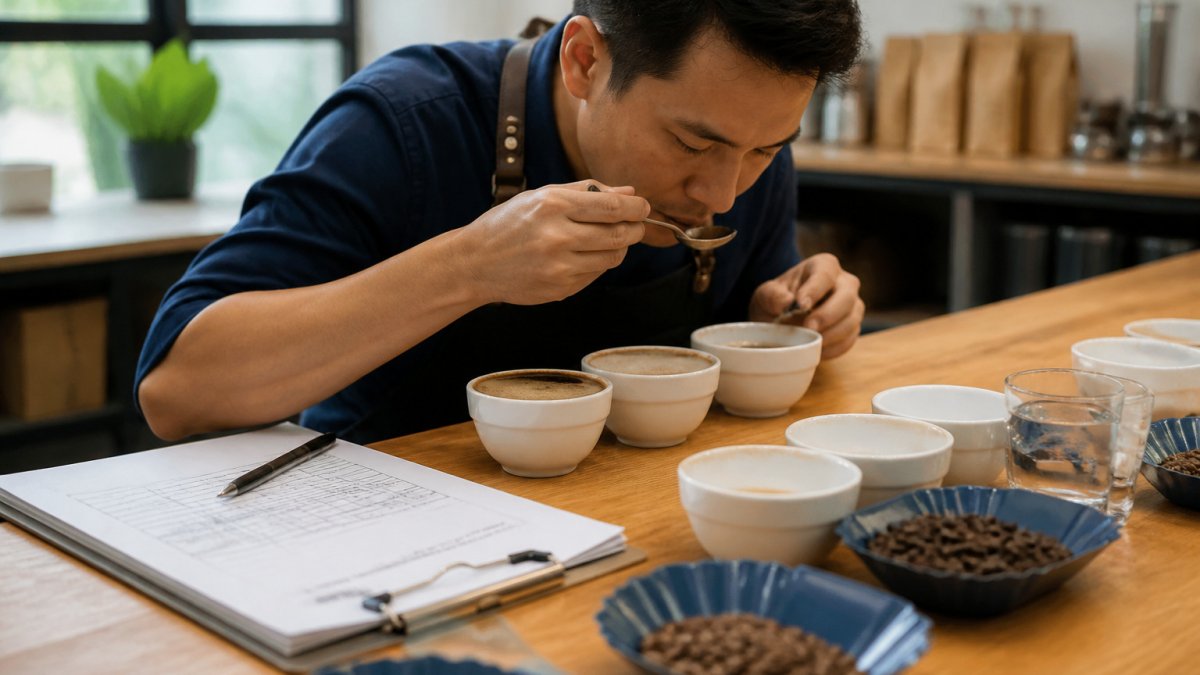
Research from the Journal of Agricultural and Applied Economics analyzed how material and symbolic quality attributes affect specialty coffee scores and market prices, showing that sensory evaluation directly predicts market value.
The cupping protocol also evaluates clean cup (absence of off-flavors or defects) and uniformity (consistency across cups in a batch).
Flavor Profile, Acidity, Body, and Balance
Flavor profile describes the specific tasting notes in a coffee. One might display chocolate, stone fruit, and floral notes; another berry, caramel, and spice.
Acidity in coffee isn't about pH or sourness; it's the brightness, liveliness, and complexity that makes a coffee feel vibrant.
Body refers to weight and mouthfeel: a full-bodied coffee feels heavier and more viscous, a light-bodied one clean and delicate.
Balance is how all these elements work together. You can explore how single origin flavor profiles vary by region to understand how these sensory elements differ across coffee-growing regions.
Specialty vs. Commercial Grade Coffee
The difference between specialty and commercial grade coffee goes beyond a single point on the scale. For deeper understanding of what distinguishes specialty coffee beyond grading, explore what makes specialty coffee ethically sourced. It reflects fundamentally different supply chain approaches. Specialty coffee prioritizes traceability, knowing exactly which farm or cooperative produced the beans.
For deeper understanding of what distinguishes specialty coffee beyond grading, explore what makes specialty coffee ethically sourced, and learn whether specialty coffee is worth the extra cost.
Start Your Specialty Coffee Journey
Understanding specialty coffee grading transforms how you approach coffee purchasing. You now know what the 100-point scale measures, why defect counts matter, and how processing methods influence flavor. The next step is experiencing specialty coffee directly.
The Single Origin Favorites Sample Pack from LGBrewTeaQ gives you six world-class coffees in 2 oz portions, enough for multiple brews of each. You'll experience how a natural-process Ethiopian expresses floral complexity differently than a washed Colombian, and how high-altitude beans develop more acidity and complexity than lower-altitude coffees. Each roast is roasted to order for maximum freshness, so you're tasting coffee at its peak.
As you explore, you'll develop your own preferences within the specialty coffee landscape. Some gravitate toward bright, acidic coffees; others prefer full-bodied, sweet cups. The grading standards give you a shared language to discuss these preferences with other enthusiasts and roasters.
| Grading Tier | Point Range | Characteristics | Best For |
|---|---|---|---|
| Outstanding | 90-100 | Exceptional complexity, rare origin character, competition-quality | Enthusiasts seeking the best |
| Excellent | 85-89.99 | Complex flavor, clean cup, distinctive origin | Daily specialty coffee drinkers |
| Very Good | 80-84.99 | Clear merit, origin character, quality consistency | Those exploring specialty coffee |
| Good | Below 80 | Consistent, shelf-stable, cost-focused | Commercial/bulk applications |
Frequently Asked Questions
What is the difference between specialty grade and commercial grade coffee?
Specialty coffee must score at least 80 points on the SCA 100-point scale and contain a maximum of 5 full defects per 300g sample. Commercial grade coffee scores below 80 points and allows significantly more defects. Specialty grade beans are evaluated for clean cup, sweetness, acidity, body, balance, flavor profile, and aftertaste. Commercial coffee prioritizes volume and cost over sensory complexity, making specialty coffee the choice for home baristas and coffee enthusiasts seeking distinct flavor characteristics and superior quality control.
How does the SCA scoring system work for coffee?
The Specialty Coffee Association uses a 100-point scale to evaluate green and roasted coffee across multiple sensory attributes. Scores of 90-100 are outstanding, 85-89.99 are excellent, and 80-84.99 are very good (the minimum for specialty classification). Q Graders assess factors like aroma, flavor, acidity, body, balance, uniformity, clean cup, sweetness, and defects. The cupping protocol involves standardized brewing, sensory analysis, and documented scoring to ensure unbiased evaluation. This system creates supply chain transparency and helps buyers identify high-quality lots that command premium market prices.
What are the primary defects looked for in coffee grading?
Primary defects include insect damage, fungal damage, and large physical defects like broken or discolored beans that significantly impact cup quality. Each primary defect counts as one full defect toward the maximum of 5 allowed in a 300g specialty coffee sample. Secondary defects are minor issues like small stones, sticks, or light discoloration. The coffee bean defect count directly determines whether a lot qualifies as specialty grade. Q Graders physically inspect samples under standardized conditions, counting and classifying defects to ensure only the cleanest, highest-quality beans reach specialty classification and your cup.
What does a Q-Grader do?
A Q-Grader is a certified professional trained by the Specialty Coffee Association to evaluate coffee quality using standardized protocols. The Q-Grader certification process requires extensive training in sensory science, green coffee grading, roasted coffee evaluation, and cupping methodology. Q Graders conduct blind tastings, score coffee on the 100-point scale, assess defect counts, and provide unbiased quality assessments that buyers and roasters rely on for purchasing decisions. Their expertise ensures that specialty coffee meets consistent standards across regions and harvest seasons, maintaining the integrity of the specialty coffee supply chain.
How does moisture content affect specialty coffee grading?
Moisture content is a critical green coffee grading criterion that affects bean stability, roasting potential, and shelf life. Specialty coffee typically contains 10-12% moisture by weight, which preserves the bean's structural integrity and allows for consistent roasting. Beans with too much moisture risk mold and fermentation; too little moisture become brittle and prone to cracking. Q Graders measure moisture content during green coffee evaluation because it directly influences how the bean will roast and develop flavor. Proper moisture content ensures that specialty-grade beans deliver the complex, balanced flavor profiles that define specialty coffee quality.
Why is bean size and density important in coffee grading?
Bean size (measured by screen size) and density affect roasting uniformity and flavor development. Denser beans roast more slowly and evenly, producing more consistent flavor extraction. Specialty coffee grading evaluates screen size to ensure beans are large enough to develop complex flavors during roasting. Higher-altitude coffees tend to have greater density and smaller bean size, concentrating sugars and creating more complex sensory profiles. Roasters use bean density and size information to dial in roast profiles that highlight each coffee's unique terroir and tasting notes. This standardized classification ensures that specialty coffee delivers the balanced, clean cup quality that defines the specialty grade.
How does processing method impact specialty coffee grading?
Processing method (washed, natural, or honey) directly influences the final flavor profile, defect risk, and grading outcome. Washed coffees typically score higher for clean cup and uniformity because water fermentation removes mucilage consistently. Natural-processed coffees develop fruity, complex flavors but carry higher defect risk if dried improperly. Honey-processed coffees balance clean cup with fruit-forward sweetness. Q Graders evaluate each processing method against its own sensory standards, recognizing that terroir, altitude, and post-harvest handling all shape how a coffee's origin character emerges in the cup. Understanding these variables helps buyers select specialty coffee that matches their flavor preferences and brewing method.
