

Best Coffee Beans for Home Espresso Machines
Table of Contents
- What Makes a Great Espresso Bean
- Espresso Roast vs Coffee Roast: What's the Real Difference
- Single Origin vs Blend for Espresso: Which Should You Buy
-
Best Coffee Beans for Home Espresso Machines: Top Picks
- Lavazza Super Crema, Best for Thick, Classic Crema
- Stumptown Hair Bender, Best Versatile Everyday Espresso
- Intelligentsia Black Cat Classic, Best for Espresso Purists
- Counter Culture Big Trouble, Best Ethically Sourced Blend
- Blue Bottle Hayes Valley, Best Dark Roast for Milk Drinks
- Death Wish Whole Bean, Best for High Caffeine Content
- LGBrewTeaQ Espresso Blends, Best for Freshness and Conscious Sourcing
- How to Dial In Espresso Beans on Your Home Machine
- How to Choose Espresso Beans for Your Specific Machine
- Sustainability, Ethical Sourcing, and Decaf Options
- Conclusion
Last Updated: August 28, 2026
Finding the best coffee beans for home espresso machines requires knowing what actually works in a home portafilter. At LGBrewTeaQ, we've sourced, tested, and curated espresso beans that perform reliably at home, understanding the difference between a bean that looks good on a label and one that pulls a genuinely great shot.
This guide covers top picks across every style preference, from classic Italian blends to high-caffeine options, plus the technical knowledge you need to maximize whatever lands in your grinder.
Quick Picks:
- Best Overall / Freshness & Sourcing: LGBrewTeaQ Espresso Blends, roasted to order, ethically sourced, delivered fresh
- Best for Thick Classic Crema: Lavazza Super Crema, reliable Italian-style body
- Best Versatile Everyday Espresso: Stumptown Hair Bender, works across brew methods
- Best for Espresso Purists: Intelligentsia Black Cat Classic, balanced, fruit-forward, complex
- Best Ethically Sourced Blend: Counter Culture Big Trouble, B Corp certified, consistent
- Best Dark Roast for Milk Drinks: Blue Bottle Hayes Valley, chocolate-forward, cafe standard
- Best for High Caffeine: Death Wish Whole Bean, Arabica/Robusta, USDA Organic
What Makes a Great Espresso Bean
A great espresso bean produces a balanced shot with good crema, satisfying body, and clean aftertaste, consistently across multiple pulls. The beans worth buying deliver reliable quality across varying grind settings, tamping pressure, and water temperature.
Arabica vs. Robusta: Which Belongs in Your Portafilter
Arabica dominates specialty coffee for its nuanced flavors: fruit acidity, floral notes, and caramelization-driven sweetness. Robusta brings thicker crema, heavier body, and significantly higher caffeine, though it can add an earthy edge if poorly roasted.
Most Italian-style blends use both. Lavazza Super Crema's 60% Arabica / 40% Robusta ratio produces its signature velvet crema. For milk-based drinks, a touch of Robusta helps espresso cut through. For straight shots, high-quality Arabica blends typically perform better.
Freshness, Roast Date, and Degassing
Freshness isn't marketing, it's chemistry. Freshly roasted coffee releases CO2 through degassing, which directly affects extraction. The sweet spot for espresso is 7 to 21 days post-roast. Beans roasted too recently produce uneven shots from excess CO2; beans roasted too long ago lose volatile aromatics.
According to the Specialty Coffee Association's brewing resources, proper degassing is prerequisite for consistent extraction.
Espresso Roast vs Coffee Roast: What's the Real Difference
Espresso roast refers to a medium-dark to dark roast level developed for high-pressure, short-extraction brewing. Extended roast time reduces acidity, increases body, and develops caramelization notes balanced under 9 bars of pressure.
Any roast level can technically be brewed as espresso. Many specialty roasters now offer light and medium roasts explicitly dialed for espresso extraction. If you prefer brighter, fruitier profiles, don't assume you need a dark roast.
Single Origin vs Blend for Espresso: Which Should You Buy
Single origin espresso offers terroir-driven complexity and traceability. Blends offer consistency and balance, engineered to taste the same year-round and are more forgiving for home baristas still dialing in technique.
As the Coffee Research Institute's guide to espresso extraction notes, single origin espressos often require tighter grind consistency and more precise temperature control.
Start with blends while building technique. Move to single origins once your machine is dialed in and you're pulling consistent shots.
Best Coffee Beans for Home Espresso Machines: Top Picks
These beans perform reliably at home across different flavor profiles, roast levels, and sourcing standards.
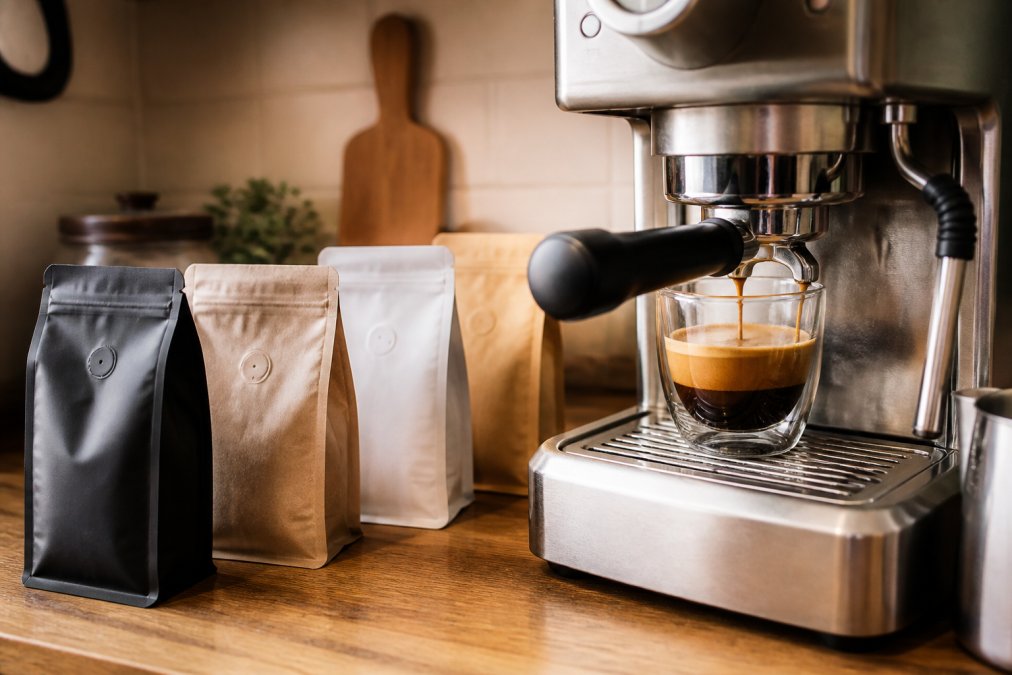
LGBrewTeaQ Espresso Blends, Best for Freshness and Conscious Sourcing
LGBrewTeaQ is our top pick for home espresso because roasted-to-order means beans arrive fresh, not from warehouse stock months old. The difference in cup quality is immediate. LGBrewTeaQ's blends are carefully sourced from trusted farms with genuine ethical sourcing commitment.
Beans roasted to order and shipped directly arrive in the ideal 7-21 day post-roast window, where espresso extraction performs best. Visit LGBrewTeaQ to shop the current espresso selection and find the right roast for your machine.
Pros: Roasted to order, ethically sourced, wide variety, fast delivery Best for: Fresh espresso delivered with sourcing you can trust
Lavazza Super Crema, Best for Thick, Classic Crema
Lavazza Super Crema is the benchmark for traditional Italian-style espresso at home. The 60/40 Arabica-Robusta split produces velvet, thick, compact golden crema hard to match at this price. Flavor notes include roasted hazelnut, brown sugar, and honey. At medium roast intensity, it balances approachability with consistency and is forgiving on home machines with imperfect temperature stability.
Pros: Exceptional crema, balanced flavor, versatile for lattes and cappuccinos Cons: Less complex than single-origin options Best for: Anyone wanting reliable Italian espresso without chasing complexity
Stumptown Hair Bender, Best Versatile Everyday Espresso
Hair Bender works across multiple brew methods. As espresso, it delivers sweet citrus, milk chocolate, and caramel with enough body to hold through milk. The medium roast keeps acidity lively without harshness. Stumptown's Direct Trade program ties price to quality and long-term producer relationships.
Pros: Versatile, consistently delicious, direct trade sourced Cons: Higher price per ounce than comparable blends Best for: Home baristas wanting one bag that works for espresso and other brew methods
Intelligentsia Black Cat Classic, Best for Espresso Purists
Black Cat Classic is Intelligentsia's lightest espresso blend, designed for those wanting to taste espresso's full potential without dark roast caramelization. Syrupy sweetness, vivid fruit acidity, and clean aftertaste linger without bitterness. This bean demands precise technique, grind consistency, tamping pressure, and machine temperature all matter.
Pros: Exceptional complexity, iconic blend, range of roast options Cons: Too light for dark roast preferences; demands precise extraction Best for: Experienced home baristas wanting technically demanding, high-reward espresso
Counter Culture Big Trouble, Best Ethically Sourced Blend
Big Trouble is Counter Culture's best-selling blend: approachable, consistent, and backed by genuine ethical sourcing. Direct Trade and B Corp certified, standards that mean something beyond logos. The medium-dark roast delivers caramel, chocolate, and nutty notes with low acidity.
Pros: Highly consistent, ethically sourced, versatile for any brew method Cons: Seasonal bean changes may subtly alter nuances Best for: Ethically minded home baristas wanting smooth, classic espresso
Blue Bottle Hayes Valley, Best Dark Roast for Milk Drinks
Hayes Valley is Blue Bottle's house espresso across all cafes, indicating its reliability. Dark roasted with baking chocolate, orange zest, and brown sugar notes, it's full-bodied and transforms beautifully with milk. The dark roast makes it forgiving for machines running slightly cooler.
Pros: Rich, full-bodied, reliable cafe standard, organic certified Cons: Too dark for drinkers preferring lighter, brighter espresso Best for: Latte and cappuccino drinkers wanting chocolate-forward base
Death Wish Whole Bean, Best for High Caffeine Content
Death Wish prioritizes caffeine content while maintaining flavor. USDA Organic and Fair Trade Certified, this Arabica/Robusta blend delivers subtle stone fruit and caramel despite intensity. High Robusta content drives both caffeine and body.
Pros: Exceptionally high caffeine, smooth despite strength, organic and fair trade certified Cons: Extreme strength isn't suitable for everyone; Robusta adds earthiness Best for: High-caffeine seekers not sacrificing flavor for a jolt
Espresso Bean Comparison at a Glance:
| Bean | Roast Level | Flavor Profile | Best For | Key Certification |
|---|---|---|---|---|
| LGBrewTeaQ Espresso Blends | Varies | Fresh, curated, varies by blend | Freshness, ethical sourcing, variety | Ethically sourced |
| Lavazza Super Crema | Medium | Hazelnut, brown sugar, honey | Classic crema, Italian style | |
| Stumptown Hair Bender | Medium | Citrus, chocolate, caramel | Versatile everyday espresso | Direct Trade |
| Intelligentsia Black Cat | Light-Medium | Fruit, sweetness, clean finish | Espresso purists | Direct Trade |
| Counter Culture Big Trouble | Medium-Dark | Caramel, chocolate, nutty | Ethical sourcing, consistency | B Corp, Direct Trade |
| Blue Bottle Hayes Valley | Dark | Baking chocolate, orange zest | Milk drinks, dark roast fans | Organic |
| Death Wish Whole Bean | Dark | Stone fruit, caramel, bold | High caffeine content | USDA Organic, Fair Trade |
How to Dial In Espresso Beans on Your Home Machine
Dialing in espresso means adjusting grind size, dose, and extraction time until your shot tastes right. Every new bag requires fresh dial-in, as different roast levels, processing methods, and bean densities behave differently under pressure.
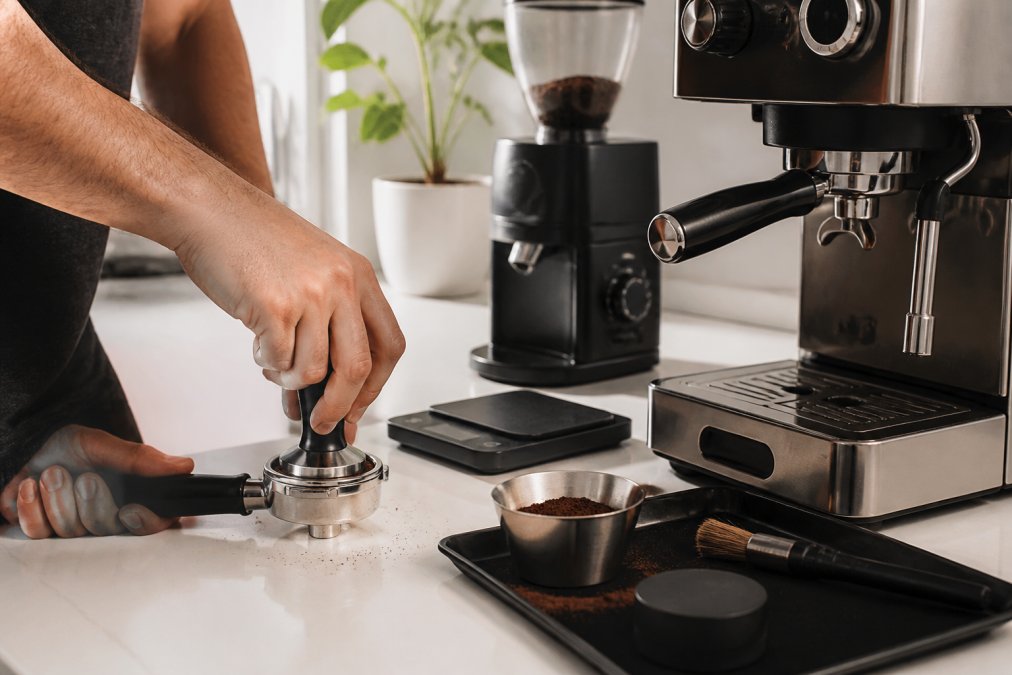
Start with a standard target: 1:2 ratio of coffee to espresso by weight, extracted in 25-30 seconds. If your shot runs fast and tastes sour, grind finer. If it runs slow and tastes bitter, grind coarser.
Grind Size, Tamping, and Pressure Profile
Grind consistency is the most important variable in home espresso. A burr grinder, not a blade grinder, is non-negotiable for consistent extraction. Blade grinders produce uneven particle sizes that create channeling, producing uneven, sour, or bitter shots regardless of bean quality.
Tamping pressure should be firm and level, approximately 30 pounds applied evenly. Pressure profiling, available on some prosumer machines, varies pressure during extraction and can dramatically improve shot quality with lighter roasts and single origins.
Water Chemistry and Its Effect on Extraction
Water chemistry is frequently overlooked but critical. According to the Specialty Coffee Association's water quality standards, ideal brewing water has total dissolved solids between 75-250 ppm, targeting around 150 ppm with neutral to slightly alkaline pH.
Tap water is often too hard or too soft. Use filtered water or a water filter designed for espresso machines. Proper mineral content helps water penetrate the puck evenly during pre-infusion, improving overall extraction consistency.
How to Choose Espresso Beans for Your Specific Machine
Your machine should influence which beans you buy.
Entry-level machines (under $500): Less temperature stability and fixed pressure favor forgiving medium roasts like Lavazza Super Crema, Counter Culture Big Trouble, and Stumptown Hair Bender. Avoid very light roasts, which demand tight temperature control.
Prosumer semi-automatics ($500-$1,500): More control lets you explore single origins and lighter roasts. Intelligentsia Black Cat Classic shines here. Stable temperature means bean nuance reaches the cup.
Super-automatic machines: Automatic grinding and tamping limit adjustments. Stick with medium to medium-dark roasts performing well across grind settings.
Bean density also matters. High-altitude beans are denser, requiring finer grind and slightly higher pressure. Switching from low-altitude blend to high-altitude single origin requires finer grind adjustment.
Sustainability, Ethical Sourcing, and Decaf Options
Ethical sourcing is a spectrum. Fair Trade sets a price floor but doesn't guarantee quality or environmental standards. Direct Trade establishes direct farm relationships and ties price to quality metrics. B Corp certification applies broader sustainability standards across entire operations.
USDA Organic certification prohibits synthetic pesticides and fertilizers. Decaf espresso options have improved significantly. Intelligentsia offers Black Cat Decaf processed using Swiss Water Process, a chemical-free method preserving more original flavor than solvent-based methods.
Natural and honey process methods, where coffee cherry fruit remains during drying, produce sweeter, heavier-bodied espresso with pronounced fruit notes. Washed processing produces cleaner, more acidic shots with higher clarity.
| Sourcing Standard | What It Guarantees | Best For |
|---|---|---|
| USDA Organic | No synthetic pesticides or fertilizers | Clean cup, environmental impact |
| Fair Trade | Minimum price floor for producers | Basic producer protection |
| Direct Trade | Direct farm relationship, quality-linked pricing | Quality + producer relationships |
| B Corp Certified | Whole-business sustainability standards | Ethically minded buyers |
| Swiss Water Process Decaf | Chemical-free decaffeination | Decaf drinkers, flavor preservation |
The best coffee beans for home espresso machines aren't those with the most awards or highest price, they're the ones matching your machine, technique, and palate. Shop Coffee at LGBrewTeaQ and explore espresso blends roasted to order, sourced from trusted farms, and delivered fresh to your door, so your next shot starts from the best possible place.
Frequently Asked Questions
What is the difference between espresso beans and regular coffee beans?
There is no botanical difference. Any whole bean coffee can be pulled through an espresso machine. What distinguishes an 'espresso roast' is the roast level and how the bean is processed to suit high-pressure extraction. Espresso roasts are typically medium to dark, which reduces acidity and increases body and sweetness. The grind consistency and tamping pressure matter far more than a label that says 'espresso' on the bag.
How fresh should coffee beans be for espresso?
For the best shot quality, use beans roasted within the past 2 to 4 weeks. Freshly roasted beans release CO2 during a process called degassing. Pulling espresso too soon after roasting (within 3 to 5 days) causes uneven extraction and a sour, underdeveloped flavor. Waiting 7 to 14 days post-roast date is the sweet spot for most blends. Always check the roast date on the bag, not just a 'best by' date.
Can you use light roast coffee in an espresso machine?
Yes, but it requires careful calibration. Light roast beans are denser and less soluble than dark roasts, so they need a finer grind, higher water temperature, and a longer extraction time to avoid a sour, underdeveloped shot. Single origin light roasts can produce bright, fruity espresso with complex acidity and a distinctive flavor profile. They reward patience during the dial-in process, making them better suited for experienced home baristas.
Do I need specific espresso beans for a super-automatic machine?
Super-automatic machines grind and tamp automatically, so they work best with medium or medium-dark roast whole bean coffee. Very oily dark roasts can clog internal grinders over time. Light roasts may under-extract because the machine's preset grind and pressure settings are calibrated for denser, darker beans. A consistent medium roast blend with low surface oil gives the most reliable shot quality from a super-automatic.
What is the best way to store coffee beans for maximum freshness?
Store whole bean coffee in an airtight, opaque container at room temperature, away from heat, light, and moisture. Avoid the refrigerator; temperature fluctuations cause condensation that degrades flavor. The freezer works only for sealed, unopened bags you won't open for weeks. Buy in smaller quantities aligned to your brew frequency rather than bulk bags, so you're always pulling from a fresh supply close to the roast date.
This article was written using GrandRanker