

Why Does My Coffee Taste Bitter? How to Fix It
Table of Contents
- Why Does My Coffee Taste Bitter? The Main Causes
- The Ideal Coffee Grind Size for Brewing
- The Best Water Temperature for Coffee
- How to Clean Coffee Maker to Remove Bitter Taste
- Step-by-Step: How to Fix Bitter Coffee Today
- When the Problem Is Your Equipment: Grinders and Espresso Machines
- Common Mistakes That Keep Coffee Bitter
- Conclusion
- Frequently Asked Questions
Last Updated: September 26, 2026
Why Does My Coffee Taste Bitter? The Main Causes
Bitter coffee almost always comes down to one thing: too much extraction. When hot water pulls too many compounds out of the grounds, you taste harsh, dry, and astringent notes instead of sweetness. This guide from LGBrewTeaQ breaks down every cause and gives you fixes you can use today.
Over-Extraction: The Most Common Cause
Over-extraction happens when water stays in contact with coffee grounds too long, or when the water is too hot. Both pull out bitter plant compounds that should stay behind.
Watch for these signs of over-extraction:
- A dry, chalky feeling on your tongue
- Bitterness that lingers after you swallow
- A hollow taste with no sweetness
- Dark, murky coffee instead of clear
Beans, Roast Level, and Freshness
Dark roasts taste bitter more easily than light roasts. The longer a bean is roasted, the more of its natural sugars turn to carbon, and carbon tastes bitter.
The Ideal Coffee Grind Size for Brewing
The ideal coffee grind size for brewing depends on your method: fine grinds extract fast, coarse grinds extract slow. Grind size is the single biggest lever you control, and a grind that's too fine for your method chokes the water flow and over-extracts every time.
Grind Size Chart by Brew Method
| Brew Method | Grind Size | Brew Time | Common Bitter Mistake |
|---|---|---|---|
| French press | Coarse | 4 minutes | Grinding too fine |
| Pour-over | Medium | 3 minutes | Pouring too slowly |
| Drip machine | Medium | 5 minutes | Old, stale grounds |
| Espresso | Fine | 25-30 seconds | Over-tamping |
| Cold brew | Coarse | 12-16 hours | Steeping too long |
If your coffee tastes bitter, go one step coarser before changing anything else. That single adjustment fixes most home brews.
The Best Water Temperature for Coffee
The best water temperature for coffee sits between 195°F and 205°F. Water above 205°F scalds the grounds and pulls out harsh, bitter compounds; water below 195°F under-extracts and tastes sour. Most drip machines run too hot or too cold, so check yours with a thermometer. For pour-over, let your kettle rest 30 seconds after boiling.
How to Clean Coffee Maker to Remove Bitter Taste
Learning how to clean coffee maker parts properly is the fix nobody talks about. Old oils and mineral scale build up inside your machine and turn every cup bitter, no matter how good your beans are. Clean your drip machine monthly and descale every two to three months, or more often if your water is hard.
Here's a simple routine:
- Run equal parts white vinegar and water through a full brew cycle
- Follow with two full cycles of plain water
- Wash the carafe, basket, and lid by hand with warm soapy water
- Rinse the filter basket until no residue remains
Step-by-Step: How to Fix Bitter Coffee Today
Fixing bitter coffee today takes five steps you can do in order without buying anything new. Start with the easiest change and stop when the bitterness clears.
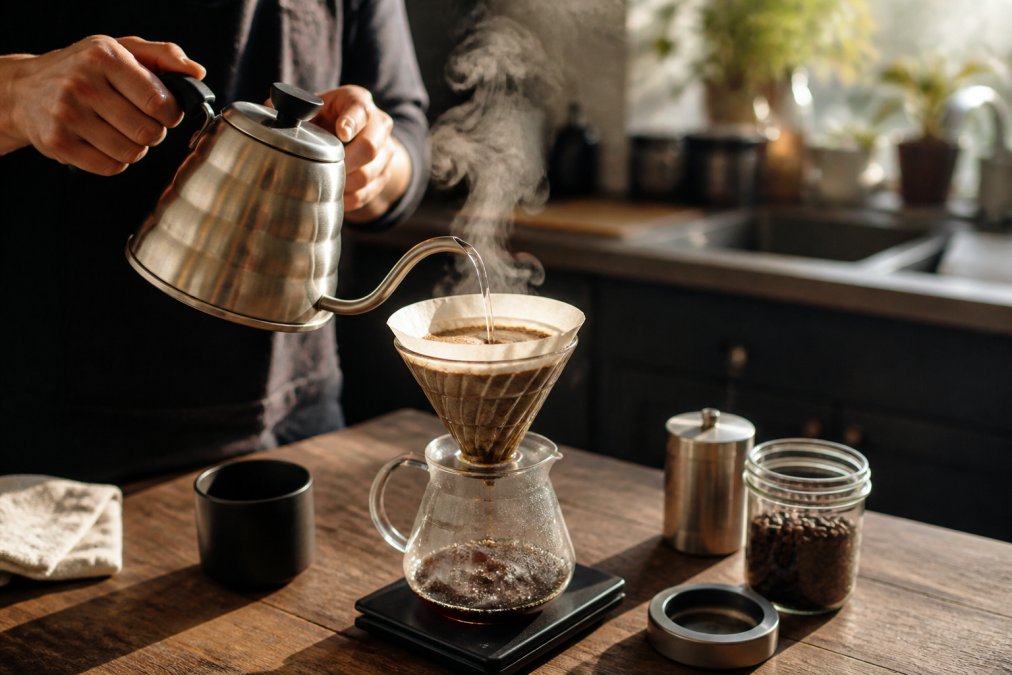
- Grind coarser. Move one setting coarser and brew again.
- Lower your water temperature. Aim for 195°F to 205°F.
- Shorten your brew time. Cut 30 seconds off your steep or pour.
- Check your ratio. Use 1 gram of coffee to 15-16 grams of water.
- Clean your equipment. Rinse and descale if you haven't in a month.
Quick Fixes for a Cup You Already Brewed
Already brewed a bitter cup? You have options.
- Add a small pinch of salt to cut the bitterness
- Splash in warm milk or oat milk to soften the edge
- Dilute with a little hot water
- Serve it over ice with a sweetener
These tricks mask bitterness but don't fix the cause. Use them while you dial in your brew.
When the Problem Is Your Equipment: Grinders and Espresso Machines
Your gear sets the ceiling on how good your coffee can taste. A dull blade grinder or a scaled-up espresso machine will keep producing bitter cups no matter what you change. But "buy better gear" is not a diagnosis. Here is how to tell whether your equipment is the bottleneck, without overspending.
Diagnosing the Grinder First
The grinder is the most common equipment culprit, and the cheapest to diagnose. Do a simple particle test:
USB Rechargeable Ceramic Electric →
- Grind a tablespoon of beans on your normal setting.
- Spread the grounds on a white plate in a single layer.
- Look for the spread between the largest chunks and the finest powder.
Espresso Machine Checks
For espresso, the National Coffee Association's brewing guide points out that pressure and temperature control decide the shot. A machine without stable temperature will swing between sour and bitter, often in the same session. Three checks tell you whether the machine is the problem:
- Temperature stability. Pull two shots back to back. If the second tastes noticeably more bitter than the first, the group is overheating. Let the machine idle and re-temper between shots, or look for a machine with a PID controller rather than a simple thermostat.
- Pressure. Nine bar at the group is the traditional target. A machine running well above that, some budget machines advertise 15 or 20 bar at the pump, tends to channel and over-extract. A visual pressure gauge lets you see what is actually happening instead of guessing.
- Flow and channeling. If the shot starts fast, blondes early, and tastes harsh, water is punching a hole through the puck rather than saturating it evenly. Improve distribution and tamp levelness before you blame the beans.
When to Repair vs. Replace
Descaling and backflushing solve a surprising share of "my machine suddenly tastes bitter" complaints, because scale insulates the heating element and throws off temperature. Before you shop, run a full descale and backflush, then brew again; if the bitterness clears, you saved the cost of a new machine. If the grinder is the weak link, upgrading it usually improves the cup more than upgrading the brewer, a modest burr grinder with a basic drip machine beats a premium brewer fed by a blade grinder almost every time.
A Note on Burnout and Gear Creep
Most guides assume you are motivated to chase the perfect cup. In practice, the bigger risk is gear creep, buying equipment you will not clean, descale, or dial in. A machine you maintain weekly will out-brew a better machine you neglect. If you are already tired of the routine, fix the cheap variables (grind, water, cleanup) before adding hardware, and keep the setup small enough that you will actually use it on a bad morning.
Common Mistakes That Keep Coffee Bitter
Most bitter coffee comes from a short list of repeat mistakes, but the ones that actually ruin your cup are the ones you make when rushed, tired, or on autopilot. Here is the list ranked by how often it is the real cause, plus how to stop making it when you have no energy to think.
Ranked by Likelihood
- Grinding too fine for your method. The most common error by far, and the one that survives every other fix. If you change nothing else, go one step coarser.
- Water straight off a rolling boil. Boiling water scalds the grounds and pulls out harsh compounds. Let the kettle rest 30 to 45 seconds.
- Steeping or brewing too long. A timer removes this mistake entirely. Set it before you start, not after.
- Skipping cleanup. Old oils turn rancid and bitter. A machine that has not been descaled in months will taste bitter no matter what beans you use.
- Storing beans in the fridge. Moisture and odors migrate into the beans. Keep them in an airtight container away from light and heat.
- Reusing spent grounds. There is nothing left to extract but bitterness.
- Ignoring your water. Very hard water changes extraction and taste. If your tap water tastes off, your coffee will too.
A common mistake is blaming the beans when the brew method is the real problem. Try a coarser grind before you switch roasters.
The Mistakes You Make When You Are Tired
The ranked list assumes you are paying attention. The harder problem is the 6 a.m. version of you who is not. Three habits prevent tired-morning mistakes:
- Pre-set the grinder. Leave it on yesterday's setting instead of re-dialing from scratch. If yesterday's cup was good, do not touch it.
- Pre-measure the night before. Weigh beans into the hopper or a small jar so the morning decision is already made.
- Keep a sticky note on the machine. Write the one variable you are currently testing, "coarser," "195°F," "3:00", so you do not accidentally change three things at once.
Adjusting for the Season
Bitterness behaves differently in summer and winter. In cold months, water cools faster in the kettle and during the pour, so start slightly hotter to hit the same extraction. In warm months, cold brew at a coarse grind and a long steep is far more forgiving than hot brewing poured over ice, which dilutes and can taste both bitter and weak.
When the Problem Is Not the Coffee
If you have fixed grind, water, time, and cleanup and the cup still tastes bitter, consider variables outside the brewer. A medication, a recent illness, or a change in the water supply can shift how you perceive bitterness. Change one variable at a time and trust the process rather than your palate on any single morning.
Conclusion
Bitter coffee is frustrating, but it's one of the easiest problems to solve. Coarser grind, cooler water, shorter brew time, and clean equipment handle almost every case.
Frequently Asked Questions
What is the main cause of bitter coffee?
Over-extraction is the main cause. It happens when hot water pulls too many bitter compounds from the grounds, usually because the grind is too fine, the water is too hot, or the brew time runs long. Old beans and a dirty coffee maker add to it. Fix the grind first, then check your water temperature and cleaning routine.
Does a finer grind make coffee more bitter?
Yes. A finer grind gives water more surface area to work with, so extraction speeds up. If you grind espresso-fine for a drip brewer, the water strips bitter compounds before the brew finishes. Match your grind to your method: coarse for French press, medium for drip, fine for espresso. A consistent grind matters as much as the setting itself.
How does water temperature affect coffee bitterness?
Water above 205°F scorches the grounds and pulls out harsh, bitter flavors. Water below 195°F under-extracts and leaves the cup sour and weak. The sweet spot is 195°F to 205°F. If you do not have a thermometer, let a kettle sit for 30 to 45 seconds after boiling before you pour.
How do I balance bitter coffee without adding sugar?
Try a coarser grind, a lower water temperature, or a shorter brew time before you reach for the sugar bowl. If the cup is already brewed, add a splash of hot water to dilute it, or a pinch of salt to mask bitterness. Pairing it with milk or oat milk also softens the harsh edges.