

Is Specialty Coffee Worth the Extra Cost?
Table of Contents
- Specialty Coffee vs. Commodity Coffee: What's the Real Difference?
- How to Tell If Coffee Beans Are Fresh
- The Cost-Per-Cup Reality: Specialty vs. Supermarket Coffee
- Flavor, Aroma, and Sensory Experience You Actually Notice
- Ethical Sourcing and Direct Trade: Where Your Money Goes
- How to Store Coffee Beans for Maximum Freshness
- Is the Premium Worth It? Your Decision Framework
- Frequently Asked Questions
Last Updated: September 27, 2026
Specialty Coffee vs. Commodity Coffee: What's the Real Difference?
Specialty coffee is a measurable standard: the Specialty Coffee Association grades beans on a 100-point scale, with 80+ classified as specialty grade, but is specialty coffee worth the extra cost? Commodity coffee typically scores 60-70. That gap represents real differences in how beans were grown, processed, stored, and roasted.
Specialty coffee comes from farms that hand-select ripe cherries, control fermentation, and dry beans on raised beds. Commodity coffee is bulk-harvested with mixed ripeness and quick-dried on patios. One demands precision; the other prioritizes speed and cost.
At LGBrewTeaQ, we work directly with specialty producers who share this commitment to quality. Our single-origin offerings, like the Colombia and Ethiopia coffees, come from farms where traceability matters. You know which region grew your beans, at what elevation, and how they were processed. That transparency doesn't exist in commodity coffee chains.
Specialty roasters adjust heat and airflow for each origin's characteristics, light roasts highlight floral notes in Ethiopian beans, medium roasts bring caramel sweetness in Colombian coffee. Commodity roasters use fixed schedules, treating all beans the same, producing flat, one-dimensional results.
How to Tell If Coffee Beans Are Fresh
Freshness is critical: coffee loses flavor compounds within two weeks of roasting and tastes stale after four weeks.
Check the roast date printed on the bag. A reputable roaster always displays this prominently. If you see only a "best by" date with no roast date, that's a red flag. You have no way to know if those beans were roasted last week or three months ago. At LGBrewTeaQ, every bag includes a roast date so you know exactly how fresh your coffee is when it arrives.
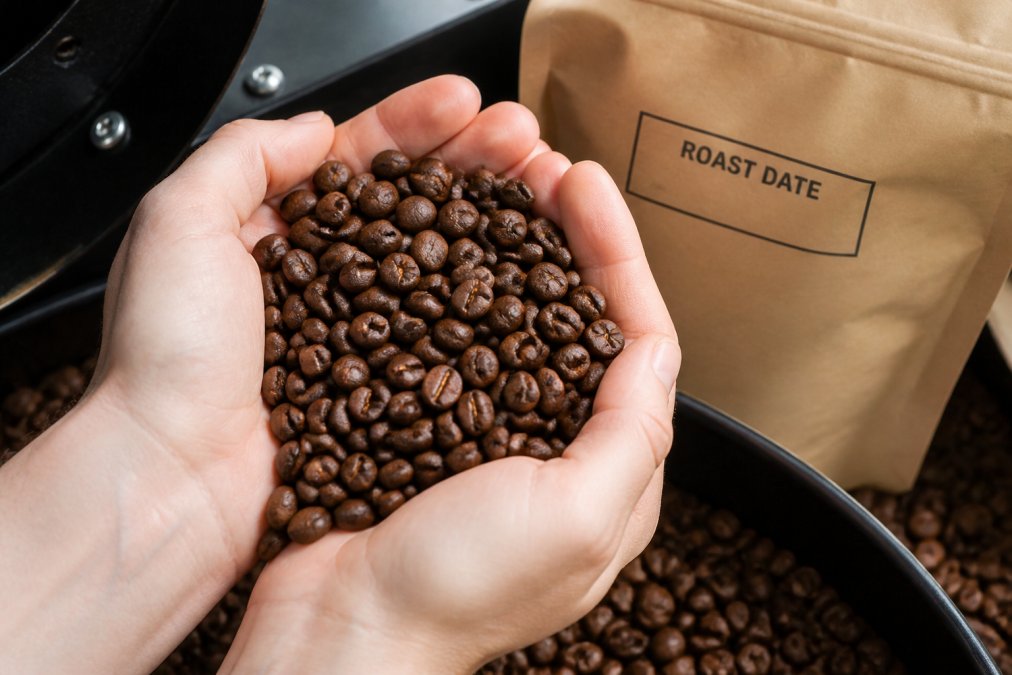
Fresh beans have a light sheen from surface oils; dull, matte beans suggest age. Fresh coffee smells bright, sweet, or fruity; stale beans smell flat and cardboard-like.
During brewing, fresh coffee releases CO₂ rapidly, creating visible bubbles and a dome of grounds. Stale coffee barely bubbles. More bloom means fresher coffee.
The Cost-Per-Cup Reality: Specialty vs. Supermarket Coffee
Specialty coffee costs more upfront, but cost-per-cup often favors specialty when you factor in extraction efficiency.
The Basic Math
A specialty bag (12 oz) typically costs $14-18 and yields 15-18 cups depending on brewing method and grind size. That's roughly 78 cents to $1.20 per cup.
Specialty coffee's denser structure and careful roasting mean better extraction, you need fewer grounds per cup. Commodity coffee requires more grounds to taste acceptable, pushing actual cost-per-cup higher than the sticker price.
Annual Cost Comparison: Daily Drinker
Assume a daily coffee drinker brewing at home:
- Specialty coffee (standard brewing): 90 cents per cup × 365 days = $328.50 per year
For context, that's less than a single café latte per week. Most people spend $5-7 on a café drink, so switching from café to home-brewed specialty coffee saves $1,500-$2,000 annually while improving flavor quality.
Subscription and Bulk Discounts
Brewing Method Impact
Different brewing methods extract different amounts of coffee solids, which affects both cost and flavor:
| Brewing Method | Grounds per Cup | Specialty Cost/Cup | Commodity Cost/Cup | Flavor Profile |
|---|---|---|---|---|
| Pour-over (cone) | 15-17g | $0.70-$1.00 | $0.40-$0.55 | Bright, clean, nuanced |
| Drip machine (auto) | 10-12g | $0.50-$0.75 | $0.30-$0.45 | Balanced, forgiving |
| French press | 17-20g | $0.85-$1.30 | $0.50-$0.75 | Full-bodied, oily |
| Moka pot (stovetop) | 7-9g | $0.45-$0.70 | $0.25-$0.40 | Concentrated, intense |
| AeroPress | 12-15g | $0.60-$0.90 | $0.35-$0.55 | Clean, versatile |
The Freshness Factor
Commodity coffee loses flavor rapidly; a two-month-old bag tastes worse and requires more grounds per cup. Specialty coffee's roast-date guarantee means fresher beans and fewer grounds needed, compounding savings over time.
The Real Question
The cost difference between specialty and commodity coffee is modest, roughly $2-3 per week for a daily drinker. The question isn't whether specialty costs more; it's whether the improvement in flavor, freshness, and ethical sourcing justifies a small weekly premium. For most people, the answer is yes.
Flavor, Aroma, and Sensory Experience You Actually Notice
Specialty coffee has distinct flavor notes, Ethiopian tastes like jasmine and peach, Colombian brings caramel and berries, Costa Rican offers apple and honey. These are real sensory compounds. Commodity coffee tastes bitter, generic, and one-note.
Body, how coffee feels in your mouth, varies in specialty coffee: light-roasted Ethiopian feels silky, medium-roasted Brazil feels balanced, dark-roasted blends feel thick and rich. Commodity coffee tastes thin and watery regardless of roast.
Fresh specialty coffee's complex aroma comes from volatile compounds that dissipate with age. The scent signals quality before you taste it.
Good acidity in specialty coffee feels bright and crisp, like lemon or berry. Bad acidity in commodity coffee tastes sour and sharp. The difference comes down to bean quality, processing, and roast precision.
Single Origin Favorites Sample Pack →
Ethical Sourcing and Direct Trade: Where Your Money Goes
When you pay more for specialty coffee, some of that premium actually reaches the farmers who grew it. That's the whole point of ethical sourcing and direct trade models.
Commodity coffee passes through brokers and middlemen; farmers receive 5-10% of the final price, with the rest going to intermediaries.
Fair compensation leads farmers to invest in better practices, hand-selecting cherries, upgrading equipment, experimenting with fermentation. Better farming produces better coffee you taste in your cup.
LGBrewTeaQ sources from smallholder cooperatives and family farms committed to sustainable harvesting. Our product listings detail the origin and processing method so you know exactly where your coffee comes from and how it was grown.
How to Store Coffee Beans for Maximum Freshness
Proper storage extends the flavor window from two weeks to four weeks or beyond.
The Chemistry of Coffee Staling
Fresh beans contain volatile aromatic compounds that degrade through oxidation (primary cause of staling), CO₂ loss, moisture absorption, and heat exposure. Proper storage slows these processes dramatically.
Optimal Storage Conditions
Store beans in airtight containers away from light, heat, and moisture. Airtight seals minimize oxygen exposure. Opaque containers prevent light-accelerated oxidation. Keep at 50-70°F; every 18°F increase doubles staling rate. Avoid humidity above 65%.
Recognizing Stale Beans
Before brewing, check for these signs of degradation:
- Appearance: Fresh beans, especially darker roasts, have a light sheen from surface oils. Dull, matte beans suggest oxidation and age.
- Aroma: Open a bag of fresh beans and smell something immediately, bright, sweet, fruity, or floral depending on origin. Stale beans smell flat, musty, or like old cardboard.
- The bloom test: Pour hot water over grounds and watch them puff up. Fresh coffee releases CO₂ rapidly, creating visible bubbles and a dome of grounds. Stale coffee barely bubbles. This happens because CO₂ gradually escapes from beans over time.
Freezer Storage for Long-Term Keeping
Freezing slows oxidation and extends freshness by several weeks. Divide beans into weekly portions before freezing to minimize thaw-refreeze cycles. Thawed beans stay fresh about one week at room temperature.
Why NOT the Refrigerator
Avoid refrigerators: temperature fluctuates, moisture accumulates, and odors transfer to coffee.
Grinding Timing Matters More Than Storage
Whole beans stay fresh longer than ground coffee. Ground coffee loses flavor within 15-30 minutes of grinding. Grind only what you'll brew in the next few hours.
Burr grinders produce consistent particle size for better extraction than blade grinders.
Budget-Friendly Storage Solutions
Budget-friendly storage: glass mason jars, ceramic canisters, vacuum-seal bags, or original valve-sealed bags placed in larger airtight containers.
The Roast-Date Guarantee
The best storage practice is buying fresh. Reputable specialty roasters always print the roast date on the bag.
Is the Premium Worth It? Your Decision Framework
The answer depends on how much you value coffee in your daily life and what you're comparing against.
Frequently Asked Questions
What is the difference between specialty coffee and regular supermarket coffee?
Specialty coffee is graded at 80+ points by the Specialty Coffee Association, sourced from single origins or curated blends, and roasted to order to preserve flavor. Commodity coffee comes from bulk production, often mixed origins, and sits on shelves for months. Specialty beans have distinct tasting profiles, bright acidity, complex body, clear aftertaste, while commodity coffee tastes flat and bitter. The difference shows in your cup within the first sip.
How can you tell if coffee beans are actually fresh?
Check the roast date on the bag, specialty coffee should be roasted within 2-4 weeks of purchase. Fresh beans have a glossy, oily surface and smell vibrant and aromatic. Beans older than 6 weeks lose flavor complexity and aroma. Squeeze a sealed bag gently; fresh beans release CO2 and feel slightly puffy. Supermarket coffee rarely prints roast dates, which is a red flag that beans are months old.
Is specialty coffee actually worth paying more per cup?
At $23-25 per 12 oz bag, specialty coffee costs $1-1.40 per cup. If you drink 5 cups weekly, specialty coffee costs about $30 more per month, a modest premium for noticeably better taste, ethical sourcing, and guaranteed freshness. For home baristas and remote workers who brew daily, the investment pays off in enjoyment and consistency.
What makes specialty coffee ethically sourced?
Specialty-grade coffee comes from smallholder farms and cooperatives with direct relationships to roasters, ensuring fair prices and transparent supply chains. Direct trade and fair trade certifications ensure farmers receive premiums above commodity rates. Specialty roasters publish origin details, farm location, altitude, processing method, so you know exactly where your coffee comes from.