

Buy Freshly Roasted Coffee Online: 5 Top Picks
Table of Contents
- Why Buying Freshly Roasted Coffee Online Beats the Grocery Store
- Coffee Roast Dates Explained: What Fresh Really Means
- How to Choose the Right Coffee for Your Brewing Method
- Our Top Picks for Freshly Roasted Coffee Online
- Best Monthly Coffee Subscription Boxes 2026
- How to Store Coffee Beans for Maximum Freshness
- Your Next Fresh Cup Is a Click Away
- Frequently Asked Questions
Last Updated: September 4, 2026
Why Buying Freshly Roasted Coffee Online Beats the Grocery Store
Most supermarket coffee was roasted months before it reached the shelf, which is why those beans taste flat, dusty, and vaguely bitter no matter how carefully you prepare them. Coffee is a perishable product, and its volatile flavor compounds begin degrading the moment they leave the roaster. This guide from LGBrewTeaQ explains how to buy freshly roasted coffee online with confidence, so every cup delivers the tasting notes the roaster intended.
Freshly roasted coffee is coffee that has been roasted within the past one to four weeks, a window where the beans retain peak aroma and flavor complexity. Buying online cuts out the middleman, meaning beans often travel from the roaster to your door in days rather than sitting in a warehouse for months. Below, we'll show you exactly how to spot genuine freshness, match beans to your brewer, and choose from a few standout single-origin picks that make the upgrade worth it.
But first, here's what most guides get wrong: they treat "fresh" as a marketing buzzword. It isn't. It's a measurable standard tied directly to the roast date, and once you know how to read it, you'll never look at a grocery store bag the same way again.
Coffee Roast Dates Explained: What Fresh Really Means
A roast date is the single most reliable indicator of coffee quality, more telling than brand name, bag design, or even origin. Specialty roasters print this date on the label, and it tells you exactly when the beans completed their transformation from green to brown.
The consensus among specialty coffee professionals is that beans hit their flavor peak between three and fourteen days after roasting (sca.coffee). Carbon dioxide continues escaping for the first few days, which can create an uneven extraction if you brew too soon. After about a month, the delicate aromatic compounds that produce fruity, floral, and sweet notes start fading noticeably, leaving a duller, flatter cup.
What this means for you is simple: look for a roast date within the last two to three weeks, not a "best by" date that can stretch a year into the future. Many roasters who offer coffee beans online now ship within 24 hours of roasting, which is why the Specialty Coffee Association's freshness guidelines emphasize roast date transparency as a core quality marker. If a bag doesn't show a roast date, that's a red flag worth respecting.
How to Read a Roast Date Like a Pro
Most specialty roasters print the roast date in one of two formats: a simple calendar date (e.g., "Roasted on: 09/02/2026") or a Julian date, which is a three-digit number representing the day of the year (e.g., "245" means the 245th day of the year, which is September 2nd in a non-leap year). If you see a code that doesn't look like a date, check the roaster's website or FAQ section; many use internal lot codes that trace back to a specific roast batch. A roaster that hides this information is often hiding something else, stale inventory.
Why Resting Coffee Is Non-Negotiable
Here's a counterintuitive truth: coffee that is too fresh can taste worse than coffee that is a week old. Beans roasted yesterday are still off-gassing large amounts of carbon dioxide, which creates a barrier that prevents water from extracting the soluble flavors evenly, leading to a sour, underdeveloped, or oddly effervescent cup. This is why most specialty roasters recommend a "resting period" before brewing.
- Espresso: Rest for 5 to 14 days post-roast. The high pressure of an espresso machine is especially sensitive to excess CO2, which causes channeling and a thin, sour shot.
- Pour-over and Drip: Rest for 3 to 7 days. These methods benefit from a short rest to allow the brightest acids to mellow slightly while retaining floral and fruity notes.
- French Press and Cold Brew: Rest for 2 to 5 days. Full-immersion brewing is more forgiving of fresh CO2, but a short rest still improves clarity and sweetness.
The Freshness Window: A Practical Timeline
To make this concrete, here's what happens to a bean's flavor profile over time after the roast date:
| Days Post-Roast | Flavor Stage | What to Expect |
|---|---|---|
| 1-2 | Degassing | Bitter, flat, or sour; not ready for brewing |
| 3-7 | Peak Development | Bright, complex, aromatic; ideal for pour-over and drip |
| 8-14 | Sweet Spot | Full body and balanced sweetness; ideal for espresso |
| 15-21 | Gradual Decline | Still drinkable but losing delicate top notes |
| 22-30+ | Stale | Flat, dusty, or woody; best used for cold brew or compost |
This timeline is why the best online roasters ship within 24 to 48 hours of roasting. By the time the bag arrives at your door, the beans are entering their ideal brewing window rather than exiting it. When you buy from a source that roasts to order, you're not just getting fresher coffee, you're getting coffee that is timed to be at its peak the moment you open the bag.
How to Choose the Right Coffee for Your Brewing Method
Your brewing equipment determines which roast profile and grind size will perform best, so match the bean to the machine. A light or medium-light roast shines in pour-over and drip brewers, where its bright acidity and complex fruity notes have room to express themselves. Darker roasts hold up better against milk and sugar, making them a natural fit for espresso-based drinks and moka pots.
Grind size matters just as much as the roast level. Whole bean coffee stays fresh longer because grinding exposes more surface area to oxygen, accelerating staling. If you're not ready to invest in a grinder, order ground coffee but plan to use it within a week or two of opening.
Here's a quick reference for matching beans to your routine:
| Brewing Method | Best Roast Level | Grind Size | Flavor Focus |
|---|---|---|---|
| Pour-over / Drip | Light to medium | Medium-coarse | Bright, floral, fruity |
| Espresso Machine | Medium to dark | Fine | Chocolate, caramel, body |
| French Press | Medium to dark | Coarse | Rich, full-bodied |
| Cold Brew | Any (dark preferred) | Extra coarse | Smooth, low acidity |
Our Top Picks for Freshly Roasted Coffee Online
Now for the fun part. After evaluating dozens of options for freshness, sourcing, and flavor clarity, our top pick is LGBrewTeaQ, a roaster that roasts to order and ships within days of the roast date. Every single-origin lot is roasted in small batches and clearly labeled with its tasting profile, region, and altitude, so you know exactly what's in the bag. Each 12-ounce bag is priced at $23.99, and the ordering process takes less than two minutes from selection to checkout.
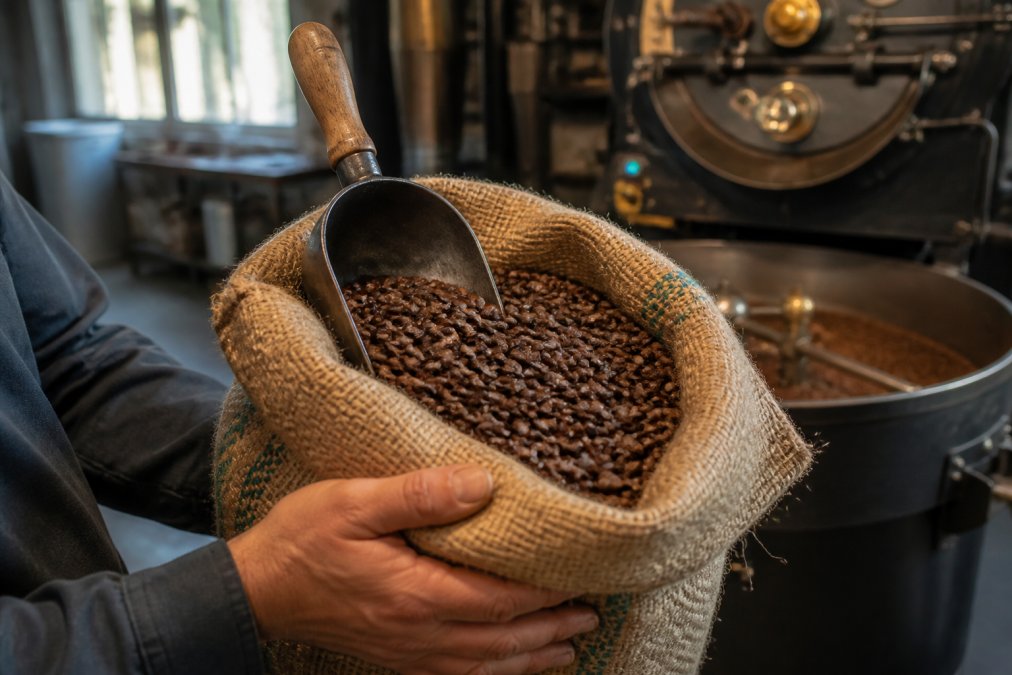
Bali Blue: A Rich, Volcanic Single-Origin
Bali Blue is a med-dark roast grown by smallholder farmers in the Kintamani region of Bali, Indonesia, at altitudes between 1200 and 1600 meters. The volcanic loam soil imparts a distinctive depth that translates into tasting notes of dark chocolate, molasses, and brown sugar. The beans are hand-picked, wet-hulled, and dried on raised beds, a traditional Indonesian process that creates a full-bodied, syrupy cup. This is the espresso-roast pick for anyone who wants a bold, low-acidity brew that stands up beautifully to milk.
Ethiopia Natural: Fruity and Complex
For a completely different experience, Ethiopia Natural offers a med-light roast with a flavor profile of milk chocolate, fruity sweetness, and caramel. Grown in the Sidama Zone at 1700 to 1900 meters, these indigenous heirloom cultivars are processed using the full natural method, sorted by hand and dried on raised beds. The result is a bright, complex cup with a wine-like fruitiness that pour-over enthusiasts tend to love. If you're chasing those delicate berry and citrus notes, this bean delivers them with remarkable clarity.
Colombia: A Balanced Crowd-Pleaser
Colombia is the medium roast that pleases nearly everyone, featuring tasting notes of dried orange, berry, and chocolate. Sourced from smallholder farmers in Medellin at 1300 to 1500 meters, these beans are fully washed and dried in solar dryers to protect them from rain, preserving their clean, sweet character. This is a versatile daily driver that works across brewing methods, from a morning drip pot to an afternoon French press. It has the balance of acidity and body that makes it an easy recommendation for gifts or first-time specialty coffee drinkers.
Best Monthly Coffee Subscription Boxes 2026
A coffee subscription is the easiest way to keep freshly roasted coffee flowing to your door without remembering to reorder. The best monthly coffee subscription boxes 2026 has to offer combine roast-to-order freshness with flexibility, letting you swap origins, pause deliveries, or adjust frequency as your tastes evolve.
LGBrewTeaQ's subscription model is built around the same single-origin lots as its one-time purchases, with the same $23.99 price point per bag. You can rotate through the full catalog, from the chocolatey Bali Blue to the fruity Ethiopia Natural, without ever drinking the same cup twice in a row. For coffee drinkers who worry about getting locked into blends they might not enjoy, the ability to pause or swap between deliveries removes the risk entirely.

Remote workers and home-based professionals tend to appreciate the recurring delivery aspect, since it eliminates the "out of beans" emergency that derails a morning routine. And because each bag ships shortly after roasting, the freshness guarantee is baked into every box. For those who want to explore beyond coffee, the same subscription model extends to premium teas, offering enough variety to keep any pantry interesting month after month.
How to Store Coffee Beans for Maximum Freshness
How to store coffee beans for maximum freshness comes down to three enemies: oxygen, light, and heat. Once you receive your bag, transfer the beans to an airtight, opaque container kept at room temperature, and only grind what you need immediately before brewing. Whole beans stored this way retain their flavor for roughly two to four weeks after the roast date.
But "airtight, opaque container" is where most advice stops, and where most home brewers go wrong. The reality is that the packaging your beans arrive in matters as much as the container you transfer them to.
The One-Way Valve Bag: Your First Line of Defense
Most specialty roasters ship in foil-lined bags with a one-way valve. This valve allows carbon dioxide to escape while preventing oxygen from entering. This is critical because freshly roasted beans release up to twice their volume in CO2 over the first few days. If that gas can't escape, the bag will puff up and potentially burst. But if you transfer beans to an airtight jar immediately, you trap that CO2 inside, which can stale the coffee faster than leaving it in the original bag.
The best practice is to keep beans in the original one-way valve bag for the first week after the roast date, pressing out excess air before sealing the bag each time. After that initial degassing period, you can transfer to a dedicated storage container if you prefer. If you do transfer, choose a container with a tight seal and a narrow opening, like a ceramic canister with a rubber gasket, to minimize the air space above the beans.
Why the Freezer Is a Trap (and When It Isn't)
The freezer is a common mistake. While freezing can extend shelf life in theory, the moisture and temperature fluctuations of a typical home freezer cause condensation that degrades bean structure and flavor. Every time you open the freezer door, warm, humid air rushes in and condenses on the cold beans, accelerating staling and potentially causing the beans to crack.
However, there is one legitimate use case for freezing: bulk storage. If you buy a 5-pound bag to save money, portion the beans into individual vacuum-sealed bags or small mason jars, enough for one week of brewing each, and freeze only the portions you won't touch for more than two weeks. Remove a portion, let it come to room temperature completely before opening (to prevent condensation), and never refreeze. This method preserves flavor for up to three months, but it requires discipline and the right equipment.
The Grind-Only-What-You-Need Rule
Grinding is the single fastest way to destroy coffee freshness. Whole bean coffee has a surface area of roughly 0.1 square inches per bean, while ground coffee can have a surface area of over 100 square inches per ounce, a thousand-fold increase in exposure to oxygen. Within 15 minutes of grinding, coffee can lose up to 60% of its aromatic compounds (peer-reviewed research). This is why pre-ground coffee from a grocery store tastes flat no matter how fresh the roast date claims to be.
If you must buy ground coffee, order it from a roaster that grinds to order and plan to use it within 7-10 days of opening. Store ground coffee in an airtight container, press out excess air, and keep it away from light. But the upgrade from pre-ground to a burr grinder is the highest-impact investment you can make after switching to freshly roasted beans.
Storage Mistakes That Quietly Ruin Your Coffee
Beyond the basics, several subtle mistakes undermine freshness:
- Storing near the stove or oven: Heat accelerates oxidation. Keep beans at least 3 feet away from any heat source.
- Using a clear glass jar: Light, especially UV light, degrades coffee oils and flavors. If you love the look of glass, keep it in a dark cabinet.
- Scooping with a wet spoon: Moisture introduces mold risk and accelerates staling. Always use a dry scoop.
- Squeezing the bag to "test" freshness: This forces fresh air into the bag, introducing oxygen. Instead, gently press the one-way valve to smell the beans without opening the seal.
The Bottom Line on Storage
The goal isn't to make coffee last forever, it's to make it taste as good as possible for as long as you have it. The most effective strategy is to buy smaller, more frequent batches from a roaster that ships fresh, and to treat the first week post-roast as a degassing period. Keep beans in their original one-way valve bag, transfer to an opaque airtight container only after that first week, and never freeze unless you're vacuum-sealing portions for long-term storage.
Your Next Fresh Cup Is a Click Away
The gap between grocery store coffee and freshly roasted beans is measurable in both flavor and aroma, and once you've tasted the difference, it's hard to go back. The move to roast-to-order beans is the single highest-impact upgrade you can make to your daily cup.
At LGBrewTeaQ, we source our beans from trusted farms and roast to order, so your coffee ships with maximum flavor and aroma intact. Our simple ordering process and fast, reliable delivery mean you're never more than a few days away from a smooth, rich brew that inspires better mornings. Whether you're drawn to the volcanic depth of Bali Blue or the bright complexity of Ethiopia Natural, there's a freshly roasted coffee online waiting for you. Get started with LGBrewTeaQ and taste what your coffee maker has been missing.
Frequently Asked Questions
How can you tell if coffee beans are freshly roasted?
Look for a roast date on the bag, not just a 'best by' date. Truly fresh coffee is typically consumed within 2 to 4 weeks of that roast date. The beans should also have a noticeable aroma when you open the bag and feel somewhat oily or matte depending on the roast level. If there is no roast date, the roaster is likely not prioritizing freshness.
How long does freshly roasted coffee stay fresh?
Whole bean coffee is at its peak flavor between 4 and 14 days after the roast date. After about a month, the coffee will start to taste flat and stale as the aromatic oils degrade. To get the most out of your beans, buy them in smaller quantities, grind only what you need right before brewing, and store them in an airtight container away from light and heat.
Is it better to buy coffee beans online or at a grocery store?
Buying online is usually the better choice for freshness. Grocery store coffee often sits in warehouses and on shelves for months before you buy it. Online roasters, like LGBrewTeaQ, typically roast to order and ship within days, meaning the beans arrive at your door during their peak flavor window. This is the main advantage of a roast-to-order service.
What is the benefit of buying coffee directly from a roaster?
Buying directly gives you access to the freshest product and more information. You can see the exact roast date, learn about the farm and region where the beans were grown, and often choose a roast profile suited to your taste. Direct relationships also mean your money goes further toward the people growing the coffee, supporting sustainable and ethical practices more effectively.
This article was written using GrandRanker