

7 Caffeine-Free Herbal Teas for Deep Relaxation
Last Updated: November 20, 2026
Quick Summary
Caffeine-free herbal teas are made by steeping dried botanicals like flowers, leaves, roots, and spices, so they never contained caffeine to begin with, unlike decaf. For deep relaxation, choose blends built on calming herbs such as chamomile, lavender, lemon balm, passionflower, valerian root, or rooibos, and brew them covered to lock in the aromatics.
- Decaf tea is true tea with caffeine removed, while herbal infusions never contained caffeine.
- Yerba mate and guayusa are herbal teas that do contain caffeine, so read the ingredient list.
- Brew lavender at 205°F, one to two teaspoons per 8 oz, and steep five to seven minutes covered.
- Rooibos is naturally low in tannins, so it never turns bitter even on an extended steep.
- Stop concentrated herbal supplements about two weeks before a scheduled procedure.
Table of Contents
- Why Caffeine-Free Herbal Teas Beat Decaf for Deep Relaxation
- 7 Caffeine-Free Herbal Teas for Deep Relaxation, Compared
- Chamomile Tea for Relaxation: The Classic Bedtime Cup
- Lavender, Lemon Balm, and Passionflower: Floral Blends for Winding Down
- Caffeine-Free Tea for Sleep: Valerian Root, Rooibos, and What the Evidence Says
- How to Choose and Brew Loose-Leaf Caffeine-Free Herbal Tea
- Safety, Interactions, and Who Should Use Caution
- Build Your Evening Tea Ritual with LGBrewTeaQ
- Frequently Asked Questions
Why Caffeine-Free Herbal Teas Beat Decaf for Deep Relaxation
If you want a cup that actually helps you wind down, caffeine-free herbal teas are the smarter choice over decaf. Here is the core reason: decaf coffee and decaf tea start as the real thing and then have caffeine stripped out, while herbal infusions never contained caffeine to begin with. At LGBrewTeaQ, we build our evening blends around that distinction because it changes what ends up in your cup.
Caffeine-free herbal tea is a drink made by steeping dried botanicals, such as flowers, leaves, roots, and spices, in hot water rather than steeping the leaves of the Camellia sinensis plant. A review published in the journal Molecules on traditional and modern tea production notes that herbal teas do not contain caffeine and can be made from a single herb, which is exactly why they suit a bedtime ritual.
Decaffeinated tea still comes from true tea leaves and goes through a processing step that can affect flavor.
Caffeine-Free Versus Decaffeinated: What's the Difference?
Decaffeinated tea is true tea that has had most of its caffeine removed through solvent, carbon dioxide, or water processing. Caffeine-free tea is an herbal infusion that never contained caffeine in the first place.
That distinction is not just semantic. Decaf still contains trace caffeine, and the process can strip some of the aromatic compounds that make a cup taste fresh. Herbal infusions have no caffeine to remove, and no processing to lose flavor to.
There is one catch that surprises a lot of shoppers. "Herbal" does not automatically mean caffeine-free. Michigan State University's Center for Research on Ingredient Safety points out that most herbal teas are naturally caffeine-free, but yerba mate and guayusa contain caffeine. Always read the ingredient list before you buy.
The Calming Botanicals Behind a Good Cup
What separates a soothing cup from a merely warm one is the botanical lineup. Chamomile, lavender, lemon balm, passionflower, valerian root, rooibos, peppermint, and hibiscus each bring a different character, from floral and honeyed to minty and tart.
Flavor is not the only variable. A blend built for bedtime usually leans on soft, aromatic herbs rather than bright, tart ones. Our rule of thumb: if the blend smells like a garden after rain, it is probably an evening tea.
7 Caffeine-Free Herbal Teas for Deep Relaxation, Compared
Here is the short version before the detail. Each of these seven blends targets a slightly different kind of unwinding, so pick by mood and flavor rather than by hype.
| Tea | Flavor Profile | Best For | Price |
|---|---|---|---|
| LGBrewTeaQ Lavender Herbal Tea | Floral, honeyed, citrus peel | A quiet, aromatic wind-down | $12.68 (2 oz tin) |
| LGBrewTeaQ Apple Cider Rooibos | Baked apple, cinnamon, clove | Fireside comfort without sugar | $22.99 |
| LGBrewTeaQ Hibiscus Rose | Tart cranberry, rose, chamomile | A bright, floral evening cup | $18.67 |
| LGBrewTeaQ Hibiscus Berry | Blueberry, currant, passionfruit | Iced or hot fruity relaxation | $16.99 |
| Chamomile | Soft apple and honey | The classic bedtime cup | Varies |
| Lemon balm and passionflower blends | Grassy, gentle citrus | Winding down after screen time | Varies |
| Valerian root blends | Earthy, rooty | Sleep-oriented routines | Varies |
The first four are ours, and we will be honest about why they made the list: we blend them for exactly this purpose, in small batches, with whole botanicals and no artificial flavorings. The last three are the traditional herbs most people already know.
Prices of LGBrewTeaQ caffeine-free herbal teas
Chamomile Tea for Relaxation: The Classic Bedtime Cup
Chamomile tea is mild, floral, and forgiving to brew, which makes it a simple entry point if you are new to herbal infusions.
What most guides miss is that chamomile works best as a supporting player rather than a solo act. On its own it is gentle; paired with rose petals or a whisper of spice, it rounds out a blend and softens sharper flavors. Our Hibiscus Rose blend includes whole chamomile blossoms.
One practical note: cover your mug while it steeps.
Lavender, Lemon Balm, and Passionflower: Floral Blends for Winding Down
Floral blends are the most sensory route to calm. Lavender brings a heady, honeyed perfume; lemon balm adds a soft grassy citrus; passionflower contributes a gentle herbal depth.
Our own Lavender Herbal Tea is built on whole French lavender blossoms, with a palate of delicate floral sweetness, gentle herbaceous warmth, and hints of citrus peel. The finish is crisp and clean with zero lingering bitterness. If you want to try it, you can shop lavender herbal tea in a 2 oz tin.
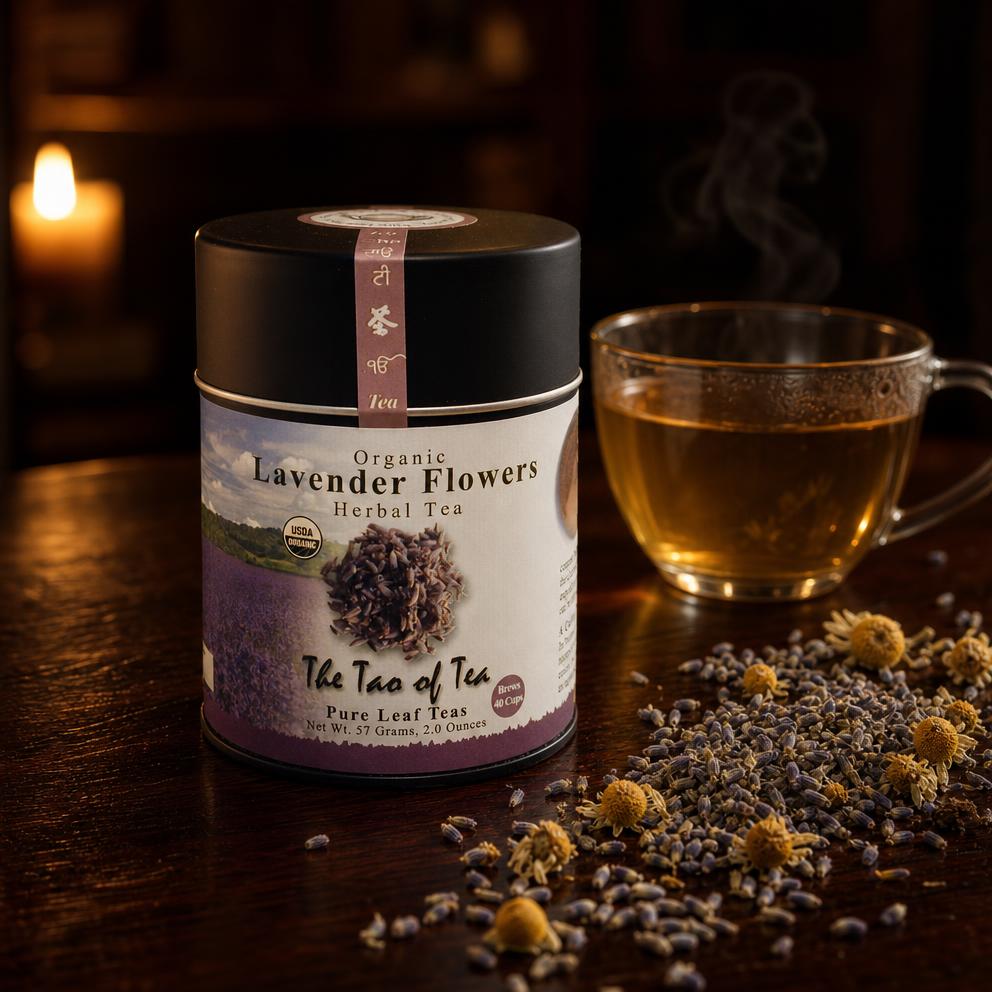
Brew it at 205°F, one to two teaspoons per 8 oz, and steep five to seven minutes in a covered mug to lock in the essential oils.
Caffeine-Free Tea for Sleep: Valerian Root, Rooibos, and What the Evidence Says
Caffeine-free tea for sleep is where marketing outruns evidence most often, so let us be careful. The honest framing is this: some herbs have a long traditional-use record and a modest clinical literature, but no herbal tea is a treatment for insomnia.
Here is how the main sleep-oriented options actually compare on evidence and everyday reliability.
Valerian root. Valerian is among the more studied sleep herbs, but the clinical evidence is limited and results vary between people. Valerian also smells strongly of damp earth and aged wood, so it is usually blended with peppermint, lemon balm, or chamomile rather than drunk alone.
Passionflower. Passionflower has a smaller evidence base than valerian and is often studied in combination products, which makes it hard to attribute effects to the herb itself.
Lemon balm. Lemon balm is frequently described in traditional use as calming and is a common component of sleep and stress blends.
Chamomile. Chamomile is the most familiar bedtime herb and among the best tolerated.
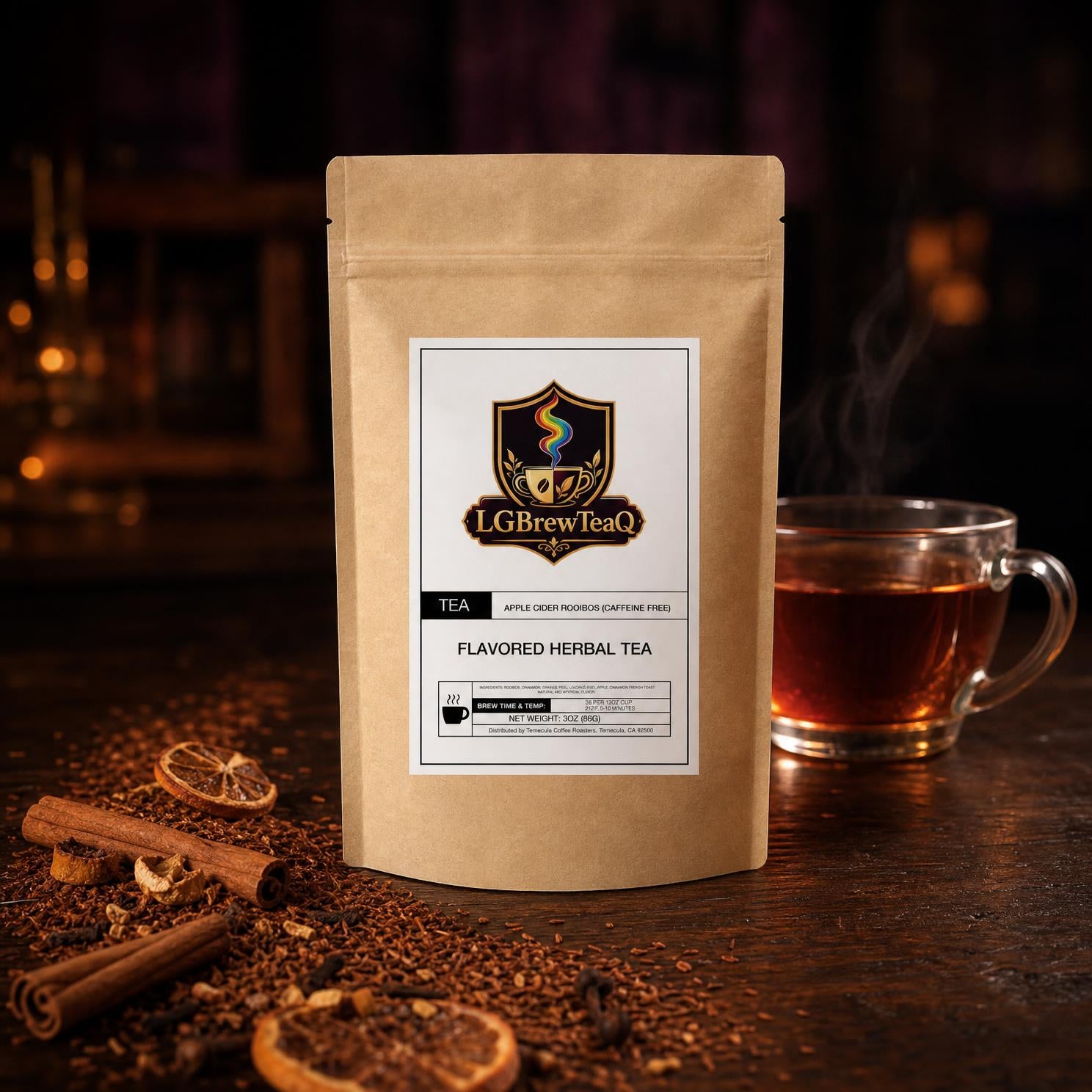
Rooibos. Rooibos is not a sedating herb and should not be marketed as one. You can browse the rooibos blend if that sounds like your evening.
Watch out: a "sleep blend" label is not a dosing instruction. Many commercial sleep teas combine several sedating herbs at unknown ratios, which makes it hard to tell what is working and harder to spot a reaction. Start with single-herb infusions before moving to multi-herb blends.
One more caution on the research itself. A review in Frontiers in Nutrition on tea and sleep regulation discusses tea and sleep broadly, including studies on oolong, which contains caffeine and is therefore not an evening option. For a deeper comparison of sleep blends, our guide to the best herbal tea blends for sleep goes further.
How to Choose and Brew Loose-Leaf Caffeine-Free Herbal Tea
Loose-leaf caffeine-free herbal tea gives you more control over strength, flavor, and aroma than a tea bag, and it usually costs less per cup. The trade-off is that you need to measure and time it yourself.
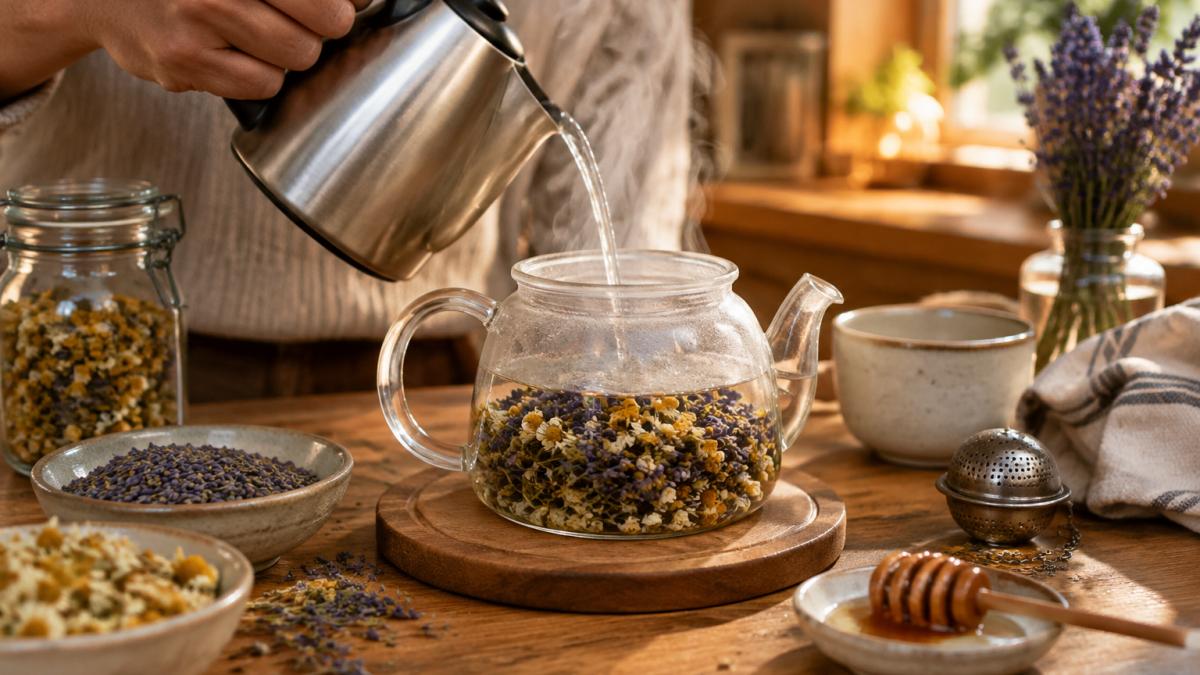
Use this checklist before you buy:
- Ingredients list whole botanicals, not "natural flavors" alone
- The blend names the herbs you actually want
- No caffeine-containing additions like yerba mate or guayusa
- A steeping temperature and time are printed on the package
- The tin or pouch is resealable to protect the aromatics
Then brew with intention:
- Heat fresh water to the temperature the blend calls for
- Measure one to two teaspoons per 8 oz of water
- Steep five to seven minutes in a covered vessel
- Strain fully and sip while warm
For full technique, our loose leaf tea brewing guide walks through water temperature, ratios, and resteeping.
Safety, Interactions, and Who Should Use Caution
Herbal teas can still interact with medications, so review your routine with a clinician or pharmacist.
Sedating herbs. Valerian, passionflower, lemon balm, and skullcap can add to the effects of sedatives, sleep medications, and anxiety prescriptions. That includes prescription sleep aids, benzodiazepines, and over-the-counter sleep products such as diphenhydramine.
Blood pressure and heart medications. Some calming botanicals can affect blood pressure or heart rate, and the effect may be additive with medication.
Pregnancy and breastfeeding. Pregnant and breastfeeding people should check with a clinician before regular use of valerian, passionflower, or skullcap.
Surgery and procedures. Several herbs can affect bleeding or sedation. A common recommendation is to stop concentrated herbal supplements about two weeks before a scheduled procedure; mention your tea habit at the pre-op appointment so your care team can weigh in.
Allergies. Chamomile is in the daisy family, so people with ragweed, chrysanthemum, or other Asteraceae allergies sometimes react to it. Hibiscus is another common sensitizer.
Children and older adults. Both groups are more sensitive to sedating herbs and to concentrated infusions. Keep servings small and dilute for children, and check with a pediatrician before giving valerian or passionflower to anyone under 18.
Watch out: "caffeine-free" does not mean "interaction-free." A tea can be entirely free of caffeine and still contain herbs that interact with prescription medication, so read the ingredient list the same way you would read a supplement label.
Sourcing matters too. If you care about how your botanicals are grown, our overview of the benefits of organic fair trade tea explains what those labels actually cover.
Build Your Evening Tea Ritual with LGBrewTeaQ
The hardest part of a tea ritual is not the brewing. It is remembering to stop. A cup you actually look forward to makes that pause easier, and that is the whole reason we curate evening blends rather than dumping every herb into one tin.
We blend our teas and ship with fast, reliable delivery. Our collection includes lavender, rooibos, and hibiscus blends, along with brewing supplies and equipment. If you are new to loose leaf, start with one tin and a simple infuser. You do not need a full setup to begin.
Ready to make your evenings calmer? Start with a single tin of our lavender or rooibos blend and see how a fifteen-minute ritual changes the end of your day. Get started with LGBrewTeaQ and find the caffeine-free cup that fits your wind-down routine.
Frequently Asked Questions
What is the most calming caffeine-free herbal tea?
There is no single winner, because calming effects vary by person and by blend. Chamomile is a familiar, mild option for relaxation, while lavender delivers a strong floral aroma. Valerian root is traditionally used for sleep support, though the evidence is mixed. A practical approach is to try one single-ingredient tea at a time so you can tell which botanical actually helps you unwind.
Does caffeine-free tea for sleep actually work, or is it just the ritual?
Both matter. Oolong tea contains caffeine, so it is not an evening choice. For caffeine-free options, a warm drink, a quiet pause, and a consistent bedtime cue can support a calming routine. Treat tea as one part of good sleep hygiene rather than a replacement for it, and give any new blend a week or two before judging results.
Is herbal tea always caffeine-free?
No. Most herbal teas are naturally caffeine-free, but yerba mate and guayusa contain caffeine, . If you are shopping for an evening cup, read the ingredient list rather than trusting the word herbal on the front of the box. Blends built on chamomile, lavender, rooibos, lemon balm, or hibiscus are safe bets for a caffeine-free routine.
How long should you steep loose-leaf caffeine-free herbal tea?
Most herbal infusions need five to seven minutes in water just off the boil, roughly 205 to 208 degrees Fahrenheit, and a covered mug helps trap the aromatic oils. Rooibos can steep longer without turning bitter because it is naturally low in tannins. Hibiscus can be brewed hot for five to seven minutes or cold-brewed for eight to twelve hours.
