

How Long Should Coffee Beans Rest After Roasting?
Quick Summary
Most whole coffee beans need somewhere between a few days and a few weeks for coffee beans rest after roasting, depending on roast level and brew method. Light roasts usually need about 10 to 14 days for filter brewing, while dark roasts often settle within 1 to 5 days.
- Light roasts hold the most gas, so they often need the longest rest.
- Light roast whole beans are often rested about 10 to 14 days for filter brewing.
- Espresso with light roasts may need two to three weeks of rest.
- Dark roasts are often ready in about 1 to 5 days.
- Test days 7, 10, 14, and 21 with fixed grind, dose, and water to find your sweet spot.
Table of Contents
- Why Freshly Roasted Coffee Beans Need to Rest
- How Long to Rest Light Roast Coffee
- How Long Should Dark Roast Rest?
- How Long After Roasting Is Coffee Good for Espresso?
- How to Rest Coffee Beans Properly
- How to Tell When Your Beans Are Ready to Brew
- Troubleshooting: What Early or Late Brewing Tastes Like
- Start Your Next Brew With Beans Roasted to Order
- Frequently Asked Questions
Freshly roasted coffee tastes great on day one, but coffee beans rest is needed before they brew at their best. Roasting releases carbon dioxide, and that gas has to escape before the coffee's flavors settle. Most roasters agree that a short rest is necessary, but they disagree on how long.
Here's the short answer: most whole beans need somewhere between a few days and a few weeks to rest, depending on roast level and brew method. Lighter roasts usually need longer coffee beans rest, and dark roasts usually need less. The best rest time is the one that tastes best to you, so use the ranges below as a starting point and adjust from there.
Why Freshly Roasted Coffee Beans Need to Rest
Right after roasting, beans are full of carbon dioxide. That gas is the reason fresh beans bubble and puff when you pour hot water over them. Degassing is the slow release of that gas over time.
Gas trapped inside the bean can interfere with extraction. Water has a harder time evenly dissolving the coffee's flavor compounds, so a too-fresh coffee can taste sour, flat, or sharp. Resting lets the flavors balance out.
Some guides claim a day is plenty, while others recommend longer. The gap between sources is a sign that the answer depends on the bean.
How Long to Rest Light Roast Coffee
Light roasts are the densest and hold the most carbon dioxide after roasting, because they spend less time in the roaster and the cell structure of the bean has not fully opened up. That trapped gas is why light roasts often need the longest rest, and why brewing them too early can make them taste sharp, grassy, or sour.
Light roast whole beans are often rested for roughly 10 to 14 days before filter brewing, and some roasters wait two to three weeks for espresso, where the pressure of the shot makes uneven extraction more noticeable.
Several factors can shift that window:
- Processing: Naturally processed coffees often carry more sugars and fruit notes, and they can taste bolder sooner. Washed coffees tend to show clean acidity earlier in the rest period, though they can still need time to balance.
- Density: Denser beans, often high-altitude coffees, usually hold more gas and may need a few extra days.
- Roast development: A light roast that is pushed toward the end of development degasses more slowly than one roasted to a shorter finish.
To find the window for your bag, brew a small test on days 7, 10, 14, and 21, keeping grind, dose, and water fixed. Note whether the cup gains sweetness and body as the days pass. Once the cup peaks and then begins to flatten, you have found the sweet spot.
Watch out: do not assume a light roast will improve forever. Once the bright, fruity notes fade into flat or papery flavors, the beans are past their best and should be brewed up soon.
The rest window varies by roast and brew method, so here is how the main ranges compare.
| Roast or brew | Typical rest | Note |
|---|---|---|
| Light roast, filter | About 10 to 14 days | Densest beans, hold the most gas |
| Light roast, espresso | Two to three weeks | Pressure shows uneven extraction |
| Dark roast | About 1 to 5 days | Releases more gas during roasting |
| Medium or dark, espresso | About 7 to 14 days | Most sensitive brew method to freshness |
| Pour-over ratio | About 1:16 by weight | Example: 15 g coffee to 240 g water |
| Test schedule | Days 7, 10, 14, 21 | Keep grind, dose, and water fixed |
How Long Should Dark Roast Rest?
Dark roasts have already released more gas during roasting, so they settle faster. Many guides suggest resting dark roast for about 1 to 5 days before brewing.
Dark roasts are often ready sooner, but they can still taste better after a short rest.
How Long After Roasting Is Coffee Good for Espresso?
Espresso is the most sensitive brew method to freshness. Espresso is pressurized, so gas in the beans can cause uneven extraction and unstable shots. Many home baristas wait about 7 to 14 days after roasting before pulling shots with medium or dark roasts, and light roast espresso may need longer.
If you want to start sooner, try a slightly coarser grind and a shorter shot. Once the beans are settled, you can dial in your grind for a richer crema and a smoother shot.
How to Rest Coffee Beans Properly
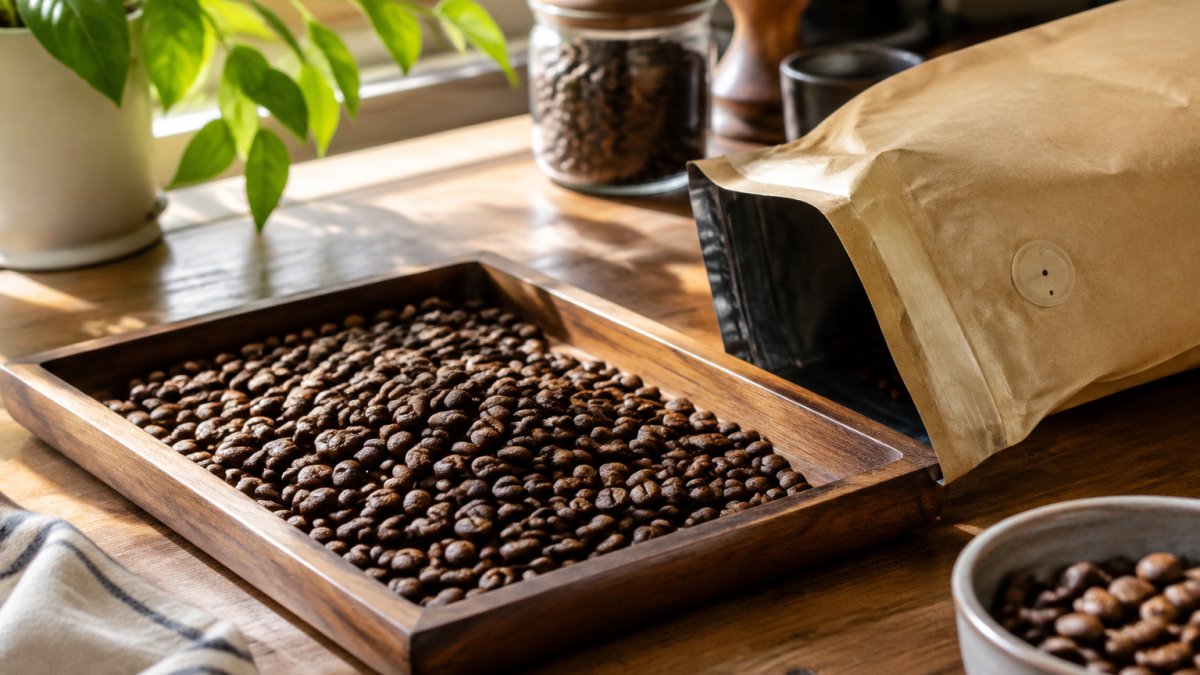
Resting is simple. Keep the beans in their original bag or a sealed container with a one-way valve. Store them in a cool, dry spot away from light, heat, and moisture.
How to Tell When Your Beans Are Ready to Brew
Date ranges are a starting point, but the most reliable way to know your beans are ready is a simple side-by-side test. Keep every variable fixed except rest time so that any change in the cup can be traced back to the beans.
Here is a practical protocol:
- Grind: Use the same burr setting for every test. Grind just before brewing, not in advance.
- Dose and water: Weigh the coffee and water. A common starting point for pour-over is about 1:16 coffee to water by weight, for example 15 g of coffee to 240 g of water.
- Brew method: Use the same method and filter each time, and keep water temperature consistent.
- Log the result: Record the roast date, the day you brewed, and tasting notes for acidity, sweetness, body, and any off flavors.
Brew a small cup on the same schedule, such as every other day for two weeks, and compare the notes. Early in the window, you may notice a sour or sharp edge, a thin body, or a crema that collapses within seconds. As the beans settle, the sweetness usually rises, the body fills out, and the cup tastes more balanced. Once the flavors stop changing noticeably from one test to the next, you've likely found the window for that bean.
Readiness is also a moving target. If a cup tastes flat or woody after you've passed the window, the beans have likely started to stale, and the rest period has ended. Use your log to decide when to buy the next bag, not just when to start brewing.
Watch out: changing the grind, dose, and water at the same time makes it impossible to tell whether the beans or the brew caused the difference. Change one variable at a time.
Troubleshooting: What Early or Late Brewing Tastes Like
Brewing too early usually tastes sour, thin, or bubbly, and the crema may collapse quickly. Brewing too late tends to taste flat, woody, or stale, with fewer aromas. If your coffee tastes off, adjust the rest time first, then tweak the grind size and brew ratio.
Start Your Next Brew With Beans Roasted to Order
Ready to try a fresh-roasted lineup? Our Single Origin Favorites Sample Pack ($24.99) lets you taste six origins in 2 oz pouches, and the Colombia Single Origin Coffee ($23.99) offers a rounded, chocolatey daily cup. Track the rest times above, and find the sweet spot for your brew. Shop Coffee at LGBrewTeaQ to start with beans roasted to order.
BUTTON: Shop Fresh-Roasted Coffee CARD_TITLE: Ready to brew your best cup? CARD_TEXT: LGBrewTeaQ roasts to order and ships fresh coffee and tea straight to your door.
Frequently Asked Questions
How long should you let coffee beans rest?
Most roasters recommend resting coffee for several days to two weeks after roasting, though the range is wide. Published guidance varies: some suggest 1 to 5 days for dark roasts, 5 to 7 days for medium roasts and 10 to 14 days for light roasts, while others say two or three days is enough for many coffees. Because the right window depends on the bean and your brew method, use these ranges as a starting point and taste your coffee over the first two weeks to find your own peak.
How long should light roast coffee rest?
Light roasts generally need the longest rest, often 10 to 14 days according to some roasters, and occasionally up to two to three weeks. Lighter roasts hold more dense, unreleased carbon dioxide because they are roasted for less time, so they degas more slowly. Start tasting around the second week and keep notes so you can find the point where the florals and fruit sweetness are most expressive.
How long after roasting is coffee good for espresso?
Many espresso drinkers wait 7 to 14 days after roasting before pulling shots, since fresh coffee releases gas that can make espresso extraction uneven and produce excess crema bubbling. Dark roasts often hit espresso readiness sooner, around 5 to 7 days, while lighter espresso blends may take longer. Once the bloom settles and your shots extract evenly, the coffee is usually at a good point for espresso.
How do you rest coffee beans after roasting?
Leave the beans whole and unground in their original bag or an airtight container with a one-way valve, away from heat, light and moisture. Avoid sealing them in an airtight jar right away, because the released gas needs somewhere to go. Keep the bag closed between uses and grind only what you need for each brew to protect the flavor as the beans degas.
