

How to Identify High-Quality Espresso Beans?
Quick Summary
High-quality espresso beans show a recent printed roast date, typically 3 to 14 days past roast for reliable shots, plus even color, a clean aroma and a clear roast level. Check these signs before you grind, since freshness affects flavor more than almost anything else.
- Choose a bag roasted within the last 2 to 4 weeks, with a specific printed roast date.
- A one-way valve and resealable bag help protect flavor after roasting.
- Look for even bean color, and avoid greasy, shiny beans that may taste rancid or bitter.
- Fresh beans smell rich and clearly roasted; stale beans smell flat, sour or like cardboard.
- If sourness vanishes with a finer grind or longer shot, it was extraction; if it persists, the beans are the problem.
Table of Contents
- Start With the Roast Date
- Check the Espresso Roast Level on the Label
- Inspect the Beans: Color, Surface Oils and Uniformity
- Smell and Taste for Clean, Balanced Flavor
- Tell Fresh Espresso Beans From Stale Ones
- Judge Origin, Sourcing and Traceability
- Store Your Beans to Keep Them at Their Best
- Choosing Your Next Bag of Fresh Espresso Beans
- Frequently Asked Questions
Start With the Roast Date
Fresh roast date matters more than almost anything else on the bag. Espresso beans start losing their aromatics and crema-building oils within days of roasting, so a bag with no date is a gamble. Look for a roast date printed as a specific day, not just a "best by" date that can sit a year out.
Many home baristas find that beans between 3 and 14 days past roast give the most reliable shots. Beans shorter than that can still be gassy and produce uneven crema. Beans much older tend to taste flat, sour, or woody.
Here is a quick way to judge freshness on the shelf:
- Printed roast date: Choose a bag roasted within the last 2 to 4 weeks.
- One-way valve: A valve lets carbon dioxide escape without letting oxygen in, which helps protect flavor.
- Resealable bag: Helps keep air out once you open it.
- No roast date: Consider skipping the bag, since you cannot confirm freshness.
For more on whether that premium is worth it, read Is Fresh Roasted Coffee Worth the Price? A 2026 Guide.
Check the Espresso Roast Level on the Label
The word "espresso" on a bag describes how the beans are roasted and blended, not a guarantee of quality. Some roasters label beans "espresso" because they consider that roast best for pulling shots. Others leave the choice to the buyer. A Reddit discussion among home baristas makes the same point: the label reflects roaster preference rather than a single industry standard.
So read past the label. Look for the roast level, typically light, medium, medium-dark, or dark, along with tasting notes and recommended brew methods.
For espresso, many buyers look for a medium to dark roast. Darker roasts tend to produce heavier body and thicker crema, while lighter roasts can taste brighter but may need more dialing in to avoid sourness. Our 6 Bean Blend - Dark Roast House Espresso & Coffee at $23.99 is roasted for a syrupy body and dense crema, with tasting notes of dark chocolate, walnut, and molasses.

Inspect the Beans: Color, Surface Oils and Uniformity
Beans can tell you a lot before you ever grind them. Pour a small handful onto a white plate and look closely.
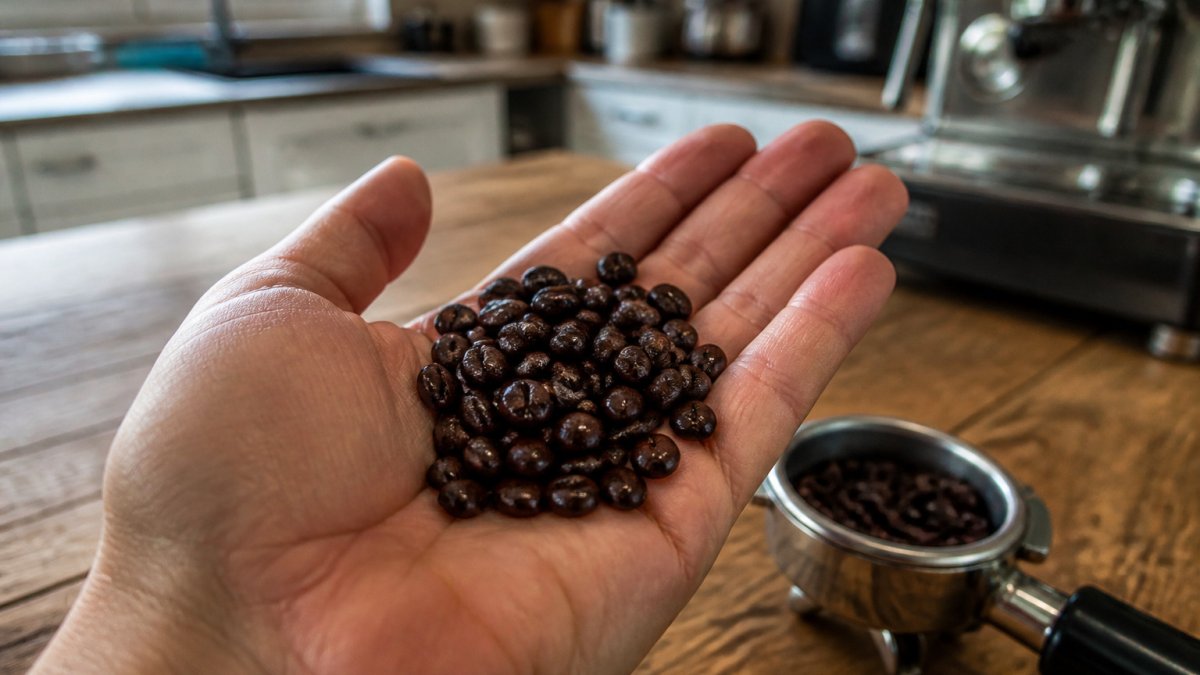
- Even color: Beans should be consistent in color within the same roast level. Mixed shades can mean uneven roasting.
- Surface oils: Dark roasts naturally have a glossy sheen. Excess oil on a lighter roast can signal a roast that went too far, or beans that are stale.
- Size and shape: Uniform beans roast more evenly and extract more predictably.
- Defects: Look for broken beans, chaff, and dark, burnt spots. Remove them before grinding.
Watch out: beans that look very shiny and feel greasy to the touch often taste rancid or bitter, so skip them.
Smell and Taste for Clean, Balanced Flavor
Your nose is one of the best quality tests you have. Open the bag and smell it. Good espresso beans smell rich and clearly roasted, with notes of chocolate, caramel, nuts, or fruit depending on the blend.
Avoid beans that smell flat, sour, or like cardboard. A sharp, sour smell can point to stale beans or an underdeveloped roast. Strong smoky or ashy notes may mean the beans were burned.
Sourness versus desirable acidity
This is the distinction most buyers miss. Some coffees are supposed to taste bright. A washed East African coffee or a light-roasted blend may carry lemon, berry, or stone-fruit acidity that reads as vivid and pleasant. That is desirable acidity, and it should come with sweetness and a clean finish.
Under-extracted sourness is different. It tastes sharp, hollow, and vinegar-like, and it usually arrives without sweetness to balance it. Use these cues to tell them apart:
- Desirable acidity: Brightness sits in the middle of the sip, sweetness follows, and the finish is clean. The sensation feels integrated rather than prickly.
- Under-extracted sourness: The sour note hits immediately and dominates, the middle of the sip feels empty, and the finish is short or metallic. It often comes with a thin body.
- Bean defect sourness: A sour, cardboard, or rubbery note that persists across grind, dose, and temperature changes usually points to the beans themselves, not the extraction.
Taste checks that separate bean quality from brew problems
Taste matters even more than smell. When you pull a shot, look for:
- Balanced sweetness: Notes of chocolate or caramel that round out the acidity.
- Pleasant acidity: A bright edge that supports the sweetness instead of replacing it.
- Clean finish: No harsh, ashy, or rubbery aftertaste.
A useful check is to brew the same beans as a simple immersion cup, such as a French press, using a coarse grind and a 4-minute steep. If the cup tastes sweet and balanced but the espresso tastes sour, the beans are fine and the espresso is under-extracted. If the immersion cup also tastes sour or papery, the beans are the problem.
Our African Espresso at $23.99 is a medium-dark blend with dark cocoa, berry, and floral notes, built for clean, vibrant espresso. Expect its berry note to read as brightness, not as the hollow sourness of a bad extraction.

Tell Fresh Espresso Beans From Stale Ones
Freshness changes both aroma and extraction, so it is worth knowing the signs of stale coffee. Fresh beans release a strong smell when ground and produce a thick, golden crema. Stale beans smell weak or papery, and their shots often pour thin and fade quickly.
6 Bean Blend - Dark Roast House Espresso & Coffee →
A common mistake is blaming the grinder or machine when the beans are simply old. If your shots taste sour and thin no matter how you adjust the grind, check the roast date first.
A measurable freshness check
Instead of guessing from smell alone, use the same dose, grind, and yield and compare the shot against a known-good baseline. Most practitioners find that a fresh bag and a stale bag of the same coffee behave differently in predictable ways:
- Flow and time: A very fresh roast (under about 3 days) can run fast and gushy because trapped carbon dioxide pushes water through the puck. A stale bag often runs faster too, but for the opposite reason: the puck offers less resistance as oils oxidize and fines migrate.
- Crema: Fresh shots build a thick, persistent crema that holds for several minutes. Stale shots produce a thin ring that dissipates within about a minute.
- Puck condition: A fresh puck knocks out in a firm, cohesive disk. A stale puck often crumbles or leaves muddy residue on the basket.
- Taste trajectory: Fresh beans taste sweet and balanced at a normal 1:2 ratio in roughly 25 to 30 seconds. Stale beans taste flat, papery, or woody no matter how you adjust grind or dose.
The degassing window
Beans release carbon dioxide for days after roasting. A common pattern is that espresso is most predictable between roughly 5 and 14 days past roast, though darker roasts degas faster and lighter roasts can stay gassy longer. If a bag is only 1 to 2 days old and your shots are erratic, the beans may simply need a few more days rather than a grind change.
What staleness is not
Stale beans are not the same as beans that taste sour because of under-extraction. If your shot is sour but the crema is thick and the puck is firm, the beans are probably fine and the problem is in the grind, dose, yield, or temperature. Check the roast date first, then move to extraction variables only if the beans are within a reasonable window.
For storage tips that help beans last longer, see How Do You Store Coffee Beans Without a Container?
The table below sums up the freshness signs the article describes, so you can check a bag quickly against each one.
| Freshness sign | Fresh beans | Stale beans |
|---|---|---|
| Aroma when ground | Strong, rich smell | Weak or papery smell |
| Crema | Thick, golden, lasts several minutes | Thin ring, gone within about a minute |
| Puck after shot | Firm, cohesive disk | Crumbles, leaves muddy residue |
| Taste at 1:2 ratio | Sweet and balanced | Flat, papery or woody |
| Roast age | Typically 3 to 14 days past roast | Much older, tastes flat or sour |
Judge Origin, Sourcing and Traceability
Origin tells you where the coffee grew, and traceability tells you how well it was documented along the way. Good specialty beans often name the country, region, farm, or cooperative. Single-origin coffees make it easier to taste the regional character, such as fruit notes from East Africa.
Blends can be just as good, but ask whether the roaster explains where the beans come from and how they were sourced. Vague labels like "premium beans" give you little to judge.
At LGBrewTeaQ, we focus on carefully sourced beans from trusted farms and relationships built on respect for growers.
Store Your Beans to Keep Them at Their Best
Once you have high-quality beans, storage decides how long they stay at their best. Keep beans in an airtight container away from heat, light, and moisture. The fridge and freezer can cause condensation, so most people store beans at room temperature in a cool, dark cabinet.
- Use an opaque, airtight container.
- Keep it away from the stove, sink, and sunny windows.
- Only grind what you need right before brewing.
- Buy quantities you can use within a few weeks.
If you do not own a proper container, you can still store beans well with a few simple tricks. Read How Do You Store Coffee Beans Without a Container? for practical options.
Choosing Your Next Bag of Fresh Espresso Beans
Put it all together and choose beans with a recent roast date, a clear roast level, even color, and a clean aroma. Check the origin and sourcing details, and store the beans well once they arrive. Good espresso starts at the bag, not just at the machine.
Our Italian Roast at $23.99 pairs dark chocolate and smoky molasses with a thick, golden crema, and it holds up well in a Moka pot or on a French press. Before you choose, compare your options in Best Coffee Beans for Home Espresso Machines.

Frequently Asked Questions
How fresh should espresso beans be for espresso?
Look for a roast date on the bag rather than a best-by date.
What roast level is best for espresso?
Check the roast level on the label and choose the profile you like in milk drinks and straight shots. Our 6 Bean Blend and Italian Roast are both dark roasts built for espresso.
How do you know if espresso beans are stale?
Stale beans smell flat or cardboard-like, look dull rather than slightly oily, and produce shots that taste hollow or bitter with little sweetness. Fresh beans have a noticeable aroma when you open the bag. If your shots pour quickly and taste thin no matter how you adjust the grind, the beans may be past their peak. Buying in smaller, freshly roasted quantities and storing them correctly makes staleness much less likely.
Should espresso beans look oily?
A light sheen of oil on darker roasts is normal and often a sign of a deeper roast level. Very dark beans can look quite glossy, while lighter roasts usually look dry and matte. Oil that appears on freshly roasted beans is a natural result of roasting, but beans that look greasy all over, or that smell rancid, may be old or poorly stored. Judge oil alongside aroma and roast date rather than appearance alone.
