

Light Roast vs Dark Roast Caffeine Content
Last Updated: October 29, 2026
Quick Summary
The light roast vs dark roast caffeine content difference is small, and roast caffeine levels often run opposite to what people expect. A Healthline summary of a 2018 brewing study reported about 60 mg in a light-roast brewed sample versus 51 mg in the same amount of dark-roast brewed coffee, a gap of roughly 9 mg.
- Caffeine is heat-stable through roasting, so roasting removes mass, not caffeine.
- Weigh 18 grams of each roast and the denser light roast gives you fewer beans.
- Scoop by volume and the lighter, larger dark roast beans can pack in more caffeine.
- Brewing method moves caffeine far more than roast level does.
- A 16-ounce mug of drip coffee can carry roughly double the caffeine of an eight-ounce cup.
Table of Contents
- Light Roast vs Dark Roast Caffeine Content: The Short Answer
- How Roasting Changes Bean Size, Mass, and Density
- Coffee Beans Measured by Weight vs Volume
- What the Studies Actually Show About Roast and Caffeine
- Blonde Roast vs Dark Roast Caffeine: A Like-for-Like Comparison
- Coffee Caffeine Content by Brewing Method
- Light Roast vs Dark Roast Flavor: Why Bold Does Not Mean Stronger
- Pick Your Roast at LGBrewTeaQ
- Frequently Asked Questions
Light Roast vs Dark Roast Caffeine Content: The Short Answer
The light roast vs dark roast caffeine content question has a surprisingly boring answer: the difference is small, and it often runs opposite to what people expect. A Healthline summary of a 2018 brewing study reported about 60 mg of caffeine in a light-roast brewed coffee sample versus 51 mg in the same amount of dark-roast brewed coffee, a gap of roughly 9 mg. That is about a tenth of a typical cup, not a jolt.
Here is the part most drinkers get wrong. Dark roast tastes stronger, so we assume it hits harder. It usually does not. Below, we break down what the research actually says, how weight and volume change the math, and how to pick a roast based on what you want from the cup.
How Roasting Changes Bean Size, Mass, and Density
Roasting is a controlled loss of mass. Green coffee beans start dense and heavy with moisture. As the drum heats them, water evaporates, sugars caramelize, and the bean expands. Bean size grows, bean mass drops, and bean density falls. A dark roast spends longer in the roaster, so it loses more weight and swells further than a light roast.
That physical change matters for caffeine because caffeine itself is remarkably heat-stable. The roasting process does not burn off meaningful caffeine. What changes is everything around it: the bean's weight, its volume, and how easily water reaches the compounds inside. A darker, more porous bean gives up its solubles faster during extraction, which is why dark roast can taste bolder even when the caffeine load is similar or slightly lower.
Coffee Beans Measured by Weight vs Volume
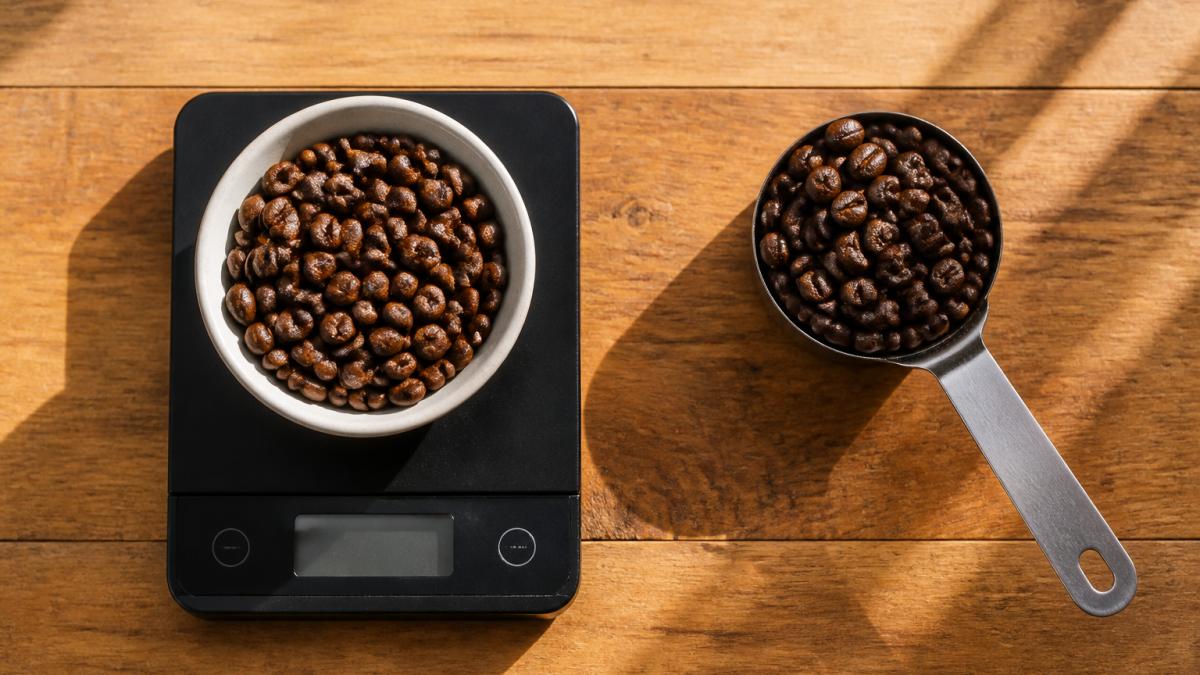
This is where the confusion starts, and it is the single most important distinction in the whole debate. Caffeine by weight and caffeine by volume are two different measurements, and they can point in opposite directions.
Weigh 18 grams of light roast and 18 grams of dark roast. The light roast beans are denser, so you get fewer beans in that dose. The dark roast beans are larger and lighter, so you get more beans.
Now measure by volume. Fill the same scoop with each. The dark roast, being less dense, packs fewer grams into that scoop. A Daily Coffee News summary of roast research noted that darker roasts showed higher caffeine concentration per unit of extracted coffee but lower overall extraction yields.
| Measurement Method | What It Captures | Typical Result |
|---|---|---|
| Caffeine by weight | Caffeine per gram of ground coffee | Light roast often slightly higher |
| Caffeine by volume | Caffeine per scoop | Dark roast often slightly higher |
| Caffeine per brewed cup | What you actually drink | Depends on dose and brew ratio |
| Caffeine per bean | Caffeine per individual bean | Roughly equal across roasts |
The practical takeaway: if you brew by weight, a light roast may edge out a dark roast. If you scoop, the dark roast may win. Neither is wrong. The measurement method decides the winner.
What the Studies Actually Show About Roast and Caffeine
The evidence is thinner and messier than most articles admit, but it is not empty. The useful move is to separate what is well established from what is small, variable, or simply repeated. Here is the honest hierarchy.
Well established: caffeine is heat-stable through roasting. Caffeine does not meaningfully degrade at typical roast temperatures, which is why the chemistry literature and roaster-side analyses consistently find caffeine largely intact across roast levels. This is the finding that anchors everything else. If caffeine survived roasting poorly, dark roast would be reliably weaker, and it is not.
Well established: roasting removes mass, not caffeine. A darker roast spends longer in the drum, loses more water and organic mass, and ends up lighter per bean.
Small and variable: cup-level differences between roasts. The Healthline summary of a 2018 brewing study reported about 60 mg in a light-roast brewed sample versus 51 mg in the same amount of dark-roast brewed coffee. The Daily Coffee News summary of roast research makes the same point from the other direction: darker roasts can show higher caffeine concentration per unit of extracted coffee while delivering lower overall extraction yields.
Repeated but weakly supported: 'dark roast is stronger.' Kicking Horse Coffee and other roaster-side sources report virtually equal caffeine by weight across roast levels, which aligns with the chemistry. Claims that one roast is dramatically more potent usually trace back to a single study, a volume-based scoop comparison, or a perceived-strength impression rather than a controlled like-for-like measurement.
What does that mean for you? Treat any claim that one roast is dramatically stronger as marketing, not science. The roast-caffeine relationship is real but small, and it is easily overwhelmed by how much coffee you use and how you brew it. The practical takeaway is to trust the mass-balance explanation, treat cup-level gaps as modest and method-dependent, and adjust your dose before you adjust your roast color.
Blonde Roast vs Dark Roast Caffeine: A Like-for-Like Comparison
Blonde roast is simply a light roast by another name, and the blonde roast vs dark roast caffeine comparison follows the same rules. To make it fair, hold everything constant except the roast: same dose in grams, same grind, same water temperature, same brew time.
Do that, and the caffeine gap is modest. The blonde roast, being denser, may deliver marginally more caffeine per gram. The dark roast, being more porous, may extract faster and taste stronger. If you scoop instead of weigh, the dark roast can pull ahead because more beans fit in the scoop.
Our Blonde is a light-medium roast with Meyer lemon, honeyed peach, and delicate jasmine notes, built for a naturally sweet espresso shot.

Coffee Caffeine Content by Brewing Method
Brewing method moves caffeine far more than roast level does, and serving size compounds it. The ranges below are practical estimates for common methods and sizes, not lab guarantees. Bean variety, dose, grind, and extraction all shift the result, so treat them as a starting point for planning intake rather than a precise label.
| Method | Estimated Caffeine |
|---|---|
| Drip coffee | 80-100 mg |
| Drip coffee | 160-200 mg |
| Espresso | 60-65 mg |
| French press | 80-110 mg |
| Cold brew | 100-150 mg |
| Instant coffee | 30-60 mg |
A few patterns explain most of the spread. Espresso concentrates caffeine into a small volume, but a single shot still contains less total caffeine than a full mug of drip because the dose of grounds is smaller. French press and cold brew steep longer and often use more coffee per unit of water, so they tend to land higher per serving. Instant coffee is diluted by its own processing and typically lands lower.
Serving size is the lever most drinkers underestimate. A 16-ounce mug of drip coffee can carry roughly double the caffeine of an eight-ounce cup from the same pot. If you are managing intake, cup size and brew ratio deserve more attention than the roast label. A light roast brewed strong in a 16-ounce mug will beat a dark roast brewed weak in an 8-ounce cup every time.
For a deeper look at lower-caffeine options and timing, see our guide to the best low caffeine coffee beans for afternoon productivity. And if you are deciding between brewers, our comparison of moka pot vs siphon brewing covers how each method shapes the cup.
Light Roast vs Dark Roast Flavor: Why Bold Does Not Mean Stronger
The light roast vs dark roast flavor divide is where perception and chemistry part ways. Light roasts keep more of the bean's origin character: acidity, fruit, floral notes, and a lighter body. Dark roasts develop deeper caramelization and oils, producing smoky, bittersweet, chocolate-heavy flavors with low acidity. The bold flavor reads as strength, but it is roast character, not extra caffeine.
Our French Roast is the case in point. It is a dark blend of Arabica and Robusta roasted into the second crack, with bittersweet chocolate, toasted walnut, and sweet woodsmoke. The Robusta adds body and crema, and Robusta naturally carries more caffeine than Arabica, so species matters alongside roast. That is a point most roast-versus-roast comparisons skip entirely.

If bold flavor is the goal, dark roast wins. If caffeine is the goal, check your dose and your bean species first.
Pick Your Roast at LGBrewTeaQ
Choosing a roast comes down to what you want from the cup, not a caffeine scoreboard. We roast to order in small batches.
- Want brightness and clarity? Reach for our Blonde, a light-medium roast with citrus and floral notes.
- Want a smooth daily cup? Our Breakfast Blend is a balanced medium roast with milk chocolate and graham cracker.
- Want bold and smoky? Our French Roast and 6 Bean Blend deliver deep, low-acidity intensity.
- Not sure yet? Our Best Sellers Coffee Tasting Flight packs six 2 oz roasts so you can compare light, medium, and dark side by side.
Every bag is $23.99, and the tasting flight is $24.99.
Frequently Asked Questions
Does blonde roast have more caffeine than dark roast?
By weight, the difference is small and often overstated. A 2018 study summary reported about 60 mg of caffeine in a light-roast brewed sample versus 51 mg in the same amount of dark-roast brewed coffee. By volume, blonde roast can edge ahead because lighter beans are denser, so a scoop holds more coffee mass. Neither roast is a high-caffeine shortcut; your dose and brew method matter more than roast level.
Does the darkness of a coffee roast affect its caffeine content?
Roasting does not add or remove much caffeine from the bean, but it changes the bean's mass and density. In practice, the roast caffeine gap is smaller than most people expect, and how you measure your coffee shifts the result more than the roast profile does.
How does brewing method affect caffeine in light and dark roast coffee?
Brewing method changes caffeine per cup far more than roast level. Espresso concentrates caffeine into a small volume, drip coffee extracts steadily over minutes, and French press keeps more oils and sediment in the cup. A dark roast brewed as espresso can deliver more caffeine per serving than a light roast brewed as drip, which is why coffee caffeine content by brewing method deserves more attention than the roast debate.
Does dark roast taste stronger because it has more caffeine?
No. Dark roast tastes bolder because the roasting process develops smoky, bittersweet, chocolatey flavors and reduces acidity, not because it carries more caffeine. The strong taste comes from roast profile and oils on the bean surface.
Which has more caffeine, light roast or dark roast, if I use a scoop?
A scoop of light roast usually contains more coffee by weight than a scoop of dark roast, because lighter beans are denser and smaller after less volume expansion during roasting. That means a scoop-based measurement can make light roast look higher in caffeine. Weighing your coffee on a scale removes that variable and gives you a consistent cup regardless of roast level.
The roast on the label tells you less about caffeine than the scale on your counter. If you want to taste the difference for yourself, start with a flight and brew each roast by weight. Get started with LGBrewTeaQ and find the roast that fits your morning.
