

7 Reasons Loose Leaf Tea Has More Caffeine Than Bags
Last Updated: November 18, 2026
Quick Summary
Not always. A 2025 study measured black tea from cup-sized bags at 39 ± 9.9 mg of caffeine per 200 mL versus 24 ± 7.2 mg for loose-leaf black tea, so loose leaf tea caffeine depends on your leaf quantity, leaf size, steep time, and water temperature rather than format alone.
- Weigh 2.0 g of loose leaf against one 2.0 g bag and brew both in 200 mL of water at the same temperature.
- A bag weight difference of 1.5 g versus 2.5 g alone can shift caffeine by roughly 25%.
- Whole leaves release caffeine more slowly than cut leaves, so steep time matters.
- Black tea typically ranges 40-70 mg per 8 oz cup, while green tea ranges 20-45 mg.
- Five minutes is a sensible steep ceiling for most black teas before bitterness takes over.
Table of Contents
- Does Loose Leaf Tea Have More Caffeine? The Short Answer
- How Much Caffeine in Tea Leaves Before You Brew
- Loose Leaf vs. Tea Bags: A Like-for-Like Comparison
- Your Tea Caffeine Content Chart by Tea Type
- What Tea Has More Caffeine, Black or Green?
- How Much Caffeine in Tea vs Coffee Per Cup
- Brewing Variables That Change Caffeine Per Cup
- Myths About Loose Leaf Tea and Caffeine
- Frequently Asked Questions
Does Loose Leaf Tea Have More Caffeine? The Short Answer
Not always. A 2025 study in Determination of L-Theanine and Caffeine Contents in Tea Infusions measured black tea from cup-sized bags at 39 ± 9.9 mg of caffeine per 200 mL, versus 24 ± 7.2 mg per 200 mL for loose-leaf black tea. So in that test, the bags won.
Format alone doesn't decide caffeine. Leaf quantity, leaf size, steep time, and water temperature do most of the work.
Below, we'll show you how to compare loose leaf tea caffeine against bagged tea like a lab tech would.
Why Format Alone Doesn't Decide Caffeine
Loose-leaf tea is the dried, unbroken leaf of the tea plant, Camellia sinensis. A tea bag holds the same plant, usually cut into smaller pieces. Neither format has a fixed caffeine level built in.
Three things drive caffeine per cup:
- How much dry leaf you use. More leaf means more caffeine.
- How much of that leaf's caffeine actually extracts. Small pieces give it up faster.
- How long and how hot you steep. Both push extraction further.
A generous scoop of whole leaf can out-caffeine a single bag. A stingy scoop of the same leaf can lose to it. That's the whole game.
How Much Caffeine in Tea Leaves Before You Brew
The catch is that you never eat the leaf, so dry weight tells you little about your cup.
Caffeine Per Gram vs. Caffeine Per Cup
Think of caffeine per gram as the raw material and caffeine per cup as what you actually drink. Only part of the caffeine in the dry leaf lands in your mug.
This split explains the confusion. Two teas with identical caffeine per gram pour very different cups if you use one level teaspoon of the first and a heaping tablespoon of the second.
So the useful question isn't "which leaf is stronger?" It's "how many grams am I brewing, and how well does my method extract them?"
Loose Leaf vs. Tea Bags: A Like-for-Like Comparison
Here's the fair test. Weigh both teas on the same scale, brew them in the same water volume at the same temperature for the same time, then compare. Change one variable and you've learned nothing.
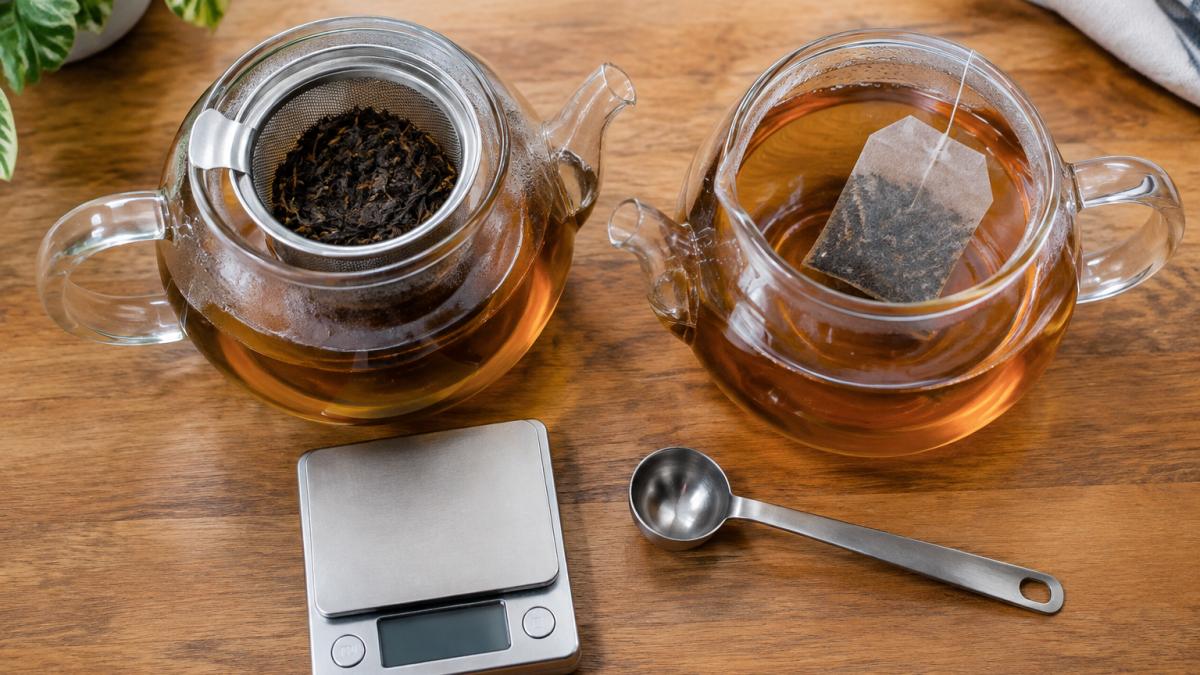
| Factor | Loose Leaf | Tea Bags | Effect on Caffeine |
|---|---|---|---|
| Leaf size | Whole and large pieces | Cut, broken, often dust | Bags extract faster |
| Typical serving | 2-3 g, measured by scoop | Fixed 2 g per bag | Loose leaf varies more |
| Steep time needed | Longer, 3-5 minutes | Shorter, 2-4 minutes | Bags peak sooner |
| Surface area | Low | High | Bags release caffeine quicker |
| Control over strength | Full | Limited | Loose leaf adjusts easier |
If you're switching formats, a basket that handles fine particles makes the transition easier. Our guide to the Top 5 Best Tea Infusers for Fine Leaf Tea covers the options worth considering.
A Controlled Method You Can Run at Home
Most comparisons fail because they change several variables at once. To get a like-for-like read on loose leaf tea caffeine versus bagged tea, hold these four constant:
- Dry tea weight. Use a 0.1 g digital scale. Weigh 2.0 g of loose leaf and use one 2.0 g bag. If your bag is 1.5 g or 2.5 g, note it; that difference alone can shift caffeine by roughly 25%.
- Water volume. Brew each in 200 mL (about 6.8 fl oz) of water. A standard 8 oz cup is 237 mL, so scale your expectations if you use a mug.
- Water temperature. Use the same temperature for both. For black tea, 200-212°F is typical; for green tea, 160-180°F.
- Steep time. Start with 3 minutes for both, then repeat at 5 minutes. The direction of the result can flip between those two points.
Measure the finished liquid, not the dry leaf. Caffeine per gram tells you the raw material; caffeine per brewed serving tells you what you actually drink. A kitchen scale and a timer get you most of the way.
What the 2025 Black Tea Study Actually Measured
Whole leaves release caffeine more slowly than cut leaves, so steep time matters. Run the controlled method at both times and you'll see the difference for yourself.
Watch out: if you compare a 3 g scoop of whole leaf against a 2 g bag, you have changed two variables at once and cannot attribute the difference to format.
Your Tea Caffeine Content Chart by Tea Type
Tea type matters, but less than brewing. Here's a general guide to typical caffeine ranges for 8 oz cups, using standard brewing:
| Tea Type | Caffeine Level | Typical Range per Cup | Notes |
|---|---|---|---|
| Black tea | High | 40-70 mg | Highest of the true teas |
| Oolong tea | Medium-high | 30-50 mg | Varies with oxidation |
| Green tea | Medium | 20-45 mg | Cooler water, shorter steep |
| White tea | Low-medium | 15-30 mg | Young buds and leaves |
| Herbal tea | None | 0 mg | Tisanes contain no tea plant |
Typical Range per Cup
Herbal teas aren't true teas at all. They're tisanes made from flowers, roots, and herbs, so they carry no caffeine unless a label says otherwise.
One more wrinkle: young leaves and buds hold less caffeine than mature leaves. That's why white tea, picked early, tends to run lower than black tea picked later in the season.
What Tea Has More Caffeine, Black or Green?
Black tea usually wins, and processing explains why. Both come from the same plant, but black tea is fully oxidized, while green tea skips oxidation (pubmed.ncbi.nlm.nih.gov).
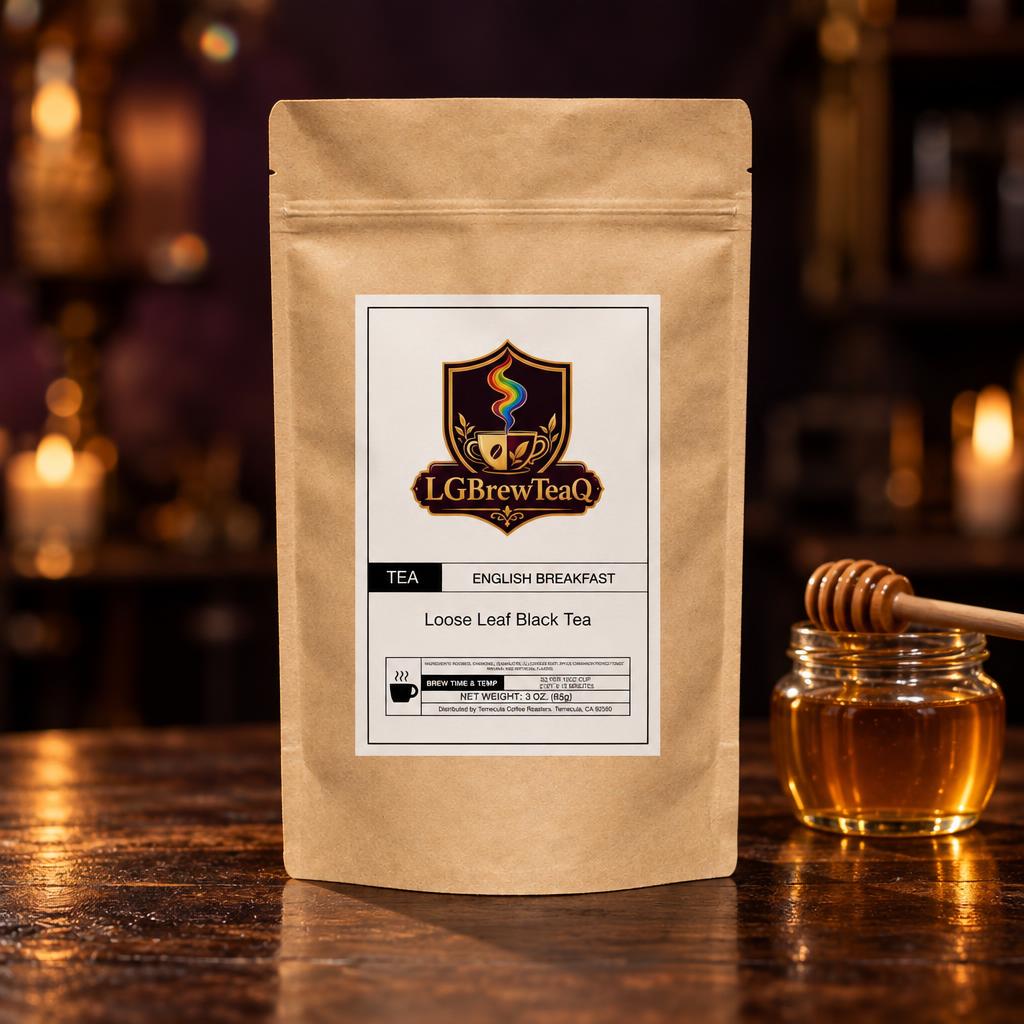
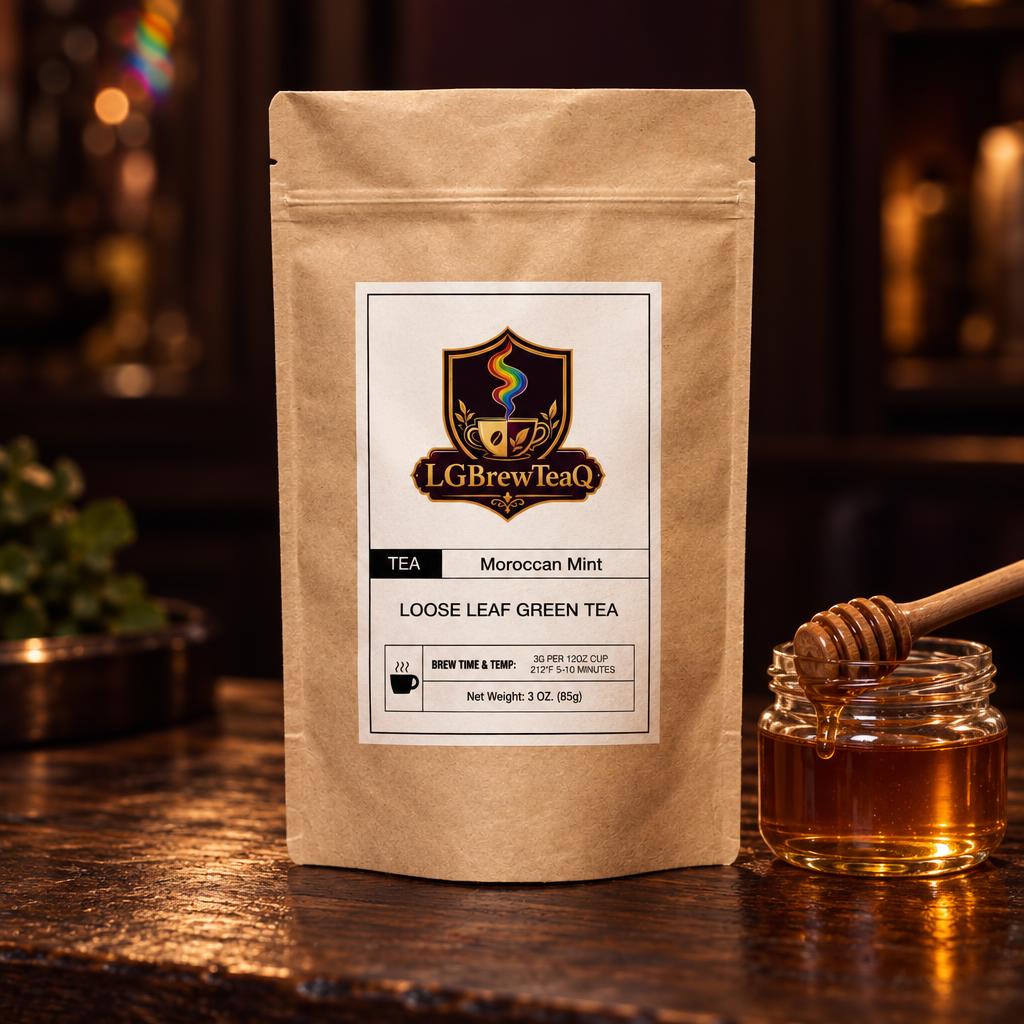
The gap isn't huge, though. A strong green tea can beat a weak black tea any morning of the week. If you want the higher-caffeine option to test at home, our English Breakfast loose leaf black tea lists a high caffeine level and a whole-leaf profile. For a side-by-side, try our Moroccan Mint loose leaf green tea, which lists a moderate caffeine level.
How Much Caffeine in Tea vs Coffee Per Cup
Coffee wins on caffeine, and it isn't close. Tea generally carries less caffeine per cup than coffee, depending on type and brew strength.
If you're cutting back on coffee, tea gives you room to maneuver, since strength varies by tea type and brew.
The practical takeaway: tea lets you dial the dose in small steps, while coffee gives you one big setting and a jolt.
Brewing Variables That Change Caffeine Per Cup
Four levers control how much caffeine lands in your mug. Pull them one at a time and you can hit the same cup strength every time.
- Leaf quantity. A level teaspoon of fine leaf weighs more than a heaping teaspoon of whole leaf. Weigh once, then trust your scoop.
- Leaf size. Broken leaves extract fast; whole leaves extract slow.
- Steeping time. Longer steep, more caffeine, up to a point.
- Water temperature. Hotter water pulls caffeine faster.
A Practical Way to Estimate Your Cup
You do not need a lab to get close. Use this approach to think through how leaf quantity, cup size, tea type, and steeping choices affect your cup.
- Start with dry leaf weight. Weigh your scoop once. A level teaspoon of fine black tea is often 2-2.5 g; a heaping teaspoon of whole leaf can be 2.5-3 g. Write the number on the tin.
- Consider leaf quantity and tea type. Black, green, and white teas differ in caffeine, and cultivar and harvest shift the amount in each cup.
- Scale to your cup. Multiply your grams by the per-gram figure, then adjust for water volume. A 12 oz mug with the same 2 g of leaf is more dilute per sip than an 8 oz cup, even though the total caffeine in the mug is the same.
- Adjust for steep time and temperature. A 3-minute steep extracts less than a 5-minute steep. Cooler water for green tea slows extraction, so a 160°F steep pulls less caffeine than a 200°F steep on the same leaf.
Leaf Size, Steeping Time, and Water Temperature
Whole leaves generally take longer to release their flavor than cut leaves.
Temperature matters just as much. Boiling water extracts fast; green tea brewed cooler extracts slower, protecting flavor but lowering caffeine. Our step-by-step guide on how to steep loose leaf tea properly walks through times and temperatures for each style.
For the full picture on ratios, water volume, and re-steeping, see our complete guide to brewing specialty loose leaf tea.
How Many Infusions Affect Total Intake
Loose leaf tea can often be brewed more than once from the same leaves.
Myths About Loose Leaf Tea and Caffeine
Myth one: loose leaf always has more caffeine. Format is not destiny.
Myth two: tea bags are just dust and have no caffeine. Small pieces release flavor and caffeine at a different rate, not less.
Myth three: herbal tea is a low-caffeine tea. Herbal blends contain no tea plant, so they carry none unless something else is added.
Myth four: white tea is caffeine-free. It isn't. Young buds and leaves simply hold less than mature leaves.
Myth five: a longer steep always means more caffeine. Past a point, you're extracting bitterness, not more stimulant. Five minutes is a sensible ceiling for most black teas.
The honest answer to "does loose leaf tea have more caffeine" is: it depends on your scoop, your leaf, and your steep. Measure those three and you'll know your cup better than any chart can tell you.
Caffeine is personal. The only way to know your real intake is to control your variables: weigh your leaf, time your steep, and adjust from there. That's exactly how we'd approach it at LGBrewTeaQ, where our teas are sourced with that kind of care and shipped fresh to your door. Every order is roasted or packed to order, with fast, reliable delivery and a simple ordering process that lets you swap blends as you learn what suits you.
Frequently Asked Questions
Does loose leaf tea have more caffeine than tea bags?
Not automatically. Format alone does not settle the question. When you brew the same weight of dry leaf for the same time, the two formats can land close together. Loose leaf tea caffeine depends on how much leaf you scoop, how long you steep, and your water temperature, so a generous 2-teaspoon pour of whole leaf can easily out-caffeinate a single bag.
What tea has more caffeine, black or green?
Black tea usually edges out green, but the gap is smaller than most people expect. Both come from the same tea plant, and the difference comes down to leaf maturity and processing rather than color. Black teas are often made from more mature leaves and brewed hotter and longer, which pulls out more caffeine. Green teas like gunpowder or sencha are often brewed at cooler temperatures than black tea, so a cup can land lower. Matcha is the exception: you consume the whole ground leaf.
How much caffeine is in tea compared with coffee?
Black tea generally carries less caffeine per cup than brewed coffee, and green tea usually sits lower still. If you are cutting back, swapping a coffee for a tea can lower your dose while still giving you a morning lift. Check serving sizes on any label.
Does steeping tea longer increase its caffeine?
Yes, up to a point. Caffeine is water-soluble and keeps extracting as long as the leaves stay in hot water. Longer steeps generally extract more from the leaves, though very long steeps can add bitterness. Whole-leaf teas release their contents more slowly than broken leaves.
