

9 Environmental Costs of Specialty Coffee Processing
Last Updated: October 30, 2026
Quick Summary
Coffee processing decides much of coffee's environmental cost, mainly through water use, drying energy, wastewater and pulp waste. Washed processing demands the most water, natural processing the least, and drying energy and wastewater treatment can change the carbon and pollution outcome more than the method label alone.
- Washed processing has the highest process water demand, while natural processing has the lowest.
- Natural processing generates little wastewater, which is one reason it often scores better on water metrics.
- Ask whether a producer treats its effluent, not just which processing method it uses.
- Pulp left in piles can ferment and release emissions, but composting returns it to the land as a soil amendment.
- Certifications signal standards met but do not measure the water or carbon footprint of a specific lot.
Table of Contents
- Why Processing Matters More Than Most Coffee Drinkers Think
- How Coffee Processing Methods Differ
- Coffee Processing Water Usage Compared Across Methods
- Carbon Footprint and Energy in Drying and Processing
- Coffee Wastewater Treatment and Pollution Risks
- Coffee Pulp Waste Management and Soil Impacts
- Certifications, Regional Differences and Where the Data Is Thin
- Choosing a Lower-Impact Cup: Your Next Step with LGBrewTeaQ
- Frequently Asked Questions
Most coffee drinkers never think about what happens before the beans reach their roaster. Yet the processing stage, where the cherry is removed from the seed and dried, is where a large share of coffee's environmental cost is decided. Processing is a stage of coffee production where environmental impact is decided. At LGBrewTeaQ, we think the choice of processing method deserves as much attention as the origin on the bag.
Why Processing Matters More Than Most Coffee Drinkers Think
Specialty coffee buyers often focus on origin, roast level and tasting notes. Those factors shape flavor, but the environmental story starts earlier.
Processing sits between harvest and roasting, and it draws on water, energy and land. Those inputs vary widely by method, which is why the processing choice carries so much weight.
How Coffee Processing Methods Differ
The three methods most relevant to specialty coffee are washed, natural and honey processing. Washed coffee removes the fruit pulp mechanically and ferments the beans in water before drying. Natural coffee dries the whole cherry in the sun, leaving the fruit on the bean. Honey processing sits between the two, removing part of the pulp and drying the rest.
Each method trades water use against drying time and energy. The choice also shapes flavor, which is why many roasters select a method for taste as much as for footprint.
Coffee Processing Water Usage Compared Across Methods
Water is the most visible cost of wet processing, and it is also the metric where the three specialty methods diverge most sharply. A direct comparison is the fastest way to see why "washed" and "natural" are not interchangeable from an environmental standpoint.
For buyers, the practical question is not only which method a lot used but how the producer manages the water it does use. Ask producers for their own figures rather than assuming the method label settles the question.
The three specialty methods differ most sharply on water, so a side-by-side view makes the trade-offs easy to scan.
| Method | Process water demand | Drying time and weather risk |
|---|---|---|
| Washed | Highest | Shorter drying, less weather exposure |
| Honey | Middle | Partial pulp removal, moderate drying |
| Natural | Lowest | Longer drying, higher weather risk |
Carbon Footprint and Energy in Drying and Processing
The practical takeaway is that "natural is greener" and "washed is worse" are both too simple. The energy source behind drying, and whether the lot needed mechanical backup at all, are the variables that decide the carbon outcome.
Colombia Single Origin Coffee →
Coffee Wastewater Treatment and Pollution Risks
Wet processing produces wastewater rich in organic material. If that water is discharged untreated, it can pollute soil and waterways. Industry attention has grown around treating and reusing this water, and some producers now recycle process water through closed systems.
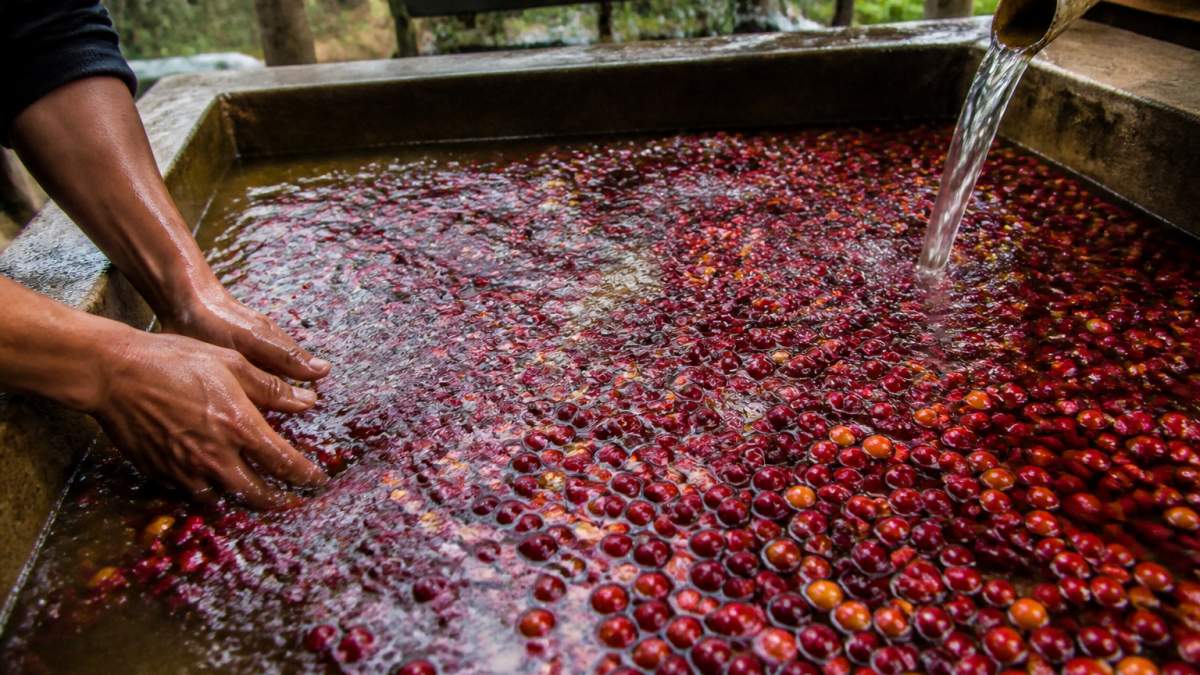
Wastewater is one of the clearest differences between methods. Natural processing generates little of it, which is one reason it often scores better on water-related metrics. Buyers should ask whether a producer treats its effluent, not just which method it uses.
Coffee Pulp Waste Management and Soil Impacts
Pulp, the fruit removed during processing, is a large byproduct. Left in piles, it can ferment and release emissions. Managed well, it can be composted and returned to the land as a soil amendment. The industry has not settled on one best practice here, and the data on pulp management is thinner than the data on water and energy.
This gap matters. A method that looks efficient on water can still create waste problems if the pulp is poorly handled. Treat pulp management as a separate question when you evaluate a producer.
Certifications, Regional Differences and Where the Data Is Thin
Certifications can signal environmental standards, but they do not measure footprint directly. You can compare how Fair Trade and Direct Trade differ before deciding which label matters to you. A certificate tells you a producer met certain criteria, not how much water or carbon a specific lot used.
Choosing a Lower-Impact Cup: Your Next Step with LGBrewTeaQ
Processing choices vary, and the best lower-impact cup depends on what you value most: water, energy or waste. If you are weighing smaller lots, read whether small-batch coffee offers a real value advantage. Ask roasters which method they buy, how producers manage wastewater and pulp, and whether they can share lot-level data.
Our Brazil Santos single-origin is a medium roast with chocolate and mandarin orange notes, priced at $23.99. You can also explore our Colombia Single Origin Coffee and our Costa Rica Single Origin Coffee, both at $23.99. Check each product page for the full origin and sourcing details before you choose.


Frequently Asked Questions
Is natural coffee processing more sustainable than washed processing?
It depends on what you value most. Neither processing method is automatically the lower-impact choice, so ask the producer for its own water and waste practices alongside the processing method.
Which coffee processing method uses the least water?
Natural (dry) processing uses the least water because the whole cherry is dried in the sun and the fruit is removed later by hulling, with no washing tanks or fermentation water. Honey processing uses less water than washed processing because the mucilage is left on the bean during drying, though it still requires some water for pulping. Washed processing is typically the most water-intensive, which is why water recycling systems matter for lower-impact washed coffee.
What happens to coffee pulp and wastewater after processing?
Coffee pulp, the fruit flesh removed during wet processing, can be composted, used as animal feed or dried for fuel if it is managed properly. Wastewater from washing and fermentation is acidic and rich in organic matter, so it can pollute rivers and soil if discharged untreated. Treatment options include settling ponds, constructed wetlands and anaerobic digesters, and the quality of this management varies widely between producers.
Where can I find the environmental data for a specific coffee?
Ask roasters directly about processing method, water recycling and wastewater treatment, since a specific answer is a better signal than a general sustainability claim.
