

Fair Trade vs Direct Trade Coffee: Key Differences
Table of Contents
- Fair Trade vs Direct Trade Coffee: The Core Differences Explained
- Side-by-Side Comparison: Pricing, Verification, and Farmer Control
- Coffee Farmer Premiums: What Farmers Actually Earn Under Each Model
- Coffee Supply Chain Transparency: Who Verifies the Claims?
- Risks and Limitations Farmers Face in Both Trade Models
- How to Choose Ethical Coffee: A Practical Checklist
- Conclusion: Matching Your Values to Your Morning Cup
- Frequently Asked Questions
Last Updated: October 8, 2026
Fair Trade vs Direct Trade Coffee: The Core Differences Explained
The core difference between fair trade coffee and direct trade coffee comes down to who sets the rules. Fair trade coffee is a certification system: an independent body audits farms and buyers against published standards and guarantees a minimum price plus a social premium.
Both models exist to fix the same broken math in the coffee supply chain, where growers historically capture a small fraction of the retail price of a bag.
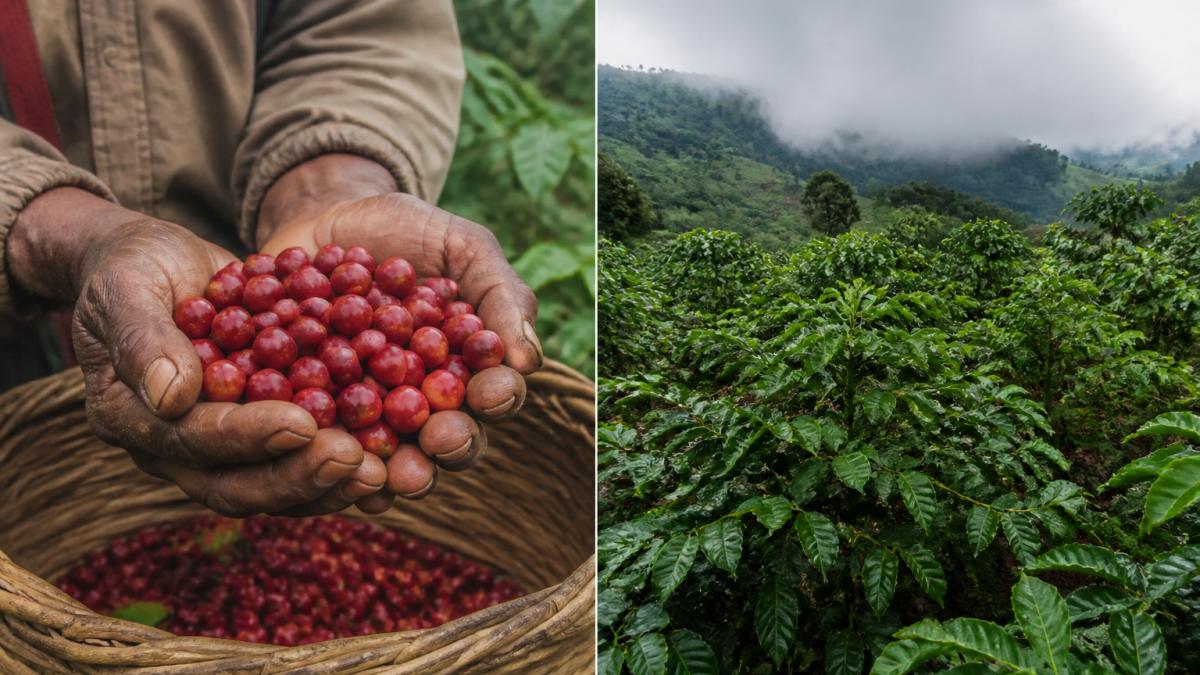
What Fair Trade Coffee Certification Actually Requires
Fair trade coffee certification requires third-party auditing against published standards, a guaranteed minimum price, and an additional social premium paid on top (How Fairtrade certification works).
The mechanics work like this:
- A cooperative pays for inspection and certification
- Buyers must pay at least the published minimum price, which acts as a floor when the commodity market drops
- A fixed premium is added on top of the price and paid into a cooperative-controlled fund for community projects
The tradeoff is real. Certification costs money, and smallholders often join a cooperative specifically to share that burden. For a broader look at how these standards are structured, the Fairtrade International standards documentation outlines the pricing and premium rules certifiers enforce.
How Direct Trade Coffee Sourcing Works Without a Label
Direct trade coffee sourcing works through private negotiation between a roaster and a producer, with no certification body in the middle.
The appeal is flexibility: a roaster can pay a premium tied to cup quality, fund a specific project, or commit to multi-year purchasing. The catch is that "direct trade" is a marketing term, not a protected one.
Side-by-Side Comparison: Pricing, Verification, and Farmer Control
The two models diverge most sharply on three axes: how price is set, who checks the claims, and how much bargaining power the farmer holds.
| Factor | Fair Trade Coffee | Direct Trade Coffee |
|---|---|---|
| Price setting | Published minimum price plus fixed premium | Privately negotiated, often quality-based |
| Verification | Third-party audits and certification | Varies; often self-reported |
| Farmer bargaining power | Collective, through cooperatives | Individual, depends on the relationship |
| Traceability | Required by standard | Voluntary, roaster-dependent |
| Best for | Farmers needing a guaranteed floor | Producers with exceptional quality and access |
Neither column wins outright. Fair trade protects against price collapse. Direct trade rewards quality and can pay more, but only for farmers with the connections and consistency to command it.
Coffee Farmer Premiums: What Farmers Actually Earn Under Each Model
Coffee farmer premiums under fair trade are structured and published: a set differential above the minimum price, plus a separate social premium routed into a cooperative-controlled fund.
The headline premium number is not the same as money in a farmer's pocket. Cooperative premiums are often pooled and spent on shared infrastructure, which benefits the community but may not raise an individual household's income this season.
Reading a Farmgate Number: What Actually Reaches the Producer
A farmgate price is what a producer receives at the farm or cooperative collection point, before the coffee moves to a mill, exporter, importer, or roaster.
To compare models fairly, you have to hold three things constant:
- The unit. Green coffee is quoted per pound in the United States, but producers often think in quintales (about 100 pounds) or in local currency. A price that looks generous in one unit can look ordinary in another.
- The deduction stack. Wet-milling, dry-milling, export preparation, financing, and cooperative administration are frequently subtracted from the quoted price before the producer is paid. Two farms can be quoted the same farmgate figure and net very different amounts.
- The timing. A price agreed at harvest and paid months later is worth less than the same number paid on delivery, especially where credit is expensive.
A common pattern in published cooperative reports is that the certified minimum price plus premium clears the cost of production for an average smallholder, while the same farm selling into the conventional market in a low-price year does not.
Price Floors, Market Prices, and Quality-Based Pricing
A price floor protects farmers when the commodity market falls below the cost of production, the scenario fair trade was built for. Coffee prices swing widely year to year, driven by weather, currency, and speculation, and smallholders control none of it.
Quality-based pricing is direct trade's answer. A roaster cups the harvest, grades it, and pays according to how it scores, rewarding farmers who invest in picking, processing, and drying.
Why the Same Premium Can Mean Different Things
Two farmers can receive identical premium dollars and end up in different positions:
- A cooperative member receives the premium through the cooperative, which may invest it in a wet mill, a nursery, or a school. The household income effect is indirect and slow.
- A direct-trade producer receives the premium as a line item on a contract, often paid at delivery. The household income effect is immediate but not repeatable unless the contract renews.
- A farmer selling both ways, certified volume for the floor, direct volume for the premium, is the pattern most often described by importers as the most resilient, because neither channel has to carry the whole farm.
How to Get a Real Number Out of a Roaster
Certified brands can point to a published floor and premium. Direct trade brands that are serious will answer with a farmgate figure, the farm name, and the harvest year. If a brand cannot produce those three, the premium is a story, not a payment.
Coffee Supply Chain Transparency: Who Verifies the Claims?
Coffee supply chain transparency depends entirely on which model you are buying into. Certified coffee carries documented audits you can trace. Direct trade coffee carries whatever the roaster chooses to disclose.
A certification label is a claim backed by an inspection report. A direct trade label is a claim backed by a story. Both can be honest.
Certification Bodies vs Private Negotiation: How Accountability Differs
Accountability under certification runs through a third party that can suspend a certificate for violations. That is a genuine enforcement mechanism, and it is why certified supply chains tend to be more traceable end to end.
Colombia Single Origin Coffee →
Accountability under private negotiation runs through reputation. Public commitments, like those described in USDA agricultural marketing guidance on labeling claims, give consumers something concrete to hold a brand to.
Risks and Limitations Farmers Face in Both Trade Models
Both models leave farmers exposed in ways the marketing rarely admits. Fair trade guarantees a floor but caps upside: when the market spikes, certified farmers still sell at the fixed premium structure, missing the boom.
Direct trade offers higher potential returns and faster relationships, but concentrates risk. A farmer tied to one roaster's order loses income entirely if that roaster switches origins or cuts the line.
Buyer Concentration: The Risk Nobody Prices In
A direct-trade relationship is only as stable as the buyer's menu. When one roaster accounts for most of a farm's harvest, the farm's income is tied to a single company's sourcing decisions, which can change with a rebrand, a new green buyer, or a shift in what customers order.
Certification does not solve this. A certified cooperative can still sell most of its volume to one exporter or roaster, and the floor only applies to volume actually contracted under certified terms. The floor is a price guarantee, not a demand guarantee.
Contract Continuity and the Renewal Problem
Multi-year purchasing commitments are the strongest form of direct trade, and the least common. A common pattern is a one-harvest agreement with a verbal intention to continue.
Certified supply chains have a similar renewal problem at the cooperative level. Certification is periodic, fees recur, and a cooperative that fails an inspection can lose access to the certified market for a season or more, a risk that falls on members who had no role in the compliance failure.
Crop Failure, Climate, and Market Volatility
Coffee is an agricultural product, and both models are exposed to the same physical risks: leaf rust, drought, excessive rain at harvest, and the longer-term shift in suitable growing elevations.
Market volatility cuts the other way too. In a high-price year, a certified farmer selling under the fixed premium structure can earn less than a neighbor selling into the conventional market at spot.
Regional Variation and Cooperative Structure
Regional variation makes all of this worse. A well-organized cooperative in one growing region may negotiate effectively, publish its farmgate prices, and hold multi-year contracts.
Farm size matters as well. Smallholders with a few acres rarely have the volume to fill a direct-trade contract on their own and often depend on a cooperative or exporter to aggregate their lot.
What This Means for a Buyer
The practical takeaway is that no label removes risk from farming. Fair trade shifts some price risk from the farmer to the buyer through the floor. Direct trade shifts some quality risk from the buyer to the farmer through the contract. Neither eliminates buyer concentration, crop failure, or the renewal problem. A roaster who can describe how they handle a failed harvest, a lost relationship, or a price spike is more informative than one who only describes the best case.
How to Choose Ethical Coffee: A Practical Checklist
Use this checklist to evaluate any bag before you buy:
- Does the label name a specific certification, or use "direct trade" with no farm named?
- Is the farm, cooperative, or region disclosed on the packaging or website?
- Does the roaster publish the price paid to the producer?
The strongest choice is often a roaster who combines both: certified sourcing for the floor, plus direct relationships for quality and transparency.
Conclusion: Matching Your Values to Your Morning Cup
Reading labels carefully is the first step. The second is finding a roaster whose sourcing you can actually verify. At LGBrewTeaQ, we source single-origin beans from named farms and cooperatives, roast them to order for maximum flavor and aroma, and deliver them straight to your door. Whether you reach for our Colombia Single Origin with its caramel and red berry notes, or the floral, tea-like Ethiopia Single Origin, you get a cup traceable back to real growing regions.

Frequently Asked Questions
What is the difference between fair trade and direct trade coffee?
Fair trade coffee relies on third-party certification: farmers join cooperatives, pay for audits, and receive a guaranteed minimum price plus a social premium. Direct trade coffee skips certification and instead builds long-term relationships between roasters and farmers, with prices set through private negotiation based on bean quality. Fair trade offers a safety net; direct trade offers flexibility and often higher prices for exceptional quality.
Which is better for coffee farmers: fair trade or direct trade?
Neither model wins universally. Fair trade coffee certification protects smallholder cooperatives from market price volatility through a price floor, which matters most when commodity prices crash. Direct trade coffee sourcing can pay more, but only when roasters commit to long-term relationships and farmers have the bargaining power to negotiate. Farmers in strong cooperatives often benefit from fair trade, while those with exceptional quality and direct buyer access may earn more through direct trade.
Does direct trade coffee have a certification?
No. Direct trade has no universal certification or third-party verification standard. Each roaster defines what direct trade means for their business, which means transparency varies widely. Some roasters publish farmgate prices and farmer names; others use the term loosely as a marketing claim. If verification matters to you, look for roasters who disclose specific farm names, prices paid, and sourcing relationships.
Can coffee be both fair trade and direct trade?
Yes. A roaster can buy from a fair trade certified cooperative while also maintaining direct, long-term relationships with those farmers. In practice, the two models overlap: direct relationships often start with certified cooperatives, and the roaster may pay above the fair trade minimum price for quality. The distinction matters most when you want to know whether a price floor applies or whether pricing is purely negotiated.
How can you tell whether a coffee brand sources ethically?
Look for specifics, not slogans. A trustworthy brand names the farms or cooperatives it buys from, states prices paid or explains how they are set, and can describe the length of its relationships with producers. Fair trade logos provide third-party verification; direct trade claims require the roaster to show its work. If a brand says 'ethically sourced' without naming farms, prices, or certifications, there is no way to verify the claim.