

Best Herbal Tea Blends for Sleep: What Works
Last Updated: November 11, 2026
Quick Summary
The best herbal tea blends for sleep are caffeine-free blends built on calming herbs such as chamomile, valerian, lemon balm, lavender, and passionflower. Research on their effectiveness remains limited, so treat them as a pleasant part of a wind-down routine rather than a reliable cure for sleep problems.
- Choose caffeine-free blends, because caffeine is the most common reason a cup works against nighttime rest.
- Read the full ingredient list, since a blend labeled for sleep can still contain green or black tea.
- Use about 1 to 2 teaspoons of whole blossoms per 8 oz of water, covered, for 5 to 7 minutes.
- Drink your tea 30 to 60 minutes before bed to avoid night-time bathroom trips that fragment sleep.
- Ask a doctor or pharmacist before adding a herbal blend if you take any regular medication.
Table of Contents
- How We Chose These Herbal Tea Blends for Sleep
- What Is in Sleepytime Tea That Makes You Sleepy
- Valerian Root Tea: Strong Evidence Claims, Strong Taste
- Best Herbal Tea Blends for Sleep and Anxiety
- How to Make Herbal Tea Blends for Sleep at Home
- Timing, Medication Interactions and Realistic Expectations
- Choose Your Bedtime Blend and Start Tonight
- Frequently Asked Questions
Most bedtime tea shoppers are buying on a hunch. A box with a moon on it and a promise of rest sells well, but the evidence behind those promises is thinner than the packaging suggests. This guide from LGBrewTeaQ looks at which herbal tea blends for sleep are worth your money, what the research actually supports, and how to use them without expecting too much. Herbal tea blends can be a pleasant part of a wind-down routine.
A 2022 review in the National Institutes of Health's PubMed Central examined tea and sleep regulation, including reported stress-related effects of oolong and green tea. It did not provide a clear finding about herbal sleep blends specifically, which is itself a useful signal about how thin the evidence is New Perspectives on Sleep Regulation by Tea. Healthline makes the same point more plainly: herbal teas such as chamomile, valerian, passionflower, and lavender may promote relaxation, but research on their effectiveness remains limited Healthline, 6 Best Bedtime Teas That Help You Sleep.
How We Chose These Herbal Tea Blends for Sleep
We looked for blends built around ingredients that appear again and again in bedtime tea products: chamomile, valerian, lemon balm, lavender, and passionflower. Common sleep-tea selections from established brands lean on the same calming herbs, which tells you what the market considers the standard set Republic of Tea, Sleep Tea.
Our selection criteria were simple. The blend had to be naturally caffeine-free, because caffeine is the most common reason a cup of tea works against you at night. It had to use whole botanicals rather than heavy flavor sprays. And it had to be easy to brew to a consistent strength. We also weighed how well each blend suits a nightly ritual, since the habit of sitting down with a warm cup often matters as much as the cup itself.
What Is in Sleepytime Tea That Makes You Sleepy
Ingredient safety matters here. Check labels for added sleep aids and confirm what each herb is, because a single blend can combine several active botanicals at once.
Valerian Root Tea: Strong Evidence Claims, Strong Taste
If you try a valerian blend, start with a small serving to see how you respond. Valerian can interact with other sedating medications and alcohol, which is why the timing and medication section later in this guide matters.
Best Herbal Tea Blends for Sleep and Anxiety
What separates a good blend from a forgettable one is not the moon on the box but what is actually inside it and whether the label tells you.
Before you compare specific blends, decide what you want from the cup. Single-herb options are easier to evaluate because you can tell whether one ingredient agrees with you. Multi-herb blends are convenient but harder to troubleshoot if something disagrees with your stomach or your sleep. If you are sensitive to flavor, start floral and mild rather than tart or spiced. If you take regular medication, favor blends with a short, disclosed ingredient list so you can check each herb with a pharmacist.
Use this checklist when you shop, whether you buy from us or anyone else:
- Full ingredient disclosure. The label should name every botanical, not just the first two. Undisclosed "proprietary blends" make it impossible to know what dose you are getting.
- Whole botanicals over flavor sprays. Look for whole flowers, leaves, and roots rather than "natural flavors" doing the heavy lifting.
- Caffeine-free by ingredient, not by claim. Rooibos, chamomile, lavender, lemon balm, and hibiscus are naturally caffeine-free. Verify that no green, black, or oolong tea sneaks into a "sleep" blend.
- Third-party testing and organic claims. A testing statement or organic seal is a useful signal, but treat it as one data point rather than a guarantee of effectiveness.
- Serving and steep guidance on the package. A blend that tells you how much to use and for how long is easier to brew consistently.
With that framework in mind, here is how our three caffeine-free options compare.
Lavender Herbal Tea is loose leaf, made from whole French lavender blossoms, and naturally caffeine-free. It is priced at $12.68 for a 2 oz tin. This is a single-herb option, with a floral aroma and flavor.
Apple Cider Rooibos is a caffeine-free option built on South African red bush tea with cinnamon bark, clove, and citrus peel. It is fuller and spiced rather than floral, and it does not turn bitter on a longer steep. At $22.99, it is the most expensive blend here. If you find floral teas thin or perfumey, this is the more satisfying cup.
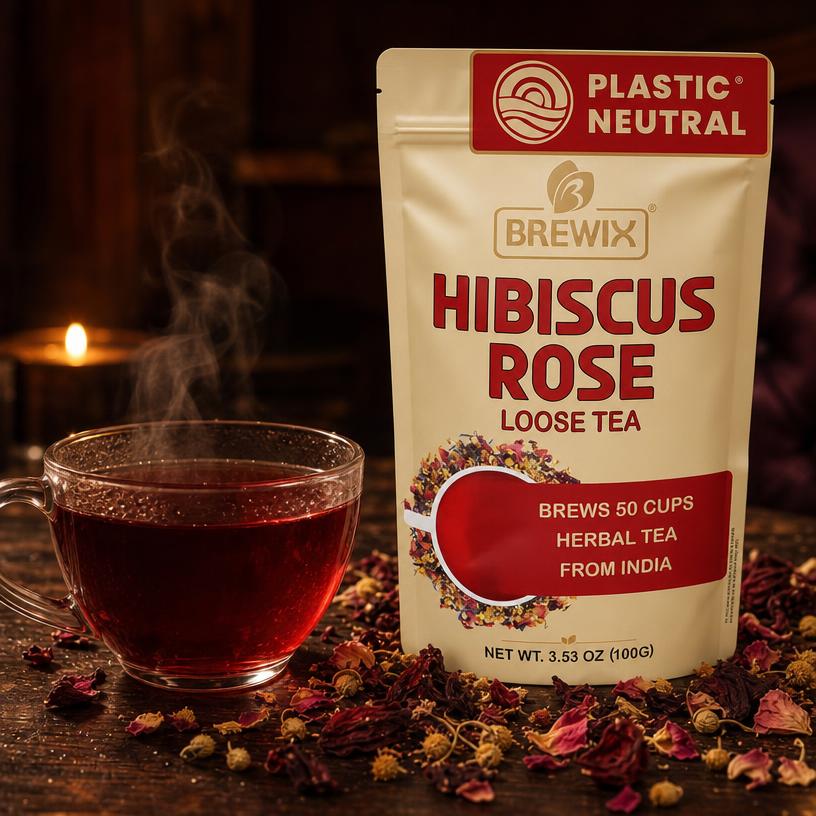
Hibiscus Rose Herbal Tea brews a tart, ruby-colored infusion with rose petals and chamomile blossoms. At $18.67, it can be enjoyed hot or chilled. You can see the Hibiscus Rose blend if you want a tart alternative. Hibiscus has a tart, bright flavor.
Watch out: a blend labeled "sleep" can still contain a stimulant if it includes green or black tea, so read the ingredient list rather than the front of the box.
How to Make Herbal Tea Blends for Sleep at Home
Brewing matters more than most people expect, and consistency matters more than any single trick. Our steeping guide walks through the basics of getting loose leaf herbs right each time. The goal is to make the same cup the same way each night so you can actually tell whether a blend helps you.
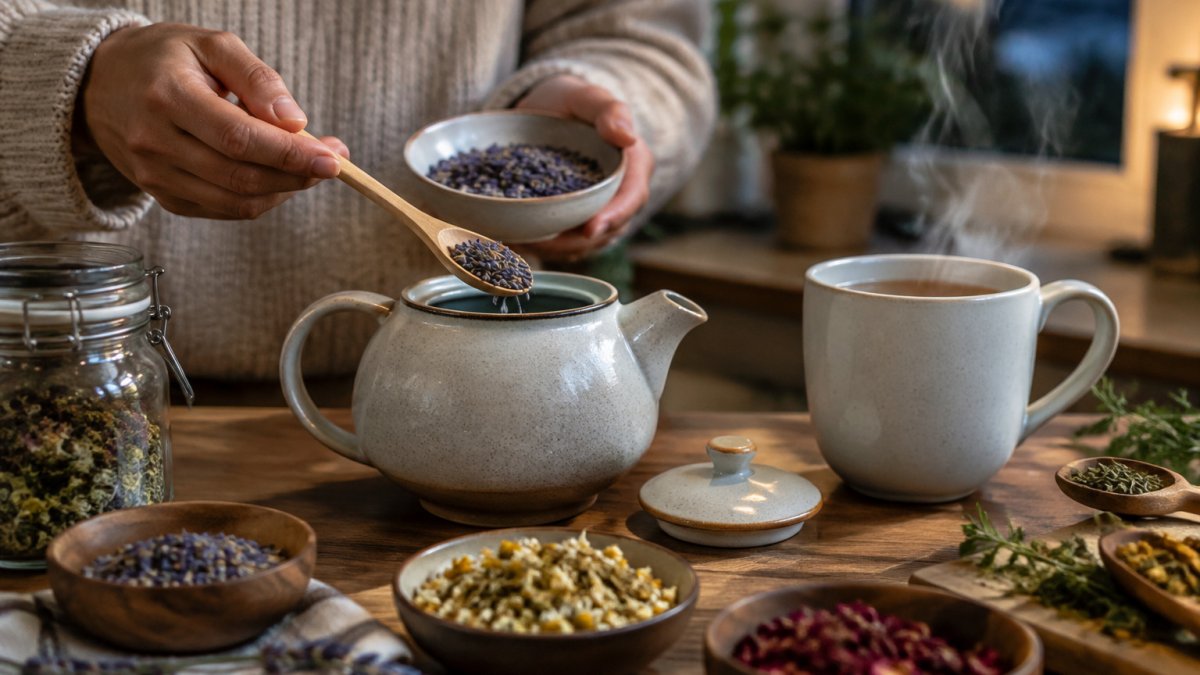
Start with the dose. For Lavender Herbal Tea, use about 1 to 2 teaspoons of whole blossoms per 8 oz of water. Stay at the lower end for floral herbs and the higher end for roots and bark, which give up their flavor more slowly.
Water temperature and time do the rest. Bring fresh water to a boil, let it rest for about 30 seconds, then steep for 5 to 7 minutes in a covered mug or teapot so the essential oils stay in the cup. Covering the cup while it steeps helps keep the aroma in the tea.
Hibiscus and rooibos are forgiving. Hibiscus can be steeped longer for a stronger color and tartness, and rooibos stays smooth even on an extended steep. The Lavender Herbal Tea listing recommends a 5 to 7 minute steep. Keep the tea itself simple: a spoon of honey is enough, and avoid heavy sweeteners that defeat the purpose of a calming drink.
Timing is where most people go wrong. Drink your tea 30 to 60 minutes before bed, not right before you lie down. A full mug of any liquid close to bedtime can mean a bathroom trip in the middle of the night, which fragments sleep more than a calming herb can repair. If you are prone to nighttime waking, keep the serving to about 6 to 8 oz and finish it earlier in the evening rather than sipping a large mug in bed. The same logic applies to a second cup: a refill at 10 p.m. is a lot of fluid to process overnight.
Store loose leaf herbs in an airtight container away from light and heat to keep their aroma and potency How to Store Loose Leaf Tea at Home.
Watch out: steeping a floral blend for 10 or 15 minutes because you forgot about it will give you a bitter cup that tastes like a chore, which undercuts the routine you are trying to build.
Brewing details from the article, summarised for quick reference:
| Blend or step | Key detail | Timing or amount |
|---|---|---|
| Lavender Herbal Tea | Whole French lavender blossoms, caffeine-free | 1-2 tsp per 8 oz water |
| Water and steep | Boil, rest about 30 seconds, then steep covered | 5-7 minutes |
| Hibiscus Rose Herbal Tea | Tart, ruby-colored, hot or chilled | Steep longer for stronger tartness |
| Drink before bed | Finish the cup before lying down | 30-60 minutes before bed |
| Serving size for night wakers | Smaller serving finished earlier | About 6-8 oz |
| Loose leaf storage | Airtight container away from light and heat | Keeps aroma and potency |
Timing, Medication Interactions and Realistic Expectations
If you take any regular medication, ask your doctor or pharmacist before adding a herbal blend.
Set realistic expectations. If sleep problems persist for weeks, see a healthcare provider rather than relying on tea.
Choose Your Bedtime Blend and Start Tonight
Start with the blend that matches what you want from the cup. If you want a calm, floral ritual, begin with the Lavender Herbal Tea. If you want something warm and spiced, try the Apple Cider Rooibos. If you prefer bright and tart, try the Hibiscus Rose Herbal Tea.
At LGBrewTeaQ, we roast for the LGBTQIA+ community and for everyone else. Get started with the blend that fits your evenings.
BUTTON: Shop Bedtime Teas CARD_TITLE: Want a calmer evening cup? CARD_TEXT: LGBrewTeaQ sells naturally caffeine-free loose leaf herbal teas for winding down.
Frequently Asked Questions
What is the strongest herbal tea for sleep?
Pick based on taste and how your body responds.
Can herbal tea help with insomnia?
If insomnia lasts more than a few weeks or affects your daily life, talk with a doctor or pharmacist about options.
When should you drink tea before bed?
If you take prescription medication, check with a pharmacist before adding a herbal tea.
