

Top 5 Best Tea Infusers for Fine Leaf Tea (2026)
Table of Contents
- Why Fine Leaf Tea Demands a Better Tea Infuser
- How We Evaluated These Tea Infusers
- Quick Comparison: Top 5 Tea Infusers for Fine Leaf Tea
- 1. Fine Mesh Brewing Basket, Best Overall
- 2. Stainless Steel Micromesh Ball Infuser, Best for Travel
- 3. Over-Cup Drip Basket Infuser, Best for Capacity
- 4. Silicone-Framed Fine Mesh Infuser, Best for Beginners
- 5. In-Pot Steeping Basket, Best for Multiple Cups
Last Updated: August 29, 2026
Most tea drinkers have experienced a cup clouded with fine leaf sediment. The wrong infuser lets sediment through, restricts water circulation, limits leaf expansion, and flattens flavor. Below, we rank the top 5 best tea infuser options for fine leaf tea.
Quick Picks:
- Best Overall: Fine Mesh Brewing Basket, handles fine leaf grades without compromise
- Best for Travel: Stainless Steel Micromesh Ball Infuser, compact, durable, zero sediment
- Best for Capacity: Over-Cup Drip Basket Infuser, generous room for leaf expansion
- Best for Beginners: Silicone-Framed Fine Mesh Infuser, easy to use, easy to clean
- Best for Multiple Cups: In-Pot Steeping Basket, brews a full pot without mess
Why Fine Leaf Tea Demands a Better Tea Infuser
Standard ball infusers are designed for large, rolled leaves. Fine leaf tea, including Broken Orange Pekoe, fannings, and many Chinese green teas, requires a different approach. When fine particles escape into your cup, they continue steeping, driving up tannins and bitterness well past optimal steeping time.
Fine leaf tea requires mesh density tight enough to trap small particles, but open enough to allow full water circulation and leaf expansion (peer-reviewed research). Most standard infusers fail on at least one axis: holes too large for sediment retention, or baskets too small for proper leaf expansion.
According to FDA food contact material guidelines, materials used in food preparation must be food-grade and non-reactive at brewing temperatures. For tea infusers, this means stainless steel rated for food contact or food-grade silicone, not low-grade plastics that may leach compounds into hot water.
How We Evaluated These Tea Infusers
We assessed each infuser across five core dimensions:
- Mesh density and sediment retention: Does the infuser trap fine particles, including small broken leaf grades and powders?
- Capacity and leaf expansion: Can leaves expand to at least double their dry size during infusion?
- Water circulation: Does water move freely through the mesh throughout the steep?
- Ease of cleaning: How thoroughly can each infuser be cleaned by hand or dishwasher?
- Material quality and durability: We prioritized food-grade stainless steel and food-grade silicone, assessing handle design and overall build quality.
According to NSF International food equipment standards, food contact surfaces should be smooth, non-porous, and resistant to corrosion, standards that directly inform what to look for in a quality tea infuser.
| Infuser Type | Mesh Density | Capacity | Dishwasher Safe | Best For |
|---|---|---|---|---|
| Fine Mesh Brewing Basket | Very fine micromesh | Large | Yes | All fine leaf grades |
| Micromesh Ball Infuser | Fine micromesh | Small-medium | Yes | Travel, single cups |
| Over-Cup Drip Basket | Fine mesh | Large | Yes | High-volume steeping |
| Silicone-Framed Mesh | Fine mesh | Medium | Yes | Beginners |
| In-Pot Steeping Basket | Fine mesh | Extra large | Yes | Multiple cups |
Quick Comparison: Top 5 Tea Infusers for Fine Leaf Tea
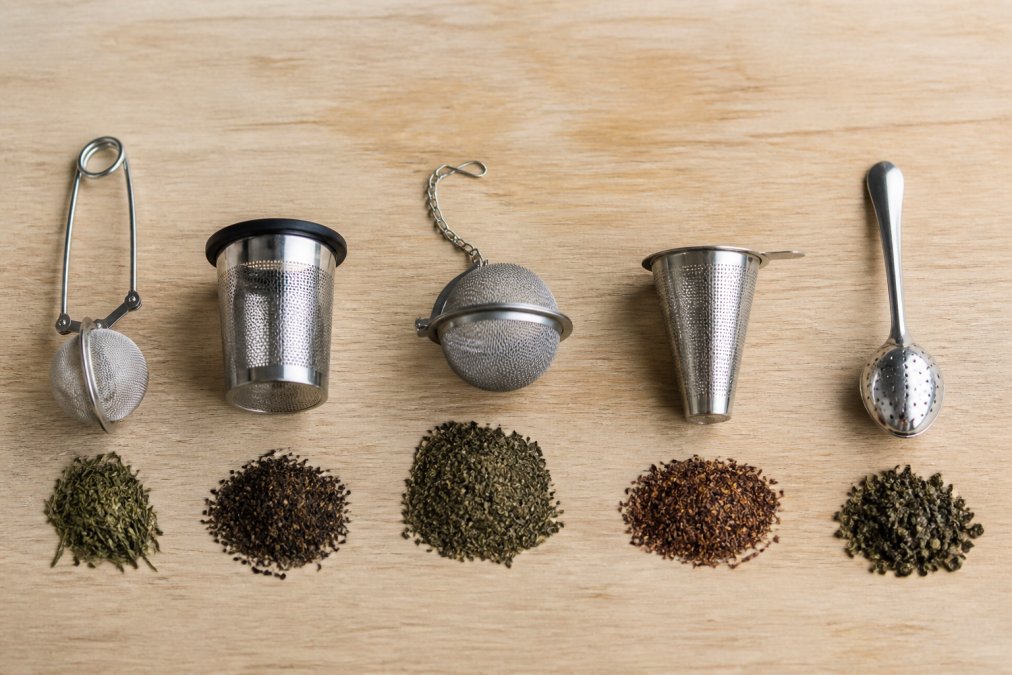
| Infuser | Best For | Mesh Type | Sediment Risk | Ease of Cleaning |
|---|---|---|---|---|
| Fine Mesh Brewing Basket | Overall best performance | Stainless micromesh | Very low | Moderate |
| Micromesh Ball Infuser | Travel and portability | Stainless micromesh | Very low | Easy |
| Over-Cup Drip Basket | High capacity, multiple steeps | Fine mesh with drip tray | Low | Easy |
| Silicone-Framed Mesh | Beginner-friendly | Fine mesh | Low | Very easy |
| In-Pot Steeping Basket | Brewing for 2-4 people | Fine mesh | Low | Moderate |
The right choice depends on your typical brewing volume, the specific tea grades you use, and whether portability or capacity matters more to you.
1. Fine Mesh Brewing Basket, Best Overall
The fine mesh brewing basket is the most versatile tea infuser for fine leaf tea. This style features a wide, cylindrical stainless steel basket with true micromesh construction, woven stainless steel that catches particles a standard infuser would miss entirely.
The basket format gives leaves genuine room to expand during steeping. When fine leaf tea is crammed into a small ball, water circulation drops and you extract an uneven, often bitter infusion. A wide basket solves this structurally, ensuring even water flow and consistent brewing temperature.
Practical details to look for:
- A handle or rim that rests securely on your mug
- A lid that doubles as a drip tray
- Stainless steel construction rated for food contact
- Dishwasher-safe designation
The one limitation: Micromesh baskets require thorough cleaning. Fine leaf residue embeds in the mesh weave, and a quick rinse won't cut it. A soft brush and warm soapy water after each use keeps the mesh clear.
This infuser pairs especially well with LGBrewTeaQ's Earl Grey, a Ceylon black tea with cornflowers and bergamot that brews best with unrestricted water flow.

Pros:
- Best sediment retention of any infuser style
- Large capacity supports full leaf expansion
- Lid doubles as drip tray
- Durable stainless steel construction
Cons:
- Requires deliberate cleaning
- Bulkier than ball-style options, not ideal for travel
2. Stainless Steel Micromesh Ball Infuser, Best for Travel
The micromesh ball infuser solves the fine leaf problem in a compact format. Unlike standard ball infusers with large stamped holes, a micromesh ball uses a woven mesh insert that stops sediment without restricting water flow.
This is ideal for anyone brewing a single cup away from home. The compact size fits most travel mugs and standard cups. The screw or clip closure keeps loose leaf tea contained without spillage, and the all-metal construction handles daily carry without damage.
Water-to-leaf ratio note: Fill the ball no more than halfway to allow leaves to expand during infusion. Overfilling restricts water circulation and produces uneven steeping.
Pros:
- Compact and portable
- Micromesh construction stops fine sediment
- Durable stainless steel, no plastic components
- Dishwasher safe
Cons:
- Limited capacity, not suited for multiple cups
- Overfilling is easy and degrades brew quality
3. Over-Cup Drip Basket Infuser, Best for Capacity
The over-cup drip basket is the best format for anyone who brews large volumes or re-steeps fine leaf teas multiple times. A wide brewing basket sits directly over your mug, held in place by a rim. You load loose leaf tea, pour hot water through, and the infusion drips directly into the cup. When steeping is complete, you lift the basket away with its integrated drip tray.
Fine leaf grades release flavor quickly and benefit from multiple steepings. A wide basket gives leaves adequate room to rehydrate and expand fully between steeps, preventing leaf compression that accelerates oxidation and flattens flavor.
Pros:
- Largest capacity of any single-cup infuser style
- Integrated drip tray keeps counters clean
- Ideal for multiple steepings
- Easy to inspect and clean
Cons:
- Not portable, designed for home use
- Requires a mug with a rim wide enough to support the basket
4. Silicone-Framed Fine Mesh Infuser, Best for Beginners
The silicone-framed fine mesh infuser combines a stainless steel fine mesh filter with a food-grade silicone frame and handle. The silicone provides a non-slip grip that stays comfortable with a hot mug and creates a seal against the cup rim that prevents leaf or sediment from bypassing the mesh.
This is the right starting point for new loose leaf tea drinkers. The mesh is fine enough to handle most broken leaf grades, the silicone handle makes it easy to lower and lift without burning your fingers, and the whole thing goes in the dishwasher.
Material note: Always confirm that the silicone used is food-grade. Lower-quality silicone may discolor or degrade with repeated exposure to boiling water.
Pros:
- Non-slip silicone handle, safe with hot mugs
- Fine mesh stops sediment in most fine leaf grades
- Very easy to clean, fully dishwasher safe
- Gentle learning curve for new loose leaf brewers
Cons:
- Silicone frame can absorb strong aromas over time
- Not ideal for the finest powdered teas like pure matcha
5. In-Pot Steeping Basket, Best for Multiple Cups
The in-pot steeping basket solves brewing for more than one person at a time. This infuser sits inside a teapot or large steeping vessel with fine mesh construction, giving even large quantities of fine leaf tea full room to expand during infusion. When steeping is complete, you lift the basket out, stopping the infusion cleanly.
When you brew fine leaf tea directly in a pot without a removable basket, the leaves continue steeping even after you pour the first cup. By the third cup, tannin levels have climbed significantly and flavor has shifted toward bitterness. A removable in-pot basket gives you full control over steeping time.
Pros:
- Brews 2-4 cups simultaneously
- Removes cleanly to stop the infusion at the right moment
- Fine mesh handles most loose leaf grades
- Works with many teapot sizes
Cons:
- Requires a compatible teapot
- Larger mesh surface area means more thorough cleaning is needed
How to Brew Fine Loose Leaf Tea for Maximum Flavor
The best tea infuser won't save a poorly executed brew. Getting the most from fine leaf tea comes down to four variables: water temperature, steeping time, leaf-to-water ratio, and infuser fit.
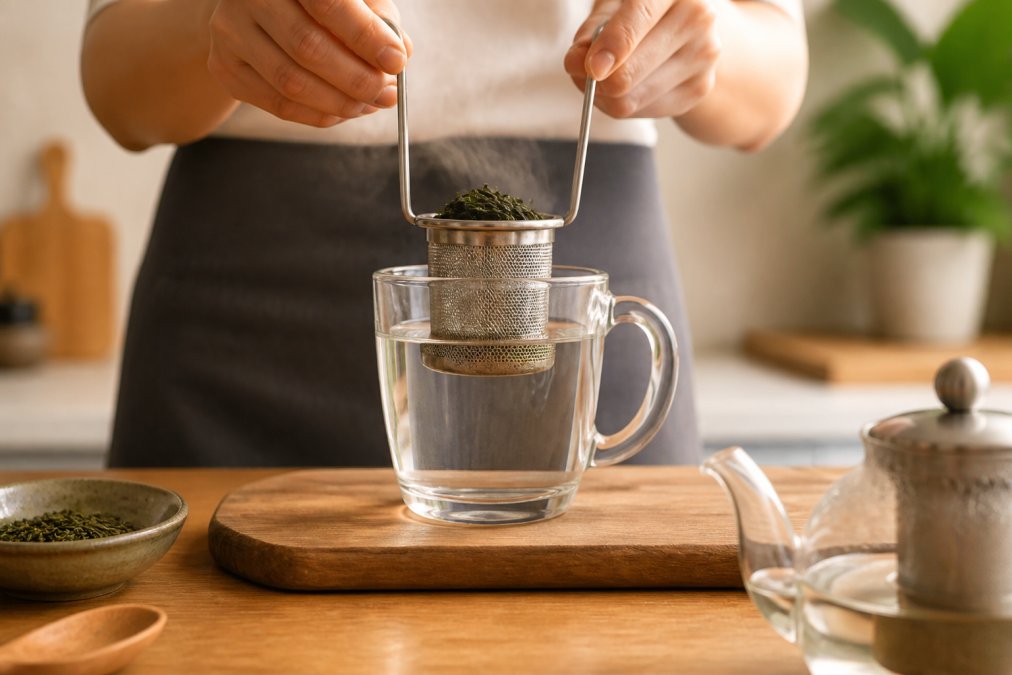
Water temperature is the variable most home brewers ignore. Fine leaf green teas and delicate florals like jasmine need water below boiling, typically 160-185°F, to avoid scorching the leaves and producing a bitter cup. Black teas and strong blends handle full boiling temperature well.
Steeping time should be treated as a starting point. Fine leaf tea releases flavor faster than large-leaf grades because of greater surface area contact with hot water. Taste early and adjust.
Leaf-to-water ratio for fine leaf tea: approximately 1 teaspoon of loose leaf tea per 8 oz of water. Finer grades are denser and may require slightly less.
Quick-reference brewing guide:
| Tea Type | Water Temp | Steep Time | Leaf Amount (per 8 oz) |
|---|---|---|---|
| Fine green tea | 165-175°F | 2-3 minutes | 1 tsp |
| Jasmine green | 170-180°F | 2-3 minutes | 1 tsp |
| Black tea (fine cut) | 200-212°F | 3-4 minutes | 1 tsp |
| Masala Chai | 200-212°F | 4-5 minutes | 1.5 tsp |
| Moroccan Mint | 175-185°F | 2-3 minutes | 1 tsp |
| Hojicha powder | 175-185°F | 1-2 minutes | 1 tsp |
How to Choose the Right Infuser for Your Tea Grade
For ultra-fine powders (matcha, hojicha powder): Standard mesh infusers are not the right tool. Powdered teas are designed for suspension, not filtration. Use a whisk and bowl for traditional preparation, or a dedicated fine-mesh sieve.

For broken-grade black teas and fine-cut blends (English Breakfast, Earl Grey, Masala Chai): A fine mesh brewing basket or over-cup drip basket handles these grades well. The key requirement is mesh density fine enough to stop the smallest particles, combined with adequate capacity for leaf expansion.
For fine-cut green and white teas (Jasmine, Moroccan Mint, Peach Paradise herbal blends): These teas benefit from the widest possible basket to maximize water circulation at lower brewing temperatures. Avoid ball infusers for these grades.
For multiple steepings: Choose an over-cup drip basket or in-pot steeping basket. The ability to remove leaves cleanly between steeps is essential for preserving flavor across multiple infusions.
Cleaning Fine Mesh Tea Strainers: What Actually Works
Fine mesh is the best solution for fine leaf tea, and it's also the most demanding to keep clean. Residue builds up faster in tightly woven mesh, and if you let it accumulate, you'll taste previous session's tannins in your next cup.
The most common mistake is relying on a quick rinse under cold water. That removes loose leaf debris but leaves behind a tannin film that builds up over time.
What actually works:
- Rinse immediately after use with warm water to prevent tannin bonding
- Use a soft-bristle brush to scrub the mesh surface
- For weekly deep cleaning: soak in warm water with baking soda for 10-15 minutes
- For stubborn staining: a brief soak in diluted white vinegar loosens oxidized tannin deposits
- Rinse thoroughly after any soak before next use
- Allow to air dry completely before storing
Dishwasher safety varies by infuser. Most stainless steel mesh baskets are dishwasher safe on the top rack, but check manufacturer guidance. Hand washing is always the safer long-term choice for a quality infuser you want to last.
The Micro-Plastic and Material Safety Question
Low-grade plastic infusers present a legitimate concern when used with hot water. The combination of heat and prolonged water contact creates conditions where certain plastic compounds can migrate into the liquid.
The practical answer is straightforward: use stainless steel or food-grade silicone. Both materials are chemically stable at standard brewing temperatures and have long track records in food contact applications. Stainless steel is the preferred material for the mesh component specifically, because it's non-porous, easy to clean, and doesn't absorb flavors or aromas between uses.
If you're currently using a plastic infuser, verify whether it carries a food-grade designation from the manufacturer. No designation means no verified safety assessment for hot water contact.
The right tea infuser genuinely changes the cup. A fine mesh brewing basket handles the widest range of fine leaf grades, makes the most of quality loose leaf teas, and lasts for years with basic maintenance.
LGBrewTeaQ carries a full range of premium loose leaf teas, from delicate Jasmine green to bold Masala Chai and smooth Moroccan Mint, all sourced and prepared to reward a properly equipped brew. Pair any of these with the right infuser, and the difference in your cup is immediate. Explore the LGBrewTeaQ tea collection and brew every steep the way it deserves.

Frequently Asked Questions
Q: What is the best type of tea infuser for fine leaf tea?
A: A fine mesh brewing basket is the best choice for fine loose leaf tea. It provides enough surface area for leaf expansion and water circulation while blocking sediment from reaching your cup. Look for a micromesh or 200+ mesh stainless steel infuser. Tea balls with large perforated holes let fine particles through, producing a gritty, bitter cup. For teas like matcha, hojicha, or finely cut rooibos, mesh density matters more than any other single feature.
Q: Are stainless steel mesh infusers better than silicone for fine tea?
A: For fine leaf tea, stainless steel micromesh generally outperforms silicone in two key ways: hole size and durability. Silicone infusers typically have larger perforated openings that allow fine particles and sediment to pass through. Food-grade stainless steel holds its shape under heat, does not absorb aroma or tannins over time, and poses no chemical leaching risk. Silicone is fine for whole-leaf teas but may fall short when brewing finely cut blends, fannings, or powdered teas like hojicha.
Q: Do tea balls work well for fine loose leaf tea?
A: Tea balls are generally a poor fit for fine loose leaf tea. Their perforated holes are large enough to let fine particles escape into your cup, and their small capacity restricts leaf expansion, which limits aroma extraction and produces a weaker infusion. They work acceptably for large whole-leaf teas steeped briefly, but for finely cut blends, fannings, or any tea where sediment is an issue, a flat mesh basket or over-cup drip infuser will generally produce a noticeably cleaner, fuller-bodied result.
Q: How do you keep fine tea leaves from getting into your cup?
A: Choose an infuser with a true micromesh filter rather than punched perforations. After steeping, lift the infuser out cleanly and let it drain over a drip tray before setting it aside, this prevents drips and keeps stray particles out of the cup. For powdered teas like matcha or hojicha, a two-layer mesh or a dedicated fine strainer works best. Decanting the brewed tea through a secondary strainer is another option if your infuser still passes fine particles.
Q: What features should I look for in a tea infuser for rooibos or fannings?
A: Rooibos and fannings are among the finest-cut teas available, so prioritize a 200-mesh or finer stainless steel filter. Look for a wide, flat basket shape that gives the leaves room to expand and allows good water circulation. A non-slip handle or lid that doubles as a drip tray makes the brewing process cleaner. Dishwasher-safe construction helps because rooibos and black tea fannings leave residue that builds up quickly in tight mesh weaves.
This article was written using GrandRanker