

How to Store Coffee Beans for Freshness
Table of Contents
- Why Proper Storage Matters for Coffee Bean Freshness
- Best Coffee Storage Containers to Preserve Flavor
- The Four Essential Storage Conditions
- How Long Do Coffee Beans Stay Fresh
- Freezing Coffee Beans: Pros and Cons
- Step-by-Step Storage Process for Maximum Freshness
- Common Mistakes That Destroy Coffee Freshness
- Honey Jar with Dipper Airtight - Glass Honey Pot Dispenser
- Frequently Asked Questions
Last Updated: September 2, 2026
Why Proper Storage Matters for Coffee Bean Freshness
The moment coffee beans are roasted, they begin to deteriorate. Oxygen exposure, heat, light, and moisture break down the volatile compounds that give freshly roasted coffee its distinctive aroma and flavor. Proper storage isn't just about keeping beans edible, it's about preserving the quality that made you buy them.
At LGBrewTeaQ, we roast beans to order because freshness is everything. Once beans leave the roaster, every day matters. The difference between properly stored coffee and coffee left on a shelf is dramatic: one tastes vibrant and complex, the other tastes flat and stale. The right storage approach can extend peak freshness by weeks, while poor storage collapses it in days.
Understanding storage conditions, temperature stability, light exclusion, humidity control, and oxygen minimization, transforms storage from a passive afterthought into an active part of your brewing ritual.
Best Coffee Storage Containers to Preserve Flavor
The container you choose is your first line of defense against oxidation and environmental degradation. Not all sealed containers are equal.
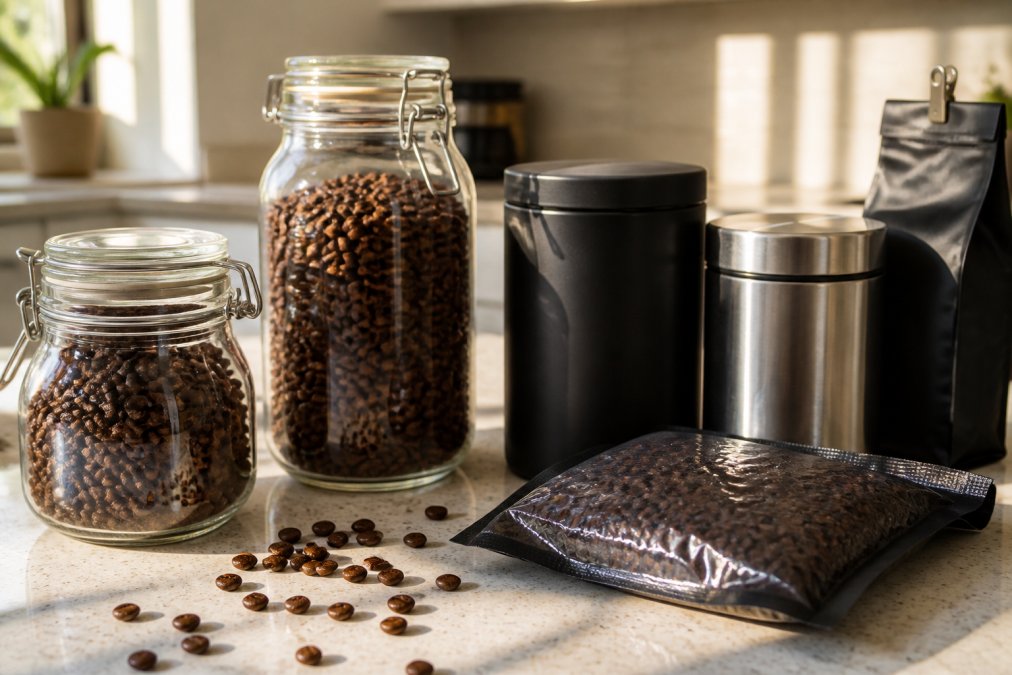
Airtight Containers with One-Way Degassing Valves
One-way degassing valves are essential for freshly roasted coffee. Immediately after roasting, beans release carbon dioxide. A one-way valve lets CO2 escape while preventing oxygen from entering, balancing pressure without requiring you to open the container.
The best containers feature silicone or rubber seals that create a tight closure. Glass containers with degassing valves work well because they're inert and you can see your beans at a glance. When shopping, look for containers explicitly labeled with a one-way valve and test the seal by pressing the lid down firmly, you should feel resistance.
Opaque Glass and Metal Vessels
Light is a primary enemy of coffee freshness. UV exposure degrades the oils and aromatic compounds in beans, accelerating staleness. Opaque containers, whether dark glass or metal, block light entirely, which is why they outperform clear glass jars for long-term storage.
Metal canisters with airtight seals are excellent for this reason. They're durable, completely opaque, and many come with rubber gaskets that create a genuine airtight seal. The downside is you can't see how much coffee remains without opening the container. For serious coffee drinkers who buy in bulk, this trade-off is worth it.
Vacuum-Sealed and Nitrogen-Flushed Options
Vacuum sealing removes most oxygen from the container before sealing, dramatically slowing oxidation. Nitrogen flushing replaces air with inert nitrogen gas, which doesn't react with coffee oils. Both approaches extend shelf life significantly.
Vacuum-sealed bags are common for retail coffee because they're effective and cheap to produce. Nitrogen-flushed bags are even more protective. Home vacuum sealers work for coffee, but only if you seal properly and store the sealed bags in a cool, dark place afterward.
The Four Essential Storage Conditions
Container choice is half the battle. The environment where you store the container determines the other half. Four conditions work together to preserve or destroy freshness: temperature, light, moisture, and oxygen exposure.
Temperature Control and Avoiding Heat
Heat accelerates every chemical reaction that degrades coffee. The ideal storage temperature is between 50-70°F, which is why pantries and kitchen cabinets work better than countertops near stoves or sunny windows (peer-reviewed research).
Consistency matters as much as absolute temperature. Fluctuating temperatures cause condensation inside the container, introducing moisture and triggering degradation. A cool closet with stable temperatures beats a cold refrigerator that cycles on and off. Avoid storing beans near heat sources: above the stove, in direct sunlight, or in rooms that get warm during the day.
Protecting from Light and UV Exposure
Light degrades coffee through a process similar to what happens to beer or olive oil left on a sunny shelf. UV rays break down the compounds responsible for flavor and aroma. Even indirect light matters, a clear jar on a kitchen counter away from direct sun still receives enough ambient light to cause degradation over weeks.
Store in a dark cabinet, pantry, or closet. If your only option is a visible location, use an opaque container or keep beans in their original packaging if it's dark. Most specialty roasters use opaque bags specifically because they understand that light exposure ruins freshness.
Managing Moisture and Humidity
Moisture accelerates oxidation, promotes mold growth, and causes beans to lose structural integrity. The ideal humidity level is below 50%. In humid climates, storing beans in a cool, dark closet or pantry helps because these spaces typically have more stable humidity than kitchens.
If you live in a very humid area, consider adding a small silica gel packet to your storage container. These absorb excess moisture and can be reused by heating them in an oven. Never store coffee in the refrigerator unless you're planning truly long-term storage, as opening a cold container in a warm kitchen causes immediate condensation.
Minimizing Oxygen Exposure
Oxidation is the primary driver of coffee staleness. Oxygen reacts with the oils and compounds in beans, breaking them down into flavorless molecules. Every time you open the container, you introduce fresh oxygen.
This is why buying smaller quantities more often beats buying large amounts and storing them for months. A 2-week supply in an airtight container stays fresher longer than a 3-month supply that gets opened repeatedly. The one-way degassing valve solves the immediate post-roast problem without requiring you to open the container.
How Long Do Coffee Beans Stay Fresh
Freshness isn't binary, it's a spectrum. Understanding the timeline helps you plan purchases and consumption.
Peak Freshness Window After Roasting
The peak freshness window for whole bean coffee is typically 2-4 weeks after roasting (peer-reviewed research). During this period, the beans taste their best: the roast profile is fully developed, volatile compounds are still present, and oxidation hasn't significantly degraded flavor.
After 4 weeks, noticeable flavor decline begins. By 8-12 weeks, most beans taste noticeably stale, the brightness fades, complexity flatters, and off-flavors can emerge. This timeline assumes proper storage. Coffee stored in poor conditions can taste stale within 1-2 weeks, while coffee stored excellently might remain acceptable for 3-4 months.
Always buy coffee with a visible roast date and prioritize beans roasted within the last 2-3 weeks. LGBrewTeaQ roasts to order specifically to ensure you receive beans at peak freshness.
Whole Bean vs. Pre-Ground Storage Duration
Whole beans stay fresh significantly longer than pre-ground coffee. When you grind beans, you dramatically increase the surface area exposed to oxygen. Whole bean coffee stored properly stays fresh for 2-4 weeks. Pre-ground coffee, even in an airtight container, starts declining noticeably within 3-5 days (peer-reviewed research).
This is why buying whole beans and grinding just before brewing is the gold standard. If you must buy pre-ground coffee, buy small quantities and use them quickly. Grind immediately before brewing, don't grind in advance and store the grounds.
Freezing Coffee Beans: Pros and Cons
Freezing is a legitimate storage strategy for long-term preservation, but it comes with trade-offs that make it wrong for most home brewers.
When Freezing Makes Sense
Freezing works well if you buy coffee in bulk and want to preserve beans for several months. Beans frozen immediately after purchase can taste acceptable for 3-6 months, far longer than room-temperature storage allows. Freezing also works if you have limited storage space or want to preserve expensive or rare beans.
The key to successful freezing is minimizing condensation. Beans must be in an airtight, moisture-proof container before freezing and should stay frozen until you use them. Once thawed, use them quickly and don't refreeze.
Preventing Freezer Burn and Condensation
Freezer burn occurs when ice crystals form on the bean surface, damaging cellular structure and causing flavor loss. Condensation happens when you remove cold beans from the freezer and bring them to room temperature.
To minimize these problems, use vacuum-sealed bags or airtight containers with minimal headspace. Leave beans in the freezer until they reach room temperature. For most home brewers, freezing adds complexity without enough benefit. If you're buying coffee regularly from a fresh roaster, you don't need to freeze because you're always working with fresh beans.
Step-by-Step Storage Process for Maximum Freshness
Proper storage is simple once you understand the principles.
Step 1: Choose Your Storage Container
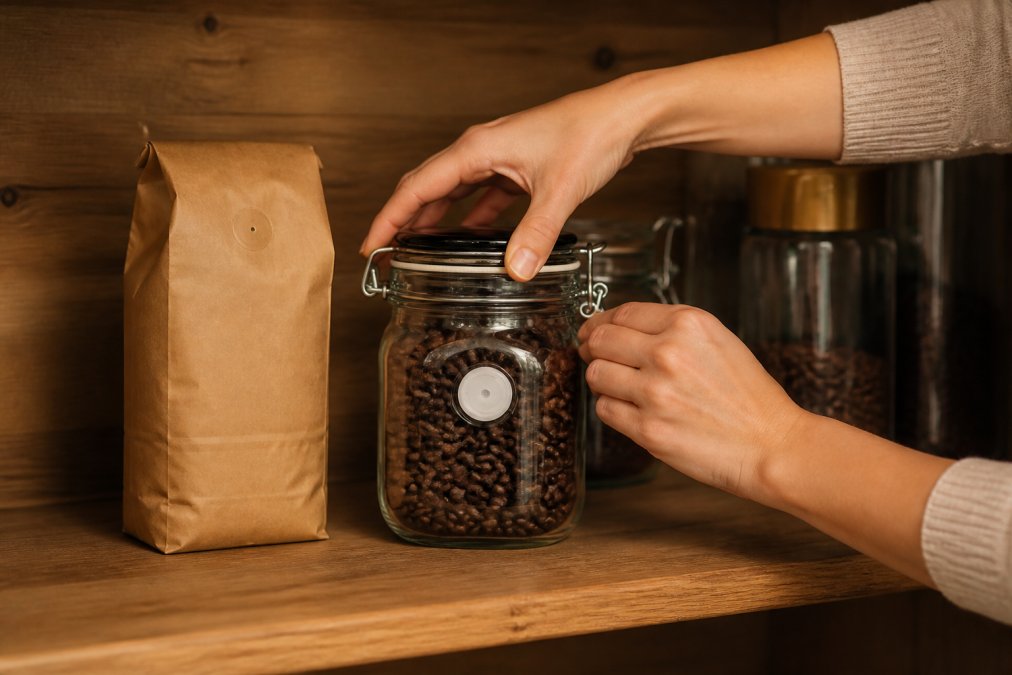
Start with an airtight container featuring a one-way degassing valve, or use opaque glass or metal vessels with tight-fitting lids. If your beans came in their original packaging and it's opaque with a good seal, you can store them as-is. Many roasters design packaging specifically for storage.
If you transfer to a different container, choose one that's opaque with an excellent seal. Test the seal by pressing the lid down, it should require firm pressure and create noticeable resistance.
Step 2: Check the Roast Date and Plan Your Use
Before storing, verify the roast date on the package. This tells you how much of the peak freshness window you have left. If beans were roasted 1 week ago, you have roughly 1-3 weeks of peak freshness remaining.
If buying a large quantity, consider dividing it. Store one portion at room temperature for immediate use and freeze the rest if you won't use it within 4 weeks. The roast date also helps you evaluate whether you're getting fresh beans. LGBrewTeaQ's roast-to-order model ensures beans ship within days of roasting.
Step 3: Seal and Store in Optimal Conditions
Place your beans in the chosen container and seal completely. If using a container with a degassing valve, ensure it's functioning. Store the sealed container in a cool (50-70°F), dark location: a pantry, kitchen cabinet, or closet away from heat sources and sunlight.
Avoid the refrigerator unless freezing for long-term storage. Avoid countertops, windowsills, or anywhere near the stove. Minimize opening, each time you open the container, you introduce oxygen. Some brewers keep a small daily-use container and store the bulk supply sealed elsewhere.
Step 4: Monitor for Signs of Staleness
Even with perfect storage, beans age. Check your coffee regularly for signs that freshness is declining. Stale coffee tastes flat, lacks brightness and complexity, and may develop off-flavors like cardboard or mustiness.
The smell is often the first indicator. Fresh beans have a vibrant, complex aroma. Stale beans smell muted and dull. The taste is the ultimate test. If your morning cup tastes less vibrant than it did a week ago, the beans are aging. When this happens, it's time to order fresh beans.
Common Mistakes That Destroy Coffee Freshness
Understanding what not to do is as important as knowing what to do.
Storing in clear containers on display. This looks nice but destroys freshness rapidly. Light exposure accelerates degradation. Move the jar to a dark cabinet immediately.
Opening the container too frequently. Every time you open the container, you introduce oxygen. Grind larger quantities less frequently, or use a smaller daily-use container while keeping the main supply sealed.
Storing near heat sources. Above the stove, next to the oven, or in a warm kitchen corner are terrible locations. Find the coolest, darkest spot available.
Buying pre-ground coffee and storing it long-term. Pre-ground coffee has maybe 3-5 days of peak freshness. Buy whole beans and grind as needed.
Transferring to inappropriate containers. Switching from the roaster's opaque bag to a clear jar actively makes storage worse. Keep beans in their original packaging when possible.
Assuming freezing is always the answer. Freezing works for specific situations but adds complexity for everyday storage. Room-temperature storage in proper conditions is simpler and better for regular consumption.
Ignoring the roast date. Always prioritize roast date as a primary factor in your purchase decision.
Storing in the refrigerator for convenience. The refrigerator cycles temperature constantly, creating condensation risk. A cool pantry or cabinet is far better.
Storing coffee beans for freshness comes down to four principles: minimize oxygen exposure, block light completely, maintain cool stable temperatures, and control humidity. Get these right and your beans stay vibrant for weeks.
The good news is that proper storage is simple and inexpensive. An airtight container with a degassing valve costs less than a specialty coffee drink. Storing in a dark cabinet costs nothing. The return on this small investment is enormous: better-tasting coffee every morning and the ability to enjoy the full flavor profile that roasters work hard to develop.
When you order from LGBrewTeaQ, you're starting with beans roasted to order for maximum freshness. Proper storage preserves that advantage. Follow these steps, avoid the common mistakes, and you'll experience why fresh, properly stored coffee tastes so much better. Shop Coffee and discover how freshness transforms your daily brew.
===
Honey Jar with Dipper Airtight - Glass Honey Pot Dispenser
Honey Jar with Dipper Airtight - Glass Honey Pot Dispenser - $22.56

Airtight Honey Jar That Locks In Freshness: Fitted silicone seal forms a tight closure, keeping raw honey protected from moisture, dust, and ants. Most honey pots leak or stay sticky - this honey container with dipper stays clean and tidy.
Borosilicate Glass Honey Dispenser With No Drip Wood Dipper: Crystal-clear glass resists chips and survives microwave warming when hone
=== FAQ ANSWERS (audit these too, same rules) ===
[1] Q: Is it okay to store coffee beans in a Ziploc bag? A: Ziploc bags offer some protection but aren't ideal for long-term freshness. While they block some air and moisture, they lack an airtight seal comparable to dedicated coffee containers with one-way degassing valves. If you use a Ziploc bag, remove excess air before sealing and store it in a cool, dark place. For best results, transfer beans to an opaque airtight container within a few days of purchase to preserve flavor profile and aroma.
[2] Q: How long do coffee beans stay fresh in a sealed bag? A: Coffee beans reach peak freshness within 2-4 weeks after the roast date. In a sealed, airtight bag with a one-way degassing valve, whole beans maintain good flavor for 4-6 weeks. After 8 weeks, oxidation and volatile compound loss begin noticeably affecting taste. Pre-ground coffee deteriorates faster, staying fresh for only 1-2 weeks even when sealed. Always check the roast date on your bag and prioritize beans roasted within the last 2-3 weeks for optimal quality.
[3] Q: Should you store coffee beans in the freezer or pantry? A: Room temperature storage in a cool, dark place is best for regular consumption within 4-6 weeks. Freezing works for long-term bulk storage beyond 2 months, but introduces risks of freezer burn and condensation if not handled carefully. If you freeze beans, use an airtight, opaque container, remove excess air, and thaw them in the sealed container before opening to prevent moisture accumulation. For most home users, a pantry or cupboard away from heat and light offers simpler, reliable freshness without the freezing complications.
[4] Q: Does light and heat affect coffee bean flavor? A: Yes, both significantly damage coffee quality. UV light breaks down coffee oils and volatile compounds that create aroma and taste, while heat accelerates oxidation and stale flavors. Store beans in an opaque container away from direct sunlight, heat sources, and temperature fluctuations. A dark pantry, cupboard, or drawer is ideal. Avoid storing near appliances, windows, or warm areas. Even brief exposure to heat and light degrades the flavor profile, so consistent cool, dark conditions are essential for preserving freshness throughout the shelf life.
Frequently Asked Questions
Is it okay to store coffee beans in a Ziploc bag?
Ziploc bags offer some protection but aren't ideal for long-term freshness. While they block some air and moisture, they lack an airtight seal comparable to dedicated coffee containers with one-way degassing valves. If you use a Ziploc bag, remove excess air before sealing and store it in a cool, dark place. For best results, transfer beans to an opaque airtight container within a few days of purchase to preserve flavor profile and aroma.
How long do coffee beans stay fresh in a sealed bag?
Coffee beans reach peak freshness within 2-4 weeks after the roast date. In a sealed, airtight bag with a one-way degassing valve, whole beans maintain good flavor for 4-6 weeks. After 8 weeks, oxidation and volatile compound loss begin noticeably affecting taste. Pre-ground coffee deteriorates faster, staying fresh for only 1-2 weeks even when sealed. Always check the roast date on your bag and prioritize beans roasted within the last 2-3 weeks for optimal quality.
Should you store coffee beans in the freezer or pantry?
Room temperature storage in a cool, dark place is best for regular consumption within 4-6 weeks. Freezing works for long-term bulk storage beyond 2 months, but introduces risks of freezer burn and condensation if not handled carefully. If you freeze beans, use an airtight, opaque container, remove excess air, and thaw them in the sealed container before opening to prevent moisture accumulation. For most home users, a pantry or cupboard away from heat and light offers simpler, reliable freshness without the freezing complications.
Does light and heat affect coffee bean flavor?
Yes, both significantly damage coffee quality. UV light breaks down coffee oils and volatile compounds that create aroma and taste, while heat accelerates oxidation and stale flavors. Store beans in an opaque container away from direct sunlight, heat sources, and temperature fluctuations. A dark pantry, cupboard, or drawer is ideal. Avoid storing near appliances, windows, or warm areas. Even brief exposure to heat and light degrades the flavor profile, so consistent cool, dark conditions are essential for preserving freshness throughout the shelf life.
This article was written using GrandRanker