

Is Fresh Roasted Coffee Worth the Price? A 2026 Guide
Table of Contents
- Fresh Roasted vs. Supermarket Coffee: The Real Difference
- The Price Per Cup Breakdown: Is Fresh Roasted Coffee Worth the Price?
- Why Does Specialty Coffee Cost More?
- How to Tell If Coffee Beans Are Fresh
- How to Store Coffee Beans for Maximum Freshness
- The Diminishing Returns Threshold: When Fresh Coffee Stops Being Worth It
- Conclusion: Making the Choice for Your Daily Cup
- Frequently Asked Questions
Last Updated: September 13, 2026
Fresh Roasted vs. Supermarket Coffee: The Real Difference
Fresh roasted coffee is coffee roasted within the last two to three weeks, and that timing is the single biggest factor separating it from the bags on a supermarket shelf. This guide from LGBrewTeaQ breaks down whether that difference justifies the higher price tag. Grocery aisles are full of bags with "best by" dates stamped a year out, that's shelf stability, not freshness. Fresh roasted coffee is worth the price for daily drinkers who care about flavor, but only if you understand what you're paying for and how to store it.
The gap comes down to one thing: when the beans were roasted. Supermarket coffee is built to survive months of warehousing and shipping. Fresh roasted coffee is built to taste good right now.
That trade-off shapes everything else, from aroma to acidity to how much you'll pay per cup.
The Price Per Cup Breakdown: Is Fresh Roasted Coffee Worth the Price?
Is fresh roasted coffee worth the price? For most daily drinkers, yes, but only after you convert the bag price into a cost per cup. Cost per bag is a marketing number; cost per cup decides whether the premium is justified.
The cost-per-cup formula
Use this for any bag, any roast, any brew method:
Cost per cup = (Bag price ÷ (Bag weight in grams ÷ Dose per cup in grams)) + (Filter or pod cost per cup, if any)
A 12 oz bag is 340 grams. At 18 grams per cup you get roughly 18 to 19 cups; at 15 grams, closer to 22. Dose swings your cost per cup more than the bag price does.
Worked example at three price tiers
Assuming a 12 oz (340 g) bag and an 18 g dose, which yields about 18 cups:
| Bag price | Cost per cup (18 g dose) | Cost per cup (15 g dose) |
|---|---|---|
| $9.99 | ~$0.55 | ~$0.44 |
| $16.99 | ~$0.94 | ~$0.75 |
| $23.99 | ~$1.33 | ~$1.06 |
Now compare that to the alternatives a daily drinker actually faces:
| Option | Typical cost per cup | Freshness window |
|---|---|---|
| Supermarket pre-ground | $0.25-$0.50 | 6-12 months |
| Supermarket whole bean | $0.50-$0.75 | 3-6 months |
| Fresh roasted whole bean (specialty) | $1.00-$1.50 | 2-4 weeks |
| Café drip | $2.50-$3.50 | Brewed to order |
| Café latte or espresso drink | $4.00-$6.00 | Brewed to order |
The number that changes the decision
The gap between supermarket whole bean and fresh roasted whole bean is roughly $0.50 to $0.75 per cup, about $365 to $550 per year for a two-cup-a-day drinker (peer-reviewed research). Compare that to the café line: replacing one $4.50 latte per workday with a fresh-roasted home cup at $1.33 saves about $3.17 per day, or roughly $790 over a 250-workday year, more than enough to cover the annual premium on fresh beans.
Brew method changes the math more than the bean price
People fixate on bag price and ignore extraction efficiency. Two brewers using the same beans can land at very different costs per cup:
- Drip machine: 15-18 g per 8-10 oz cup. Standard, predictable.
- French press: 20-30 g per cup because of the coarse grind and full immersion. Higher dose, higher cost per cup.
- Pour-over (V60, Chemex): 15-22 g per cup. Middle of the road, but rewards good beans more than any other method.
- AeroPress: 14-18 g per cup. The most dose-efficient of the manual brewers, which is why it's the cheapest way to drink fresh coffee per cup.
- Espresso: 18-20 g per double shot. Highest dose per serving, and the highest cost per ounce of any method.
If cost per cup is your concern, an AeroPress or drip machine at a 15 g dose stretches a $23.99 bag to 22 cups, about $1.09 per cup, while a French press at 25 g yields only 13 to 14 cups, roughly $1.71 per cup. Same beans, 57% difference, purely from brew method.
When the premium does not pay off
At one cup a day, the annual premium for fresh beans over supermarket whole bean is roughly $180 to $275, worth it for most people who drink coffee for taste rather than caffeine. At one cup a week, the bag goes stale before it's finished and the math collapses; a sample pack or a subscription sized to your consumption is the only way the per-cup cost stays honest.

Why Does Specialty Coffee Cost More?
Specialty coffee costs more because of everything that happens before the beans reach your grinder: higher-grade beans, smaller harvests, careful processing, and small-batch roasting all add cost that commodity coffee avoids.
The Specialty Coffee Association's green coffee grading standards classify beans by defect count and cup quality, and only the top tier earns the "specialty" label. That screening eliminates most of the global harvest.
Growing matters too. Single-origin beans from high-altitude regions like Colombia's volcanic mountains or Ethiopia's Yirgacheffe highlands develop denser beans with more complex flavor. Those farms invest in quality control at every stage: selective picking, controlled fermentation, and proper drying.
Then there's roasting. Commodity roasters crank out thousands of pounds per hour. Specialty roasters work in smaller batches, which means more labor and attention per bag.
How to Tell If Coffee Beans Are Fresh
You can tell if coffee beans are fresh by checking the roast date, smelling the bag, and looking at the beans. A roast date within the last two weeks is your strongest signal; "best by" dates tell you nothing about when the coffee was actually roasted.
Here's what to look for:
- Roast date on the bag: A specific date, not a vague month or season. If the bag only shows "best by," assume it's old.
- Aroma when you open it: Fresh beans release a noticeable burst of scent. Stale beans smell flat or papery.
- Bean surface: Fresh beans have a slight sheen from oils. Very oily or very dry beans are past their peak.
- Degassing: Fresh roasted coffee releases carbon dioxide for several days after roasting. That's why some bags have a one-way valve. If your beans don't bloom when hot water hits them, they've lost their gas and their flavor.
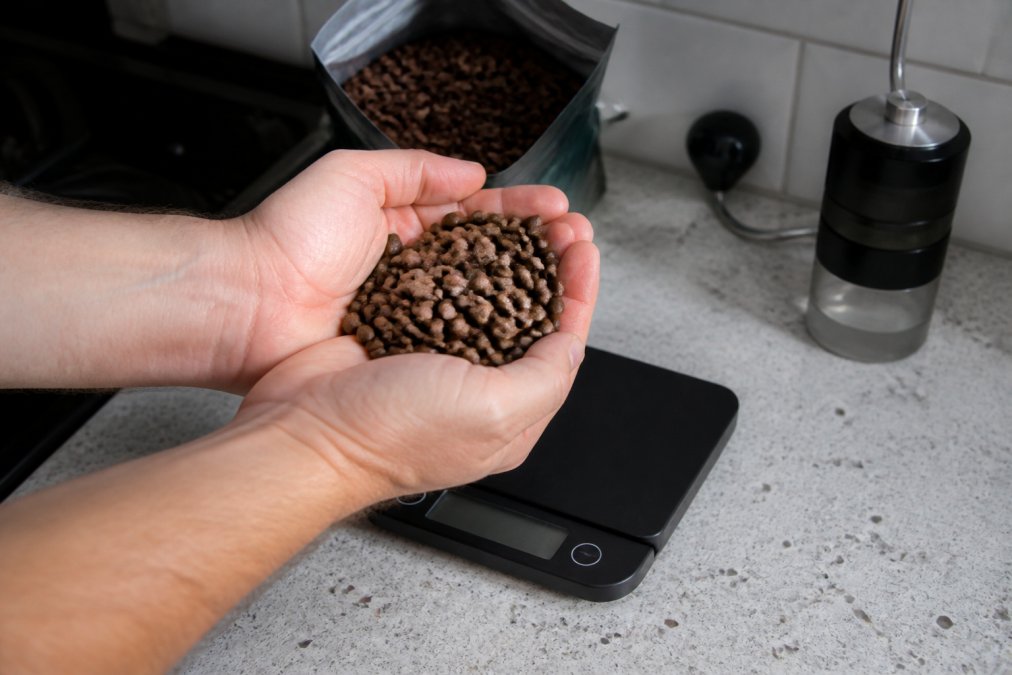
A common mistake is trusting the "roasted in" region label instead of the actual date. Origin tells you where the coffee came from. The roast date tells you whether it's still worth drinking.
How to Store Coffee Beans for Maximum Freshness
Storing coffee beans for maximum freshness means keeping them away from air, light, heat, and moisture. The best approach is an opaque, airtight container stored at room temperature, used within two to four weeks of the roast date.
Oxidation is the main enemy. Once beans are exposed to oxygen, the oils that carry flavor begin breaking down. That's why the FDA's guidance on food storage and shelf life recommends keeping dry goods sealed and away from light. Coffee isn't a regulated perishable, but the same principles apply.
What works:
- Airtight ceramic or opaque metal container
- Cool, dark cabinet away from the stove
- Whole beans, ground right before brewing
What doesn't:
- The freezer, unless you're storing sealed bags long-term and never thawing and refreezing
- The fridge, which introduces moisture and absorbs odors
- The original bag, unless it has a proper resealable valve
Grinding right before brewing matters more than most people realize: ground coffee stales in days, not weeks, because the increased surface area speeds oxidation.
The Diminishing Returns Threshold: When Fresh Coffee Stops Being Worth It
Fresh roasted coffee stops being worth the premium at a definable point. The threshold has three parts, a price ceiling, a sensory test, and a consumption floor. Find your number on each and you'll know where the value curve flattens for you.
The price ceiling: where the curve flattens
Specialty coffee pricing follows a pattern most roasters won't say out loud. From roughly $12 to $22 per 12 oz bag, every additional dollar tends to buy a noticeably better cup, better green coffee, tighter roast control, fresher delivery. Past about $25 to $30, improvements become smaller and harder to detect without cupping experience. Past roughly $40, you're paying for scarcity, competition scores, or single-lot exclusivity rather than a cup meaningfully better than a well-roasted $20 bag.
That's the diminishing-returns threshold: the point where the next dollar buys less flavor than the last one did. For most daily drinkers, it sits somewhere between $18 and $28 per 12 oz bag. Below that range, you're often sacrificing freshness or roast quality. Above it, you're paying for rarity.
The sensory test: can you actually taste it?
Price only matters if it reaches your palate. Run this comparison before you decide your ceiling:
- Brew two cups side by side, one from a $15 bag, one from a $30 bag, using the same dose, grind, water, and method.
- Taste them blind. Have someone else label the cups.
- Score each on sweetness, acidity, body, and aftertaste.
People can reliably pick the fresher coffee but cannot reliably pick the more expensive one once both are fresh. If you can't tell a $30 bag from a $20 bag blind, your threshold is $20, buying above it is paying for a story, not a cup.
The consumption floor: freshness math
Fresh roasted coffee has a 2-4 week peak window. That window sets a hard floor on how much you should buy at once:
- 1 cup per day at 18 g: about 126 g per week, so a 340 g bag lasts roughly 2.5 weeks, right at the edge of the peak window.
- 2 cups per day at 18 g: about 252 g per week, so a 340 g bag lasts about 9 days, comfortably inside the window.
- 1 cup per week at 18 g: 18 g per week, so a 340 g bag lasts about 19 weeks, far past the point where the beans have gone flat.
If your consumption puts you past the peak window before the bag is empty, the premium is wasted regardless of how good the beans were on day one. Buy smaller bags, split a subscription, or drop to a cheaper tier you'll finish in time.
The equipment threshold
You don't need a full home barista setup to justify fresh beans, but there is a floor. A blade grinder produces an uneven grind that extracts inconsistently, masking the flavor differences you paid for. A basic burr grinder, hand or electric, is the minimum that lets fresh beans show what they can do; beyond that, a drip machine, French press, AeroPress, or pour-over cone all work fine. The beans matter more than the brewer, but the grinder matters more than most people admit.
The honest answer
The threshold is personal, but not arbitrary. Set a price ceiling based on what you can taste, a consumption floor based on how fast you drink, and an equipment floor based on whether you can grind consistently. Hit all three and fresh roasted coffee is worth the price; miss any one and you're paying a premium for a difference you won't experience.
Conclusion: Making the Choice for Your Daily Cup
The real challenge isn't deciding whether fresh roasted coffee is worth the price. It's finding a roaster who actually delivers on freshness and lets you adjust your order as your taste develops. That's where LGBrewTeaQ comes in. We roast to order, source beans from trusted farms, and ship fast so your coffee arrives at peak flavor. Our Colombia Single Origin Coffee and Single Origin Favorites Sample Pack are the easiest ways to start. Get started with LGBrewTeaQ and taste what fresh actually means.

Frequently Asked Questions
Is fresh roasted coffee actually better than store-bought?
Fresh roasted coffee typically has more aroma, sweetness, and complexity because it hasn't spent months oxidizing on a shelf. Store-bought bags often carry a 'best by' date rather than a roast date, so you don't know how old the beans are. If you value flavor clarity and a richer sensory experience, fresh roasted coffee is a noticeable upgrade. The trade-off is cost and planning, but for daily drinkers, the difference in the cup is real.
How long does coffee stay fresh after roasting?
Most roasters suggest drinking coffee within 2 to 4 weeks of the roast date for peak flavor. The beans degas for the first few days, then gradually lose aromatic compounds through oxidation. Whole bean coffee holds up better than pre-ground because less surface area is exposed to air. For maximum freshness, buy in small batches and store beans in an airtight container away from light, heat, and moisture.
Does the roast date on coffee bags really matter?
Yes, the roast date is the single most useful freshness indicator on a bag. Unlike a 'best by' date, which can be a year out, the roast date tells you exactly when the clock started ticking. Look for bags with a printed roast date within the last two weeks. If a bag only has a best-by date, you're guessing. Fresh roasted coffee from a roaster that stamps the roast date gives you control over quality.
What is the 15-15-15 rule for coffee?
The 15-15-15 rule is a simple guideline some coffee enthusiasts use: buy beans within 15 days of roast, store them for no more than 15 days after opening, and brew within 15 minutes of grinding. It's not a hard science, but it captures the three biggest freshness windows: roast date, storage time, and grind timing. Following it helps you get the most flavor from any bag of fresh roasted coffee.