

What Makes Specialty Coffee Ethically Sourced
Table of Contents
- What Makes Specialty Coffee Ethically Sourced
- Fair Trade vs Direct Trade Coffee: Understanding the Difference
- Ethical Coffee Certification Labels and What They Mean
- Coffee Supply Chain Transparency: From Farm to Cup
- Why Ethical Sourcing Matters for Specialty Coffee Quality
- How to Identify and Verify Ethical Coffee Brands
- The Greenwashing Trap: Spotting False Ethical Claims
- Frequently Asked Questions
Last Updated: September 20, 2026
What Makes Specialty Coffee Ethically Sourced
Ethical sourcing in specialty coffee means more than a logo on the bag. At LGBrewTeaQ, we understand what actually separates genuinely responsible coffee from greenwashing. The answer involves tracing every step from farm to roaster, verifying farmer compensation, and confirming environmental practices are real, not marketing.
What makes specialty coffee ethically sourced comes down to three core elements: fair compensation for farmers, verifiable environmental stewardship, and supply chain transparency. Many coffee drinkers assume any specialty coffee is automatically ethical. That assumption costs smallholder farmers millions in lost income annually. The specialty coffee market has grown rapidly, but the ethical practices haven't always kept pace with demand.
This guide breaks down how to identify truly ethically sourced specialty coffee, distinguish between certification types, and spot the false claims that dominate the market. We'll cover the certifications that matter, the ones that don't, and the red flags that signal greenwashing.
Fair Trade vs Direct Trade Coffee: Understanding the Difference
Fair Trade and Direct Trade represent two fundamentally different approaches to ensuring farmer welfare. They're often confused, but they operate on entirely different models.
Fair Trade certification establishes a minimum price floor for coffee, typically managed through cooperatives and third-party auditors. A Fair Trade-certified coffee guarantees that farmers received at least a baseline price, regardless of market fluctuations (Fairtrade standards). The system protects smallholder farmers from price crashes. However, Fair Trade doesn't guarantee a living wage in many regions, and the certification process involves fees that smaller farms sometimes struggle to afford.
Direct Trade cuts out middlemen entirely. Roasters buy directly from individual farms or small farmer groups, negotiate prices collaboratively, and often build long-term relationships. Direct Trade typically results in higher farmer income than Fair Trade because there are fewer intermediaries taking a cut. The roaster can verify practices firsthand and adjust pricing based on actual farm conditions and crop quality.
The trade-off: Direct Trade requires roasters to invest time and resources in farm relationships. Not every roaster has the capacity to do this at scale. Fair Trade is more accessible to larger operations and provides consistent, auditable standards.
For consumers, the practical difference is this: Fair Trade guarantees a minimum standard across many farms. Direct Trade offers potentially higher farmer income but depends entirely on the roaster's integrity and commitment. Both can be ethical. Neither is automatically superior.
Ethical Coffee Certification Labels and What They Mean
The certification landscape is crowded. Some certifications carry real weight. Others are largely marketing.
Common Certifications Explained
Fair Trade Certified, Ensures minimum prices, prohibits child labor, and requires environmental standards. Verified through third-party audits. This is the most widely recognized certification globally. The standard is consistent but sometimes falls short of a true living wage depending on the region.
Rainforest Alliance Certified, Focuses on environmental sustainability, worker rights, and community development. Allows farmers to continue conventional practices if they meet sustainability benchmarks. Less stringent than organic but broader in scope than price-focused certifications.
Organic Certified, Confirms that coffee was grown without synthetic pesticides or fertilizers. Organic farming protects soil health and reduces chemical runoff. However, organic certification doesn't guarantee fair wages or worker welfare. A coffee can be organic and still exploit farmers.
Bird-Friendly Certified, A specialty certification that verifies shade-grown coffee in biodiverse canopies. This protects migratory bird habitats while supporting smallholder farmers who use shade-grown methods. It's rigorous and meaningful but less common than Fair Trade.
Direct Trade, Not a formal certification but a business model. When a roaster claims Direct Trade, verify their transparency. Legitimate Direct Trade roasters publish farm names, locations, and often farmer compensation details.
The strongest ethical coffees often carry multiple certifications. A coffee that's Fair Trade, Organic, and Rainforest Alliance certified has met three independent standards. However, more certifications don't always mean better ethics. A single, rigorous certification from a credible auditor often indicates more genuine commitment than a coffee plastered with logos.
Coffee Supply Chain Transparency: From Farm to Cup
Transparency is the foundation of ethical sourcing. A truly ethical coffee brand should be able to tell you exactly where their beans came from and how farmers were compensated.
Supply chain transparency means the roaster can trace coffee back to specific farms, cooperatives, or regions. The best roasters go further: they publish farmer names, payment amounts, and processing methods. This level of detail is rare but increasingly expected by consumers who care about ethics.
Here's what to look for in a transparent supply chain:
Colombia Single Origin Coffee →
- Named farms or farmer groups, Not just "sourced from Colombia" but "sourced from the Huila region, from the Asocesan cooperative"
- Harvest and processing details, How the coffee was dried, fermented, or washed affects both flavor and environmental impact
- Farmer compensation transparency, The price paid per pound, whether it's above market rate, and how often payments are made
- Third-party verification, Independent audits confirming that stated practices actually occur
- Traceability documentation, The ability to follow coffee from farm to roastery
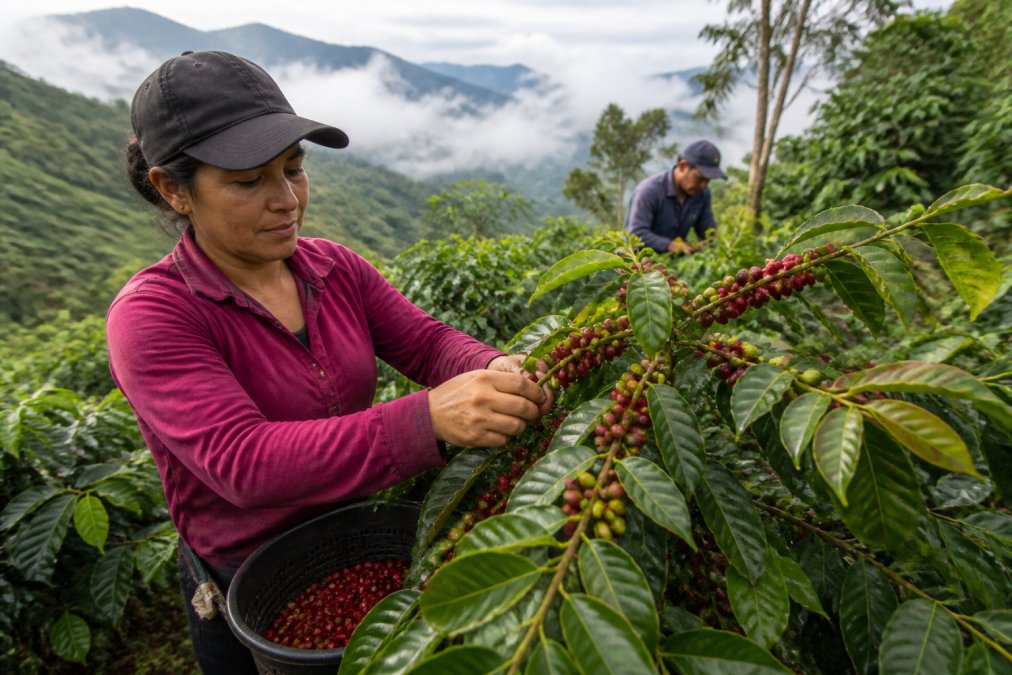
LGBrewTeaQ sources from farms that meet these transparency standards. Our Colombia Single Origin Coffee comes from volcanic high-altitude mountains where smallholder farming families hand-harvest at peak ripeness. We publish sourcing details because transparency builds trust.

Supply chain opacity is where greenwashing thrives. Vague language like "ethically sourced" without specifics, or "sourced from Africa" without naming a country or farm, signals that the roaster either doesn't know their supply chain or doesn't want you to know it.
Why Ethical Sourcing Matters for Specialty Coffee Quality
Here's the counterintuitive part: ethical sourcing and coffee quality are deeply connected. They're not separate concerns.
Farmers who receive fair compensation invest in better farming practices. They can afford to replace aging plants, implement soil-building techniques, and harvest selectively for peak ripeness instead of stripping every cherry off the plant. Specialty coffee requires meticulous care at every stage. Underpaid farmers can't afford that care.
Environmentally sustainable practices also improve coffee quality. Shade-grown coffee ripens more slowly, concentrating sugars and developing complex flavor profiles. Organic farming builds soil health, which produces denser beans with more nuanced flavors. These aren't just ethical benefits; they're quality benefits.
The economic reality: specialty coffee commands premium prices. When those premiums don't reach farmers, the system breaks. Farmers abandon coffee farming for other crops. The remaining farms cut corners to maintain income. Quality declines. The specialty coffee market collapses from the bottom up.
Ethical sourcing ensures the specialty coffee supply chain remains viable. It's not charity. It's the foundation that allows specialty coffee to exist at all.
How to Identify and Verify Ethical Coffee Brands
Identifying genuinely ethical coffee requires moving beyond marketing claims to actual verification.
Start with certifications, but don't stop there. A Fair Trade label is a baseline, not a guarantee of excellence. Look for roasters that go beyond certification:
Check the roaster's sourcing page. Legitimate ethical roasters publish detailed sourcing information. They name farms, regions, farmers, and often include photos or videos of the farms. If the sourcing page is vague or missing, that's a red flag.
Ask about farmer compensation. Ethical roasters are transparent about what they pay farmers. They'll tell you the price per pound, whether it's above market rate, and how that compares to Fair Trade minimums. If a roaster won't discuss pricing, they're likely not paying premium rates.
Verify third-party certifications. Look up certifications on the issuing organization's website. Legitimate Fair Trade, Rainforest Alliance, and Organic certifications are searchable. Fake certifications won't appear in official databases.
Look for long-term farm relationships. Ethical roasters work with the same farms year after year.
The Greenwashing Trap: Spotting False Ethical Claims
Greenwashing in coffee is rampant. Many brands make ethical claims with little or no substance behind them.
Frequently Asked Questions
What are the primary indicators of ethically sourced coffee?
Ethically sourced coffee shows traceability back to specific farms or cooperatives, carries third-party certifications (Fair Trade, Direct Trade, Rainforest Alliance), pays farmers above commodity market prices, and practices sustainable agriculture. Look for transparency about processing methods, labor conditions, and environmental stewardship. Specialty roasters often list origin details, elevation, and farming practices on packaging. Single-origin coffees from trusted roasters like LGBrewTeaQ provide direct sourcing information that commodity blends typically hide.
How does Fair Trade certification differ from direct trade models?
Fair Trade certification involves third-party audits ensuring minimum prices and labor standards across large supply networks, but farmers may not know the final buyer. Direct trade eliminates middlemen: roasters work directly with farms, often visiting them personally, negotiating prices that reward quality, and building long-term relationships. Direct trade typically pays higher premiums but reaches fewer farmers. Fair Trade reaches more smallholder producers but with less personal accountability. Both reject commodity market exploitation, but direct trade offers greater supply chain transparency and farmer empowerment.
Can I verify ethical claims on coffee packaging, or is it just marketing?
Verify claims by checking for specific certifications (Fair Trade USA, Rainforest Alliance, Bird Friendly), then cross-reference the roaster's website for farm names, GPS coordinates, or farmer cooperatives. Legitimate roasters publish detailed sourcing stories. Greenwashing uses vague terms like 'responsibly sourced' without backing them up. Ask roasters direct questions: Which farms? What price per pound? How do you ensure labor rights? Roasters invested in ethics answer these. LGBrewTeaQ's single-origin coffees, like our Colombia and Ethiopia offerings, include specific elevation, processing methods, and smallholder farmer details that prove traceability.
Why does ethical sourcing matter for specialty coffee quality?
Ethical sourcing and quality are inseparable. Farmers paid fairly invest in soil health, selective harvesting, and careful fermentation. Sustainable agriculture without synthetic fertilizers produces beans with cleaner, more complex flavors. Direct relationships mean roasters choose beans for flavor, not just price, creating natural selection for quality. Shade-grown coffee develops slowly, concentrating sugars and aromatics. When farmers earn living wages, they stay in coffee farming, preserving knowledge and terroir expression. Specialty coffee's delicate floral, fruit, and chocolate notes depend on ethical practices that prioritize both people and land.