

7 Ways to Improve Coffee Extraction at Home
Table of Contents
- What Is Coffee Extraction and Why It Matters
- 1. Master Coffee Grind Size for Extraction
- 2. Perfect Your Coffee-to-Water Ratio
- 3. Use Fresh, Filtered Water and Monitor Water Quality
- 4. Bloom Your Coffee Before Full Brewing
- 5. Control Espresso Extraction Time and Dial In Your Machine
- 6. Fix Bitter Coffee: Causes and Solutions
- 7. Record Your Brews and Adjust Methodically
- Frequently Asked Questions
Last Updated: October 18, 2026
What Is Coffee Extraction and Why It Matters
Coffee extraction is the process of dissolving soluble compounds from ground coffee beans into hot water, pulling out the flavors, oils, and acids that create the taste in your cup. The goal is balanced extraction: the right amount of flavor without over-extracting (bitterness) or under-extracting (sour, thin coffee).
Grind size, water temperature, brew time, and coffee-to-water ratio all affect how much of the bean dissolves into your water. Master these variables, and you'll improve coffee extraction dramatically, transforming a flat, one-note cup into something balanced and complex.
Extraction directly determines whether your coffee tastes good. Under-extracted coffee tastes sour and thin; over-extracted coffee tastes bitter and harsh. The sweet spot produces balanced sweetness, acidity, and body. Learning to improve coffee extraction at home is the single biggest lever for better-tasting coffee, regardless of which beans you buy.
| Issue | Cause | Solution |
|---|---|---|
| Sour, thin taste | Under-extraction | Grind finer, brew longer, use hotter water |
| Bitter, harsh taste | Over-extraction | Grind coarser, brew shorter, use cooler water |
| Inconsistent flavor | Uneven extraction | Improve grind consistency, bloom coffee, distribute grounds evenly |
| Weak cup | Low extraction yield | Increase brew time or contact time with water |
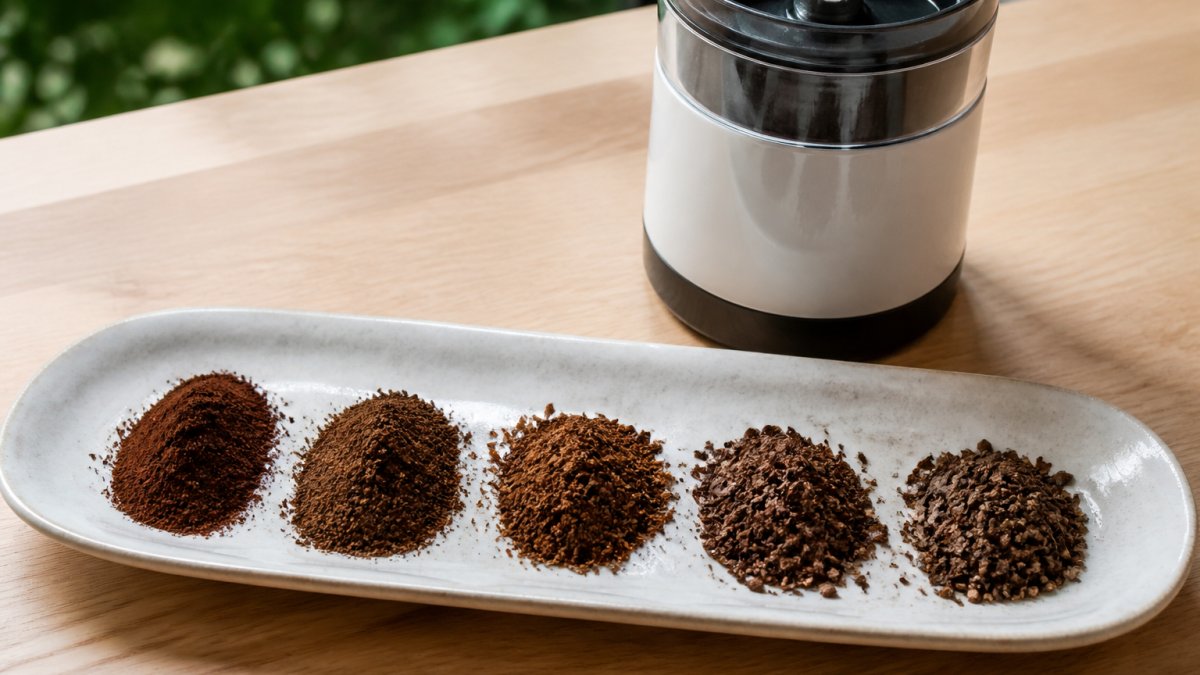
1. Master Coffee Grind Size for Extraction
(/products/usb-rechargeable-ceramic-electric-coffee-grinder) rather than a blade grinder. The LGBrewTeaQ [USB Rechargeable Ceramic Electric Coffee Grinder](https://lgbrewteaq.com/products/usb-rechargeable-ceramic-electric-coffee-grinder) ($24.36) uses ceramic burrs to deliver consistent grind sizes across all settings, making it simple to dial in the right particle size for your brewing method.For pour-over brewing, aim for medium-fine grind (like sea salt). For French press, go coarser (like breadcrumbs). For espresso, grind very fine (like flour). The relationship is simple: finer grinds = faster extraction, coarser grinds = slower extraction.
2. Perfect Your Coffee-to-Water Ratio
The coffee-to-water ratio controls how strong or weak your final cup tastes. Get the ratio right, and you extract the ideal amount of flavor. Get it wrong, and you either waste good coffee or end up with a weak, watery cup.
The standard starting point is 1:16 (one part coffee to sixteen parts water by weight). This means 20 grams of coffee to 320 grams of water. This ratio works well for most brewing methods and produces a balanced, medium-strength cup. If you prefer stronger coffee, move toward 1:15. If you prefer weaker coffee, move toward 1:17.
Weight matters more than volume, since a tablespoon varies with grind fineness and packing. Weighing coffee and water on a kitchen scale removes the guesswork; most scales cost under $20 and pay for themselves as you stop wasting beans on bad ratios.
Ratio affects extraction because the amount of water determines how long coffee particles stay in contact with liquid. More water means slower dissolution and possible under-extraction; less water means faster dissolution but risks over-extraction if brew time isn't controlled.
Start by measuring your beans and water by weight, brew at 1:16, and taste the result. If it's sour, either grind finer or use slightly less water (move to 1:15). If it's bitter, grind coarser or use slightly more water (move to 1:17).
3. Use Fresh, Filtered Water and Monitor Water Quality
Water is half your cup of coffee. If your water is off, no amount of technique will fix it. Most home brewers ignore water quality, and it costs them dramatically in flavor.
Tap water varies wildly by location. Hard water can slightly help extraction because minerals interact with coffee compounds, but water that's too hard creates scale buildup and off-flavors. Water that's too soft may under-extract because there aren't enough minerals to facilitate extraction.
Use filtered water for brewing. A simple pitcher filter (like Brita) removes chlorine and some sediment. If you want more control, a reverse osmosis filter removes nearly everything, giving you a blank slate. Many home baristas who are serious about improving coffee extraction invest in a reverse osmosis system because it lets them dial in extraction without water chemistry variables.
Temperature matters too: brew at 195-205°F for most methods. Hotter water extracts faster (useful if under-extracting), cooler water slower (useful if over-extracting). Most kettles control temperature, or let boiling water cool 30 seconds before pouring.
4. Bloom Your Coffee Before Full Brewing
Blooming is the practice of wetting your grounds with a small amount of hot water, waiting 30-45 seconds, then continuing with the rest of your brew. It's one of the simplest techniques to improve coffee extraction at home, and it works across all brewing methods.
During the bloom, water begins dissolving soluble compounds and trapped CO2 escapes. This pre-wetting creates more even extraction during the main brew because the grounds are already saturated and gas isn't creating air pockets water can't reach.
For pour-over brewing, use about 2-3 times the weight of water as coffee during the bloom. So if you're using 20 grams of coffee, bloom with 40-60 grams of water. Let it sit for 30-45 seconds, then pour the rest of your water slowly over the next 2-3 minutes.
For French press, bloom with hot water for 30 seconds, stir gently, then add the rest of your water and steep for 4 minutes total.
The bloom doesn't add time overall, it just redistributes your brewing time, but it dramatically improves extraction consistency by controlling when and how water first contacts the grounds.
5. Control Espresso Extraction Time and Dial In Your Machine
For espresso specifically, extraction time is your primary control lever. Espresso should extract in 25-30 seconds from the moment water hits the puck until the shot stops flowing.
USB Rechargeable Ceramic Electric Coffee Grinder →
If your espresso extracts too fast (under 20 seconds), the shot tastes sour and thin. If it extracts too slowly (over 35 seconds), it tastes bitter and harsh. The sweet spot is that 25-30 second window where you're pulling a balanced shot with good body and clean finish.
To dial in your espresso machine, start with grind size: if shots run too fast, grind finer; too slow, grind coarser. Make small adjustments, a quarter turn at a time, and pull test shots until you hit the 25-30 second window.
Once you've got the timing right, consistency comes from tamping pressure and puck preparation. Tamp with even pressure (about 30 pounds of force, not as much as people think).
The LGBrewTeaQ African Espresso ($23.99) is specifically roasted for espresso machines. Single-origin beans like the Colombia Single Origin Coffee ($23.99) work beautifully for espresso too, though they may require slightly different timing than blends.

6. Fix Bitter Coffee: Causes and Solutions
Bitter coffee is almost always a sign of over-extraction. Your water has dissolved too many compounds from the grounds, pulling out harsh, unpleasant flavors along with the good ones. The fix depends on your brewing method.
For pour-over or drip: the most common cause is grounds too fine or brew time too long. Grind coarser and see if bitterness disappears. If you're already at medium grind, shorten brew time by 30 seconds. If water is over 205°F, let it cool slightly.
For French press: bitterness usually means you steeped too long. French press typically brews for 4 minutes, but some people leave it longer. Pull back to exactly 4 minutes and taste. If it's still bitter, grind coarser, the larger particles will extract more slowly even with the same steep time.
For espresso: over-extraction in espresso is usually a grind problem. If your shots are running longer than 30 seconds, grind finer isn't the answer, grind coarser. Counter-intuitive, but longer shots mean water is flowing through the puck too slowly, over-extracting everything. Coarser grounds let water flow faster, shortening the shot and reducing extraction time.
The Bali Blue - Single Origin Medium-Dark Roast ($23.99) is naturally low in acidity and resistant to over-extraction, making it forgiving for brewers who are still dialing in their technique. Its syrupy body and chocolate notes come through even when extraction isn't perfect.
7. Record Your Brews and Adjust Methodically
The fastest way to improve coffee extraction at home is to keep notes. Write down your grind size, water temperature, brew time, coffee-to-water ratio, and how the cup tasted. Over weeks and months, you'll see patterns.
Most home brewers try random changes and never know which one made the difference.
Instead, change one variable at a time. Brew with your current setup, note the result. Next brew, adjust only grind size. Brew again, note the result. Did it improve? Keep that change.
Create a simple spreadsheet or notes app with columns for date, grind size, water temp, brew time, ratio, and tasting notes.
Consider trying the LGBrewTeaQ Best Sellers Coffee Tasting Flight ($24.99) or Single Origin Favorites Sample Pack ($24.99). Sample packs let you test different origins and roast levels while you're perfecting your technique. You'll quickly discover which beans respond best to your brewing method and which flavor profiles you prefer.


Improving coffee extraction at home doesn't require expensive equipment or complicated techniques, just understanding how grind size, water, ratio, and time work together. Start with one change, grind finer or coarser, and taste the difference.
The most important step is to start. Brew a cup today using your current method. Shop our freshly roasted single-origin coffees and use them as your testing ground, you'll discover your perfect extraction before you know it.
Frequently Asked Questions
How do I know if my coffee extraction is off?
Taste is your best indicator. Under-extracted coffee tastes sour, thin, and weak. Over-extracted coffee tastes bitter, harsh, and astringent. Well-extracted coffee has balance: sweetness, acidity, and body working together. If your coffee consistently tastes one way, adjust your grind size, brew time, or water temperature slightly and brew again. Track what you change so you can replicate the improvement.
What coffee-to-water ratio should I use for better extraction?
A standard starting ratio is 1:16 (1 part coffee to 16 parts water by weight). For a stronger cup, try 1:15. For a lighter cup, try 1:17. Espresso uses a different ratio: typically 1:2 (18 grams of coffee to 36 grams of liquid espresso). Measure by weight, not volume, for consistency.
Does grind size really affect how my coffee tastes?
Yes, dramatically. Finer grinds extract faster because water contacts more surface area. Coarser grinds extract slower. If your coffee tastes bitter, try grinding coarser to reduce extraction time. If it tastes sour or weak, grind finer to increase extraction. A burr grinder like the USB Rechargeable Ceramic Electric Coffee Grinder ($24.36) gives you consistent particle size, which is essential for repeatable results.
Why does my espresso extraction time matter?
Espresso extraction time controls how much flavor and oils are pulled from the coffee. Ideal extraction takes 27-30 seconds. If your shot pulls too fast (under 25 seconds), the coffee tastes sour and thin. If it pulls too slow (over 35 seconds), it tastes bitter and harsh. Adjust by tamping harder (slower extraction) or grinding coarser (faster extraction) until you hit that sweet spot.