

Best Alternatives to Mass Market Coffee Beans
Table of Contents
- Why Mass Market Coffee Falls Short
- Understanding Roast Profiles and What They Mean for Flavor
- How to Tell if Coffee Beans Are Fresh
- Single-Origin vs Blended Coffee: Which One Should You Choose
- Specialty Coffee Alternatives Worth Trying
- How to Store Coffee Beans for Maximum Freshness
- Cost-Per-Cup Breakdown: Is Specialty Coffee Worth It
- Ethical Sourcing and Direct Trade Transparency
- Frequently Asked Questions
Last Updated: October 2, 2026
Why Mass Market Coffee Falls Short
Mass market coffee beans sit on shelves for months after roasting, losing brightness, complexity, and aroma by the time you brew them, a key reason alternatives to mass market coffee have gained popularity among serious drinkers.
Most mass-produced beans are commodity-grade, lower altitude, less careful harvesting, minimal flavor development. They're engineered for shelf stability, not taste, whereas alternatives to mass market coffee prioritize flavor and freshness.
LGBrewTeaQ roasts to order and delivers within days. Freshness and sourcing are where specialty alternatives truly differ from mass market.
Understanding Roast Profiles and What They Mean for Flavor
A roast profile is the precise temperature and timing used to transform raw coffee beans into the roasted product you brew.
Light roasts preserve origin character, floral notes, bright acidity, fruit-forward flavors.
Medium roasts balance origin flavors with roast-developed sweetness, caramel, chocolate, nutty notes.
Dark roasts prioritize roast character over origin, delivering bold chocolate, molasses, and smoky notes with low acidity.
Roast profile determines ideal brewing method.
How to Tell if Coffee Beans Are Fresh
Freshness is the biggest factor separating mass market from specialty coffee.
Look for a roast date on the bag. Specialty roasters print it because it's what matters.
Fresh beans have a visible sheen; roasted coffee releases oils that catch light.
Fresh coffee has a strong, vibrant aroma (fruity, floral, chocolatey). Old coffee smells muted and cardboard-like.
The ideal brewing window is 5-30 days after roasting.
Roasting to order ensures peak freshness.
Single-Origin vs Blended Coffee: Which One Should You Choose
A single-origin comes from one region, farm, or lot. A blend combines multiple origins. Each has genuine advantages.
Single-origins let you taste terroir, the specific flavor altitude, soil, processing, and climate create.
Blends are engineered for balance and consistency. A roaster combines origins to hit a specific target, smooth breakfast blend or bold espresso blend.
Single-origins teach you more about coffee and help you develop a palate.
Try single-origins in pour-over or AeroPress to showcase complexity. Use balanced blends for French press or drip for simplicity. The LGBrewTeaQ Single Origin Favorites Sample Pack lets you taste six origins, Brazil, Colombia, Costa Rica, Ethiopia, Honduras, and Tanzania, to discover which terroirs resonate with you.

| Characteristic | Single-Origin | Blend |
|---|---|---|
| Flavor Complexity | High; reflects specific terroir | Balanced; engineered for consistency |
| Best Brewing Method | Pour-over, AeroPress, V60 | French press, drip, espresso |
| Learning Curve | Steeper; requires understanding origins | Gentler; roaster has balanced variables |
| Consistency | Varies slightly by harvest | Designed for consistency |
| Price Point | Often higher | Varies widely |
Specialty Coffee Alternatives Worth Trying
Single-Origin Tasting Flights for Exploration
A tasting flight lets you discover which origins you love without committing to a full bag. You get small samples of multiple single-origins to compare.

The LGBrewTeaQ Best Sellers Coffee Tasting Flight includes six 2 oz bags yielding roughly 25-30 cups total. You taste the roastery's most-loved roasts before committing to bulk purchases.
The Single Origin Favorites Sample Pack offers six single-origins: Brazil Santos (cocoa, velvety), Colombia (dried orange, berry, chocolate), Costa Rica (apple, raisin, honey), Ethiopia (milk chocolate, fruit, caramel), Honduras (caramel, spice, brown sugar), and Tanzania (pear, jasmine, strawberry). Brewing side-by-side reveals how altitude, climate, and processing create different flavors.
Tasting flights offer cost-efficiency: you explore six origins without committing to 5 pounds of something unfamiliar.
Dark Roasts for Bold, Rich Flavor
Dark roasts are for people who want coffee that doesn't apologize. If you've been drinking mass market dark roast and found it bitter and harsh, you've been experiencing poorly executed dark roasting. Quality dark roasts are smooth, complex, and deeply satisfying, not burnt.
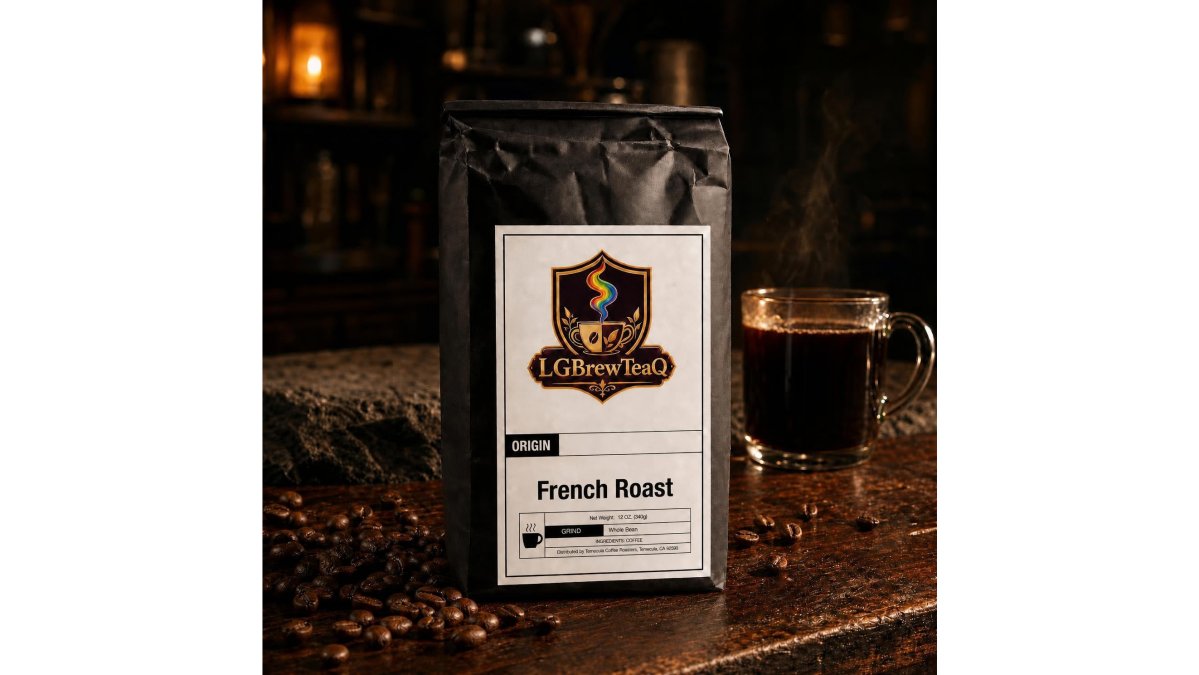
The LGBrewTeaQ French Roast is roasted right to the edge of the drum to unlock deep caramelization. You get bittersweet dark chocolate, toasted walnut, molasses, and woodsmoke, notes that only emerge at dark roast levels. The body is dense and full, acidity nearly disappears, and the mouthfeel is velvety. This is the roast for French press, cold brew, or espresso drinks where you want the coffee to stand up to milk and sweetener.
The Sumatra Single Origin is a medium-dark roast that showcases how processing method influences flavor. Sumatran beans undergo wet-hulling (Giling Basah), which creates a distinctive heavy body and syrupy mouthfeel. You taste bittersweet dark chocolate, dried fig, earthy spice, and molasses. This roast is ideal for French press or espresso, methods that maximize the natural oils and body that Sumatran processing creates.

Dark roasts are often misunderstood as "burnt." The difference between well-executed and scorched is the roaster's skill.
Balanced Blends for Everyday Brewing
Balanced blends deliver consistently delicious, approachable, reliable cups for everyday brewing.
The LGBrewTeaQ Best Sellers Tasting Flight includes the Breakfast Blend, a smooth medium roast with milk chocolate, honeyed graham cracker, and crisp finish. Engineered for drip makers, it's a genuinely good morning cup without fussiness.
Single Origin Favorites Sample Pack →
The Cowboy Blend pairs dark roast depth with medium roast sweetness, warm cocoa, caramel, vanilla, toasted pecan. It works in French press, drip, or espresso without fussiness.
Balanced blends prioritize sweetness and smoothness over origin complexity. You taste the roaster's craft in combining beans to hit a flavor target.
How to Store Coffee Beans for Maximum Freshness
Storage is where most drinkers accidentally destroy freshness. Coffee's enemies are air, light, heat, and moisture.
Keep beans in an airtight container away from direct sunlight. A sealed bag with a one-way valve is ideal.
Room temperature in a sealed container away from heat and sun is ideal.
Buy whole beans, not ground.
Grind immediately before brewing. Grinding opens the bean's surface to oxygen.
Invest in a quality burr grinder. The LGBrewTeaQ USB Rechargeable Ceramic Electric Coffee Grinder produces consistent particle size without heat buildup. Blade grinders create uneven grounds and generate damaging heat.
Cost-Per-Cup Breakdown: Is Specialty Coffee Worth It
Specialty coffee from LGBrewTeaQ costs $23.99. Is it worth it?
At $23.99 per pound, that's about $1.50 per cup, or $45 per month for daily home brewing.
Specialty alternatives deliver noticeably brighter, more complex flavor. You taste origin, roaster skill, and freshness.
For daily drinkers, specialty coffee is cheaper than cafés and better than mass market. For occasional drinkers, sample packs like the Best Sellers Tasting Flight at $24.99 offer 25-30 cups for less than five café visits.
Factor in brewing equipment costs. A pour-over setup (Chemex or V60) costs $20-40 and dramatically improves extraction. An AeroPress costs $30-40.
Ethical Sourcing and Direct Trade Transparency
Mass market coffee comes from commodity supply chains where farmers receive minimal payment.
LGBrewTeaQ sources from smallholder cooperatives and family farms committed to sustainable harvesting.
Direct trade means roasters work directly with farmers instead of through middlemen.
The Single Origin Favorites Sample Pack includes beans from specific regions: Brazil Santos (Paraná and São Paulo), Colombia (smallholder farms in Medellín), Costa Rica (volcanic micro-farms in Alajuela).
Ethical sourcing and quality are directly connected.
Specialty alternatives like LGBrewTeaQ's direct-sourced beans deliver better coffee while supporting farmers and sustainable agricultural practices.
Mass market coffee prioritizes shelf stability over flavor.
Sample packs eliminate the barrier to switching. The Best Sellers Tasting Flight and Single Origin Favorites Sample Pack let you explore six roasts and origins for $24.99 each, roughly three café visits. You'll taste the difference immediately and dial in your preferences.
National Coffee Association brewing guide
Specialty Coffee Association grading standards
USDA organic certification for coffee farms
Frequently Asked Questions
What makes specialty coffee different from mass market coffee?
Specialty coffee uses higher-grade arabica beans graded by cupping score, comes roasted to order for peak freshness, and emphasizes origin transparency and terroir. Mass market coffee relies on lower-grade commodity beans, sits in warehouses for months, and prioritizes consistency over flavor complexity. Specialty roasters highlight tasting notes like citrus undertones, floral aroma, and chocolate notes that mass-market blends mask through heavy roasting and blending.
How can you tell if coffee beans are fresh?
Fresh coffee beans should have a roast date printed on the bag (ideally within 2-4 weeks of purchase). Look for a shiny, oily appearance on medium to dark roasts, which indicates the beans are degassing properly. The aroma should be vibrant and complex, not stale or flat. Whole beans should feel slightly dense and crack cleanly when bitten. Avoid bags with unclear roast dates or beans that appear dull and dusty.
Is it worth paying more for specialty coffee beans?
Yes, if you care about flavor and freshness. Specialty beans at $23.99 to $24.99 per bag cost roughly $1.50 to $2.00 per cup when brewed at home. The difference lies in complexity, reduced acidity, and a brewing experience that changes daily. For home baristas and enthusiasts, the cost-per-cup remains lower than specialty cafes while delivering significantly better quality than grocery-store alternatives.
What is the difference between single-origin and blended coffee?
Single-origin coffee comes from one country or region, expressing distinct terroir characteristics like altitude, soil, and climate. Each origin has unique tasting notes: Ethiopian beans offer floral and citrus notes, while Colombian beans deliver caramel and red fruit. Blended coffees combine beans from multiple origins to create balanced, consistent flavor profiles suited for specific brewing methods. Single-origins showcase complexity and uniqueness; blends provide reliability and versatility.
How should I store coffee beans to keep them fresh longer?
Store whole beans in an airtight container away from direct sunlight, heat, and moisture. Keep them at room temperature, never in the refrigerator or freezer, which causes condensation and flavor loss. Vacuum-sealed bags with one-way valves (like those from freshly roasted suppliers) maintain freshness for 2-4 weeks. Grind beans immediately before brewing. Once ground, coffee oxidizes rapidly, so buy whole beans and grind small batches daily for the best flavor.