

Ethical Sourcing Practices for Specialty Coffee
Table of Contents
- What Is Ethical Sourcing in Specialty Coffee?
- Fair Trade vs. Direct Trade Coffee Models
- Coffee Supply Chain Transparency and Traceability
- Third-Party Coffee Certifications and Standards
- The Economics of Ethical Coffee Pricing
- Recognizing Greenwashing in Coffee Marketing
- How to Identify and Choose Ethically Sourced Coffee
- Frequently Asked Questions
Last Updated: September 1, 2026
What Is Ethical Sourcing in Specialty Coffee?
Ethical sourcing practices for specialty coffee represent a commitment to purchasing beans in ways that prioritize the welfare of farmers, environmental sustainability, and transparent supply chains. At LGBrewTeaQ, we believe this goes beyond marketing language, it's about ensuring that every cup you brew reflects genuine care for the people and ecosystems that make it possible.
The specialty coffee industry has grown substantially, but growth alone doesn't guarantee fairness. Many coffee farmers in developing regions earn far below living wages despite producing the beans that command premium prices in cafes worldwide. Ethical sourcing practices address this disconnect by creating direct relationships, ensuring fair compensation, and verifying that farming methods protect both soil health and biodiversity.
What separates truly ethical sourcing from greenwashing is transparency. You should be able to trace your coffee back to the specific farm or cooperative that grew it, understand how much the farmer actually received, and verify that environmental standards were met during cultivation and processing.
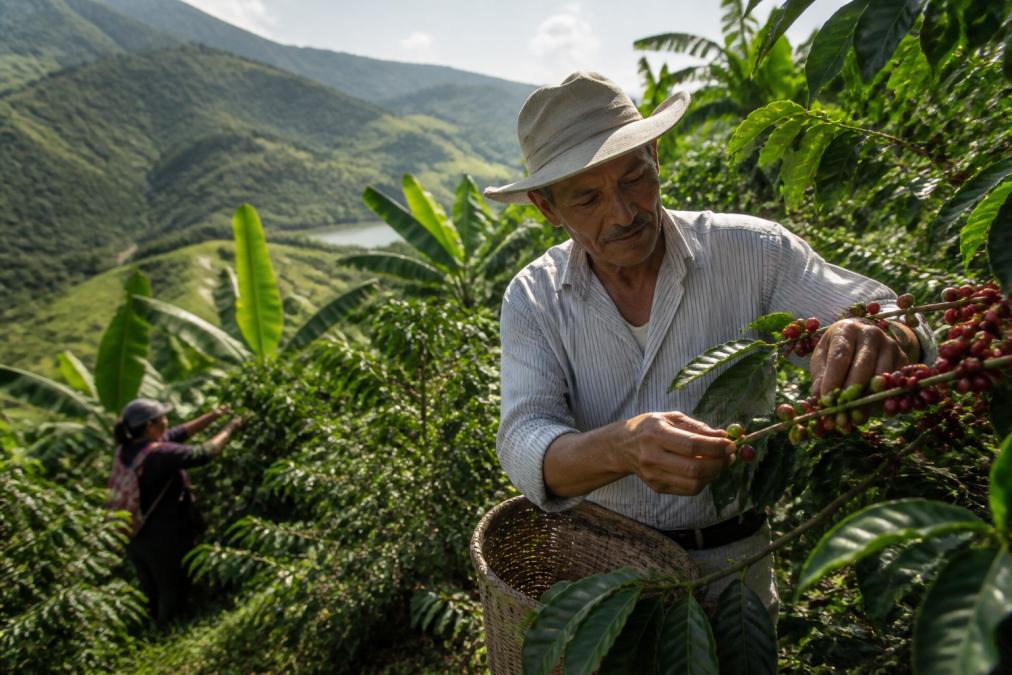
Modern ethical sourcing encompasses labor practices, climate resilience, soil conservation, and worker safety. A truly ethical approach recognizes that smallholder farmers face mounting pressure from climate change, price volatility, and debt, and that sustainable sourcing means helping them adapt and thrive, not just survive.
Fair Trade vs. Direct Trade Coffee Models
Fair Trade and Direct Trade represent two distinct approaches to ethical sourcing practices for specialty coffee, each with different mechanisms, benefits, and limitations.
Fair Trade certification operates through a standardized system where an independent third party verifies that coffee meets specific labor and environmental standards. Fair Trade guarantees a minimum price floor for coffee, currently around $1.40 per pound for conventional coffee, regardless of commodity market fluctuations (fairtrade.net). This price protection is meaningful for farmers facing volatile global markets.
However, Fair Trade's standardized approach can feel impersonal. Farmers in a Fair Trade cooperative may never know who ultimately drinks their coffee. The certification process, while rigorous, adds administrative costs that smaller farms sometimes struggle to afford upfront.
Direct Trade coffee eliminates the middleman by creating direct relationships between roasters and farmers. A roaster visits a farm, builds a relationship with the farmer, and negotiates a price based on quality and the farmer's actual costs, often significantly above commodity prices. Farmers know exactly who buys their coffee and can receive immediate feedback on quality improvements.
The advantage is clear: prices are often higher than Fair Trade minimums because they're negotiated individually, and more money goes directly to the farmer. But Direct Trade lacks the third-party verification that Fair Trade provides. You're relying on the roaster's integrity and claims.
Coffee Supply Chain Transparency and Traceability
Transparency in the coffee supply chain means you can follow a bean from harvest through roasting and into your cup. Traceability, the ability to identify exactly where and how coffee was grown, is the foundation of ethical sourcing practices for specialty coffee.
A transparent supply chain typically includes the farm or cooperative name, the region and altitude where coffee was grown, the harvest date, the processing method used, and the price paid to farmers. Some roasters go further, providing the farmer's name, photos of the farm, and details about their sustainability practices.
Why does this matter? Because opacity creates opportunity for deception. When a supply chain is murky, claims about ethical sourcing are difficult to verify. Traceability also enables accountability: if a farm violates labor standards or environmental practices, a transparent supply chain allows roasters and consumers to respond.
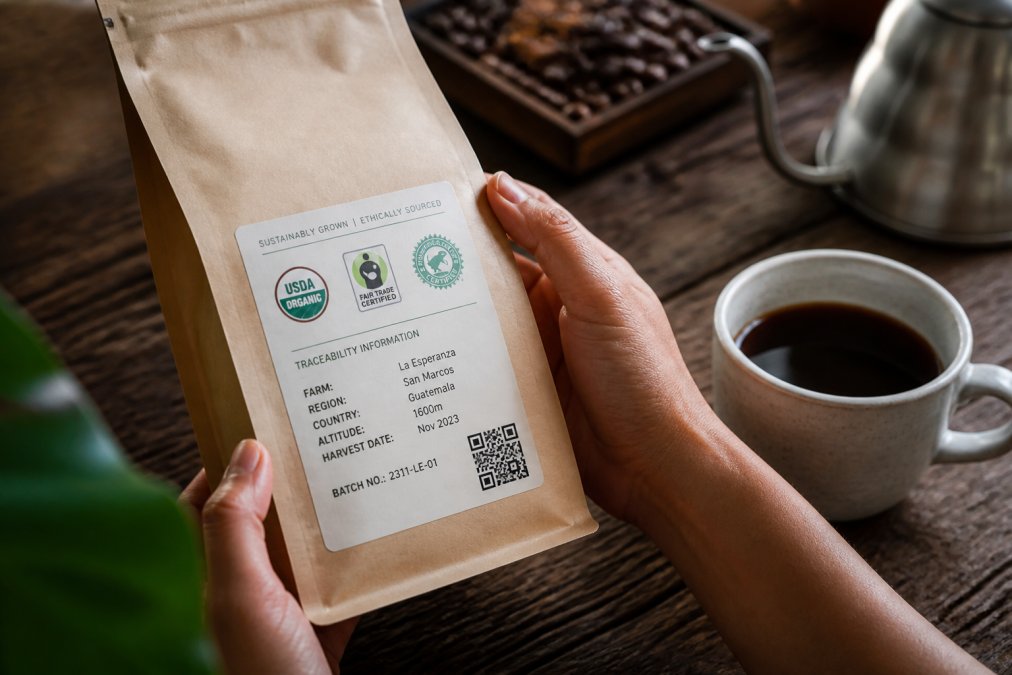
Modern technology has made traceability more accessible. Blockchain systems, QR codes, and detailed documentation allow consumers to verify sourcing claims. When you scan a QR code on a specialty coffee bag, you might see the farm's location on a map, the farmer's name, harvest details, and processing information.
Third-Party Coffee Certifications and Standards
Third-party certifications provide independent verification that coffee meets specific ethical and environmental standards.
Fair Trade Certified verifies that coffee meets standards for worker wages, labor conditions, environmental practices, and community investment. Fair Trade-certified farms must pay workers fair wages, prohibit child labor, allow collective bargaining, and implement environmental protections.
Rainforest Alliance Certified focuses on environmental sustainability, biodiversity protection, and worker welfare. Standards require shade-grown practices, soil health management, water conservation, and reduced pesticide use.
Organic certification verifies that coffee was grown without synthetic pesticides, herbicides, or fertilizers. However, organic certification doesn't guarantee fair wages or good labor practices.
Bird-Friendly certification (from the Smithsonian Migratory Bird Center) is the most stringent environmental standard. It requires shade-grown coffee on farms with diverse tree canopies that provide habitat for migratory birds.
Specialty Coffee Association (SCA) standards define quality benchmarks. A coffee scoring 80+ points on the SCA scale is considered specialty-grade. While quality doesn't equal ethical sourcing, many specialty roasters use SCA scoring alongside ethical certifications.
Understanding what each certification verifies helps you make informed choices aligned with your values. A coffee might be Fair Trade but not organic, or Rainforest Alliance certified but not Bird-Friendly.
The Economics of Ethical Coffee Pricing
Understanding coffee economics reveals why ethical sourcing costs more, and why it's worth it.
A typical commodity coffee farmer receives roughly 5-10% of the final retail price (peer-reviewed research). If a bag of coffee costs $15 at a specialty cafe, the farmer might earn $0.75 to $1.50 from that sale. After accounting for labor, fertilizer, equipment, and processing, many farmers operate at a loss.
Fair Trade certification guarantees a minimum price floor, typically around $1.40 per pound for conventional coffee. Direct Trade roasters often pay $2.00 to $4.00 per pound or more, depending on quality and the farmer's circumstances (sca.coffee). At this price point, farmers can invest in better equipment, improve processing methods, and adapt to climate challenges.
When you buy ethically sourced coffee from LGBrewTeaQ or other specialty roasters, you're paying more partly because a fair portion of that price reaches farmers. A $16 bag of specialty coffee might allocate $3-5 to the farmer, compared to $0.75 for commodity coffee. The difference funds living wages, school fees, equipment upgrades, and climate adaptation.
Price volatility also explains ethical sourcing costs. Commodity coffee prices fluctuate wildly based on global supply and weather. Ethical sourcing models buffer farmers from this volatility, allowing them to plan and invest with confidence.
Recognizing Greenwashing in Coffee Marketing
Greenwashing occurs when a company makes ethical or environmental claims without substantive backing. In specialty coffee, greenwashing is common because consumers increasingly seek ethical options, but verification is difficult.
Common greenwashing tactics include vague language like "ethically sourced," "sustainably grown," or "responsibly traded" without specific certifications or traceability data. Another tactic is highlighting one certification while downplaying gaps. A roaster might emphasize Fair Trade certification but hide the fact that Fair Trade doesn't guarantee living wages in all regions.
"Charitable donation" claims are another red flag. A roaster might say, "We donate 5% of profits to coffee farmer charities," which sounds ethical but avoids the real issue: paying farmers fairly for their work. Donations don't replace fair pricing.
Photo-based marketing without verification is suspect too. A roaster shows beautiful photos of farms and smiling farmers but provides no way to verify those photos are recent or that those farms are their actual suppliers.
To avoid greenwashing, ask three questions: Can you name the farm? Is there independent certification? Can you verify the price paid to farmers? If a roaster can't answer these clearly, the ethical sourcing claim is likely marketing.
How to Identify and Choose Ethically Sourced Coffee
Choosing ethically sourced coffee requires knowing what signals indicate genuine ethical sourcing practices for specialty coffee versus marketing language.
Start with the farm name. Ethical roasters clearly identify which farm or cooperative supplied the coffee. Look for labels that say "Single-origin: [Farm Name], [Region]" or "Cooperative: [Name], [Country]."
Check for third-party certifications. Look for logos from Fair Trade USA, Rainforest Alliance, Organic, or Bird-Friendly on the bag. Multiple certifications are a positive sign.
Research the roaster's transparency. Visit their website and look for detailed sourcing information. Ethical roasters publish the farms they work with, the prices they pay, and their sourcing philosophy. If a roaster's website is vague about sourcing, that's a warning sign.
Look for price information. Ethical roasters often disclose how much farmers are paid. Willingness to discuss pricing indicates confidence in ethical practices.
Seek specialty coffee certifications alongside ethical certifications. A coffee that scores 80+ points on the Specialty Coffee Association scale and carries Fair Trade or Direct Trade credentials is likely genuinely high-quality and ethically sourced.
Ask the roaster directly. Email and ask: Where exactly is this coffee from? What certifications does it hold? How much did you pay the farmer? Roasters committed to ethical sourcing are happy to answer.
Try LGBrewTeaQ's approach. We source from trusted farms with transparent supply chains and clear certifications. Our Organic Darjeeling Black Loose Leaf Tea, for example, comes directly from the world's first certified organic tea estate, a model of ethical sourcing that ensures both quality and fair compensation for producers.
| Sourcing Signal | What It Indicates | Red Flag If Missing |
|---|---|---|
| Specific farm or cooperative name | Traceable supply chain | Only regional labels ("Ethiopian") |
| Third-party certification (Fair Trade, Rainforest Alliance, Organic) | Independent verification of standards | Vague claims like "ethically sourced" |
| Roaster transparency on pricing | Fair compensation for farmers | Refusal to discuss prices paid |
| Specialty coffee rating (80+ SCA score) | Quality aligned with ethical sourcing | Suspiciously cheap "specialty" coffee |
| Farmer names or farm photos | Personal connection and accountability | Generic stock photos or no farmer info |
| Specific processing methods documented | Environmental practices disclosed | Vague sourcing descriptions |
Choosing ethically sourced specialty coffee is an investment in both quality and fairness. When you understand the economics, certifications, and supply chain transparency behind your coffee, you can make purchases that align with your values. The best ethical sourcing practices combine Fair Trade or Direct Trade pricing, third-party certification, full supply chain transparency, and a roaster's genuine commitment to farmer welfare and environmental stewardship.
The coffee industry is evolving. More roasters recognize that specialty coffee and ethical sourcing go hand in hand, quality requires care at every stage, and care includes fair treatment of the people who grow it. By selecting roasters who prioritize ethical sourcing practices for specialty coffee, you support a more equitable and sustainable coffee future. Start with LGBrewTeaQ's carefully sourced selections, where transparency and quality are built into every bag. Shop Coffee and taste the difference that genuine ethical sourcing makes.
Frequently Asked Questions
What is the difference between fair trade and direct trade coffee?
Fair Trade coffee uses third-party certification to ensure farmers receive minimum prices and fair working conditions, typically adding a premium to commodity prices. Direct Trade eliminates intermediaries, allowing roasters to buy directly from farmers at negotiated prices, often resulting in higher farmer earnings. Direct Trade offers greater transparency and relationship-building but requires roasters to have direct supply chain connections. Fair Trade provides standardized protections across certified farms but involves certification costs. Both models aim to improve farmer livelihoods compared to commodity coffee markets.
How can I verify that coffee is actually ethically sourced?
Look for third-party certifications like Fair Trade, Rainforest Alliance, or Bird Friendly on the packaging. Check the roaster's website for supply chain transparency information, including farm names, regions, and sourcing methods. Specialty coffee roasters often provide detailed tasting notes and sourcing stories for single-origin beans. Ask roasters directly about their sourcing practices. Reputable brands like LGBrewTeaQ highlight their sourcing practices and bean origins, making it easier to trace your coffee back to its source. Avoid vague claims like 'responsibly sourced' without supporting certifications.
Why does ethically sourced specialty coffee cost more?
Ethical sourcing increases costs at multiple points in the supply chain. Farmers receive higher wages and better working conditions, certification processes add verification expenses, and direct relationships require more time and resources for roasters. Quality specialty coffee beans also command premium prices due to selective harvesting, careful processing, and smaller production volumes. These costs reflect the true value of the product and support sustainable farming practices, environmental stewardship, and social equity in coffee-growing regions. The price difference typically reflects genuine improvements in farmer compensation and environmental practices.
What role do certifications play in ethical coffee sourcing?
Third-party certifications like Fair Trade, Organic, and Rainforest Alliance provide independent verification that coffee meets specific ethical and environmental standards. They establish baseline requirements for living wages, pesticide use, biodiversity protection, and labor practices. Certifications offer consumers confidence that their purchase supports responsible sourcing, though they involve certification fees that may increase costs. Some specialty roasters use direct trade relationships instead of certifications to achieve higher farmer payouts, but certifications remain valuable for consumers seeking standardized assurance across multiple suppliers. Look for certifications on packaging or ask roasters about their verification methods.
This article was written using GrandRanker