

Is Specialty Coffee Worth the Price: A Data-Driven Guide
Table of Contents
- What Is Specialty Coffee and How Is It Graded
- Specialty Coffee vs Commercial Coffee: The Real Differences
- How to Tell If Coffee Beans Are Fresh
- Why Specialty Coffee Costs More: Breaking Down the Price
- How to Store Coffee Beans for Freshness and Longevity
- The Diminishing Returns Curve: When More Expensive Isn't Better
- Is Specialty Coffee Worth It for Your Brewing Setup
- Conclusion
- Frequently Asked Questions
Last Updated: September 3, 2026
What Is Specialty Coffee and How Is It Graded
Specialty coffee represents the highest tier of the coffee industry, defined by rigorous grading standards and meticulous sourcing practices. At LGBrewTeaQ, we focus exclusively on specialty-grade beans.
The Specialty Coffee Association (SCA) grades coffee on a 100-point scale (sca.coffee). Beans scoring 80 points or higher qualify as specialty coffee (sca.coffee). This grading system evaluates aroma, flavor, acidity, body, balance, sweetness, clean cup, uniformity, and defects through a standardized tasting process called cupping, performed by certified SCA cuppers.
Specialty coffee must also meet strict traceability requirements. Every bag can be traced back to its specific farm, processing method, and harvest date, transparency that doesn't exist in commodity coffee, where beans from multiple origins are blended anonymously.
Single-origin coffees, beans from a specific farm or region, dominate the specialty market because they showcase unique flavor characteristics tied to terroir: the soil, altitude, climate, and processing methods of that location. When you purchase a single-origin specialty coffee like our Bali Blue or Ethiopia Natural, you're getting beans from a traceable source with documented quality standards.

Commodity coffee scores below 80 on the SCA scale and typically blends beans from multiple origins to achieve consistency at the lowest possible cost.
Specialty Coffee vs Commercial Coffee: The Real Differences
The gap between specialty and commercial coffee extends far beyond taste. Specialty coffee uses higher-altitude arabica varieties grown in optimal conditions. Commercial coffee often includes robusta beans, which contain roughly twice the caffeine but deliver a harsher, more bitter taste. Robusta grows at lower altitudes and tolerates poor soil, making it cheaper to produce.
Processing methods separate the two tiers dramatically. Specialty coffee uses careful washed, natural, or honey processes that preserve delicate flavor compounds. Commodity coffee uses industrial processing designed for speed and volume, not flavor preservation.
| Attribute | Specialty Coffee | Commercial Coffee |
|---|---|---|
| SCA Score | 80+ points | Below 80 points |
| Bean Origin | Single-origin, traceable | Blended, anonymous sourcing |
| Roast Date | Typically 2-4 weeks old | Often 3-6 months old |
| Altitude | 1,200-2,000 meters | 600-1,200 meters |
| Primary Bean Type | Arabica (100%) | Arabica/Robusta blend |
| Flavor Profile | Complex, nuanced notes | Flat, one-dimensional taste |
| Price per Pound | 8-15 dollars | 3-6 dollars |
Freshness defines the specialty coffee experience. Specialty roasters roast to order and ship within days. Commercial coffee sits in warehouses for months before reaching shelves. Coffee oxidizes after roasting, and flavor compounds break down over time.
Direct trade and fair trade certifications appear almost exclusively in specialty coffee, ensuring farmers receive premium prices and maintain sustainable farming practices.
How to Tell If Coffee Beans Are Fresh
Freshness is the single most important factor determining whether specialty coffee delivers value. Stale coffee tastes flat and bitter regardless of origin or roast level.
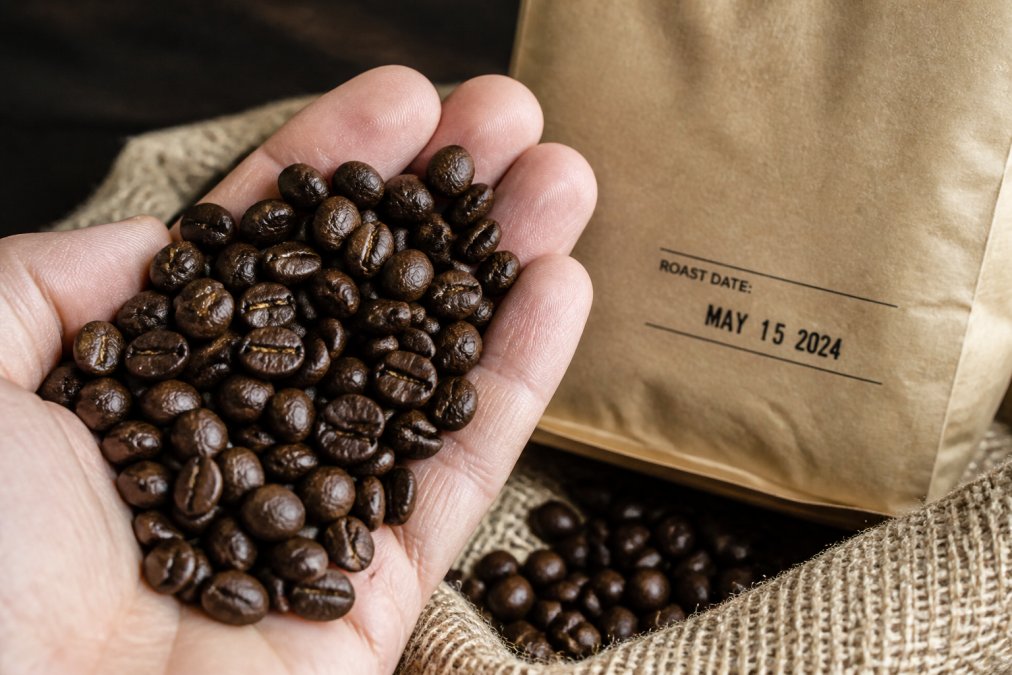
Check the roast date printed on the bag. Specialty coffee should be roasted within the past 30 days and consumed within 2-4 weeks of the roast date for peak flavor. After four weeks, the beans begin losing aromatic compounds and taste noticeably flatter.
Examine the bean surface. Fresh specialty coffee beans have a glossy, slightly oily appearance, the coffee's natural sugars and oils rising to the surface after roasting. Dull, matte beans indicate oxidation and age.
Smell the beans. Fresh specialty coffee has a bright, complex aroma with distinct notes tied to its origin. Stale coffee smells flat, cardboard-like, or musty.
Listen when you open the bag. Fresh beans release a subtle crackling sound as trapped CO2 escapes. Completely silent beans suggest they've been sitting for weeks.
Avoid pre-ground coffee unless you're brewing immediately. Ground coffee oxidizes 10-15 times faster than whole beans because grinding exponentially increases surface area (peer-reviewed research).
LGBrewTeaQ roasts all coffee to order and ships within 24 hours, ensuring maximum freshness when the beans arrive at your door.
Why Specialty Coffee Costs More: Breaking Down the Price
A specialty coffee costs roughly double or triple the price of commercial coffee. Understanding where that premium goes helps you evaluate whether the value justifies the expense.
Raw specialty-grade beans cost significantly more than commodity beans. Farmers growing specialty coffee invest in higher-altitude land, superior soil management, selective harvesting, and careful processing. A farmer producing specialty coffee earns 2-3 times more per pound than a commodity farmer, but their production costs are substantially higher.
Direct trade relationships eliminate middlemen. When you buy specialty coffee, money flows directly from roaster to farmer, skipping importers, brokers, and distributors. This structure ensures farmers receive fair compensation and roasters maintain quality control.
Roasting to order adds operational complexity. Specialty roasters roast smaller quantities multiple times per week based on orders, requiring more labor and equipment investment but guaranteeing freshness.
Packaging and shipping premium specialty coffee costs more than bulk commodity distribution. Specialty roasters use one-way valved bags that preserve freshness during shipping, costing 3-4 times more than standard bags. Fast shipping to maintain freshness adds another premium.
Quality control and curation carry costs. Specialty roasters cup and evaluate every batch, rejecting beans that don't meet standards.
Our Colombia and Guatemala single-origins cost $23.99 per bag, reflecting direct relationships with smallholder farmers, careful hand-picking and washing processes, SCA curation, roasting to order, and fast, reliable delivery.

How to Store Coffee Beans for Freshness and Longevity
Proper storage extends the flavor window of specialty coffee. Store beans in an airtight container away from light, heat, and moisture. A sealed, opaque container in a cool, dark cupboard is ideal.
Keep beans at room temperature. Refrigeration and freezing introduce moisture and temperature fluctuation every time you open the container. If you must freeze beans for long-term storage beyond four weeks, use an airtight freezer bag and thaw completely before opening to prevent condensation.
Grind immediately before brewing. Ground coffee oxidizes 10-15 times faster than whole beans. Even ground specialty coffee stored perfectly will taste stale within 2-3 days.
Buy smaller quantities more frequently. A one-pound bag consumed within 2-3 weeks stays fresher than a five-pound bag consumed over two months. Specialty coffee roasters intentionally sell smaller bags to encourage this consumption pattern.
A specialty coffee roasted recently and stored properly stays flavorful for 4-6 weeks. After six weeks, degradation accelerates noticeably.
The Diminishing Returns Curve: When More Expensive Isn't Better
Not every dollar spent on specialty coffee delivers proportional flavor improvement. Understanding diminishing returns helps you find the sweet spot for your budget and brewing skill.
The biggest flavor jump occurs when upgrading from commercial to entry-level specialty coffee. Moving from a $5 bag to a $15 bag creates a dramatic difference. Most people notice this improvement immediately.
Upgrading from $15 to $25 specialty coffee delivers noticeable but smaller improvements. You're gaining access to more exclusive micro-lots and higher-altitude farms. Casual coffee drinkers might not detect the difference. Home baristas with developed palates will.
Beyond $30-35 per bag, improvements become marginal for most brewers. You're paying for rarity and micro-lot exclusivity. A $40 specialty coffee tastes better than a $25 coffee, but the improvement is subtle.
Your brewing setup determines where the curve matters most. A basic drip coffee maker can't extract the complexity from a $35 specialty coffee. An espresso machine with a grinder, however, extracts nuances that justify premium pricing.
Brewing skill also matters. A skilled home barista with proper equipment can extract remarkable flavor from a $20 specialty coffee. A casual brewer with basic equipment might taste minimal difference between a $20 and $25 coffee.
Is Specialty Coffee Worth It for Your Brewing Setup
The answer depends entirely on your equipment and brewing habits. Specialty coffee shines with certain setups and becomes less critical with others.
A basic drip coffee maker represents the minimum viable equipment for specialty coffee. You'll taste a noticeable improvement over commercial coffee, but you won't extract the full complexity that specialty beans offer. A $20 specialty coffee tastes perhaps 40-50% better than a $5 commercial coffee in a basic drip brewer.
A burr grinder changes the equation significantly. Grinding specialty coffee immediately before brewing preserves volatile compounds that improve flavor. A burr grinder costs $40-150 but extracts 60-70% more flavor from specialty beans compared to blade grinding.
Pour-over brewers (Chemex, V60, Melitta) extract specialty coffee beautifully. These manual methods give you precise control over water temperature, pour rate, and contact time. A $20 specialty coffee tastes dramatically better in a pour-over than in a drip machine.
French press brewing extracts less complexity from specialty coffee. The immersion method and metal filter allow more oils and sediment into the cup, masking subtle flavor notes. Specialty coffee improves the experience but not as dramatically as with pour-over or espresso.
Espresso machines demand specialty coffee. Espresso extraction is unforgiving; poor-quality beans produce sour, bitter shots. Specialty coffee's consistency and flavor complexity shine in espresso.
Consider your consumption volume. If you drink two cups daily, you consume roughly one pound per week. Specialty coffee at $24 per pound costs $24 weekly, or about $1,250 annually. Budget matters.
Conclusion
Specialty coffee's worth depends on three factors: your brewing equipment, your daily consumption volume, and your palate development. A home barista with a burr grinder and pour-over setup will detect and appreciate the flavor differences that justify premium pricing.
LGBrewTeaQ delivers freshly roasted specialty coffee sourced directly from small farms and roasted to order. Our single-origin coffees, including Brazil Santos, Costa Rica, and Honduras, arrive within days of roasting, preserving the complexity and freshness that define specialty coffee. Each bag includes detailed tasting notes and processing information so you understand exactly what you're brewing. Shop Coffee at LGBrewTeaQ and experience the difference fresh, carefully sourced beans make in your daily ritual.

Frequently Asked Questions
What is the difference between specialty coffee and regular coffee?
Specialty coffee is graded by the Specialty Coffee Association (SCA) and scores 80 points or higher on a 100-point scale, based on factors like bean quality, processing, and flavor complexity. Regular or commodity coffee has no standardized grading and prioritizes yield and cost over flavor. Specialty coffee comes from traceable single-origin sources with documented processing methods, while commodity coffee is typically a blend of lower-grade beans from multiple origins.
How can you tell if coffee beans are fresh?
Check the roast date on the bag, specialty coffee should be roasted within 2-4 weeks of purchase. Fresh beans have a glossy, oily surface and smell vibrant with origin-specific aromas. Avoid beans that look dull or smell flat. Store in an airtight container away from light and heat. Beans begin losing flavor after about two weeks, and oxidation accelerates after four weeks, so freshness directly affects the flavor profile you'll taste in your cup.
Is specialty coffee worth buying for home brewing if I don't have expensive equipment?
Yes, but with caveats. A basic drip coffee maker or French press can brew specialty coffee acceptably, though you won't extract the full complexity without proper technique. Grind size, water temperature, and brew ratio matter more than equipment cost. A burr grinder (around $30-50) and a basic scale are more valuable than expensive machines. Start with specialty coffee from LGBrewTeaQ at $23.99 per bag and focus on brewing fundamentals before upgrading equipment.
Why does specialty coffee cost more than commercial coffee?
Specialty coffee costs more because of traceability, processing quality, and freshness. Single-origin beans come from specific farms with documented supply chains and ethical sourcing practices. They're roasted to order for maximum flavor and aroma, then shipped fresh rather than sitting in warehouses. Direct trade relationships with smallholder farmers ensure fair compensation. The SCA grading process adds verification costs. These factors combine to make specialty coffee $23.99 per bag compared to commodity coffee at $5-8 per pound, but the cost-per-cup difference narrows when you account for extraction efficiency and flavor intensity.
This article was written using GrandRanker