

Is Sustainable Tea Packaging Worth It for Gifts?
Last Updated: November 16, 2026
Quick Summary
Sustainable tea packaging is worth it for gifts when it protects the tea and makes the gift feel considered. Airtight tins and high-barrier pouches keep loose-leaf tea fresh, while recyclable or compostable wraps let the recipient dispose of everything properly.
- Eight percent of consumers seek eco-friendly packaging all or nearly all the time, per a 2026 report.
- Airtight closures matter as much as material, since light, moisture and oxygen degrade loose-leaf tea.
- Verify claims with certifications like BPI or FSC and check local acceptance before trusting a label.
- A pouch marked recyclable often means store drop-off, not curbside pickup, so tell recipients where to take it.
- Include a disposal card listing each component separately, because mixed-material gift sets are the most common disposal failure.
Table of Contents
- Why Sustainable Tea Packaging Matters for Gifts
- Sustainable Tea Packaging Materials Compared
- Keeping Loose-Leaf Tea Fresh With Airtight Packaging
- Recyclable Tea Packaging: What the Labels Really Mean
- Eco-Friendly Tea Gift Packaging Ideas by Budget and Recipient
- Assembling Your Eco-Friendly Tea Gift, Step by Step
- Choosing Your Next Tea Gift From LGBrewTeaQ
- Frequently Asked Questions
Why Sustainable Tea Packaging Matters for Gifts
Sustainable tea packaging is worth the extra thought when you're giving a gift, because the wrapping is often the first thing a recipient touches. At LGBrewTeaQ, we see this as a chance to show care for both the person receiving the tea and the planet. A recent 2026 Sustainable Packaging Consumer Report found that 8% of consumers seek eco-friendly packaging "all or nearly all the time," while 19% seek it "frequently."
The real question is whether the packaging does its job: protecting the tea and making the gift feel considered.
Sustainable Tea Packaging Materials Compared
Tea packaging has moved well beyond the plastic-lined foil pouch. Today's options include compostable, plant-based, reusable, and paper-based formats. Each one trades off protection, cost, and disposal differently, and for gift use the main choices come down to how well the material keeps tea fresh and how easily the recipient can dispose of it.
Before choosing, check which materials match your tea and your budget. The table below summarizes the trade-offs most gift-givers weigh.
| Material | Barrier performance | Typical gift use | Disposal path | Cost signal |
|---|---|---|---|---|
| Compostable kraft pouch with plant-based lining | Moderate to high, depending on liner | Sachets and bagged tea | Home or industrial composting, per liner | Mid |
| Recycled paper box or wrap | Low without an inner barrier | Outer gift box, wrap | Curbside recycling where accepted | Low |
| Metal tin | High when lid seals | Loose-leaf gift | Reuse, then recycle | High |
| Reusable glass jar | High when gasket seals | Loose-leaf gift | Reuse, then recycle | Mid to high |
| Fabric wrap (furoshiki-style) | Low alone; needs inner pouch | Presentation layer | Reuse | Low to mid |
Compostable Pouches and Tea Bags
Compostable pouches often use plant-based linings instead of petroleum plastic.
- Pros: Strong barrier performance; looks natural; plant-based materials
- Cons: Compost conditions vary; industrial composting may not be available at home
- Best for: Tea sold in bags or sachets where freshness matters
Watch out: a pouch labeled "compostable" may require an industrial facility your recipient cannot access, so check whether the label says "home compostable" or "industrially compostable" before promising disposal.
Paper, Tins and Reusable Containers
- Pros: Familiar and giftable; reusable tins extend the gift's life
- Cons: Tins cost more and add weight to shipping; paper alone offers less protection from air
- Best for: Loose-leaf gifts meant to be displayed or reused
Plant-Based Films and Recycled Paper
Plant-based films, such as PLA and PHA laminates, offer a renewable alternative to petroleum plastic, but their barrier performance varies widely by thickness and coating. Recycled paperboard is widely accepted in curbside programs, yet it offers little protection from oxygen unless paired with an inner liner, which can complicate recycling if the liner is not separable.
- Pros: Renewable feedstocks; recycled paperboard is familiar to recipients
- Cons: Mixed-material construction can defeat recycling; barrier performance varies
- Best for: Outer gift boxes and presentation layers, with a separate inner pouch for freshness
How to Verify Compostability and Recyclability Claims
The Federal Trade Commission's Green Guides on environmental marketing claims exist to stop marketers from presenting unsupported environmental claims, so treat any "recyclable" or "compostable" label as something to verify. Look for third-party certifications such as the Biodegradable Products Institute (BPI) logo for industrially compostable items, and check whether a paper box carries the Forest Stewardship Council (FSC) mark for responsibly sourced fiber.
The Sustainable Packaging Coalition's 2026 Sustainable Packaging Trends Report sorts material and design choices into "preferred," "detrimental," and "non-recyclable" groups. Use that framework when comparing products. A package made of mixed materials can be hard to recycle even if the label looks green.
A practical verification routine:
- Read the material label for a specific resin code or fiber type, not just a color or leaf icon.
- Check for a certification mark (BPI, FSC, or How2Recycle) and note what it actually covers.
- Confirm local acceptance: How2Recycle labels and municipal recycling guides tell you whether curbside pickup accepts the item.
- Separate components before disposal, since a tin, a paper sleeve, and a plastic window often follow different paths.
Watch out: a "recyclable" claim on a pouch usually refers to a store drop-off program, not curbside pickup, so tell the recipient where to take it.
Keeping Loose-Leaf Tea Fresh With Airtight Packaging
Loose-leaf tea loses flavor when light, moisture, and oxygen reach it. Airtight packaging is the main defense, so the closure matters as much as the material.
Look for a tin or pouch that seals well and blocks light. A tight-fitting lid on a metal tin protects the tea better than a loose paper wrap, even when the paper is compostable.
Recyclable Tea Packaging: What the Labels Really Mean
Recyclable and compostable are not the same claim, and they are not interchangeable. The Federal Trade Commission's Green Guides on environmental marketing claims exist to stop marketers from presenting unsupported environmental claims, so treat any "recyclable" or "compostable" label as something to verify.
The Sustainable Packaging Coalition's 2026 Sustainable Packaging Trends Report sorts material and design choices into "preferred," "detrimental," and "non-recyclable" groups. Use that framework when comparing products. A package made of mixed materials can be hard to recycle even if the label looks green.
Eco-Friendly Tea Gift Packaging Ideas by Budget and Recipient
Budget and recipient should drive your choice. A simple option for a coworker can differ from a gift for a tea enthusiast.
- Budget-friendly: A kraft paper wrap tied with twine and a single tea sachet
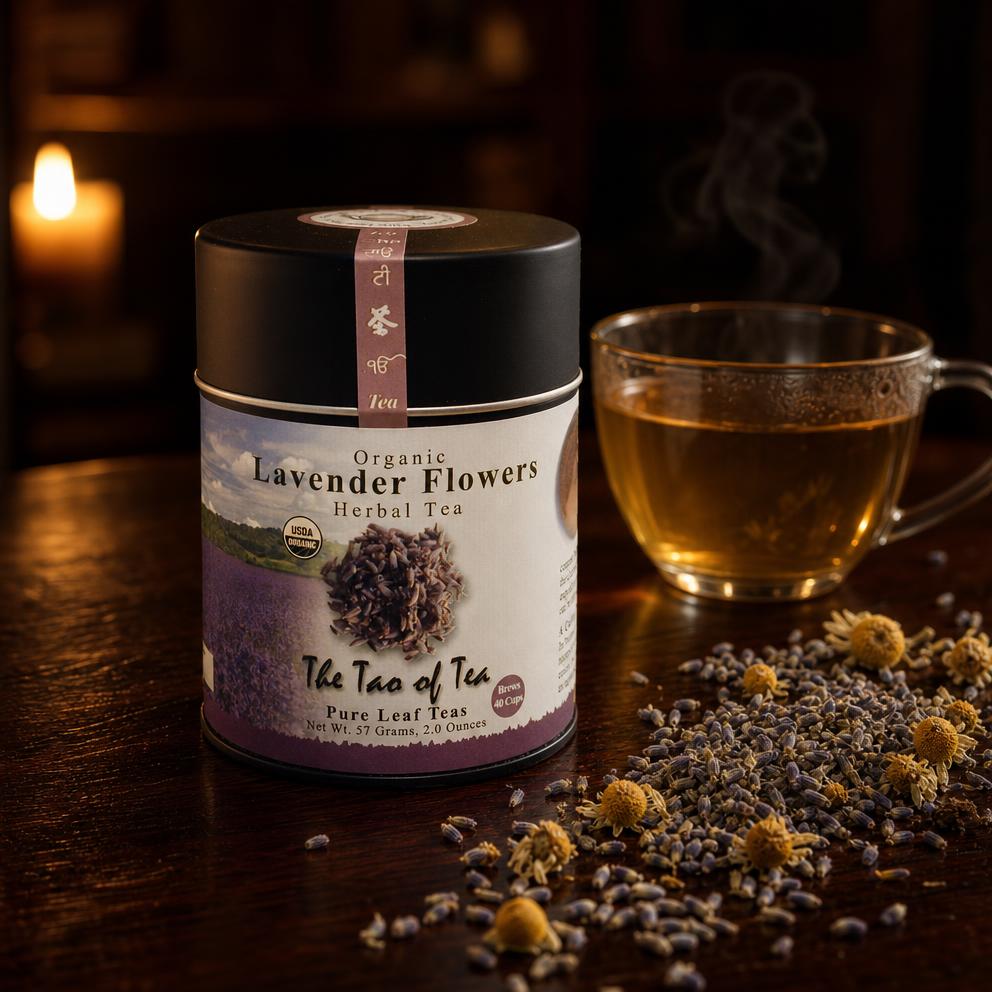
- Mid-range: A loose-leaf tin, such as our Lavender Herbal Tea - Loose Leaf (2 oz Tin), priced at $12.68
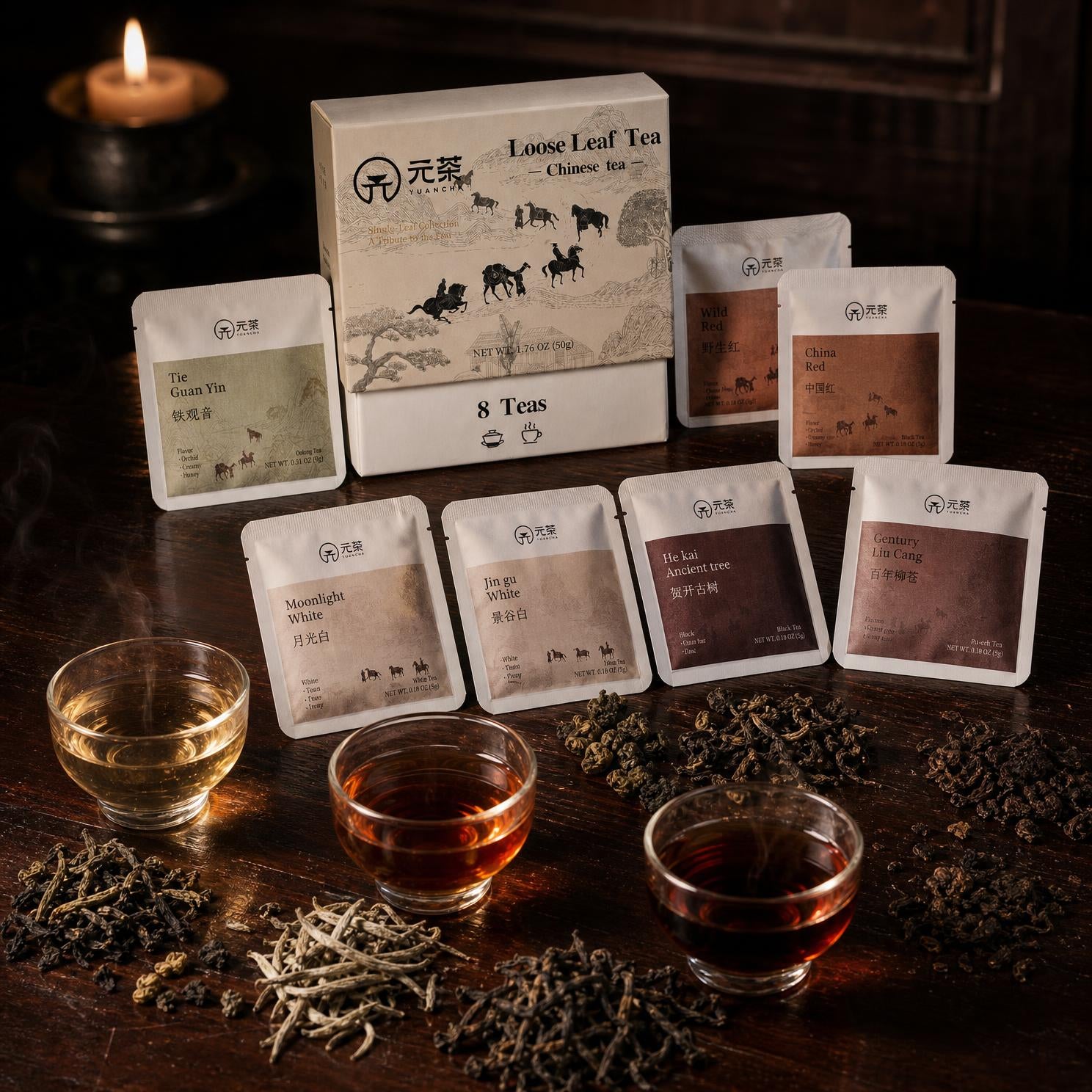
- Enthusiast gift: A curated set, such as the Artisan Whole Leaf Tea Tasting Flight - 8 Curated Varieties, priced at $22.56
For someone who likes a quick brew, a sachet pouch is simpler to open and use.
Assembling Your Eco-Friendly Tea Gift, Step by Step
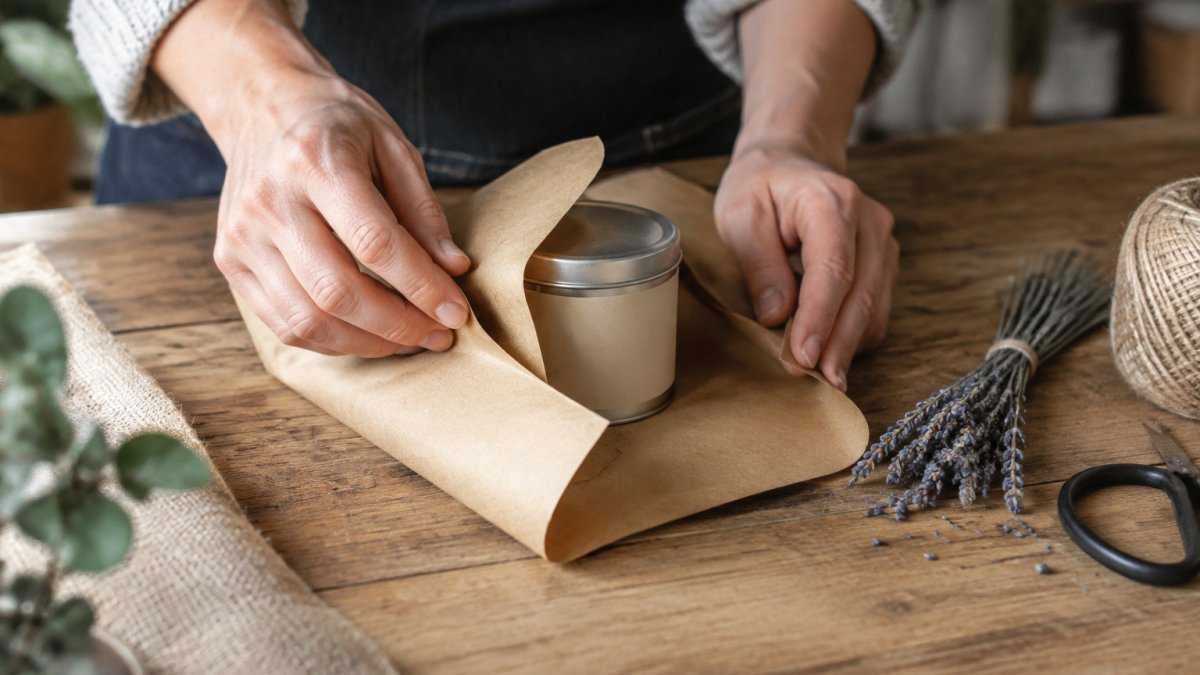
Start with the tea, then choose a container that protects it well. Next, add a simple wrap and close it without plastic tape. Include a small card that explains how to dispose of each component.
A repeatable assembly sequence keeps the gift attractive and the disposal guidance accurate:
- Select the tea and match the container. Loose-leaf tea needs an airtight tin or a high-barrier pouch; bagged tea can travel in a compostable sachet pouch. Confirm the closure seals before you buy.
- Build the presentation layer. Wrap the tin in recycled or plant-based paper and tie with natural twine. Skip plastic tape, foil seals, and glitter, which contaminate paper recycling.
- Add a reusable element. A tin, glass jar, or fabric wrap gives the recipient a second use and reduces the chance the packaging is discarded immediately.
- Write the disposal card. List each component separately, because a tin, a paper sleeve, a label, and an adhesive dot often follow different paths.
- Pack for shipping. Use paper void fill rather than bubble wrap, and keep the outer shipping box separate from the gift wrap so the recipient can recycle each layer.
Hands wrapping a tin of loose-leaf tea in kraft paper beside a sprig of dried lavender on a wooden table, soft natural light. All three elements are American, the tin, the paper and the twine, so that the gift reads as a finished, recyclable package.
End-of-Life Instructions for Each Component
A disposal card is only useful if it names each part. Use this checklist as a model:
- Outer box or paper wrap: Recycle curbside if clean and dry; compost if uncoated and your program accepts paper.
- Tin or glass jar: Reuse first; recycle when no longer wanted, and note that metal tins are accepted in most curbside programs while glass acceptance varies.
- Tea bag or sachet: Home compost if labeled home compostable; otherwise check the liner and follow the manufacturer's guidance.
- Labels and adhesive dots: Most pressure-sensitive labels are not recyclable with paper; remove them before recycling the backing.
- Twine and fabric wrap: Reuse; natural fiber twine can be composted, while synthetic ribbon should be reused or trashed.
- Inner pouch or liner: Follow the resin code or store drop-off instruction; do not place a plastic-lined pouch in curbside recycling unless the label says it is accepted.
Watch out: mixed-material gift sets are the most common disposal failure, because recipients assume the whole package goes in one bin, so separate the components in the card and, where possible, in the physical packaging.
Finish with a card that lists the disposal method for each part. Recipients appreciate knowing how to handle the packaging, and it keeps the gift from ending up in the wrong bin.
Choosing Your Next Tea Gift From LGBrewTeaQ
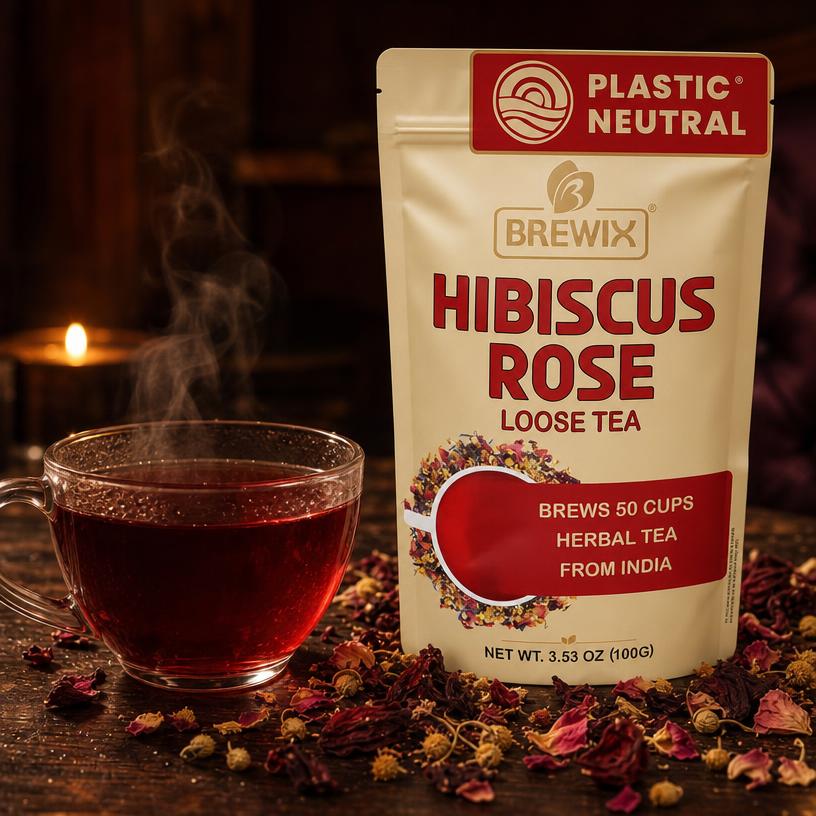
Thoughtful packaging is worth choosing when it protects the tea and suits the recipient. If you want a ready-made option, browse the Hibiscus Rose Herbal Tea - Loose Leaf or the Artisan Masala Chai - Spiced Loose Leaf Black Tea, and find a gift that feels thoughtful from the first look to the last sip.
Frequently Asked Questions
What are some examples of sustainable packaging for tea?
Common options include compostable pouches lined with plant-based materials, recycled-paper boxes, metal or reusable tins, and glass jars. Each suits a different use. Compostable pouches fit tea bags and single-serve packs, while tins and jars protect loose-leaf tea from light and air and can be reused after the tea is gone. For a gift, pair a reusable tin with a paper sleeve so the recipient can keep the container and recycle or compost the outer wrap.
Can tea packaging be both recyclable and airtight?
Yes, but it depends on the materials. Metal tins and glass jars with tight lids are recyclable and airtight. Many flexible pouches use multilayer laminates that combine barrier layers, which can make them hard to recycle. Check the packaging's labeling and local recycling rules before assuming a pouch can go in the bin.
Are compostable tea bags and packaging actually compostable?
Not always. Compostability depends on the conditions the product is designed for. Some packaging is industrially compostable and needs the high heat of a commercial facility, while other packaging is marketed as backyard compostable. Environmental claims such as compostable or recyclable should be supported and not misleading. Read the end-of-life instructions on the package and do not assume that a compostable label means it will break down in your home bin.
How can I package loose-leaf tea as a gift with less waste?
Start with one reusable container, such as a metal tin, and wrap it in unbleached paper or a cloth napkin instead of plastic film. Skip plastic inserts and use a small paper card with brewing instructions. Our Lavender Herbal Tea - Loose Leaf (2 oz Tin) is priced at $12.68, and our Artisan Masala Chai - Spiced Loose Leaf Black Tea is priced at $20.71. Choose a size that matches the recipient's habits so less tea goes stale unused.
