

How to Support LGBTQ+ Entrepreneurs in the Food Industry
Last Updated: November 9, 2026
Quick Summary
Supporting LGBTQ+ entrepreneurs in the food industry means buying from verified queer-owned businesses, funding them through grants, CDFI microloans, and certification programs, and tracking whether your spending actually reaches them. Lasting support runs year-round, not just during Pride Month.
- About 7% of new business owners in 2025 identified as LGBTQ, per Gusto Insights data.
- Match funding to stage: microgrants for pre-launch, CDFI microloans for early revenue, supplier contracts for growth.
- The NGLCC is one organization that certifies LGBTQ+-owned businesses in the U.S.
- GSBA's FOOD program has advertised grants up to $2,500 plus virtual business education.
- Track ownership, spending, supply chain, and year-round giving to measure your impact.
Table of Contents
- Why LGBTQ+ Entrepreneurs in Food Need More Than Pride Month
- LGBTQ+-Owned Food Businesses Worth Knowing
- LGBTQ+ Business Grants and Resources for Food Founders
- LGBTQ+-Owned Business Certification and Supplier Diversity
- Food Companies That Support LGBTQ+ Communities Year-Round
- Support Across the Food Supply Chain, From Farms to Food Workers
- How to Measure Whether Your Support Actually Helps
- Stock Your Kitchen With Coffee That Backs the Community
- Frequently Asked Questions
Why LGBTQ+ Entrepreneurs in Food Need More Than Pride Month
About 7% of new business owners in 2025 identified as LGBTQ, according to Gusto Insights' 2026 data on new founders.
The real gap isn't awareness. It's follow-through.
A study summarized by the University of Chicago Booth School of Business found that startups founded by LGBT people face discrimination risks affecting multiple parts of their businesses, from funding to hiring to customer trust.
Below, we break down the businesses worth knowing, the grants and resources that exist, and a practical way to measure your impact.
LGBTQ+-Owned Food Businesses Worth Knowing
Support starts with names. Here are real categories of LGBTQ+-owned food businesses you can seek out, plus the brands and founders doing the work.
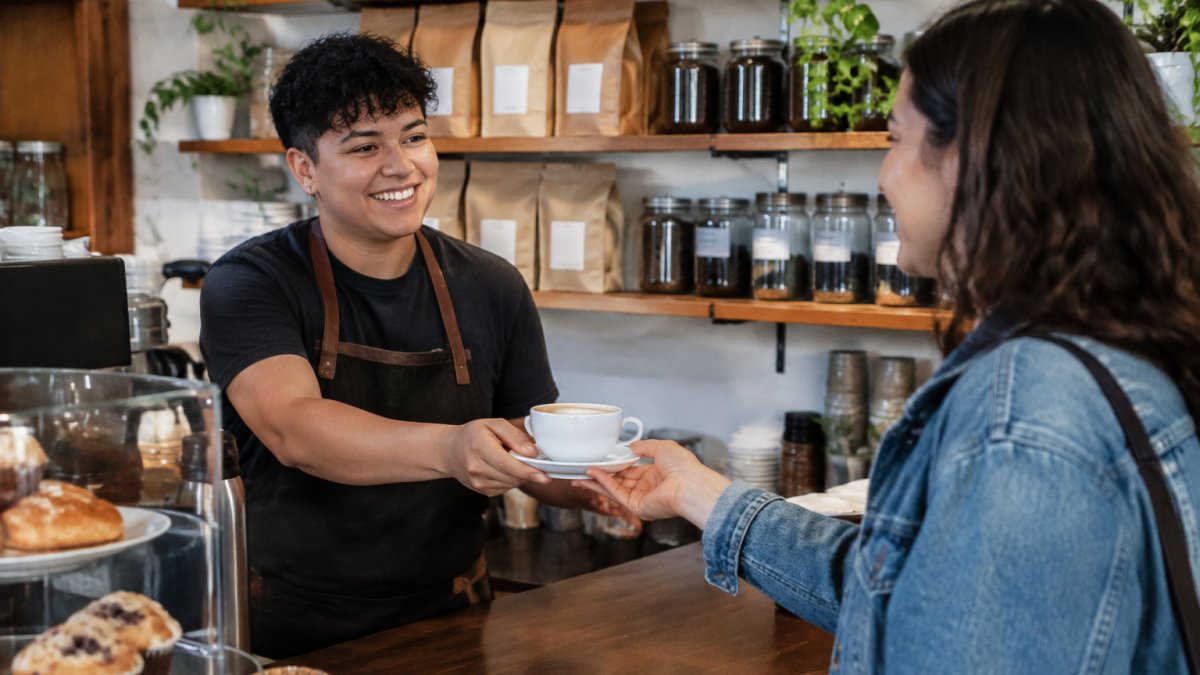
Coffee, Tea, and Pantry Brands
Coffee and tea are the easiest entry point for most shoppers. Queer-owned roasters, tea blenders, and pantry brands sell online, which means geography need not be a barrier. Look for roasters that publish sourcing details, list their farms, and roast to order.
Freshness is one clear sign a small roaster cares about the product, not just the label.
Restaurants, Bakeries, and Food Vendors
Restaurants and bakeries carry higher overhead and thinner margins than retail brands, so local spending goes further here. Food vendors at markets and pop-ups are often the first step for LGBTQ+ founders testing a concept.
- Search business directories that flag LGBTQ+-owned and LGBTQ+-friendly listings
- Check whether a business is certified through a national chamber
- Ask directly: many owners are happy to confirm and share their story
LGBTQ+ Business Grants and Resources for Food Founders
LGBTQ+ business grants are funding programs that award money to queer-owned companies, often with business education attached. For food founders, the most useful ones combine cash with mentorship, since a restaurant or packaged-food brand needs both operating capital and help with permits, margins, and distribution.
Most lists stop at "here are some grants." The harder question is which funding fits your stage and how to actually get through the application. Here is a practical map organized by what food founders typically need.
Match the funding to your business stage
- Pre-launch and pop-up stage: microgrants and pitch competitions. These are usually small, fast, and designed for founders testing a concept at markets, commissary kitchens, or pop-ups. They rarely cover build-out, so treat them as proof-of-concept money.
- Early revenue (under roughly two years): community development financial institution (CDFI) loans, microloans, and chamber-affiliated grant cycles. These fund equipment, packaging, and first hires.
- Growth stage: supplier diversity contracts, lines of credit, and larger foundation or corporate grants. These reward documented sales history and certification.
A common pattern is that food founders chase grants when what they actually need is a small loan with predictable terms. Grants are competitive and slow; a CDFI microloan can close in weeks. Many practitioners recommend applying to grants in parallel with a loan conversation rather than waiting on one.
Programs and resources worth checking each cycle
- National LGBT Chamber of Commerce (NGLCC) and its local affiliates: the main certifying body also runs or points to scholarship, grant, and accelerator opportunities for certified businesses. Check the affiliate in your region, since local chambers often administer their own food and hospitality funds.
- GSBA's FOOD program, supported by the Grubhub Community Fund: has advertised grants of up to $2,500 plus virtual business education for LGBTQ+ and allied restaurants. Amounts and eligibility change each cycle, so verify on the official program page before applying.
- CDFIs and community lenders: mission-driven lenders that serve small food businesses and often have more flexible underwriting than banks. Search the CDFI Fund's certified institution list to find one serving your area.
A realistic application sequence
- Confirm eligibility before writing anything. Ownership percentage, industry code, revenue caps, and geography are the most common disqualifiers. If a program requires 51% LGBTQ+ ownership and certification, start the certification first.
- Assemble a standing document packet. Business registration, EIN, ownership documentation, two years of financials or a startup budget, and a one-page business summary. Keep it in one folder so every application reuses the same materials.
- Write a budget that maps dollars to line items. Reviewers want to see equipment, inventory, payroll, or marketing costs, not a lump sum. Tie each line to a measurable outcome such as units produced or covers served.
- Get one outside reader. A chamber advisor, accountant, or peer founder will catch the gaps a rushed applicant misses.
- Submit early and log the decision date. Track every application in a simple spreadsheet with status, amount requested, and follow-up date.
Watch out: applying to every grant you find burns weeks you could spend on the business, and a rejected application still costs time. Pick three that match your stage and industry, and skip the rest.
Resources beyond cash
Funding is only one input. Food founders also need technical assistance: food safety planning, packaging and labeling compliance, wholesale pricing, and distribution. Many CDFIs and chamber programs bundle these with capital, and nonprofit food business incubators often provide kitchen access plus mentorship. When you compare programs, weigh the non-cash support as heavily as the check.
LGBTQ+-Owned Business Certification and Supplier Diversity
Certification is a step many food founders consider, and it can help with access to some buyers. Many large buyers run supplier diversity programs that look for verified documentation before adding a vendor.
What certification actually is
The National LGBT Chamber of Commerce (NGLCC) is one organization that certifies LGBTQ+-owned businesses in the U.S. Requirements and recognition vary, so check the current criteria directly with the certifying body.
The process, step by step
- Check the certifying body's eligibility criteria. Review the current requirements on the official site before applying.
- Gather the documentation. Pull the current document checklist from the certifying body, since requirements can change.
- Apply through the certifying organization. Confirm the application route and any pre-application support on its official site.
- Follow the verification steps. Certifiers may verify how the business operates; check the official process for details.
- Check fees and renewal terms. Confirm current fees and renewal schedules directly with the certifying organization.
Plan ahead, since certification timelines depend on the certifying body and how complete your documentation is.
Why it matters more in food than in most industries
Food and beverage procurement is heavily intermediated. Grocery chains, food service distributors, institutional dining programs, and corporate cafeterias all buy through vendor lists that are often gated by supplier diversity registration. Certification may help a food business get onto some of those lists.
- Supplier diversity programs: corporate and institutional buyers that track spending with certified vendors and often set internal targets for that spending.
- Local chambers and affiliates: regional networks that connect certified businesses to procurement opportunities and buyer matchmaking events.
- Distributors and group purchasing organizations: many require certification before a vendor can be added to a catalog, even for small producers.
What certification does not do
Certification is a door-opener, not a contract. It does not guarantee volume, and it does not replace product quality, food safety compliance, insurance, or capacity to fulfill orders. A common pattern is that newly certified food producers win a buyer meeting but lose the account because they cannot meet case-pack, labeling, or delivery requirements. Prepare the operational side before you pitch.
A practical sequence for food founders
- Get certified early if you intend to sell wholesale, to institutions, or through distributors.
- Register in the supplier diversity portals of your target buyers, not just the certifying body's directory.
- Attend chamber matchmaking events, which are often the fastest route from certification to a first purchase order.
Food Companies That Support LGBTQ+ Communities Year-Round
Year-round support separates genuine commitment from seasonal marketing. The clearest signal is a company that funds LGBTQ+ organizations, sources from queer-owned suppliers, and keeps those programs running in February as well as June.
The Clover guide to LGBTQ+ business resources points to a database of lesbian-owned and LGBTQ+-friendly businesses, a useful tool for buyers who want to verify a company before committing.
Not every business owner agrees on public positioning. A U.S. Chamber of Commerce special report found roughly 69% of small-business owners consider public expression of support a good idea, which means a meaningful minority still hesitate.
Support Across the Food Supply Chain, From Farms to Food Workers
Most support stops at the register. The supply chain runs much deeper, and every link has LGBTQ+ people in it.
The Queer Food Foundation describes its mission as connecting LGBTQIA+ people across food work, from farmworkers to workers at other levels of the industry, per Bon Appétit Management Company's 2026 partner announcement. That framing matters: a farmworker, a line cook, and a founder all sit in the same chain.
Practical ways to support the whole chain:
- Ask brands how they treat farm and production workers, and learn what ethical sourcing actually means when evaluating food and coffee brands.
- Back businesses that publish sourcing and labor details
- Support workforce inclusion programs in foodservice and hospitality
How to Measure Whether Your Support Actually Helps
Support you can't measure is hard to defend. The simplest approach is to track where your money goes and what it changes.
| What to track | How to check it | Why it matters |
|---|---|---|
| Ownership | Certification or directory listing | Confirms the business is LGBTQ+-owned |
| Spending | Annual dollars with queer-owned vendors | Shows real economic impact |
| Supply chain | Published sourcing and labor details | Reveals treatment of food workers |
| Year-round giving | Company donation records | Separates commitment from marketing |
Set a target, review it once a year, and adjust. One buyer won't change an industry, but a thousand buyers tracking the same numbers will.
Stock Your Kitchen With Coffee That Backs the Community
The easiest habit to build is the one you repeat every morning. Swapping your coffee to an LGBTQ+-owned roaster puts your spending behind the community daily, not just in June.
At LGBrewTeaQ, we roast to order and ship fresh beans and premium teas straight to your door. Our gift card starts at $25 and is redeemable across the online catalog.
If you want to go deeper into queer coffee culture, read our guide to gay coffee shop culture and LGBTQ+ cafés. For a wider list, see our roundup of the best socially conscious coffee companies. And if you're weighing whether values cost more, our 2026 review of queer-friendly brand pricing has the numbers.
Your morning cup can do more than wake you up.
Frequently Asked Questions
How can I support LGBTQ+-owned food businesses beyond Pride Month?
Buy from them year-round instead of only in June. Use LGBTQ+-friendly business directories to find coffee roasters, bakeries, and restaurants near you, then set up recurring orders where the option exists. When you find a business you like, leave a review and mention it to friends, since word of mouth is free marketing. If you run a company, add LGBTQ+-owned suppliers to your procurement list and ask about supplier diversity programs. Support that repeats every month does more for LGBTQ+ entrepreneurs than a single seasonal purchase.
How can LGBTQ+ entrepreneurs find business grants and resources?
Start with LGBTQ+ business grants and resources offered by chambers of commerce, community organizations, and corporate community funds. Programs like the GSBA's FOOD: Fueling program may offer grants and business education for LGBTQ+ and allied restaurants; check the official program page for current details. Prepare your business documents before deadlines: registration, tax records, and a short statement of how you would use the funds. Apply to several programs rather than one, and track submission dates so you do not miss cycles.
How can I verify whether a food business is actually LGBTQ+-owned?
Check the business's own website and social channels for ownership statements, then cross-reference with a certification body or an LGBTQ+-friendly business directory. Certification through a recognized chamber or certifying organization gives a verifiable signal, since the business has submitted documentation. Be cautious with vague rainbow branding that names no owner and links to no certification. A quick email asking about ownership is a fair question, and legitimate LGBTQ+-owned food businesses usually answer it directly.
What challenges do LGBTQ+ entrepreneurs face in the food industry?
A study reported by the University of Chicago Booth School of Business suggests that startups founded by LGBT people may face discrimination risks. In food specifically, founders deal with thin margins, rising ingredient and labor costs, and uneven access to capital. LGBTQ+ entrepreneurs can also face regional barriers, where local networking and lending networks are less welcoming. That combination makes grants, mentorship, and supplier diversity programs more than nice extras; they are practical ways to keep a food business funded and visible.
