

Moka Pot vs Siphon Brewing Explained: Which Is Better?
Table of Contents
- Moka Pot vs Siphon: How the Two Brewers Compare
- How Does a Siphon Coffee Maker Work?
- Moka Pot vs Siphon Taste: Body, Clarity, and Flavor
- Moka Pot vs Siphon Brewing Time and Temperature
- Moka Pot Grind Size and Siphon Grind Size
- Cost, Portability, and Long-Term Ownership
- Troubleshooting Common Brewing Defects
- Which Brewer Fits Your Kitchen?
- Frequently Asked Questions
Last Updated: October 12, 2026
Moka Pot vs Siphon: How the Two Brewers Compare
The moka pot and the siphon brewer are the two classic stovetop coffee makers, and the moka pot vs siphon brewing explained debate comes down to one idea: pressure versus vacuum.
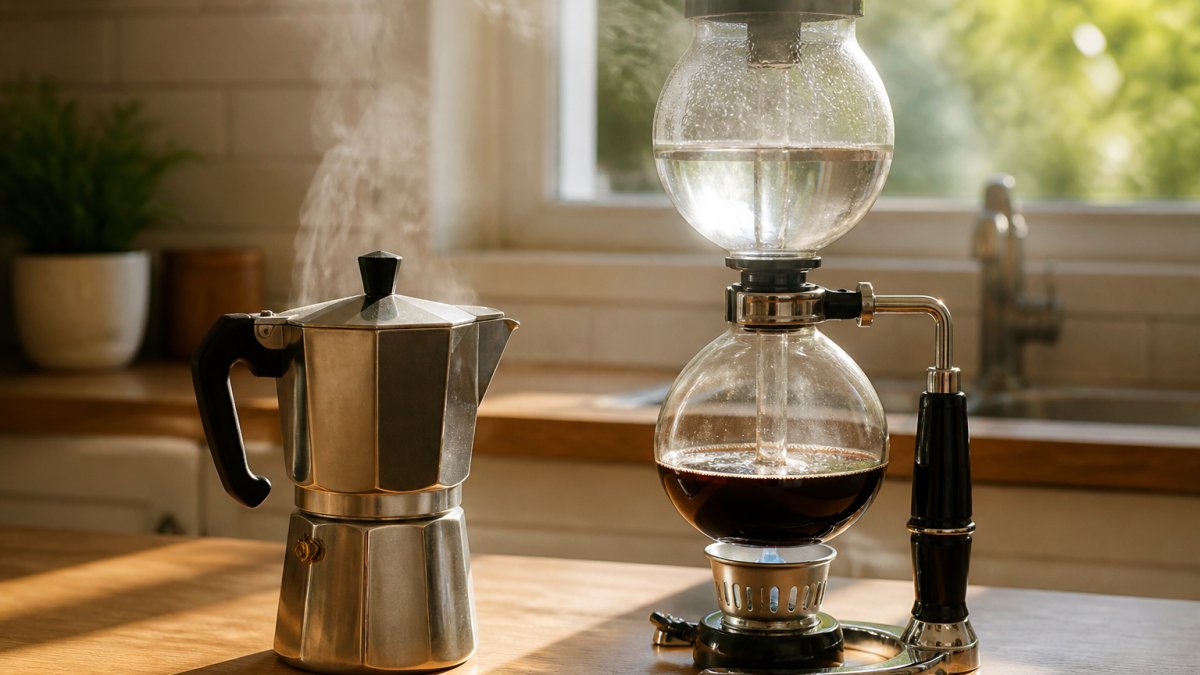
Both methods are stove-driven and both make a full pot at once. That is where the similarities end.
We talk to home brewers every day who own one of these and wonder about the other. So we built this comparison around the things that actually change your morning: taste, timing, grind, cost, and cleanup.
Below, we break down how each brewer works, what the cup tastes like, and which one fits your kitchen. Most guides skip the physics. We start there, because it explains everything else.
| Feature | Moka Pot | Siphon Brewer |
|---|---|---|
| How it brews | Steam pressure | Vacuum and immersion |
| Grind size | Fine | Medium-coarse |
| Brew time | 4-6 minutes | 6-10 minutes |
| Cup style | Bold, heavy-bodied | Clean, tea-like |
| Hands-on effort | Low | Medium-high |
| Best for | Espresso-style drinks | Clarity and aroma |
How Does a Siphon Coffee Maker Work?
A siphon coffee maker, also called a vacuum coffee maker, brews by moving water between two glass chambers using vapor pressure and a subsequent vacuum. Understanding the physics explains everything about the cup it produces.
Here is the step-by-step mechanism:
-
Heat and vapor pressure. Water sits in the lower glass chamber. As the heat source warms it, the water temperature rises. At roughly 195-205°F, water vapor begins to form above the liquid. Because the lower chamber is sealed to the upper chamber by a gasket, that vapor cannot escape. The pressure inside the lower chamber rises slightly above atmospheric pressure.
-
Water rises. That pressure pushes the hot water up through a central tube into the upper chamber. The upper chamber holds the coffee grounds. The water mixes with them in a full-immersion steep.
-
Steep and extraction. The grounds steep in the hot water for a set time, typically 45 to 90 seconds depending on the recipe. During this time, the water extracts soluble compounds from the coffee. Because the water is not under high pressure and the temperature is moderate, the extraction is gentle.
-
Cooling and vacuum. When you remove the heat source, the lower chamber begins to cool. As it cools, the water vapor condenses back into liquid, and the pressure in the lower chamber drops below atmospheric pressure. That creates a vacuum.
-
Drawdown. The vacuum pulls the brewed coffee from the upper chamber back down through a filter into the lower chamber. The filter, usually cloth or metal, traps most of the oils and fine particles.
The result is a full-immersion brew with a very clean finish. The filter catches most of the oils and fine particles that a metal basket lets through. That is why siphon coffee tastes lighter and clearer than moka pot coffee.
The trade-off is fiddle factor. Glass chambers, a filter that needs rinsing, and a heat source you have to watch. It is a ritual, not a shortcut.
Moka Pot vs Siphon Taste: Body, Clarity, and Flavor
Flavor is where the moka pot vs siphon taste question gets interesting, because the two cups are close to opposites. The moka pot makes a thick, heavy-bodied coffee with bold, intense flavor. The siphon makes a clean cup with high clarity and a tea-like texture.
Three things drive that gap:
- Pressure. The moka pot brews under pressure, which pulls out more oils and dissolved solids.
- Filtration. The siphon's cloth or metal filter traps oils the moka basket lets through.
- Temperature. The moka pot runs hotter, which builds bitterness and roast character.
If you like espresso-like coffee, the moka pot is your brewer. If you want to taste the fruit and floral notes in a single-origin bean, the siphon shows them off far better.
Moka Pot vs Siphon Brewing Time and Temperature
The moka pot vs siphon brewing time gap is smaller than most people expect, but the temperature difference is real and it shapes the cup. A moka pot finishes in about 4 to 6 minutes.
Temperature matters more than time here. Here is what actually happens in each brewer:
Moka pot temperature profile:
- Water starts at room temperature in the lower chamber.
- As the pot heats, water temperature rises to roughly 195-205°F before it is pushed up through the coffee.
- The metal body of the pot gets much hotter than the water, often exceeding 212°F on the stove.
- The brew spends only seconds in contact with the grounds, but that contact happens at high heat and under pressure.
Siphon temperature profile:
- Water heats in the lower chamber and rises to the upper chamber at around 185-195°F.
- The grounds steep in that water for 45 to 90 seconds.
- When the heat is removed, the brew cools during drawdown, dropping perhaps 10-15°F before it finishes.
That lower siphon temperature is gentler on the coffee. It pulls out fewer bitter compounds and preserves more aroma. The moka pot's higher heat builds the bold, roasted notes people love, but it also punishes a bad grind.
Neither method gives you the precise control of a pour-over or a drip machine with a set temperature. You manage heat by watching the flame. That is the trade-off for the drama and the full pot.
For a practical starting point, preheat your siphon's lower chamber water to just below boiling before assembly, and use a medium-coarse grind. For the moka pot, start with room-temperature water and a fine grind, then adjust the flame so the brew flows steadily without sputtering.
Moka Pot Grind Size and Siphon Grind Size
Grind size is the single biggest variable you control, and the two brewers want very different things. Moka pot grind size should be fine, close to espresso but slightly coarser. Siphon grind size should be medium-coarse, closer to what you would use for a drip coffee maker.
Get it wrong and you will know fast:
- Too fine in a moka pot: the basket clogs, pressure spikes, and the brew turns bitter and burnt.
- Too coarse in a moka pot: water races through, and you get a weak, sour cup.
- Too fine in a siphon: the drawdown stalls and the coffee over-extracts into a muddy cup.
- Too coarse in a siphon: the water drains too fast and the cup tastes thin.
A burr grinder makes this far easier to dial in, because you can adjust in small steps. A blade grinder gives you an uneven mix of dust and boulders, which hurts both brewers.
Cost, Portability, and Long-Term Ownership
Cost and portability split these two brewers cleanly. A moka pot is the tougher, cheaper, more portable option. A siphon brewer costs more up front and needs careful handling, but it delivers a showpiece cup.
Think about ownership this way:
- Durability. An aluminum or stainless steel moka pot survives drops, camping trips, and years of daily use. Glass siphon chambers crack if you bump them or shock them with cold water.
- Portability. The moka pot works on any gas or electric stovetop, and many models fit a camp stove. The siphon needs a stable, level surface and a controlled heat source.
- Maintenance. The moka pot needs a rinse and a dry, plus a new gasket every so often. The siphon needs a rinsed filter and careful glass cleaning.
- Replacement parts. Gaskets and filters for both are easy to find, which keeps either brewer running for years.
For a first stovetop brewer, or one you will travel with, the moka pot wins on value and grit. For a weekend ritual you want to slow down for, the siphon earns its place on the counter. Whichever you choose, fresh beans make the bigger difference, and that is where our Specialty Coffee Association brewing guidance notes on freshness and water quality come in handy.
Troubleshooting Common Brewing Defects
Most bad cups trace back to grind, heat, or dose, not the brewer itself. Fix those three and both methods get far more consistent. Here are the defects we hear about most, and what actually causes them.
| Problem | Likely Cause | Fix |
|---|---|---|
| Bitter, burnt moka cup | Heat too high, brew ran too long | Lower the flame, pull it off at the gurgle |
| Weak, sour moka cup | Grind too coarse, underfilled basket | Grind finer, fill the basket level |
| Siphon stalls on drawdown | Grind too fine, filter clogged | Coarsen the grind, rinse the filter |
| Thin, watery siphon cup | Grind too coarse, steep too short | Grind finer, add 15-30 seconds |
| Muddy siphon cup | Too many fines, filter worn | Sift fines, replace the filter |
A few habits prevent most of these. Use fresh coffee, weigh your dose, and keep your gear clean. The FDA guidance on safe drinking water is a good reminder that your water quality shapes the cup as much as your beans do.
Which Brewer Fits Your Kitchen?
Pick the moka pot if you want bold, espresso-like coffee with minimal effort, low cost, and gear that survives anything. Pick the siphon if you want a clean, tea-like cup, enjoy a slower ritual, and do not mind handling glass.
Here is the short version:
- Choose moka pot for: daily speed, durability, travel, strong coffee, milk drinks.
- Choose siphon for: clarity, aroma, single-origin beans, weekend brewing, presentation.
- Buy both if: you want range and have the counter space.
Either way, the beans matter most. At LGBrewTeaQ, we roast to order so your coffee arrives fresh, and our single-origin beans and blends give you plenty to experiment with in both brewers. We also stock the mugs and gear to round out your setup.
Frequently Asked Questions
Does a moka pot give you more caffeine than siphon coffee?
Yes, typically. A moka pot brews at higher pressure and produces a concentrated, espresso-like cup, so an equal volume delivers more caffeine than siphon coffee. Siphon brewing uses immersion and a cloth or metal filter, yielding a lighter, tea-like body with less caffeine per ounce. If caffeine punch matters most, the moka pot wins. If you want a gentler, clearer cup you can sip slowly, choose the siphon.
How long does it take to brew coffee with a moka pot or siphon?
A moka pot takes roughly 4 to 6 minutes total, including heating the water and the final push of steam. Siphon brewing runs about 6 to 10 minutes because you heat the water in the lower chamber, let it rise, stir, steep for 1 to 2 minutes, then allow the vacuum to pull the coffee back down. Preheating water speeds up either method.
What grind size should you use for moka pot and siphon coffee?
Moka pot grind size sits between drip and espresso: fine but not powdery, similar to table salt. Too fine and you will choke the filter basket and scorch the coffee. Siphon brewing wants a medium-coarse grind, closer to drip or French press, so the immersion steep extracts evenly without clogging the filter. Grinding fresh right before brewing makes the biggest difference in either brewer.
Which is easier to use, a moka pot or a siphon brewer?
A moka pot has a shorter learning curve. You fill the basket, screw the halves together, and set it on the heat. Siphon brewing involves a glass lower chamber, a filter assembly, and careful timing during the vacuum pull, plus glass that needs gentle handling. Both reward practice, but the moka pot is more forgiving for a first-time home barista.
The real challenge is not picking a brewer. It is keeping fresh, quality coffee in the house so every cup is worth the effort. LGBrewTeaQ solves that with beans roasted to order for maximum flavor and aroma, a simple ordering process, and fast, reliable delivery to your door. Whether you brew with a moka pot or a siphon, starting with fresh coffee changes everything. Shop Coffee with LGBrewTeaQ and make your next morning a better one.