

Best Coffee Subscription Box for Espresso Lovers
Table of Contents
- How We Evaluated Espresso Coffee Subscription Options
- Quick Comparison: Best Espresso Beans for Home Machines
- How to Choose Espresso Beans for Home Brewing
- Single Origin vs Blend for Espresso
- Top Espresso Coffee Subscription Picks for Home Baristas
- Pricing and Value: Cost Per Shot for Espresso Subscriptions
- Dialing In and Storing Subscription Beans for Espresso
- Conclusion
- Frequently Asked Questions
Last Updated: October 1, 2026
How We Evaluated Espresso Coffee Subscription Options
Finding the best coffee subscription box for espresso lovers comes down to one question: does the roast perform under pressure? At LGBrewTeaQ, we scored each pick on roast date transparency, crema formation on a standard 9-bar home machine, bean-to-machine compatibility, and how it holds up across a full bag.
Quick Comparison: Best Espresso Beans for Home Machines
The table below compares roast level, crema performance, and best use case so you can match a bag to your machine fast.
| Roast | Roast Level | Crema Strength | Best For |
|---|---|---|---|
| African Espresso | Medium-Dark | Thick, tiger-striped | Milk drinks, lattes |
| 6 Bean Blend | Dark | Dense, golden-hazelnut | House espresso, oat milk |
| Italian Roast | Darkest | Syrup-thick, persistent | Straight shots, cappuccino |
| Single Origin Favorites | Mixed | Varies by origin | Tasting and dialing in |
| Best Sellers Flight | Mixed | Varies by roast | Finding your daily bean |
How to Choose Espresso Beans for Home Brewing
The best espresso beans for home machines share three traits: a readable roast date, a grind that matches your basket, and enough body to survive milk. Start with roast level, darker roasts extract more predictably and give beginners a wider margin for error.

- Roast date: Fresher than 3 weeks is ideal for espresso
- Origin: Blends for consistency, single origins for discovery
- Grind: Fine enough to slow a 1:2 shot to 27-30 seconds
- Bag size: Smaller bags if you only pull one or two shots a day
Single Origin vs Blend for Espresso
A blend is the safer choice because the roaster balances acidity, body, and sweetness across origins. A single origin is more interesting but demands more dialing in, its brighter acidity and distinct notes can turn harsh if extraction runs long.

Top Espresso Coffee Subscription Picks for Home Baristas
Every pick is roasted to order, so the bag arrives near its peak degassing window rather than sitting on a shelf. The five options range from bold house espresso to a tasting flight.

African Espresso: Tri-Origin Crema Powerhouse
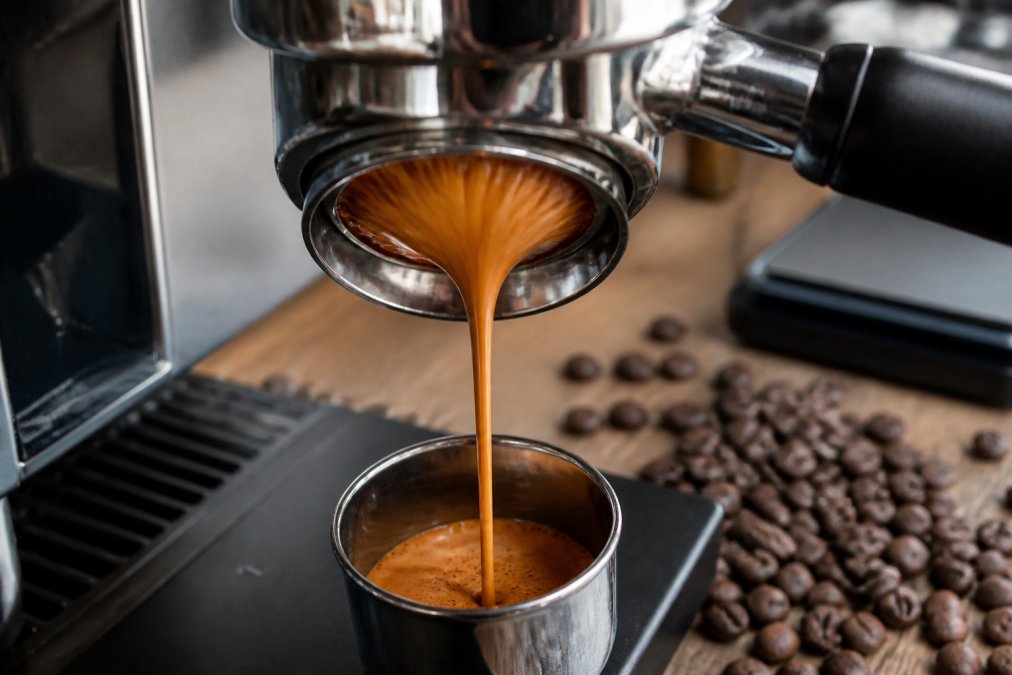
The best overall pick is African Espresso, which delivers thick, velvety crema and cuts cleanly through steamed milk. It blends Kenya, Tanzania, and Ethiopia for dark cocoa, blackberry syrup, and floral undertones at $23.99, pulling a dense, tiger-striped shot that holds up in a 12 oz latte.
6 Bean Blend: Dark Roast House Espresso
For a dependable daily driver, the 6 Bean Blend is the best espresso bean for home machines pulling multiple drinks a day. Six specialty Arabica origins combine into bittersweet dark chocolate, toasted walnut, and caramelized molasses at $23.99; the roastery recommends a 1:2 ratio (18g in, 36g out) in 27 to 30 seconds.
Italian Roast: Slow-Roast Dark Intensity
Italian Roast is our darkest, most uncompromising option, built for straight shots and authentic cappuccinos. Specialty Arabica and high-density Robusta undergo a low-and-slow roast for smoky molasses and bittersweet dark chocolate at $23.99, with the Robusta adding structural body and persistent crema.
Single Origin Favorites Sample Pack: Tasting Flight
The Single Origin Favorites Sample Pack is the best way to find your signature bean before committing to a full bag. Six 2 oz valve-protected pouches, from Brazil Santos to Tanzania, arrive at $24.99, yielding roughly 4 to 6 cups each for 25 to 35 cups total.
Best Sellers Coffee Tasting Flight: Curated Roasts
The Best Sellers Coffee Tasting Flight bundles six of our most-loved roasts, including the 6 Bean Blend and Cowboy Blend, into one 12 oz flight at $24.99, the ideal test drive before a recurring subscription.
Pricing and Value: Cost Per Shot for Espresso Subscriptions
Sticker price tells you almost nothing about whether an espresso subscription is worth it. The number that matters is cost per double shot, which moves with bag size, shipping, dial-in waste, and delivery cadence.
The Base Math: Grams, Doubles, and Bag Size
A standard double shot uses about 18g of coffee:
- 12 oz bag (340g): roughly 18 to 19 double shots
- 1 lb bag (454g): roughly 25 double shots
- 2 lb bag (907g): roughly 50 double shots
- 5 lb bag (2,268g): roughly 126 double shots
At $23.99 for a 12 oz bag, that lands near $1.30 per double shot. A 1 lb bag often drops that to roughly $1.05 to $1.15 per double, and a 5 lb bag can push it under $0.90, but only if you finish it before it stales.
The Hidden Cost: Dial-In Waste
Every new bag costs you coffee before it costs you money per shot. Dialing in a fresh roast typically burns 2 to 4 shots (36g to 72g) before you land on a recipe, 10% to 20% of a 12 oz bag gone before your first good pull.
Shipping and Cadence Change the Real Number
Most subscriptions bundle shipping into the per-bag price, but effective cost per shot still depends on cadence:
Single Origin Favorites Sample Pack →
- Weekly delivery: Freshest beans, highest shipping overhead, and the most dial-in waste from constantly breaking in new bags.
- Every two weeks: The sweet spot for most home baristas pulling 2 to 4 shots a day. One bag in peak window, one finishing out.
- Monthly delivery: Lowest shipping cost per bag, but a 12 oz bag will not last a month at 2 shots a day. You will need a larger bag or a second subscription.
Cost Per Shot vs. Café and Grocery Alternatives
| Source | Typical Cost Per Double Shot | Freshness |
|---|---|---|
| Subscription, 12 oz | ~$1.30 | Roasted to order, 2-5 days off roast on arrival |
| Subscription, 1 lb | ~$1.05-$1.15 | Same, better per-ounce value |
| Specialty café | $3.00-$5.00 | Variable, often excellent |
| Grocery store whole bean | $0.60-$0.90 | Unknown roast date, often months old |
| Pre-ground supermarket | $0.40-$0.60 | Stale within days of opening |
The grocery-store bag looks cheaper per shot, but that coffee has already lost most of its crema potential. For espresso, freshness is the difference between a shot that pulls and one that gushes.
Tasting Flights as a Value Play
Sample packs and tasting flights are the cheapest way to de-risk a subscription. At $24.99 for a multi-roast flight, you pay roughly $1.00 to $1.25 per cup across 25 to 35 cups and compare origins side by side before committing. Once you find the bean that pulls best on your machine, dial-in waste drops to near zero and the subscription math improves.
Dialing In and Storing Subscription Beans for Espresso
Subscription beans arrive at a different stage of life than grocery-store beans. Most roasters ship within 24 to 72 hours of roast, so the bag lands on your bar between day 2 and day 5 off roast, and espresso behaves very differently across that window.
The Rest Window: Why Day 3 and Day 10 Pull Differently
Freshly roasted coffee releases carbon dioxide, degassing (pubmed.ncbi.nlm.nih.gov). CO2 pushes back against pump pressure and disrupts water-to-coffee contact in the puck, so a bag opened on day 2 tends to gush, run fast, and taste sharp. As CO2 bleeds off, extraction stabilizes.
A common pattern among home baristas:
- Days 1-3 off roast: Shots run fast and erratic. Crema is foamy and collapses quickly. Wait if you can.
- Days 4-10 off roast: The sweet spot for most espresso roasts. Flow is predictable, crema is tight and tiger-striped, and sweetness peaks.
- Days 11-21 off roast: Still excellent, but you may need to grind slightly finer each day as the beans continue to lose moisture and CO2.
- Beyond 3 weeks: Oxidation accelerates. Crema thins, brightness fades, and shots flatten. This is the point to finish the bag or move it to cold brew.
A Repeatable Dial-In Routine for a New Bag
When a new bag lands, resist chasing the same grinder setting from the last one, every origin, roast level, and harvest shifts the recipe:
- Lock your dose. Weigh 18g in. Do not eyeball it, a 1g swing changes your ratio by more than 5%.
- Start one step coarser than your last bag. New beans almost always run faster than aged ones.
- Pull a 1:2 shot and time it. Target 27 to 30 seconds from first drop to finish. If it runs under 25 seconds, grind finer. Over 32, grind coarser.
- Taste before you adjust again. Sour and thin means under-extracted, grind finer or raise temperature. Bitter and drying means over-extracted, grind coarser or lower temperature.
- Adjust in small increments. One click on a stepped grinder, or a quarter-turn on a stepless one, then re-pull.
Puck Prep That Actually Moves the Needle
Grind size is the biggest lever; distribution is second. A subscription bag that pulls inconsistently is often a puck-prep problem, not a bean problem.
- WDT (Weiss Distribution Technique): Stir the grounds in the basket with a fine needle tool to break up clumps before tamping. This alone can cut channeling dramatically on light roasts.
- Level before you tamp. A leveling tamper or a distribution tool keeps the bed even so water does not find a low-resistance path.
- Use a bottomless portafilter for diagnosis. If you see spurts or a blond gusher on one side, you have channeling, fix distribution before you touch the grind.
- Keep the basket dose-matched. A 18g basket wants 18g. Overdosing to "fix" a fast shot usually makes it worse.
Storage: Protecting the Peak Window
Once a bag is open, the clock accelerates. Oxygen, light, heat, and moisture are the enemies.
- Keep beans whole and in the original valve bag if you will finish it within two weeks. The one-way valve lets CO2 escape without letting oxygen in.
- Transfer to an airtight, opaque container only if the bag is awkward to reseal. A vacuum-sealed canister slows staling noticeably.
- Do not refrigerate. The temperature swings every time you open the door cause condensation on the beans, which wrecks extraction.
- Freeze for long storage, not daily use. If your subscription outpaces your drinking, portion beans into single-day or single-bag amounts, freeze them in airtight bags, and let them come to room temperature before grinding. Do not refreeze.
Conclusion
The hardest part of espresso at home is not the machine, it is keeping fresh, well-matched beans on your bar without overbuying. LGBrewTeaQ roasts to order and delivers blends and single origins built for real extraction, from African Espresso to the 6 Bean Blend and the tasting flights that help you find your bean.
Frequently Asked Questions
Which espresso subscription box is considered the best?
The best espresso coffee subscription depends on your taste and machine. For traditional espresso with thick crema, African Espresso ($23.99) is a top choice, blending Kenya, Tanzania, and Ethiopia for dark cocoa and blackberry notes. If you prefer dark roast, Italian Roast ($23.99) delivers smoky molasses and dense crema. For variety, the Single Origin Favorites Sample Pack ($24.99) lets you try six origins before committing to a recurring plan.
Are coffee subscription boxes worth it for espresso drinkers?
Yes, for espresso drinkers who value freshness. Espresso is sensitive to stale beans, which produce thin crema and flat flavor. Subscriptions deliver freshly roasted beans on a set schedule, so you always have peak-flavor coffee. LGBrewTeaQ roasts to order in small batches, ensuring optimal degassing when your bag arrives. The cost per shot often beats cafe prices, making it a practical choice for daily home baristas.
What should I look for in an espresso-specific coffee subscription?
Look for roast date transparency, bean origin, and roast level. Espresso benefits from beans roasted for espresso, like medium-dark or dark roasts that build crema. Check if the subscription offers whole bean options and allows you to customize grind size for your machine. LGBrewTeaQ's espresso blends, such as African Espresso and 6 Bean Blend, are roasted specifically to produce rich crema and balanced extraction.
How do I choose between single-origin and espresso blends for my subscription?
Single origins highlight distinct flavors from one region, like Ethiopia's floral jasmine or Kenya's bright citrus. Blends combine origins for balance and consistency, ideal for espresso. For espresso, blends often provide better crema and body. LGBrewTeaQ offers both: single origins like Colombia and Ethiopia for pour-over, and espresso blends like African Espresso for machine use. Many subscribers rotate between them.
Do coffee subscriptions offer fresh-roasted beans suitable for home espresso machines?
Reputable subscriptions roast to order and ship within days, so beans arrive fresh. For espresso, use beans 5-14 days post-roast for optimal degassing. LGBrewTeaQ roasts in small batches and seals in valve-protected bags to preserve freshness. This ensures your home machine can extract thick crema and full flavor, unlike supermarket beans that may be months old.