

Dark Roast vs Medium Roast Coffee Blends: Which to Pick
Last Updated: November 2, 2026
Quick Summary
Medium roast is the safer everyday choice, while dark roast is the pick when you want heavy body and low acidity. Comparing dark roast vs medium roast coffee blends comes down to how long the beans stayed in the roaster, and everything else follows from that.
- Medium roast tastes sweeter and more complex, with brighter acidity and a lighter body than dark roast.
- Caffeine barely changes with roast level; a level scoop of dark roast actually holds fewer beans by weight.
- Dark roast needs a coarser grind and cooler water than medium roast because the beans extract faster.
- Dark roast is a classic choice for espresso, especially with milk, thanks to low acidity and heavy body.
- A blend's recipe can matter more than its roast level, since two dark roasts can taste completely different.
Table of Contents
- Dark Roast vs Medium Roast Coffee Blends at a Glance
- Medium Roast vs Dark Roast Coffee Taste: Flavor, Acidity, and Body
- Medium Roast vs Dark Roast Caffeine: What the Numbers Actually Say
- Medium Roast vs Dark Roast: Which Is Stronger?
- Best Roast for Espresso: Medium or Dark?
- Blend Composition: The Variable Roast Level Labels Hide
- Brewing and Grind Adjustments for Each Roast
- Pick Your Roast and Get It Fresh
- Frequently Asked Questions
Dark Roast vs Medium Roast Coffee Blends at a Glance
The quick answer: medium roast is the safer everyday choice, while dark roast is the pick when you want heavy body and low acidity. That short version is true, but it hides the part that actually decides your cup.
At LGBrewTeaQ, we roast to order in small batches, so we think about this question constantly. Below, we'll break down flavor, caffeine, strength, and brewing so you can pick with confidence.
Here's the catch most guides skip: roast level tells you about the process, not the bean. A dark roast made from cheap, flawed green coffee can taste flat and ashy. A medium roast made from a careful blend tastes sweet and clean.
| Factor | Medium Roast | Dark Roast |
|---|---|---|
| Roast duration | Shorter, stopped earlier | Longer, taken further |
| Bean color | Medium brown | Dark brown, near-black |
| Surface oils | Rarely visible | Often glossy |
| Acidity | Crisp and noticeable | Low and gentle |
| Body | Medium, silky | Heavy, syrupy |
| Flavor focus | Origin sweetness, fruit, nuts | Caramelization, chocolate, smoke |
| Best brew method | Drip, pour-over, cold brew | Espresso, French press, Moka pot |
How the Two Roasts Are Made
Roasting is a heat curve, not a switch. Beans lose moisture, turn yellow, then brown as sugars caramelize and oils migrate outward. Medium roast pulls the beans off earlier in that curve. Dark roast keeps going, pushing into deeper caramelization and, in the darkest styles, a second crack where surface oils come forward.
National Coffee Association guidance on roast levels notes that roast categories are defined by bean color, and that lighter roasts generally preserve more of a coffee's unique qualities. That's the key insight: the longer you roast, the more the roast itself, rather than the bean's origin, dominates the cup.
Bean Color and Surface Oils
Color is the most reliable visual cue you have. Medium roast beans land at a medium brown with a matte surface. Dark roast beans look darker and can show an oily sheen.
That oil isn't a defect. It's a signal that the bean has been developed further. It also means dark roast beans can clog a grinder more easily, so give the burrs a brush more often.
Medium Roast vs Dark Roast Coffee Taste: Flavor, Acidity, and Body
Medium roast tastes sweeter and more complex, with brighter acidity and a lighter body. Dark roast tastes bolder and simpler, with low acidity, heavy body, and chocolate or smoky notes. Neither is better. They're answering different questions.
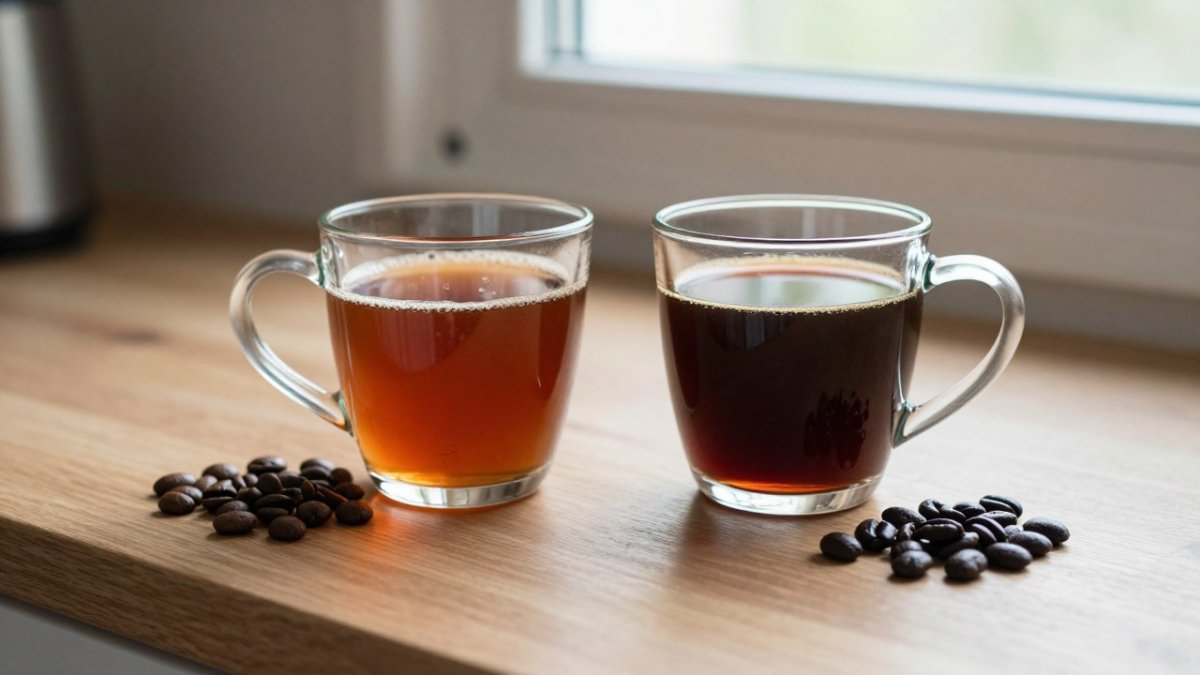
The medium roast vs dark roast coffee taste gap shows up in four places:
- Acidity: medium roast keeps the bright, crisp edge that makes coffee taste lively. Dark roast mutes it, which is why people with sensitive stomachs often reach for dark.
- Bitterness: both can be bitter, but for different reasons. Medium roast bitterness usually means under-extraction. Dark roast bitterness is built into the bean.
- Body: dark roast feels heavier and coats the mouth. Medium roast feels silky and finishes cleaner.
- Sweetness: medium roast holds fruit, floral, and nutty notes. Dark roast trades those for caramel and chocolate.
A common mistake is assuming dark roast is "richer." It's bolder, not necessarily more complex. In practice, the sweetness in a good medium roast is often the harder thing to find.
Medium Roast vs Dark Roast Caffeine: What the Numbers Actually Say
Caffeine barely changes with roast level.
The medium roast vs dark roast caffeine question gets muddled because people compare three different things and call them all "caffeine." Separate them and the picture gets clear:
- Caffeine by bean weight. Green coffee holds caffeine as a stable compound, and roasting removes moisture and organic matter but not caffeine. A gram of dark-roast bean and a gram of medium-roast bean from the same green coffee land within a few percent of each other. The roast level is not the variable.
- Caffeine by scoop or volume. This is where dark roast gets its reputation. Longer roasting drives off more water, so dark beans are less dense. A level scoop of dark roast holds fewer beans by weight than the same scoop of medium roast, which means less coffee and less caffeine per scoop. If you scoop by volume, dark roast can actually deliver slightly less caffeine, not more.
- Caffeine by brewed serving. Once you brew, extraction efficiency and serving size dominate. A 12 oz drip coffee and a 2 oz espresso are not comparable units, and a strong-tasting dark roast espresso can carry less total caffeine than a mild medium-roast drip coffee simply because the serving is smaller.
Research indexed by PubMed on roast level and gastric acid secretion compared a dark roast blend with a medium roast market blend and found the dark roast was less effective at stimulating gastric acid in healthy volunteers.
A common pattern in side-by-side brews: when both roasts are dosed by weight at the same ratio and brewed the same way, the caffeine difference is small enough that tasters cannot reliably tell which cup has more.
For the fuller light-versus-dark caffeine breakdown, see our guide to light roast vs dark roast caffeine content. The practical takeaway: measure your coffee by weight, not by scoop, and roast level stops mattering to your dose.
Watch out: caffeine content on a bag label is usually given per serving of brewed coffee, not per gram of bean, so two bags with the same number can brew very differently depending on dose and method.
Medium Roast vs Dark Roast: Which Is Stronger?
Dark roast is stronger in flavor and body. Medium roast is stronger in caffeine per bean, by a small margin. "Strong" is doing two jobs in that sentence, and that's where the confusion lives.
If strength means bold flavor that stands up to milk, dark roast wins. If strength means caffeine per gram of ground coffee, the difference is small enough that your dose matters more than your roast. If strength means "wakes me up," both work, and neither is a shortcut around drinking more coffee.
Personal preference decides the rest. We'd rather you pick the flavor you actually enjoy and adjust the dose than chase a caffeine edge that barely exists.
6 Bean Blend - Dark Roast House Espresso & Coffee →
Best Roast for Espresso: Medium or Dark?
Dark roast is a classic choice for espresso, especially with milk. Its low acidity and heavy body help it cut through steamed milk, and deeper caramelization gives a dense crema.
Our 6 Bean Blend is built for this. It's a dark roast with a heavy, syrupy body and dense golden-hazelnut crema, with tasting notes of dark chocolate, walnut, and molasses. Pull it at a 1:2 ratio, 18g in and 36g out, in 27 to 30 seconds.
Where medium roast wins: straight shots where you want fruit and sweetness, and anyone who finds dark roast espresso too intense. If you're working on crema and shot technique, our guide to perfect espresso crema covers the variables that matter.
Blend Composition: The Variable Roast Level Labels Hide
A blend's recipe can matter more than its roast level. Two dark roasts can taste completely different if one is all Arabica and the other leans on Robusta for body. Roast level is one dial. Blend composition is the other, and labels rarely explain it.
Our French Roast shows how this works. It blends specialty-grade Arabica for sweetness and aroma with Robusta for dense body and rich crema, then roasts into the second crack. The result is bittersweet chocolate, toasted walnut, and sweet woodsmoke with virtually zero acidity.
What most guides miss is that a blend is designed for a purpose. An espresso blend is built to hold up under pressure and milk. A breakfast blend is built to be forgiving in a drip machine.
Brewing and Grind Adjustments for Each Roast
Dark roast needs a coarser grind and cooler water than medium roast, because the beans are more soluble and extract faster. Medium roast rewards a finer grind and a full bloom.
Roasting longer drives moisture out, so dark roast beans tend to extract faster than medium roast beans.
A practical starting point:
- Dark roast, French press: coarse grind, 1:15 ratio, water at 200°F, steep 4 minutes.
- Dark roast, espresso: fine grind, 1:2 ratio, 27 to 30 seconds.
- Medium roast, drip: medium grind, 1:16 ratio, roughly 2 level tablespoons per 6 oz of water.
- Medium roast, pour-over: medium-fine grind, 1:15 ratio, 45-second bloom.
Treat those as launch points, then adjust by taste rather than by the clock. If the cup is sour, thin, or finishes fast, extraction is low: grind finer, raise water temperature a few degrees, or extend contact time.
Blend composition changes the recipe too.
Watch out: if your dark roast tastes ashy, the grind is usually too fine or the water too hot. Coarsen the grind before you blame the bean.
Pick Your Roast and Get It Fresh
Freshness changes both roasts more than most people expect. We roast to order in small batches.
Ready to choose? Our 6 Bean Blend dark roast is the pick for espresso and milk drinks. If you lean medium, our Coffee with Mushrooms medium roast is smooth and balanced, infused with Lion's Mane, Cordyceps, and Reishi. And if you want to know why roast date matters before you order, read about the benefits of freshly roasted single origin coffee.

Best for: dark roast seekers who want heavy body and low acidity. Skip if: you prefer bright, fruit-forward cups.
Frequently Asked Questions
Does medium or dark roast coffee have more caffeine?
By weight, medium roast beans usually carry slightly more caffeine because dark roasting burns off a small amount of mass. By scoop, the gap shrinks or flips, since dark beans are lighter and denser in flavor. Your serving size and brew ratio affect caffeine far more than the roast label.
Which coffee is stronger, dark roast or medium roast?
Dark roast tastes stronger because the roast develops smoky, bittersweet, caramelized notes and a heavy body. Medium roast keeps more origin character and bright acidity, so it reads lighter even at the same brew strength. If you want bold flavor, go dark. If you want a balanced cup you can drink mug after mug, medium roast wins. Actual caffeine strength depends on dose and extraction, not the roast name.
Which roast works best for espresso?
Dark roast is the classic espresso choice. It produces dense crema and cuts through milk in lattes and cappuccinos. A medium roast gives a brighter, more layered shot with clearer sweetness. For a dark option, LGBrewTeaQ's 6 Bean Blend pulls a 1:2 ratio in 27 to 30 seconds with heavy syrupy body and low acidity. Try both, then adjust grind and dose to taste.
How should I choose between a medium and dark roast blend?
Start with how you drink it. Milk drinks and French press favor dark roast; drip, pour-over, and black drinking favor medium. Then match your gear: dark beans need a slightly coarser grind because they are more soluble. Buy blends roasted to order so degassing finishes before the bag reaches you. LGBrewTeaQ's Breakfast Blend (medium) and 6 Bean Blend (dark) are both $23.99, so you can test both without stretching your budget.
The hardest part of comparing dark roast vs medium roast coffee blends isn't the flavor chart. It's buying beans fresh enough to taste the difference the roast level is supposed to make. LGBrewTeaQ roasts to order in small batches, sources beans with a focus on farm relationships, and delivers straight to your door, whether you want a bold dark roast espresso blend or a smooth medium roast for your drip maker. Get started with LGBrewTeaQ and taste what fresh roasting does to your morning cup.
