

How to Store Loose Leaf Tea at Home
Last Updated: October 29, 2026
Quick Summary
Store loose leaf tea in an airtight, opaque container kept in a cool, dark, dry spot away from strong odors. Fill tins to about 80 percent, scoop with a dry spoon, and reseal after every use. Skip the fridge for opened tea, since moisture and food smells ruin the leaves.
- Five enemies of fresh tea are moisture, light, heat, air, and odor.
- Green tea is best drunk within 6 months of opening.
- Freeze only unopened, vacuum-sealed bags you'll keep for a year or more.
- Aim for a storage spot that stays below about 75°F.
- Keep one tin open at a time and split bulk orders into smaller containers.
Table of Contents
- Why the Way You Store Loose Leaf Tea Decides How It Tastes
- The Five Enemies of Fresh Tea: Moisture, Light, Heat, Air, and Odor
- The Best Containers for Loose Leaf Tea and What to Look For
- How Long Does Loose Leaf Tea Last, by Tea Type
- Does Loose Leaf Tea Need to Be Refrigerated or Frozen?
- Picking the Right Spot: Cool, Dark, Dry, and Away From Strong Odors
- Tea Storage Mistakes That Quietly Ruin Your Leaves
- A Daily-Use Routine for Opened Tins and Bulk Buys
- Frequently Asked Questions
Why the Way You Store Loose Leaf Tea Decides How It Tastes
Loose leaf tea is dried plant material, and like any dried plant material, it starts losing character the moment air reaches it.
That flavor is fragile. For the full brewing method that makes the most of well-kept leaves, see our complete guide to brewing specialty loose leaf tea.
Store tea wrong and you get a flat, dusty cup. Store it right and a tin stays vibrant for months.
Below, we'll show you exactly how to keep every tin, bag, and bulk buy tasting fresh, starting with what you're actually fighting.
The Five Enemies of Fresh Tea: Moisture, Light, Heat, Air, and Odor
Five things wreck stored tea: moisture, light, heat, air, and odor. Each one attacks a different part of the leaf, and each one is easy to block once you know where it comes from.
- Moisture makes leaves go stale and can invite mold
- Light breaks down the compounds that give tea its color and aroma
- Heat speeds up every stale reaction
The fix for all five is the same in principle: a sealed, opaque container in a cool, dark, dry spot. The details are where people slip up.
The Best Containers for Loose Leaf Tea and What to Look For
The best containers for loose leaf tea block all five enemies at once: an airtight seal, an opaque body, and a size that matches how fast you'll drink the tea. Skip any one of those and the container fails at its only job.
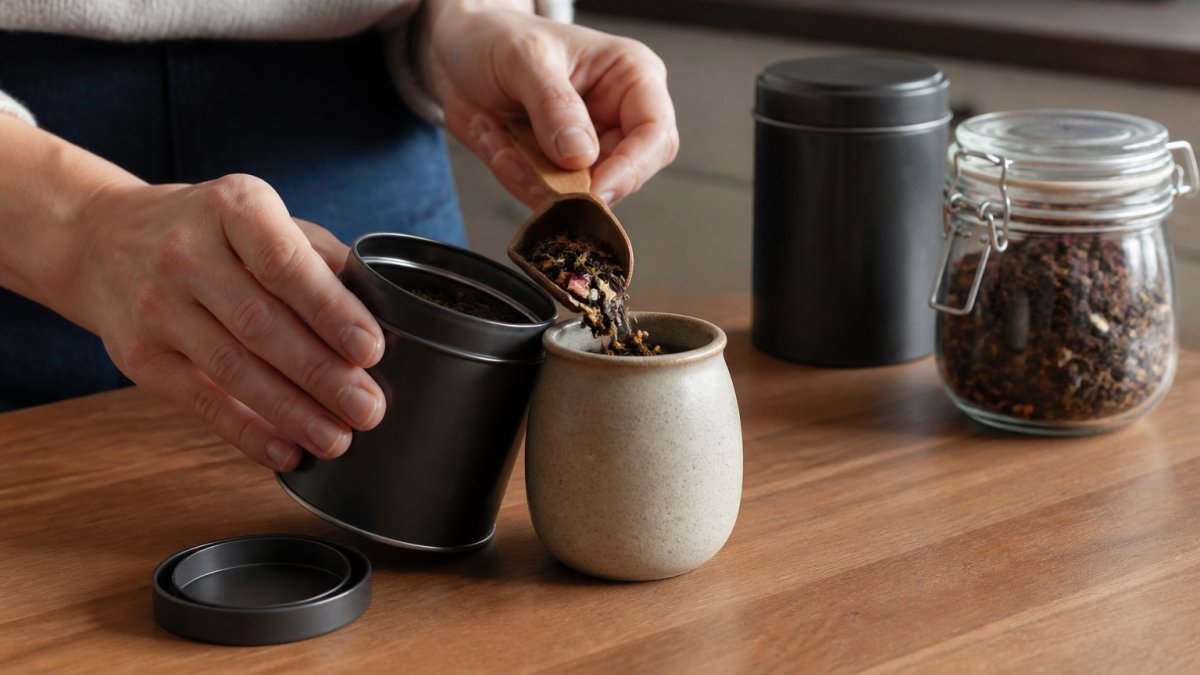
A good tea tin is the default answer. Metal blocks light completely, and a tight double-lid holds the seal. If your leaves are finely cut, our roundup of the best tea infusers for fine leaf tea covers what to look for.
Watch out: a pretty glass jar on the counter looks great and protects nothing. Light passes straight through and the leaves fade within weeks.
Tin, Ceramic, Glass, or the Original Bag?
Each option trades something off. Here's how we'd rank them for everyday home storage.
| Container | Blocks Light | Airtight | Odor Transfer Risk | Best For |
|---|---|---|---|---|
| Metal tin (double-lid) | Yes | Yes, if the inner lid seats firmly | Low, but unlined metal can pick up smells over years | Daily-use teas, most homes |
| Ceramic canister with gasket | Yes | Yes, until the gasket hardens or cracks | Low; glazed interiors are easy to wipe | Gifting, counter display |
| Glass jar with clamp lid | No | Varies; rubber gaskets wear out | Low, but light damage dominates | Short-term use only, kept in a dark cabinet |
| Original resealable bag | No | Weak; the zip track loosens with use | High; foil-lined bags hold odors | Backup, then transfer |
| Vacuum-sealed foil pouch | Yes | Yes, until opened | Low | Long-term backup of sealed tea |
The original packaging works for the trip home. Once it's open, move the leaves into a tin.
How to Test a Container Before You Trust It
A container is only as good as its seal, and most seals fail quietly. Three quick checks catch the common problems:
- The paper test. Close the empty container with a strip of tissue paper half-trapped in the lid. If you can pull the paper out with light resistance, air will get in the same way.
- The smell test. Leave the open container overnight in a closed cabinet. If it smells like the cabinet the next morning, the material is porous or the seal is loose.
- The gasket check. Silicone and rubber gaskets harden and crack over time. Squeeze the gasket; if it feels stiff or shows cracks, replace it or retire the container.
Headspace, Labeling, and the Details That Matter
Fill tins to about 80 percent, not to the brim.
Avoid unlined metal tins for strongly scented teas. The metal can hold onto aroma and pass it to the next tea you store. A glazed ceramic interior or a food-grade liner solves that.
One more rule: never store tea in a container that previously held coffee, spices, or anything with a strong smell.
How Long Does Loose Leaf Tea Last, by Tea Type
How long loose leaf tea lasts depends on the type: delicate green and white teas fade fastest, while black, oolong, and pu-erh hold up far longer.
Here's our working rule of thumb by type, based on how the leaves are processed:
- Green tea: drink within 6 months of opening
- White tea: 6 to 12 months, kept very dry
- Black tea: up to 18 months sealed, 6 to 9 months opened
Delicate teas lose their edge first, so buy them in smaller amounts. If you want to try several types before committing to bulk, a tasting flight is a practical way to sample a range and learn which ones you'll actually finish.

Does Loose Leaf Tea Need to Be Refrigerated or Frozen?
No, loose leaf tea does not need refrigeration, and the fridge is usually the worst place for it. Fridges are damp and full of food smells, and tea absorbs both. But the fuller answer is more useful than a flat no: cold storage has a narrow legitimate use, and the reason it usually fails is condensation, not cold itself.
Lavender Herbal Tea - Loose Leaf (2 oz Tin) →
Why the Fridge Backfires
A refrigerator cycles between cool and slightly warmer every time the door opens. That cycle pulls moisture out of the air and onto surfaces, including tea leaves. Dry leaves are hygroscopic, meaning they pull moisture from the surrounding air. Once damp, they go stale faster and can develop mold. Add the fact that fridges concentrate odors from produce, leftovers, and dairy, and a fridge is a smell-transfer chamber with a humidity problem.
When Freezing Actually Makes Sense
Freezing works in one narrow case: an unopened, vacuum-sealed bag you plan to keep for a year or more, especially green or white tea that you bought in bulk. The seal keeps moisture out, and the cold slows the oxidation and aroma loss that would otherwise happen at room temperature.
If you freeze, follow these rules:
- Freeze only sealed bags. Once a bag is opened, the freezer is worse than a cupboard.
- Use a dedicated freezer space. A chest freezer that stays closed, not the door shelf of a fridge-freezer that swings open all day.
- Thaw fully before opening. Let the sealed bag sit at room temperature for several hours, ideally overnight, so condensation forms on the outside of the bag, not on the leaves.
- Never refreeze. Each thaw cycle pushes moisture into the leaf.
The Condensation Rule
The single principle behind every cold-storage mistake is condensation. Moisture forms when cold tea meets warm, humid air. That happens when you open a cold bag in a warm kitchen, when a cold tin sits on the counter, and when a fridge cycles. The fix is always the same: keep the tea sealed until it reaches room temperature, and never open a cold container in a humid room.
What to Do Instead
For everyday tins, a cool cupboard beats the fridge every time. Aim for a spot that stays below about 75°F and away from the stove, dishwasher, and windows. If your kitchen runs hot in summer, move the tea to an interior closet or a lower cabinet rather than the fridge. A steady 70°F cupboard is kinder to tea than a 38°F fridge that swings open twenty times a day.
Picking the Right Spot: Cool, Dark, Dry, and Away From Strong Odors
The right storage spot is cool, dark, dry, and away from anything with a strong smell. That rules out most of the kitchen.
Good spots:
- A closed cabinet away from the stove and oven
- A pantry shelf that stays out of direct sun
- A drawer far from spices, coffee, and cleaning supplies
Bad spots:
- Above the stove, where heat and steam rise
- A windowsill, where sunlight hits daily
- Next to onions, garlic, or scented candles
Temperature swings matter as much as the average temperature. A spot that heats up when the oven runs and cools overnight will push moisture in and out of the leaves. Pick a shelf that stays steady.
Tea Storage Mistakes That Quietly Ruin Your Leaves
Most tea storage mistakes are small habits that seem harmless. Together they turn a fresh tin into a stale one long before its time.
- Scooping with a wet spoon. Water in the tin is the fastest route to mold.
- Storing tea in the fridge. Odors and moisture move in within days.
- Leaving the bag open on the counter. Air and light do the damage.
One more: dirty gear. Residue in a tin or infuser sours the next batch. Here's how to clean glass tea infusers without harsh chemicals.
A Daily-Use Routine for Opened Tins and Bulk Buys
A simple routine keeps opened tea fresh: seal after every scoop, keep one tin open at a time, and split bulk buys into smaller containers. It takes seconds and saves the whole tin.
Here's the routine we follow:
- Open one tin at a time. Keep the rest sealed and stored.
- Scoop with a dry spoon. Never dip a wet one into the leaves.
- Reseal fully. Press the lid down until it clicks or seals.
- Return it to the same cool, dark spot. Same shelf, every time.
- Label the open date. A strip of tape on the lid is enough.
- Split bulk orders. Divide big bags into smaller tins you'll open one by one.
Once your leaves are stored right, the next step is brewing them well. Our guide to steeping loose leaf tea properly walks through water temperature, timing, and ratios.
Frequently Asked Questions
What is the best way to store loose leaf tea at home?
Keep loose leaf tea in an airtight, opaque container in a cool, dark, dry spot away from the stove, sink, and spice rack. A tin or ceramic canister with a tight seal blocks light and air, which are the two fastest ways tea loses aroma. If you buy in bulk, keep the large bag sealed in a cupboard and refill a smaller tin for daily use so the main supply is not opened every morning. Label the container with the date you opened it.
How long does loose leaf tea last after opening?
Opened loose leaf tea holds good flavor for roughly six months to a year, depending on the type. Delicate green and white teas fade fastest, often within six months, while black, oolong, and pu-erh keep longer. The date on the package is a guide, not a hard deadline. Tea does not spoil in the food-safety sense, but it goes stale: the aroma flattens, the color dulls, and the cup turns flat or dusty. Store it well and it stays drinkable far longer.
Does loose leaf tea need to be refrigerated?
No. Refrigeration is one of the most common tea storage mistakes because fridges are humid and full of food odors that tea absorbs easily. Every time you pull the container out, condensation forms on the cold leaves, and moisture is the fastest route to mold and stale flavor. Keep tea in a cupboard instead. The exception is a sealed, unopened pouch you plan to keep for many months, which can go in the freezer if it is completely airtight and you let it come to room temperature before opening.
How can I tell if my loose leaf tea has lost its freshness?
Open the tin and smell it: fresh tea should hit you with a clear, recognizable aroma the moment the lid comes off. If the scent is faint or smells like paper, dust, or the cupboard, the leaves have faded. Look at the color too, since green tea turns dull and brownish as it ages. Brew a small cup and compare it to your first impression of the tea. Flat, thin, or bitter flavor with no finish means it is time to restock.
Storing tea well takes a good tin and five seconds of care each day, and that's it. The reward is a cup that tastes the way it did on day one.
At LGBrewTeaQ, we roast and pack to order so your tea arrives fresh, and we want it to stay that way. Our tins and loose leaf teas ship straight to your door, ready for the cupboard. Get started with LGBrewTeaQ and taste what fresh tea actually means.
