

Single Origin Coffee vs Blends for Pour Over
Table of Contents
- Single Origin Coffee vs Blends: A Quick Comparison for Pour-Over Brewing
- What Single Origin Coffee and Blends Actually Are
- Single-Origin Coffee Flavor Profiles: What to Expect in the Cup
- How Blends Deliver Balance and Consistency for Pour-Over
- Best Coffee Beans for Pour-Over: Matching the Bean to Your Brew
- Pour-Over Coffee Brewing Tips for Single Origins and Blends
- Light Roast vs. Medium Roast for Pour-Over: Which Works Better?
- How to Choose: A Decision Framework for Pour-Over Drinkers
- Frequently Asked Questions
Last Updated: October 13, 2026
Single Origin Coffee vs Blends: A Quick Comparison for Pour-Over Brewing
Single origin coffee vs blends for pour over comes down to one question: do you want a cup that tastes like a specific place, or one that tastes the same every morning?

Pour-over rewards either bean, but differently. A V60 or Chemex pulls bright fruit and floral notes from a light-roast single origin, and rounds a medium-roast blend into something smooth and chocolatey.
What Single Origin Coffee and Blends Actually Are
Single origin coffee is sourced from one producer, farm, cooperative, or defined region within a single country. A coffee blend combines beans from two or more origins to hit a target flavor profile. The distinction matters most in pour-over, which highlights clarity and origin character more than immersion brewing.

Single Origin: One Farm, One Region, One Crop
Traceability is the whole point. A single-origin bag tells you where the coffee grew, often down to the farm and harvest season, which is why specialty shops lean on them for tasting flights and pour-over menus.
The trade-off is availability: a single farm's harvest runs out, and that exact flavor profile may not return until the next season.
Blends: Multiple Origins, One Consistent Cup
A blend solves a problem: coffee from one origin changes every year, but your morning routine shouldn't. By combining coffees from different regions, a roaster holds a flavor profile steady across harvests, adjusting the recipe when a crop shifts.
Single-Origin Coffee Flavor Profiles: What to Expect in the Cup
Single-origin coffee flavor profiles are defined by origin, altitude, and processing, and tend to be more distinctive and less predictable than blends.
Here's what to expect from a few classic regional profiles:
- East Africa (Ethiopia, Kenya): floral aromatics, bright citrus, tea-like body
- Latin America (Colombia, Peru, Mexico): caramel sweetness, red fruit, almond, gentle acidity
- Indonesia (Bali, Sumatra): dark chocolate, molasses, syrupy body, low acidity
Our Ethiopia Single Origin Coffee is a good example: wild jasmine, bergamot citrus, sweet peach, and wildflower honey in a light-medium roast with a silky, tea-like body.
For more on how growing regions shape flavor, the Specialty Coffee Association's origin and processing resources are a solid starting point.
How Blends Deliver Balance and Consistency for Pour-Over
Blends deliver balance by design. A roaster picks component coffees that cover each other's gaps, one brings body, another acidity, a third sweetness, for a cup with no sharp edges.
Take our House Blend: sweet milk chocolate and toasted nuts with a mild citrus finish, built from high-altitude coffees across Central and South America.

Our Latin American Blend pushes richer: toasted hazelnut, mild orchard fruit, sweet caramel, and a gentle cocoa aftertaste in a medium-dark roast.
Best Coffee Beans for Pour-Over: Matching the Bean to Your Brew
The best coffee beans for pour-over are freshly roasted, whole-bean coffees matched to the flavor you want: light roasts and single origins for clarity and brightness, medium roasts and blends for balance and body.
A quick matching guide:
| Bean Style | Roast Level | Flavor Result in Pour-Over | Best For |
|---|---|---|---|
| Single origin, East Africa | Light-Medium | Floral, citrus, tea-like clarity | Tasting and exploring |
| Single origin, Latin America | Medium | Caramel, red fruit, cocoa | Balanced daily cups |
| House-style blend | Medium | Chocolate, nuts, mild citrus | Reliable mornings |
| Regional blend | Medium-Dark | Hazelnut, caramel, cocoa | Richer, fuller cups |
If you are not sure where you land, the Best Sellers Coffee Tasting Flight is the cheapest way to find out: six 2 oz bags, roughly 25 to 30 fresh cups, covering dark blends through delicate single origins.
Pour-Over Coffee Brewing Tips for Single Origins and Blends
Pour-over extraction responds to three levers: grind size, water temperature, and time-in-contact. Single origins and blends sit at different points on the solubility curve, so the same recipe will not flatter both.
Why the two styles extract differently
Light-roast single origins are denser and less soluble. Roasting develops sugars and opens the bean's cell structure; a light roast stops that early, so the bean resists water and releases acids and aromatics slowly.
Medium and medium-dark blends are more porous and soluble. Their sugars are already caramelized, so they give up flavor quickly; push too hard and you overshoot into bitterness and dryness.
Starting recipes by coffee type
Use these as launch points, then adjust one variable at a time. All ratios are by weight, and a 1:16 ratio means 1 gram of coffee to 16 grams of water.
| Coffee Type | Ratio | Water Temp | Grind | Target Time |
|---|---|---|---|---|
| Light-roast single origin (e.g., Ethiopia) | 1:16 | 200-205°F | Medium-fine | 2:45-3:30 |
| Medium single origin (e.g., Colombia) | 1:16 | 198-202°F | Medium | 2:30-3:00 |
| Medium house blend | 1:15 | 198-202°F | Medium | 2:30-3:00 |
| Medium-dark regional blend | 1:15 | 195-200°F | Medium-coarse | 2:15-2:45 |
Pour pattern matters more than most drinkers think
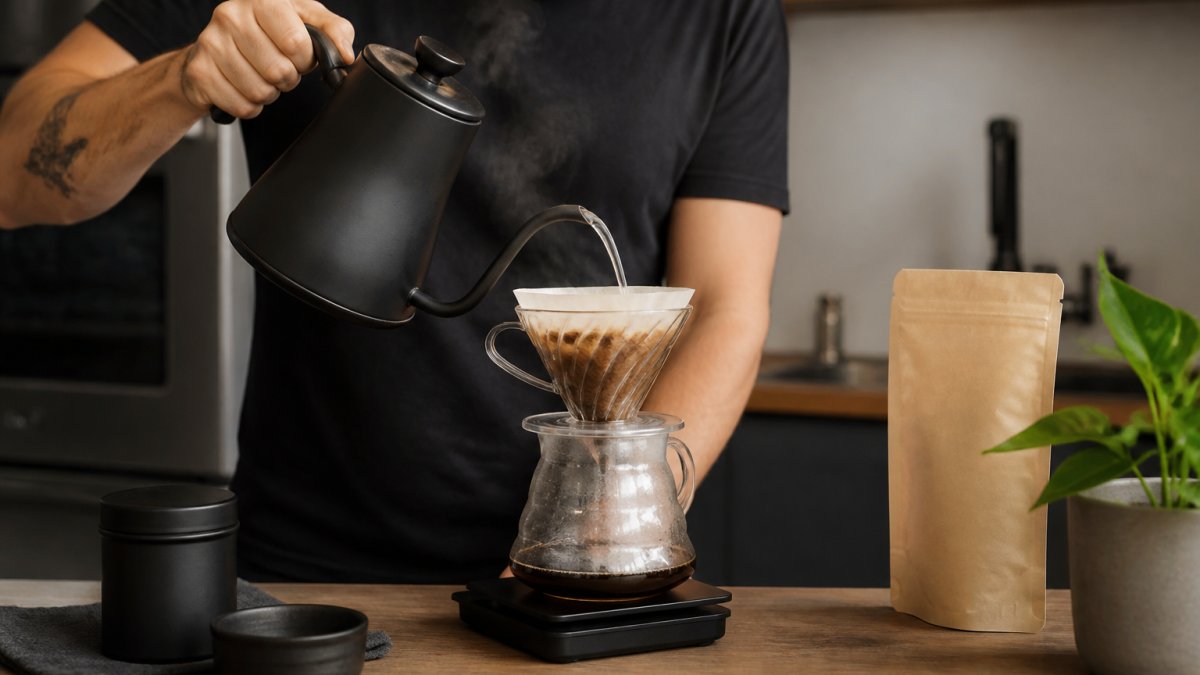
A gooseneck kettle controls agitation, and agitation drives extraction. Two coffees at the same grind and temperature can taste completely different depending on how you pour.
- Bloom: Pour roughly twice the coffee's weight in water (about 30 g for a 15 g dose), then wait 30 to 45 seconds. This releases trapped carbon dioxide so water can reach the grounds evenly. Fresh coffee blooms vigorously; older coffee barely reacts, a freshness signal.
- First main pour: Pour in slow spirals from the center outward, keeping the water level steady. Gentle pours favor clarity and preserve delicate floral notes in light single origins.
- Second main pour: For blends, a slightly faster, more assertive pour builds body and pushes sweetness forward. For light single origins, keep the pour slow and the bed level to avoid channeling.
Troubleshooting the cup
Taste is the only reliable feedback. Match what you taste to the likely cause, then change one thing.
- Sour, sharp, or hollow: Under-extracted. Grind finer, raise water temperature by 2-3°F, or extend the total brew time. Common with light single origins brewed too cool.
- Bitter, dry, or ashy: Over-extracted. Grind coarser, lower the temperature, or shorten the brew. Common with medium-dark blends brewed too fine.
- Flat or papery: Usually staleness or a weak ratio, not the origin label. Check the roast date and tighten the ratio toward 1:15.
A fair side-by-side tasting
To compare a single origin against a blend honestly, remove every variable except the coffee: same dose, water, grinder setting, kettle, and pour schedule.
Score each on sweetness, acidity, body, and finish on a 1-5 scale. If you cannot tell them apart at the same recipe, the recipe is not yet tuned to either coffee's strengths, adjust grind or temperature per bag before drawing conclusions.
Light Roast vs. Medium Roast for Pour-Over: Which Works Better?
Medium roast works better for most pour-over drinkers because it balances sweetness, body, and acidity without demanding precise technique.
Light roasts keep more of the bean's original acids and aromatics, that is why a light-medium Ethiopian can taste like jasmine and bergamot.
For a deeper look at how roast level and extraction interact, Coffee roasting and extraction guidance from the National Coffee Association is worth reading.
Our recommendation: if you are newer to pour-over, start with a medium roast.
How to Choose: A Decision Framework for Pour-Over Drinkers
Most comparisons frame this as a taste preference. For pour-over, the better question is what you want the brew to do. Pour-over rewards clarity and control, so choose a coffee that matches how much control you want to exercise and what you want to taste.
Step 1: Name the outcome you want
- "I want to taste a specific place." Go single origin. The cup is a snapshot of one farm, region, and harvest, and pour-over shows that snapshot most clearly.
- "I want the same cup every morning without thinking." Go blend. A roaster builds the recipe to hold its profile across harvests, so your recipe stays valid bag after bag.
- "I want both." Keep one of each. This is the most common pattern among pour-over drinkers who care about coffee, and it costs nothing extra beyond shelf space.
Step 2: Match the coffee to your brewing experience
Be honest about how much dialing in you will actually do.
- New to pour-over: Start with a medium or medium-dark blend. These forgive small errors in grind and temperature, so a slightly off pour still produces a drinkable cup. Build a repeatable recipe first.
- Comfortable with a recipe: Add a medium single origin. It rewards consistency without punishing every small mistake.
- Chasing clarity and complexity: Move to light-roast single origins. These demand precise grind and temperature control, but deliver the floral, tea-like, fruit-forward cups pour-over is famous for.
Step 3: Match the coffee to the occasion
- Weekday mornings: A blend, brewed on a recipe you do not have to think about.
- Weekend or guests: A single origin, brewed slowly, tasted deliberately.
- Tasting or learning: A flight of small bags across roast levels and origins, brewed with one fixed recipe so the coffee is the only variable.
Step 4: Weigh freshness against the label
Freshness and roast date affect the cup as much as whether the coffee is a blend or a single origin. Coffee stales within weeks of roasting, and pour-over makes stale coffee obvious, flat, papery, and lifeless regardless of origin. Buy from a roaster who roasts to order, check the roast date, and store beans airtight away from light, heat, and moisture.
Step 5: Read the label before you buy
Blends vary widely, and the packaging tells you more than the word "blend" suggests.
- Origin list: A blend that names its components (for example, "Colombia and Brazil") tells you the flavor direction. A blend that lists no origins is usually built for cost and consistency rather than character.
- Roast level: Medium and medium-dark blends are the most common because they balance sweetness and body. Darker blends push toward chocolate and smoke; lighter blends lean brighter and more acidic.
- Purpose: Some blends are built as espresso blends and taste thin or sharp in a pour-over. Look for blends described as filter, drip, or pour-over friendly.
Step 6: Decide with a simple rule
If you want the cup to change with the season and will adjust your recipe per bag, choose single origin. If you want one recipe that works every morning and a cup that tastes the same in March and October, choose a blend. If unsure, buy a small tasting flight, brew every coffee with the same recipe, and let your palate decide, the only comparison that matters for your brew bar.
Either way, freshness and roast date matter more than the label on the front of the bag. That is the case for buying from a roaster who roasts to order rather than stocking shelves.
Frequently Asked Questions
Is single origin coffee better than a blend for pour-over?
Neither is inherently better. Single origin coffee highlights a specific region's terroir, so you taste distinct notes like the wild jasmine and bergamot in an Ethiopian roast. Blends combine origins to create balance and consistency, like the House Blend's sweet chocolate, toasted nuts, and mild citrus. For pour-over, the best choice depends on whether you want a unique, traceable flavor or a reliable everyday cup.
How do single-origin coffees and blends taste different in pour-over?
Single origins typically show more complexity and brighter acidity. A Colombia Single Origin brings rich caramel, red berries, and smooth cocoa with a silky body. Blends tend to be smoother and more balanced. The Latin American Blend offers toasted hazelnut, mild orchard fruit, and gentle cocoa. Pour-over amplifies these differences because the paper filter highlights clarity and delicate aromatics.
Are blends or single-origin beans easier to brew consistently?
Blends are generally easier to brew consistently because roasters combine components for a stable flavor profile batch after batch. Single origins can shift slightly from crop to crop due to seasonality and harvest conditions. For pour-over, blends like the House Blend are forgiving with grind size and water temperature, while single origins like Ethiopia may need finer adjustments to avoid underextraction.
Can you use espresso blends for pour-over?
Yes, you can brew espresso blends as pour-over, but they are roasted for pressure extraction, so they may taste heavier or less nuanced through a paper filter. The 6 Bean Blend from the tasting flight works well as a pour-over if you enjoy dark chocolate and molasses notes. For brighter, clearer cups, choose a medium or light-medium roast like the Breakfast Blend or Colombia Single Origin.
How should you adjust your pour-over recipe for different coffee beans?
Start with a 1:16 coffee-to-water ratio, a medium-fine grind, and water at 200°F. For light roasts like Ethiopia, use slightly hotter water (202-205°F) and a finer grind to draw out florals and sweetness. For medium-dark blends like Latin American Blend, drop to 195-198°F and a slightly coarser grind to avoid bitterness. Always adjust one variable at a time and taste as you go.