

7 Best Organic Teas for Morning Brewing, Ranked
Last Updated: November 21, 2026
Quick Summary
The best organic tea for morning brewing depends on how alert you need to feel: choose matcha or a 5-minute English Breakfast for a strong start, jasmine or Moroccan Mint for a gentler lift, and rooibos or hibiscus for zero caffeine. Every tea on this list is loose leaf, and each of our three green teas is $22.99.
- Matcha carries 60-70 mg of caffeine per 8 oz because you drink the whole ground leaf.
- Steep green tea at 160-185°F, Earl Grey at 195°F, and black and herbal teas at 208-212°F.
- Our English Breakfast and Earl Grey cost $22.99 and $16.99 respectively.
- Jasmine and Moroccan Mint hold up for three or four re-steeps, adding about 30 seconds each time.
- Hojicha delivers 10-20 mg of caffeine, while rooibos and hibiscus contain none.
Table of Contents
- What Makes a Tea the Best Organic Tea for Morning Brewing
- The Best Organic Green Tea for a Bright Morning Cup
- Organic Black Tea Picks for a Stronger Morning Start
- Caffeine in Green Tea vs Black Tea: Which Wakes You Up Better
- Caffeine-Free Herbal and Fruit Blends for Gentle Mornings
- Loose-Leaf Tea Brewing Guide for Morning Cups
- Build Your Morning Tea Order at LGBrewTeaQ
- Frequently Asked Questions
What Makes a Tea the Best Organic Tea for Morning Brewing
The best organic tea for morning brewing is a loose-leaf tea whose caffeine level matches how alert you need to feel, whose flavor you actually enjoy before 9 a.m., and whose leaves were grown without synthetic pesticides.
Mornings are unforgiving: a tea that needs a five-minute ceremony loses to one you can steep while the kettle cools.
That is why this list separates green, black, and caffeine-free blends instead of ranking them together. Below, we show you how to pick the right one and brew it properly.
What Organic Actually Means on a Tea Label
A label reading "100% organic" must contain only organic ingredients. "Organic" means at least 95% organic ingredients by weight. "Made with organic ingredients" means at least 70%. Anything below that cannot use the seal at all.
Here is the catch most buyers miss: organic certification covers how the tea was grown, not how it tastes. Treat the seal as a starting floor, then judge freshness, leaf quality, and flavor from there. The USDA National Organic Program standards spell out the full rule set if you want the details.
The Best Organic Green Tea for a Bright Morning Cup
Green tea is the right morning choice when you want lift without the heavy, tannic weight of black tea. The best organic green tea for most drinkers is whole-leaf loose tea steeped at a lower temperature, because boiling water turns green leaves bitter fast.
Three styles cover nearly every morning mood:
- Ceremonial matcha for a creamy, high-caffeine start with a savory edge
- Jasmine green tea for a floral, moderate-caffeine cup that stays smooth
- Moroccan mint for a cooling, mint-forward brew that wakes up your mouth before your brain
Watch out: the most common green tea mistake is pouring water straight off the boil. Green leaves scorch and taste like grass clippings. Let the kettle rest a minute or two first.
Matcha, Jasmine, and Moroccan Mint Compared
Here is how our three green teas stack up for morning brewing. Each is $22.99.
| Tea | Caffeine | Flavor Profile | Best Morning For | Brew Temp |
|---|---|---|---|---|
| Matcha | High | Sweet umami, spring greens, creamy | Fast, strong start | 160-175°F |
| Jasmine | Moderate | Floral, honeydew, silky | Gentle, aromatic wake-up | 175-180°F |
| Moroccan Mint | Moderate | Spearmint, peppermint, toasted green | Refreshing, cooling lift | 180-185°F |
Brew Temp
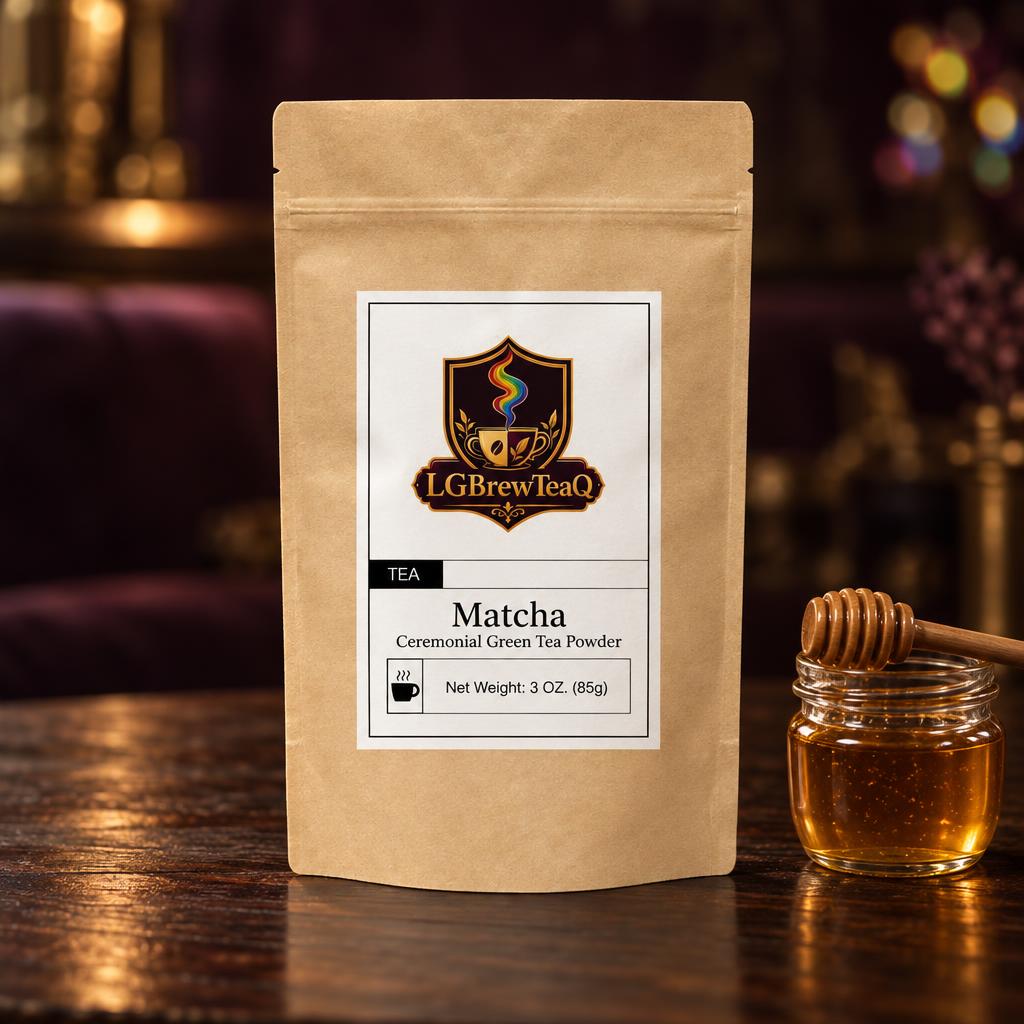
Matcha is stone-milled Japanese green tea powder, shaded for weeks before harvest to build sweetness. If you want to shop ceremonial matcha, ours is pure and unsweetened with no fillers.
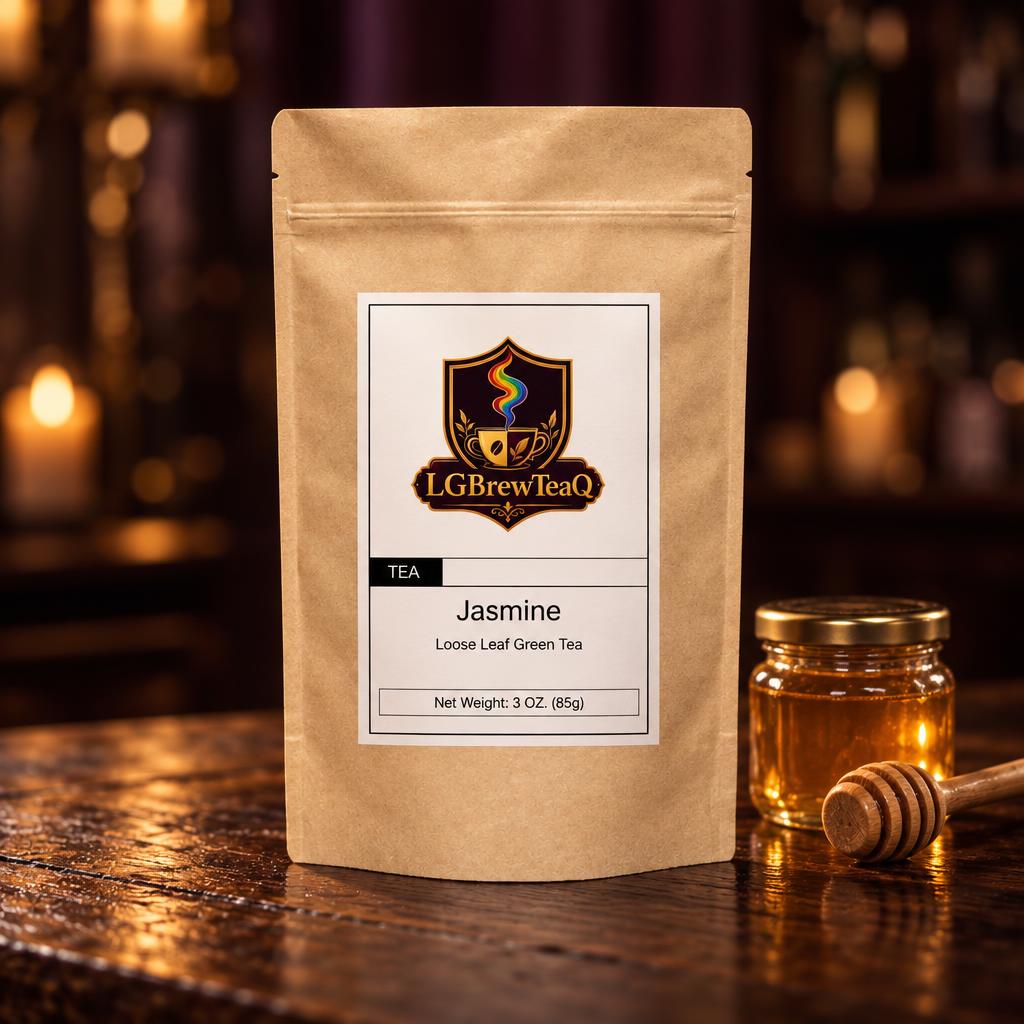
Jasmine is whole-leaf green tea scented with fresh night-blooming blossoms, never sprayed with artificial oils. Steep 1 to 2 teaspoons per 8 ounces at 175-180°F for 2 to 3 minutes, and re-steep up to four times. Browse the jasmine loose leaf green tea if floral cups are your morning default.
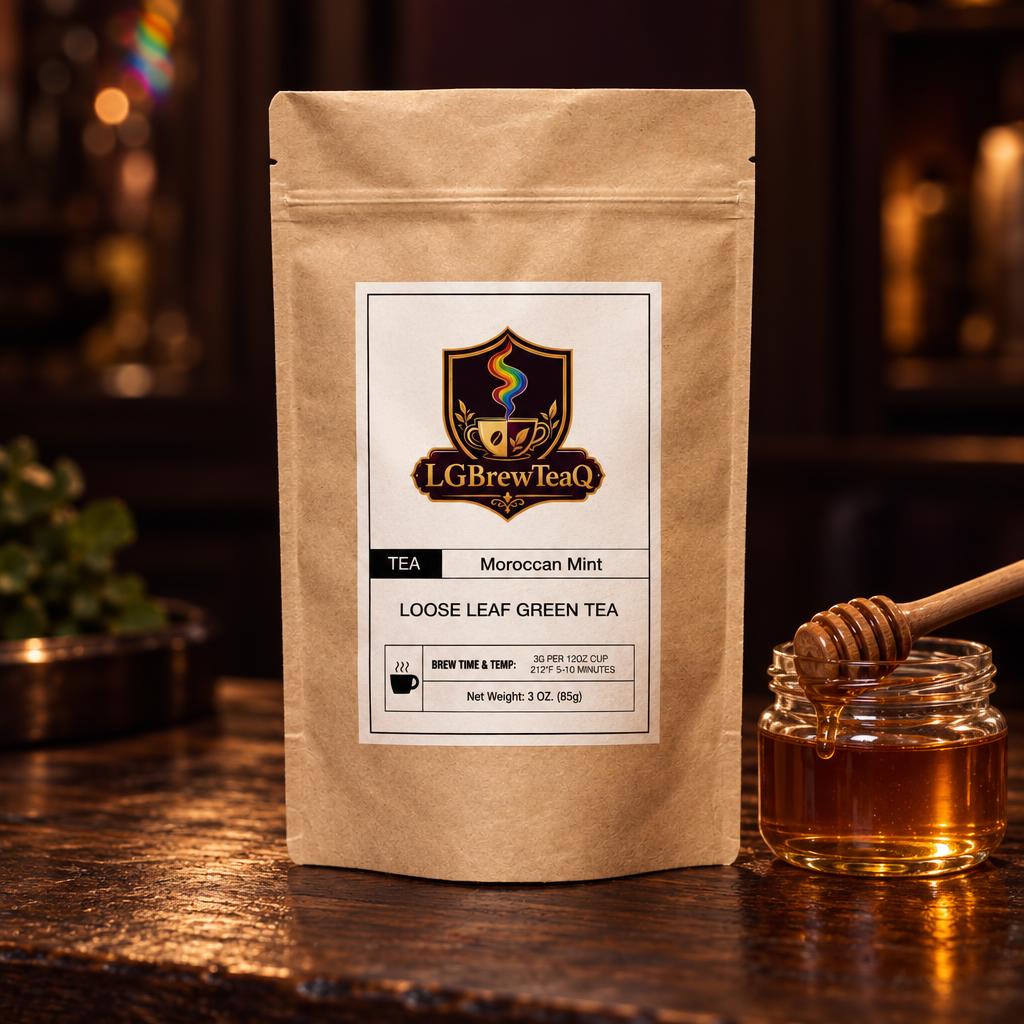
Moroccan Mint blends gunpowder green tea pearls with spearmint and peppermint. It is the most refreshing of the three hot or iced. See the Moroccan mint loose leaf green tea for full tasting notes.
Organic Black Tea Picks for a Stronger Morning Start
If you drink coffee most mornings and want tea that can keep up, organic black tea is the place to start. Black tea is fully oxidized, giving it a maltier, bolder body and more caffeine than green tea by weight.
Our English Breakfast is a whole-leaf blend of Indian and East African teas: deep golden malt, toasted oak, and enough structure to stand up to milk. It is $22.99, and you can buy the English Breakfast loose leaf black tea when you want a tea that behaves like strong coffee.
Our Earl Grey takes Ceylon black tea and tosses it with cold-pressed Italian bergamot oil and blue cornflower petals.
A common mistake is under-steeping black tea to avoid bitterness, then wondering why it tastes like hot water. Bitterness usually comes from tea dust and overboiling, not from time. Whole leaves forgive a longer steep.
Caffeine in Green Tea vs Black Tea: Which Wakes You Up Better
Black tea generally delivers more caffeine per brewed cup than green tea, because black tea is made from more oxidized leaves and is often brewed hotter and longer. Green tea, especially matcha, can still hit hard because you consume the whole leaf rather than straining it out.
Most ranking pages sort teas into 'high,' 'moderate,' and 'low' caffeine and stop there. That is not enough to plan a morning.
| Tea | Typical caffeine per 8 oz | What drives the number |
|---|---|---|
| Matcha | 60-70 mg | You drink the whole ground leaf, so nothing is left in the strainer |
| English Breakfast | 40-70 mg | Assam-heavy blends and a full 5-minute steep land at the top |
| Earl Grey | 30-50 mg | Ceylon base is lighter; bergamot oil adds no caffeine |
| Jasmine green | 20-40 mg | Green leaf plus a short 2-3 minute steep |
| Moroccan Mint | 15-30 mg | Gunpowder green cut with mint, so the tea dose per cup is lower |
| Hojicha | 10-20 mg | Roasting plus stems and late-season leaf lower the count |
| Rooibos, hibiscus, fruit blends | 0 mg | Not from the tea plant at all |
- Need to be sharp in 20 minutes: matcha or a 5-minute English Breakfast. Both clear 60 mg in a standard cup.
- Want a lift without the edge: jasmine or Moroccan Mint. You get 15-40 mg, which most drinkers describe as a nudge rather than a push.
- Caffeine-sensitive or cutting back: hojicha gives you the warm roasted ritual at 10-20 mg, and rooibos or hibiscus gives you zero.
- Drinking a second or third cup: this is where tea beats coffee.
The L-theanine factor. Matcha and other shade-grown green teas carry L-theanine, an amino acid that most drinkers report takes the sharp edge off caffeine.
If you are avoiding caffeine for a medical reason, check with your doctor before choosing a tea.
Caffeine-Free Herbal and Fruit Blends for Gentle Mornings
Not every morning needs caffeine. Some need a warm cup that does not add to the jitters, and caffeine-free blends fill that role without tasting like a compromise.
Our Apple Cider Rooibos pairs South African red rooibos with cinnamon, clove, and citrus peel. Steep at 208°F for 5 to 7 minutes.
Hibiscus Berry Tea brings hibiscus, rosehips, rooibos, and orange peel together with blueberry and passionfruit essences for a tart, deep-ruby cup.
Mango Treat and Peach Paradise lean fruity and floral, with real dried fruit and no added sugar. Both are naturally caffeine-free and forgiving on steep time.
One honest limitation: caffeine-free blends will not wake you up. If you need alertness, pair one with a smaller serving of matcha.
Loose-Leaf Tea Brewing Guide for Morning Cups
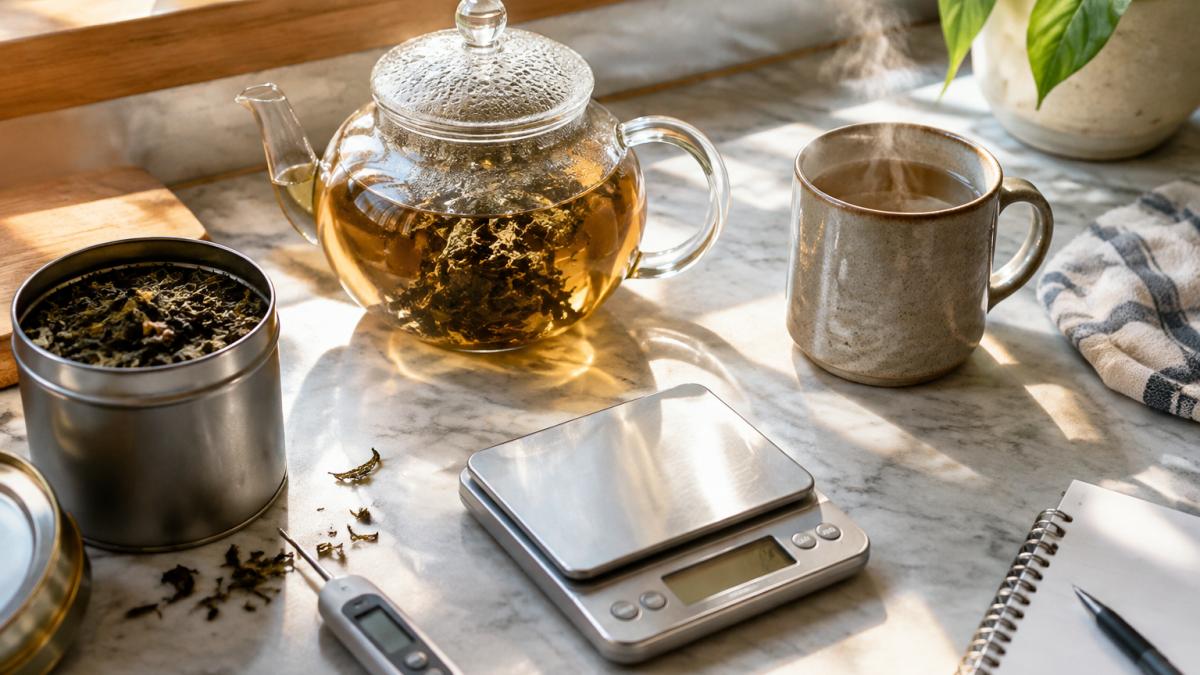
Good morning tea comes down to four numbers: leaf amount, water temperature, steep time, and water quality. Get those right and almost any loose-leaf tea tastes the way the maker intended. Get them wrong and a $22.99 tin performs like a grocery-store bag.
Loose leaf versus tea bags: the decision most guides skip.
Here is the trade-off to weigh when choosing between loose leaf and tea bags.
| Factor | Loose leaf | Conventional tea bag |
|---|---|---|
| Leaf size | Whole or large broken leaf, so more surface area and more aroma | Often fannings or dust, which release fast but flatten quickly |
| Freshness once opened | Degrades over weeks; store airtight and away from light | Also degrades, but the smaller leaf has less to lose |
| Brewing control | You set leaf dose, temperature, and time | Fixed dose; you control only water and time |
| Re-steeping | Whole leaves often give 3-4 good infusions | Usually one, occasionally two |
| Convenience | Needs an infuser and a minute of measuring | Drop in, pull out |
| Cost per cup | Higher upfront, lower per cup if you re-steep | Lower upfront, higher per cup over time |
If you want bag convenience with whole-leaf quality, look for large-leaf sachets rather than flat paper bags, and check the sachet is not so small the leaf cannot unfurl.
The four numbers, with the ranges that matter.
- Measure the leaf. 1 to 2 teaspoons per 8 ounces for most loose leaf, or about 2 grams for powdered teas like matcha. A small kitchen scale removes the guesswork; volume varies wildly by leaf shape.
- Heat water to the right temperature. 160-185°F for green and powdered teas, 195°F for Earl Grey, 208-212°F for black and herbal. A $10 digital thermometer is the single best upgrade for green tea, because 'let the kettle rest a minute' is not reproducible.
- Time the steep. 2 to 3 minutes for green, 3 to 5 for black, 5 to 7 for herbal and fruit. Set a timer; the difference between 3 and 5 minutes on black tea is the difference between brisk and bitter.
- Use filtered water. Hard water flattens flavor and leaves a film on the cup. If your tap water tastes like anything, it will taste like that in the tea.
- Re-steep whole leaves. Jasmine and Moroccan Mint hold up for three or four infusions. Add about 30 seconds to each subsequent steep, and keep the water at the same temperature.
The re-steeping note. Re-steeping works best with whole leaf; fannings and dust give up most of their flavor in the first steep.
Watch out: a common morning mistake is brewing loose leaf in a mug with a packed mesh ball. For a deeper walkthrough, read our complete guide to brewing specialty loose leaf tea.
Build Your Morning Tea Order at LGBrewTeaQ
The right morning tea is the one you will actually brew on a Tuesday when you are running late. Start with one green, one black, and one caffeine-free blend, and you cover strong starts, gentle starts, and no-caffeine evenings.
LGBrewTeaQ curates premium loose-leaf teas and delivers them to your door. Ordering is simple, and delivery is fast.
Your mornings deserve better than a stale teabag. LGBrewTeaQ can help you build a tea ritual that fits your schedule, with carefully sourced leaves, roasted-to-order freshness, and reliable delivery. Start with a green, a black, and a caffeine-free blend, then adjust as you learn what your mornings need. Get started with LGBrewTeaQ and make your first cup the best part of the day.
Frequently Asked Questions
What is the best organic tea to drink in the morning?
It depends on how much caffeine you want. For a strong start, whole-leaf black tea such as English Breakfast or Earl Grey brews up malty and brisk. If you want a gentler cup, green tea like Matcha or Jasmine is a lighter option. For a caffeine-free morning, a fruit or rooibos blend works well. Match the tea to your energy goal first, then to flavor.
Is green tea or black tea better for morning brewing?
Black tea is full-bodied and stands up to milk, so it suits people who want a bold cup. Green tea brews cooler with a lighter body. The brewing matters as much as the leaf: green tea wants water around 160°F to 185°F, while black tea needs 195°F to 212°F. Pick black for strength, green for a smoother morning cup.
How much loose-leaf tea should I use for one cup?
Start with 1 to 2 teaspoons of loose-leaf tea per 8 ounces of water. Powders like Matcha and Hojicha use about 1 teaspoon (roughly 2 grams) whisked into 2 to 3 ounces of warm water, then topped with more water or milk. Fruit and herbal blends often need a rounded teaspoon or more because the botanicals are bulkier. Adjust by taste after the first cup.
How long should I steep organic tea in the morning?
Green tea steeps 2 to 4 minutes at 175°F to 185°F, black tea 3 to 5 minutes at 208°F to 212°F, and herbal or fruit blends 5 to 7 minutes at a full boil. Over-steeping green tea can make it bitter. Set a timer for the first few brews until you know your preferred strength.
