

How Do You Remove Coffee Stains From Ceramic Mugs Safely?
Last Updated: November 16, 2026
Quick Summary
Remove coffee stains from ceramic mugs safely by lifting them with a baking soda paste for light rings or a white vinegar soak for set-in stains, then rinsing thoroughly. Avoid steel wool, sandpaper, and harsh scouring powders, which scratch the glaze and let stains settle deeper.
- Baking soda paste lifts light rings in one to two minutes; let tougher marks sit 15 to 20 minutes.
- Soak set-in rings in white vinegar for 30 minutes, or overnight for old buildup.
- Never mix vinegar with bleach, and keep acidic soaks off metallic trim and decals.
- Rinse mugs right after each cup so tannins never get a chance to bond.
- A mark that survives an overnight soak and scrub may be a chip or worn glaze.
Table of Contents
- Why Coffee and Tea Leave Stains on Ceramic Mugs
- How to Clean a Ceramic Coffee Cup With Baking Soda
- How to Remove Coffee Stains From Mugs With Vinegar
- Dish Soap and Warm Water: The Everyday Prewash
- Can Dried Coffee Stains Be Removed?
- Comparing Cleaning Methods and Protecting Your Ceramic Glaze
- Stain Prevention and Routine Mug Care
- Pick Up a Mug That Stays Stain-Free Longer
- Frequently Asked Questions
Why Coffee and Tea Leave Stains on Ceramic Mugs
That brown ring inside your favorite mug isn't dirt. It's chemistry, and knowing what causes it changes how you clean it.
Heat speeds up the process. Hot water opens microscopic pores in the glaze, letting color molecules settle in.
Below, we'll walk through the main cleaning methods, compare them side by side, and show you how to protect your mugs long term.
How to Clean a Ceramic Coffee Cup With Baking Soda
Baking soda is a gentle first choice for many mug stains. It's a mild alkali that lifts surface stains without scratching glazed ceramic, and most kitchens already have a box.
Baking soda dissolves in warm water and gently breaks the bond between the stain and the glaze. It's not a harsh chemical, so you can use it often without worry.
Step-by-Step Baking Soda Method
- Rinse the mug with warm water to remove loose residue.
- Sprinkle one or two spoonfuls of baking soda into the mug.
- Add a small amount of warm water to form a thick paste.
- Rub the paste over the stained interior with a damp sponge or cloth.
- Let it sit for one or two minutes for light stains, longer for stubborn ones.
- Scrub gently in circles, focusing on the stain ring.
- Rinse thoroughly with warm water and check your progress.
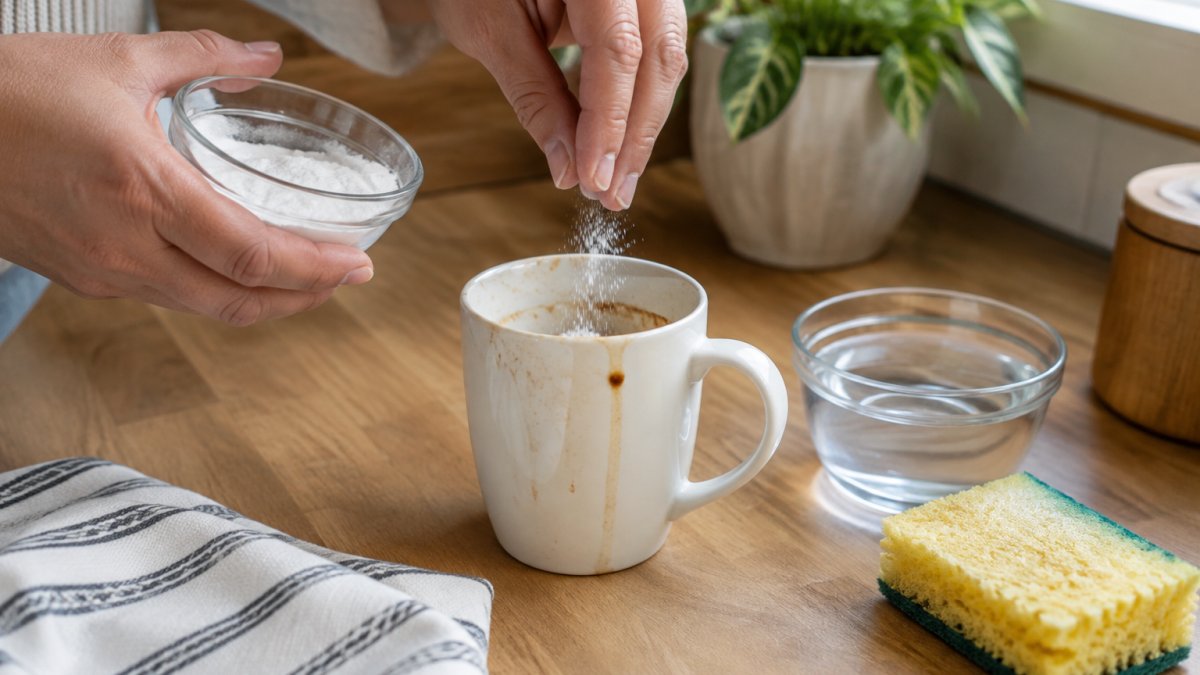
For tougher marks, make a thicker paste and let it sit for 15 to 20 minutes before scrubbing. Watch out: don't use a metal scouring pad with the baking soda, since it can scratch the glaze even though the powder itself is gentle.
How to Remove Coffee Stains From Mugs With Vinegar
White vinegar handles set-in stains that baking soda alone can't lift. Its mild acidity dissolves the mineral and tannin buildup that clings to the mug interior, which is why it works well on the brown ring near the bottom where coffee sits longest.
White Vinegar Soak for Set-In Stains
- Fill the mug halfway with distilled white vinegar.
- Top off with hot water, leaving room at the rim so the solution can move.
- Let it soak for 30 minutes for surface stains, or overnight for set-in stains.
- Pour out the solution and rinse with warm water.
- Wash with dish soap and a soft sponge to remove any loosened residue.
- Rinse again and dry.
If a ring still shows after soaking, sprinkle baking soda into the vinegar-soaked mug. The fizzing action helps loosen what's left. Rinse well afterward so no vinegar taste carries into your next cup.
Safety and Residue Rules for Vinegar
Vinegar is food-safe at kitchen concentrations, but residue can still affect flavor and the mug. Three rules keep the method safe:
- Rinse until the water runs clear and smells neutral. Vinegar residue left in a porous or worn spot can sour the next cup. A common pattern is a faint vinegar smell that persists after one rinse; a second warm-water rinse usually clears it.
- Do not mix vinegar with bleach or other cleaners. Mixing an acid with a chlorine bleach product can release irritating gases. Clean the mug with one product, rinse thoroughly, and only then try another.
- Keep vinegar off metallic trim and decals. Many ceramic mugs have gold or platinum rims, metallic logos, or applied decals. Acidic soaks can dull or lift these finishes over repeated use. If your mug has any metallic or raised decoration, soak only the stained interior below the trim line, or switch to a baking soda paste and a soft sponge.
A USDA food safety guidance on cleaning and sanitizing reminder applies here: rinsing after any cleaning solution matters, so residue doesn't end up in your drink.
Vinegar vs. Baking Soda on the Same Mug
Vinegar and baking soda are often presented as interchangeable, but they behave differently on ceramic. Baking soda is a mild abrasive and alkali that lifts surface film with light scrubbing.
Watch out: if the stain sits under a crackle glaze or an unglazed foot ring, vinegar can wick into those areas and be hard to rinse out. In that case, keep the soak short and rinse longer than you think you need to.
Dish Soap and Warm Water: The Everyday Prewash
Dish soap and warm water won't remove old stains on their own, but they keep stains from setting in the first place.
Here's the routine we recommend after every cup:
- Rinse immediately with hot water to stop residue from drying.
- Add a drop of dish soap and scrub with a soft sponge.
- Pay attention to the bottom and lower sides, where stains collect.
A common mistake is letting a mug sit in the sink overnight, giving tannins hours to settle into the glaze.
If you're also cleaning glass drinkware, our guide on how to clean glass tea infusers without harsh chemicals covers the gentler approach those materials need.
Can Dried Coffee Stains Be Removed?
Yes, dried coffee stains can almost always be removed from glazed ceramic. The key is giving the cleaning agent enough time to work before you scrub.
Dried stains have had time to bond tightly to the glaze, so they need a soak rather than a quick wipe. Choose your method based on how stubborn the mark is:
| Stain Type | Best Method | Soak Time | Effort |
|---|---|---|---|
| Fresh surface stain | Dish soap and warm water | None | Low |
| Light dried ring | Baking soda paste | 1-2 minutes | Low |
| Set-in brown ring | White vinegar soak | 30 minutes | Medium |
| Old, dark buildup | Vinegar soak, then baking soda scrub | Overnight | Medium |
| Stained lid gaskets | Vinegar soak plus soft brush | 30 minutes | Medium |
A stain that survives an overnight vinegar soak and a baking soda scrub is usually not a stain at all. It may be a chip, crack, or worn spot in the glaze where the ceramic underneath has absorbed color.
Comparing Cleaning Methods and Protecting Your Ceramic Glaze
The right method depends on your mug, your stain, and how much time you have.
| Method | Best for | Effort | Time | Glaze and decoration risk |
|---|---|---|---|---|
| Dish soap and warm water | Fresh residue, daily washing | Low | Under 1 minute | None on glazed ceramic |
| Baking soda paste | Light rings, surface film | Low | 1-20 minutes | Low; avoid gritty scrubbing on metallic trim |
| White vinegar soak | Set-in rings, mineral haze | Medium | 30 minutes to overnight | Low on glaze; can dull metallic trim and decals |
| Baking soda after vinegar | Old, dark buildup | Medium | Overnight plus scrub | Low if you use a soft sponge |
| Commercial stain removers | Fast results on tough stains | Medium | Per label | Varies; abrasive powders can dull gloss |
Baking soda is the best all-around choice for glazed ceramic: gentle, inexpensive, and safe for routine use.
White vinegar wins for set-in stains and mineral buildup.
Dish soap and warm water keep stains from forming in the first place.
Commercial cleaners can work fast, but check the label for abrasives.
Where Glaze and Decoration Change the Answer
Ceramic mugs are not all the same surface. The glaze is a glass-like coating, but it can be thin, crackled, or absent in places, and the decoration may sit on top of the glaze rather than under it. That changes what is safe:
- Unglazed areas, the foot ring on the bottom and any raw clay, are more porous than glazed surfaces. Stains there can soak in rather than sit on top. Clean them gently and expect some permanent darkening; do not scrub hard to force it out.
- Metallic trim, gold, platinum, or silver rims and logos are thin films. Abrasive powders and acidic soaks can wear them. Hand wash these mugs and keep cleaners off the trim.
- Decals and applied decoration, raised or printed designs can lift or fade with repeated abrasive scrubbing. A soft sponge and a mild cleaner are the safe limit.
Never use steel wool, sandpaper, or harsh scouring powders on a glazed mug. These scratch the surface, and once the glaze is damaged, stains settle in faster and deeper. Stick with soft sponges, cloths, and nylon brushes.
When to Stop Cleaning
One more limit worth stating plainly: cleaning advice does not establish whether a mug or its decoration is microwave- or dishwasher-safe. Those ratings come from the manufacturer.
If you're worried about glaze wear, a quality mug that holds up to repeated washing makes the whole routine easier. Our white glossy mug is built with a smooth, glossy glazed finish and is dishwasher and microwave safe.

Stain Prevention and Routine Mug Care
Prevention beats removal every time. A few small habits keep ceramic mugs stain-free for years.
- Rinse right after use. Hot water alone removes most residue before it dries.
- Don't leave coffee or tea sitting for hours. Drink it, then wash the mug.
- Wash with dish soap daily. A soft sponge and warm water are enough.
Most ceramic mugs labeled dishwasher safe can go on the top rack, but hand washing keeps the glaze glossy longer.
One insider tip: rotate your mugs. Using the same one every day means the same spots get stained repeatedly. Giving each mug a rest between uses helps the glaze stay clean.
Pick Up a Mug That Stays Stain-Free Longer
If your current mug is scratched, chipped, or permanently discolored, cleaning won't bring it back.
At LGBrewTeaQ, we offer ceramic mugs built for daily use. Our mug with color inside pairs a glossy white exterior with a bold colored interior, and it's dishwasher and microwave safe. If you want guidance on choosing the right vessel for your brewing setup, our roundup of the best coffee mugs for home baristas breaks down sizes, shapes, and materials.

Good coffee deserves a good cup. A mug that cleans up easily makes every morning ritual a little smoother.
A stained mug doesn't have to be a permanent problem. With baking soda, vinegar, and a simple rinse habit, most ceramic mugs stay bright for years.
Frequently Asked Questions
Can dried coffee stains be removed from a ceramic mug?
Yes, dried coffee stains can be removed, though they need more time and patience than fresh ones. Fill the mug with warm water and add one or two spoonfuls of baking soda, then let it soak for several hours or overnight. The baking soda lifts the set-in stain from the ceramic surface. For very old stains, follow with a white vinegar soak and scrub gently with a non-abrasive sponge. Avoid metal scouring pads, which can scratch the glaze and make future coffee stains stick even more.
Is it safe to pour boiling water into a ceramic mug?
Most everyday ceramic mugs handle hot water fine, but sudden temperature swings can crack a cold or thin-walled mug. Warm the mug first with tap water before pouring boiling water in. Check the mug for cracks or chips before use, and avoid pouring boiling water into a mug straight from the freezer. Mugs labeled dishwasher and microwave safe, like the LGBrewTeaQ ceramic mugs, are dishwasher and microwave safe, but gradual warming still protects the glaze over time.
Does dish soap remove coffee stains from mugs?
Dish soap removes surface oils and fresh residue but usually will not lift a set-in coffee stain on its own. Use dish soap and warm water as a prewash to clear loose residue, then follow with baking soda or vinegar for the stain itself. A few drops of dish soap added to a baking soda paste can help the mixture cling to the mug interior. Rinse thoroughly afterward so no soap residue flavors your next cup.
Can abrasive cleaners scratch or damage a ceramic mug?
Yes. Scouring powders, steel wool, and harsh abrasive pads can scratch the glaze on a ceramic mug. Once the glaze is scratched, coffee and tea stains settle into those tiny grooves faster, and the mug becomes harder to clean over time. Stick to soft sponges, cloths, and gentle household ingredients like baking soda and vinegar. If a mug has a decorated or metallic design, keep abrasive cleaners away entirely to protect the finish.
