

Why Single Origin Coffee Flavor Profiles Vary by Region
Table of Contents
- Why Single Origin Coffee Tastes Different Depending on Where It's Grown
- Coffee Flavor Profiles by Region: A Sensory Comparison
- How Altitude Affects Coffee Flavor
- How Coffee Processing Affects Flavor
- Soil, Rainfall, and Temperature: The Growing Conditions Behind the Cup
- Variety and Genetics: Why Two Farms in the Same Region Can Taste Nothing Alike
- How to Taste Single Origin Coffee Side by Side
- Conclusion
- Frequently Asked Questions
Last Updated: October 21, 2026
Why Single Origin Coffee Tastes Different Depending on Where It's Grown
Single origin coffee is coffee traced to one place: a single farm, estate, cooperative, or microregion. That traceability is the whole point. A bag labeled "Colombia" can taste like dark chocolate and mango, while a bag from a different farm in the same country can taste like red apple and caramel. Same country. Different cup.

At LGBrewTeaQ, we roast beans from six distinct regions, and the differences show up in every batch. Below, we'll show you exactly why geography, altitude, processing, and genetics all pull flavor in different directions.
But first, here's what most guides get wrong: they treat "region" as a single flavor. It isn't. Terroir, variety, processing, roasting, and brewing each change what lands in your cup.
Terroir, Variety, Processing, Roasting: Four Separate Causes
Terroir is the combined effect of soil, climate, rainfall, temperature, and altitude on a coffee plant. It's the same concept wine drinkers use.
Four forces shape flavor, and each works separately:
- Terroir: soil minerals, rainfall, temperature swings, elevation
- Variety: the plant's genetics, such as Caturra, Castillo, or Typica
- Processing: how the cherry becomes a dried bean (washed, natural, honey)
- Roasting: how heat develops sugars and acids in the final bean
Change any one and the cup shifts. A washed Ethiopian and a natural Ethiopian from the same hill can taste like different coffees. That's processing, not geography.
The Specialty Coffee Association's cupping standards describe how tasters separate these variables deliberately. It's the cleanest way to understand cause and effect.
Coffee Flavor Profiles by Region: A Sensory Comparison
Regional flavor profiles are tendencies, not rules. The most useful way to compare origins is to separate four sensory attributes, acidity, body, sweetness, and aroma, and then note how much variation exists inside each region. The table below summarizes common tendencies, not guarantees.
| Region | Typical Acidity | Typical Body | Typical Sweetness | Common Aroma & Flavor Notes |
|---|---|---|---|---|
| East Africa (Ethiopia, Kenya, Tanzania) | High, citrus-like | Light to medium, tea-like | Medium, honeyed | Jasmine, bergamot, berry, stone fruit |
| Central America (Costa Rica, Guatemala, Honduras) | Bright, malic to citric | Medium | Medium to high, caramel | Pineapple, blackberry, almond, cocoa |
| South America (Colombia, Brazil, Peru) | Medium, rounded | Medium to full | High, chocolatey | Dark chocolate, mango, peach, caramel, nut |
| Asia-Pacific (Sumatra, Java, Papua New Guinea) | Low to medium | Heavy, syrupy | Low to medium, earthy | Herbal, spicy, cedar, tobacco, dark fruit |
Why the table is a starting point, not a verdict. A country label compresses thousands of farms into one word. Within Ethiopia alone, a washed Yirgacheffe lot and a natural Guji lot can diverge more than a Colombian and a Costa Rican coffee do. The same is true in Colombia: a Huila washed Caturra and a Tolima natural Castillo share a border but not a cup profile.
Within-region variation at three levels.
- Farm level: Two farms a mile apart can grow different varieties, prune differently, and pick at different ripeness. A farm that picks selectively at peak sugar will taste sweeter and cleaner than a neighbor that strip-picks.
- Lot level: A single farm may sell a washed lot, a natural lot, and a honey lot from the same harvest. Processing alone can shift the cup from floral and tea-like to jammy and winey.
- Harvest level: The same tree in a wet year versus a dry year produces different sugar development and different acid balance. Roasters update lots annually for this reason.
How to read the table honestly. Treat the notes as a probability distribution, not a promise. If you buy a Kenyan coffee expecting blackcurrant and get tomato-leaf savoriness, that is still a legitimate Kenyan profile, just a different expression. The Specialty Coffee Association's cupping protocol separates acidity, body, sweetness, and flavor precisely because a single note cannot describe a region.
Our own lots show the range. The Ethiopia Sidama lot brings caramel, florals, and ripe berry at 2,000-2,200 meters. The Costa Rica Tarrazú lot brings pineapple, blackberry, and toasted almond at 1,300-1,600 meters. Both are light-medium roasts. The difference is origin, but also altitude, variety, and processing, which is why the next sections separate those causes.
How Altitude Affects Coffee Flavor
Higher altitude generally means denser beans, slower ripening, and more concentrated sugars. That usually translates to brighter acidity and more complex flavor.
The mechanism is simple. Cool mountain nights slow the cherry's development. The plant packs more sugar into each bean. Dense beans also roast more evenly and hold their origin character better.
- Low elevation (below 1,000 meters): softer acidity, rounder body, simpler sweetness
- Mid elevation (1,000-1,500 meters): balanced acidity and body
- High elevation (above 1,500 meters): bright acidity, layered aromatics, lighter body
Our Ethiopia lot grows at 2,000 to 2,200 meters. Our Costa Rica lot grows at 1,300 to 1,600 meters. Both are excellent. They just express altitude differently.
How Coffee Processing Affects Flavor
Processing method often matters as much as origin. The same cherry, handled two ways, becomes two different coffees.
Washed process removes the fruit before drying. The result is clean, bright, and clear. Origin character comes through sharply.
Natural process dries the whole cherry in the sun. The bean absorbs fruit sugars. Expect heavier body, sweeter fruit, and lower perceived acidity.
Honey process leaves some mucilage on the bean during drying. It lands between washed and natural: sweet, syrupy, and rounded.
Our Ethiopia Sidama lot is natural-processed, which is why it reads berry-forward and silky. A washed version of the same heirloom coffee would taste cleaner and more floral. Same farm. Same variety. Different process.
Soil, Rainfall, and Temperature: The Growing Conditions Behind the Cup
Growing conditions decide how much flavor a plant can build in the first place. Volcanic soil drains well and holds minerals. Steady rainfall keeps cherries developing evenly. Cool nights slow ripening and concentrate sugars.
Single Origin Favorites Sample Pack →
- Soil: volcanic loam, common in Central America, tends to support bright, clean cups
- Rainfall: consistent moisture prevents uneven ripening and shriveled beans
- Temperature: warm days plus cool nights widen the sugar-acid balance
Our Costa Rica lot grows in volcanic loam at high altitude, with cool mountain nights. That combination explains its crisp body and pineapple brightness better than the country name does.
Variety and Genetics: Why Two Farms in the Same Region Can Taste Nothing Alike
Coffee variety is the plant's genetic identity, and it changes flavor before the bean is ever picked. Caturra, Catuai, Castillo, Typica, and heirloom Ethiopian landraces all taste different.
This is the factor most drinkers miss. Two farms a mile apart, same soil, same rainfall, same processing, can produce wildly different cups because they grow different cultivars.
- Caturra and Catuai: clean sweetness, bright acidity, common in Central America
- Castillo: sturdy and balanced, widely planted in Colombia
- Typica: delicate, sweet, lower yield
- Ethiopian heirloom landraces: floral and berry-heavy, genetically diverse
Our Colombia lot blends Caturra, Castillo, and Typica from 59 farmers in Tolima. That mix is why it tastes layered rather than simple.
How to Taste Single Origin Coffee Side by Side
Comparing origins takes one session and a little discipline. The goal is to isolate origin as a variable: brew two or three coffees identically, taste them blind if you can, and record the same four attributes for each.
Total time: about 30-40 minutes. Difficulty: beginner.
What you'll need:
- Two or three single origin coffees
- One brew method for all of them (pour-over or cupping bowl works best)
- A scale, a timer, and a thermometer
- Small cups and a notebook or scoring sheet
Step 1: Fix every brewing variable. Same dose (start at a 1:16 coffee-to-water ratio), same grind size, same water temperature (about 200-205°F), same brew time. If you change grind size midway, you are tasting extraction, not origin. Write the recipe down before you start.

Step 2: Smell before you sip. Aroma carries florals and fruit that the palate reads later. Note dry fragrance and wet aroma separately.
Step 3: Slurp, don't sip. Slurping spreads coffee across the palate and releases aroma. Taste each coffee warm, then again as it cools, many origin characteristics appear only after the cup drops below about 140°F.
Step 4: Score four attributes on a simple scale. Use a 1-5 scale for each:
- Acidity: low and round versus bright and sharp
- Body: tea-like versus syrupy
- Sweetness: faint versus pronounced, and what kind (caramel, honey, fruit)
- Aftertaste: short versus long, clean versus drying
Step 5: Record, don't judge. Write what you taste before comparing. If you taste blind, have someone else label the cups A, B, and C and reveal them only after you score.
Step 6: Wait for the finish. The aftertaste often reveals origin more clearly than the first sip. A Kenyan coffee may finish like blackcurrant; a Sumatran may finish earthy and long.
Expected result: a clear sense of which flavors come from origin and which come from your brew. If two coffees taste identical, either the brewing masked the difference or the lots are more similar than the labels suggest.
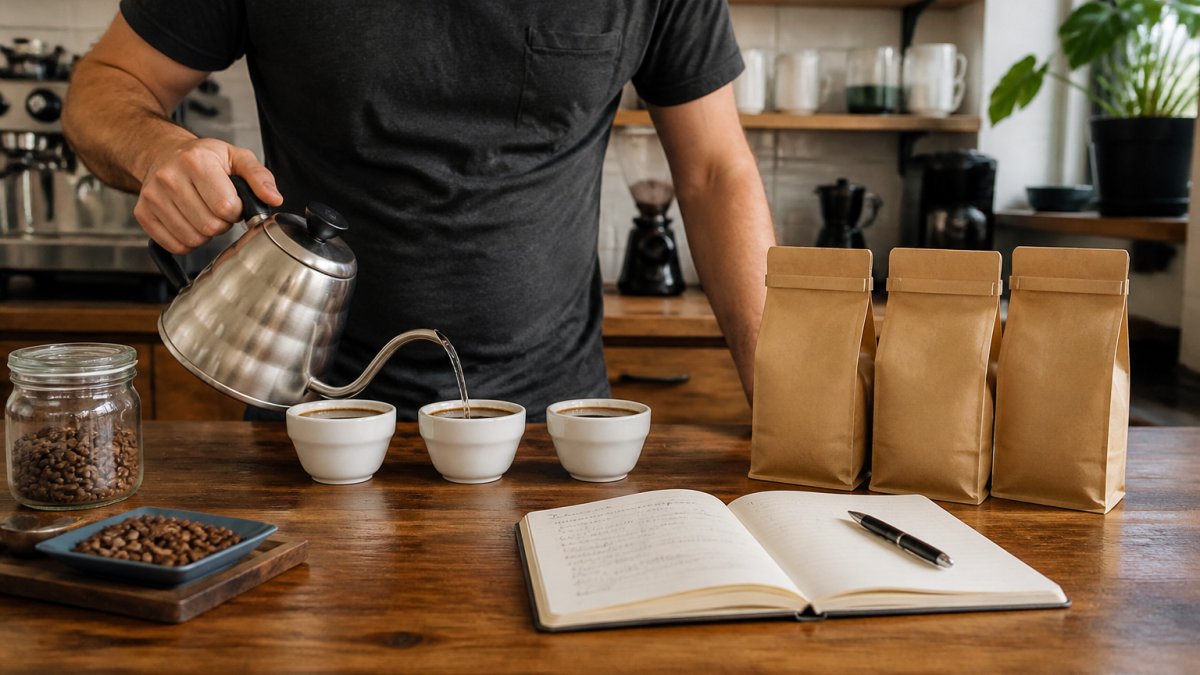
If you want a ready-made flight, our Single Origin Favorites Sample Pack ($24.99) covers six regions in 2 oz pouches, which is enough for a full side-by-side session without committing to six full bags. For a deeper dive into one origin, our Ethiopia Single Origin Coffee ($23.99) and Colombia Single Origin Coffee ($23.99) make a strong contrast pair: floral and berry against dark chocolate and stone fruit.

Conclusion
The hardest part of exploring single origin coffee is knowing where to start. Origin labels tell you a lot, but they don't tell you everything.
We roast to order so each lot keeps its origin character intact. Our small-batch process, carefully sourced beans from trusted farms, and fast delivery make it easy to taste the difference for yourself. Get started with LGBrewTeaQ and build your own tasting flight across six regions.
Frequently Asked Questions
Why does coffee taste different depending on where it is grown?
Geography sets the conditions a coffee plant grows in: soil minerals, rainfall, average temperature, and altitude. Higher elevations slow cherry maturation, which concentrates sugars and produces denser beans with brighter acidity. Volcanic soil in places like Tarrazú contributes to a clean, sweet cup. These growing conditions combine with the coffee variety and how the cherries are processed after harvest, so single origin coffee from two countries can taste dramatically different even when roasted the same way.
How does altitude affect coffee flavor?
Altitude affects how fast coffee cherries ripen. Above roughly 1,500 meters, cooler nights slow development, giving beans more time to build sugars and density. The result is usually brighter acidity, more complex fruit and floral notes, and a cleaner finish. Lower-grown coffee tends to be softer, with more chocolate and nut tones and less acidity. Ethiopian beans from 2,000 to 2,200 meters often show delicate florals, while lower-altitude Brazilian coffee leans toward smooth chocolate and caramel.
How does coffee processing change a bean's flavor profile?
Processing decides how much fruit character reaches the cup. Washed process removes the cherry before drying, producing clean, bright flavors where acidity and origin character stand out. Natural process dries the whole cherry around the bean, adding berry, wine, and heavier sweetness. Honey process leaves some mucilage on the bean, landing between the two with rounded sweetness. The same variety grown on the same farm can taste like citrus under a washed process and like strawberry jam under a natural one.
What are common flavor notes in coffee from different regions?
East African coffees from Ethiopia and Tanzania often show floral notes, berry, and citrus. Central American coffees from Costa Rica and Honduras tend toward tropical fruit, stone fruit, and almond. South American coffees from Colombia and Brazil usually deliver chocolate, caramel, and nutty sweetness with rounder bodies. These are tendencies, not rules: within-region variation at the farm and lot level means a single Ethiopian lot can taste entirely different from its neighbor. A sample pack is the fastest way to compare regions yourself.